




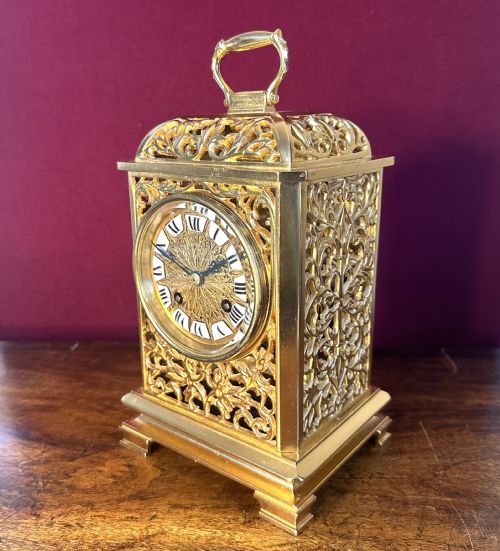


Brass Clock with Handle
A brass clock with handle brings portable mechanical timekeeping into daily rooms, valued for its combination of solid metal casework and functional top mount.

Brass Clock with Handle
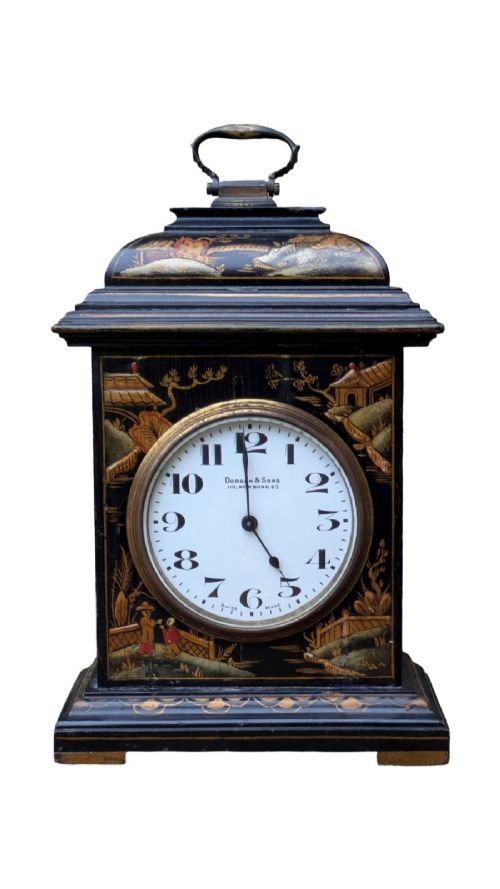
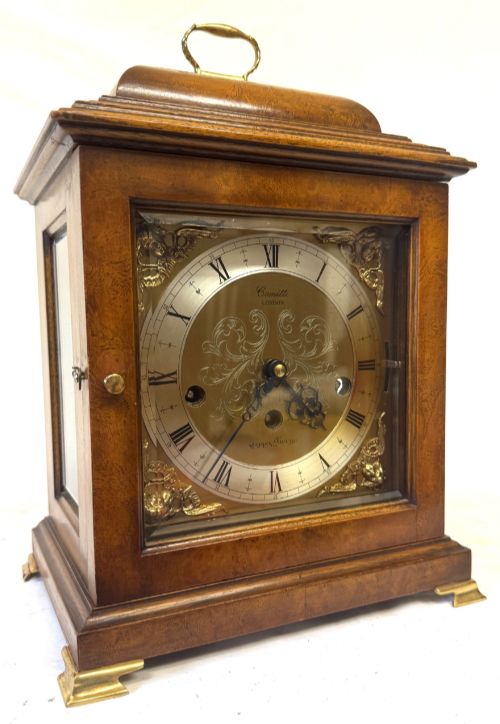
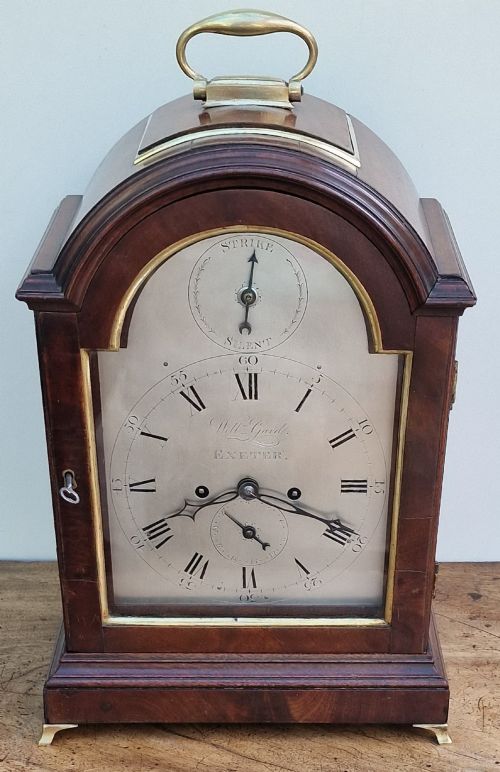
A brass clock with handle encompasses carriage clocks and table or mantel clocks designed to be moved from room to room. The form relies on a sturdy metal framework enclosing the movement and dial.
Most examples encountered here date from the Victorian and Edwardian eras, spanning from the late nineteenth century into the early twentieth century. These include miniature versions alongside repeat striking French carriage clocks and Victorian Gothic Revival models.
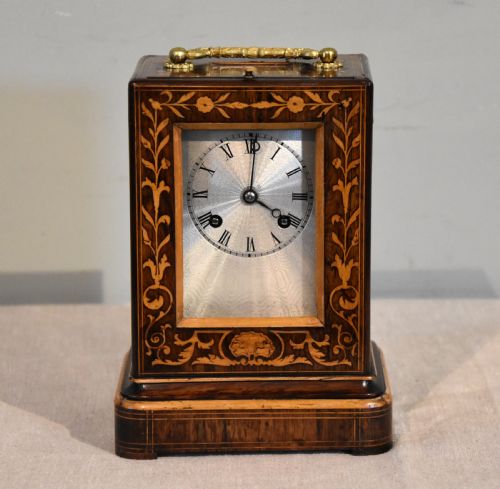
The defining characteristic remains the carry handle positioned on top of the case. While some pieces sit firmly as mantel clocks, others are travel timepieces housed in rosewood or brass housings with glass panels.
How they were made
Cases utilise cast and polished brass, sometimes gilded, paired with bevelled glass panels that reveal the internal gear train. Certain library or campaign formats employ rosewood carcasses fitted with brass carry handles.
Enamel dials feature painted Roman or Arabic numerals, framed by brass bezels. Movements incorporate mechanical spring-driven mechanisms, with select pieces featuring repeat striking capabilities.
Brass Clock with Handle Retail Price Guide 2026
Typical asking prices for brass clock with handle among the pieces listed under this phrase on Sellingantiques today, from the lower quarter to the upper quarter. They describe what is for sale here now, not the wider market.
Designed for travel on bumpy nineteenth-century roads, these sturdy little clocks had to tell time even when thrown about in a carriage.
What varies in quality
Quality rests in the precision of the brass casting, the clarity of the bevelled glass panels, and the complexity of the internal movement, such as the inclusion of a repeat striking mechanism. Heavier cases with crisp architectural detailing separate standard examples from finer ones.
The legibility and condition of the enamel dial also dictate the tier of the piece. Finer dials remain free from hairline cracks, while crisp engraving on the brass casework indicates higher workshop standards.
J.T. Bell
The Brass Clock with Handle Glossary
- Carriage clock
- A small, spring-driven clock originally designed for travelling, featuring a glass-panelled brass case and a handle on top. These often sit within protective leather outer cases.
- Enamel dial
- A metal face coated with fused glass powder fired at high temperatures to create a smooth, white surface for painted numerals. This technique ensures the numbers do not fade over time.
- Repeat striking
- A mechanical complication allowing the clock to strike the last hour and quarters on demand when a lever or button is pressed. It was particularly useful for checking the time in the dark.
- Gilded brass
- Brass treated with a thin layer of gold applied through chemical or mechanical means to enhance appearance and prevent tarnish. This finish appears on finer period pieces.
Brass Clock with Handle: Frequently Asked Questions
What is a brass clock with handle?
It is a portable mechanical timekeeper housed in a metal or wood case with an integrated top handle for transport.
These objects include carriage clocks and small table models from the Victorian and Edwardian periods.
How do you wind a carriage clock?
Winding typically requires a specific key inserted into the arbours accessed through the back door or base of the case.
Care must be taken not to overwind the mainspring, ensuring the mechanical movement runs reliably.
Where were these clocks used?
They were designed for both stationary placement on mantelpieces and for transport during travel between rooms or residences.
The handle facilitated safe movement without damaging the glass panels or brass casing.
How do you date a brass clock?
Dating relies on stylistic clues, such as Victorian Gothic Revival motifs or Edwardian proportions, alongside the construction of the dial and movement.
Makers' marks or registration numbers stamped on the backplate also help establish an approximate period.