
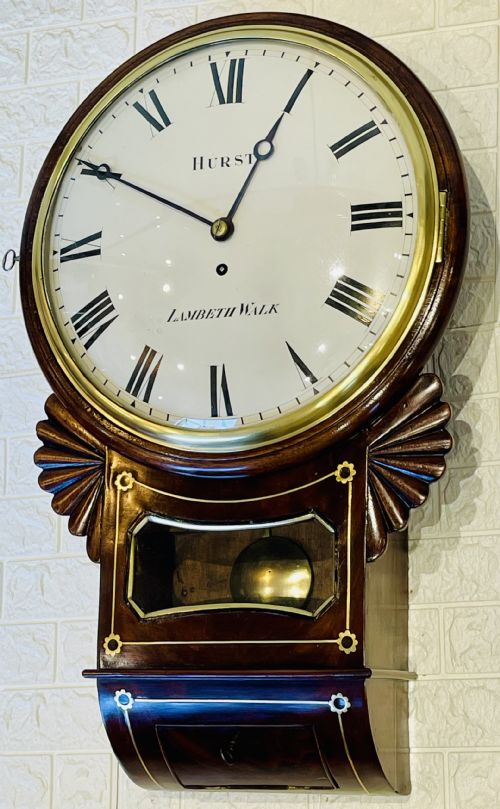


Dark Wood Fusee Clock
A dark wood fusee clock brings steady, mechanical precision into a room through a tapered cone movement.
Dark Wood Fusee Clock
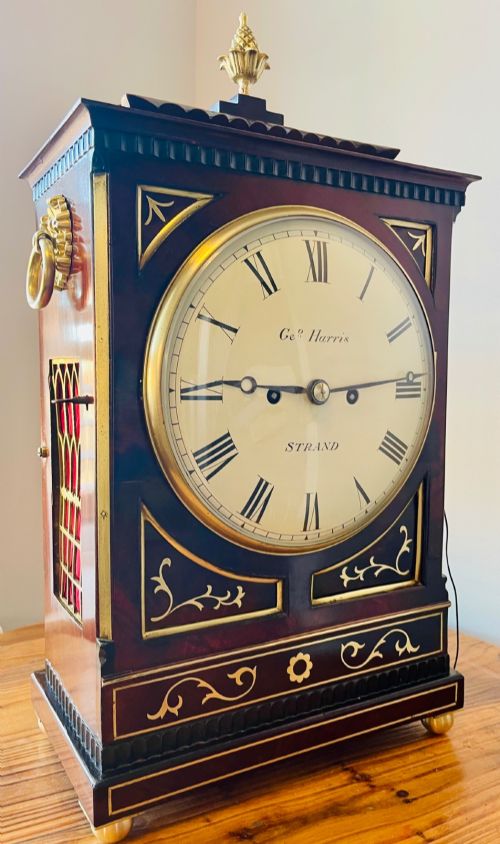
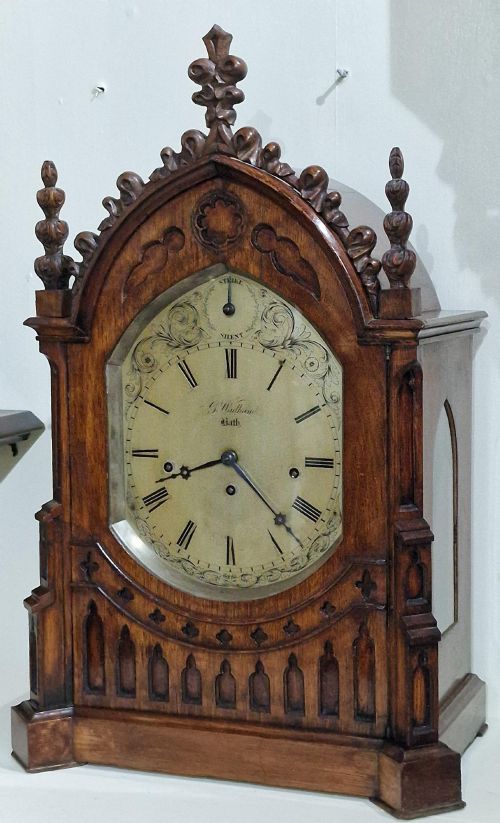
A dark wood fusee clock is a timekeeping device driven by a chain or cord wrapped around a conical drum, designed to equalise the declining pull of a falling mainspring. When you search for a dark wood fusee clock, you encounter wall clocks, bracket clocks, and library clocks shaped by Georgian, Regency, and Victorian hands.
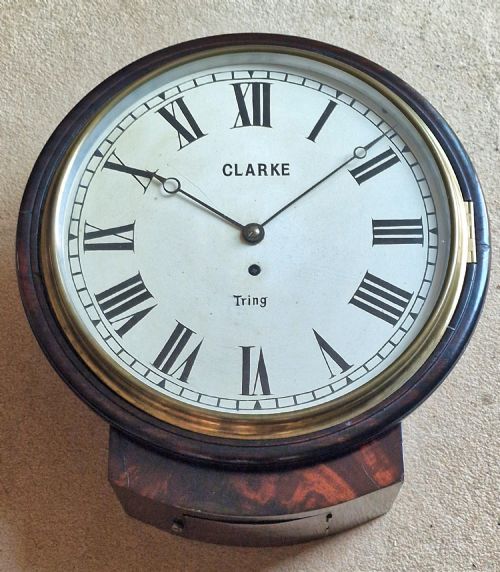
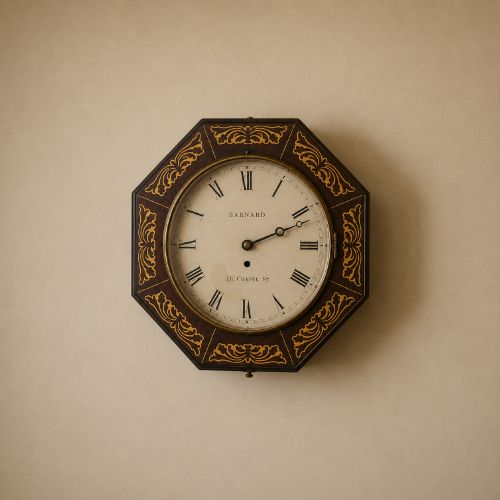
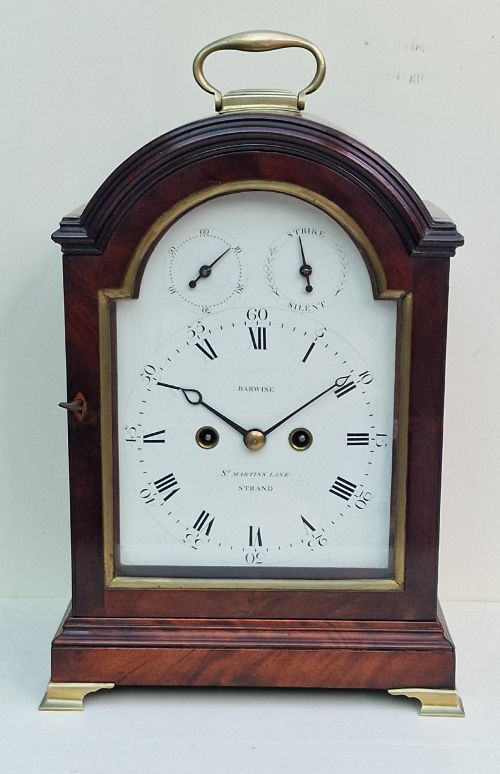
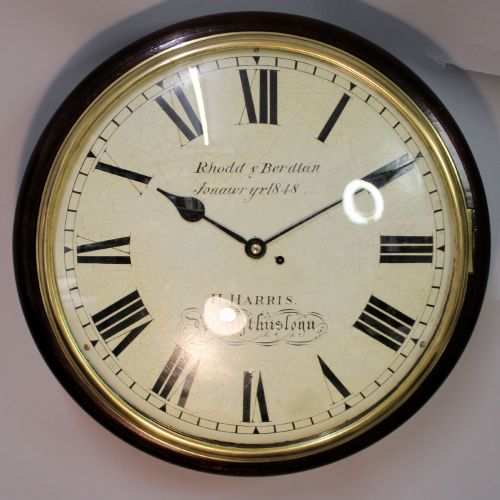
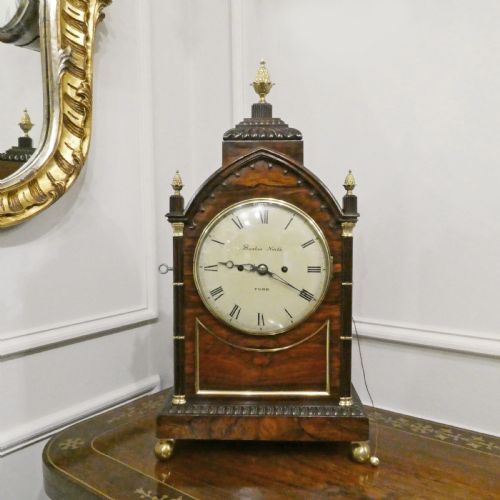
The wall-mounted versions frequently appear as drop-dial or octagonal dial pieces designed for public spaces, offices, or large domestic hallways. Mantel and bracket varieties sit lower down on furniture surfaces, often housed in rich mahogany or rosewood cases with brass details.
Makers from London and regional English towns built these objects across the nineteenth century, utilising dense hardwoods to frame clear enamel or painted dials. Surviving examples range from simple tavern clocks to elaborate triple-fusee table clocks striking bells.
Proportions and Movement
Quality rests in the crispness of the case carving, the preservation of original wooden or brass bezels, and the legibility of the dial markings. Finer pieces maintain untouched patination on the dark wood surfaces rather than stripped and refinished exteriors.
Inside the housing, the precision of the engraved movement plates and the condition of the fusee chain dictate the standard of execution. Makers who signed their brass backplates provide tangible proof of workshop pedigree that elevates the object beyond standard utility.
Dark Wood Fusee Clock Retail Price Guide 2026
Typical asking prices for dark wood fusee clock among the pieces listed under this phrase on Sellingantiques today, from the lower quarter to the upper quarter. They describe what is for sale here now, not the wider market.
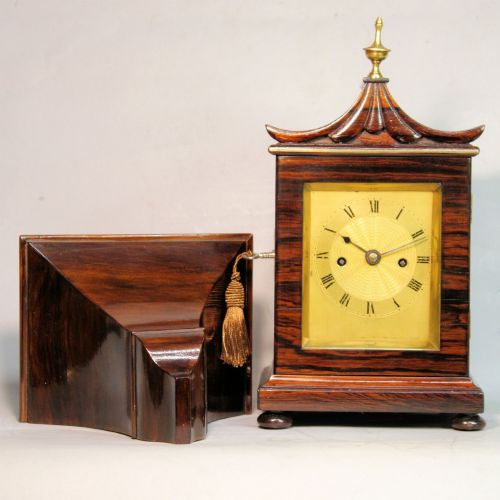
Some miniature bracket clocks include an optional wall bracket so the tiny timepiece can live in two worlds at once.
George Wadham Bath·George Clarke Tring·Barber and North·Joseph Jump·Haley and Milner
The Dark Wood Fusee Clock Glossary
- Fusee
- A conical pulley used in mechanical clocks to maintain even power delivery as the mainspring loses tension. It equalises the force across the entire run of the clock.
- Drop-dial
- A wall clock design featuring a circular dial above an extended wooden box case that protects the pendulum swing. This form was common in offices and railway stations.
- Bracket clock
- A portable table or mantel clock originally designed to sit on a wall bracket. Many retain classical architectural details in wood and brass.
- Enamel dial
- A fused glass surface on a metal backing used for clear time reading. These faces often show fine hairline fractures from age.
Dark Wood Fusee Clock: Frequently Asked Questions
How does a fusee movement work?
The fusee is a conical pulley connected to the mainspring by a chain. As the spring unwinds and loses power, the chain moves to a wider part of the cone, increasing leverage and keeping the driving force constant.
This clever engineering maintains steady timekeeping throughout the duration of the winding cycle, unlike standard spring-driven clocks that run faster when fully wound and slower as they run down.
Where were wall clocks hung?
Wall clocks with drop-dial or octagonal frames were placed in hallways, public offices, and larger domestic rooms where clear time reading was essential. Their sturdy mahogany and oak cases suited busy environments.
They needed stable wall fixings to support the heavy timber frame and swinging pendulum inside the lower case box.
How do I wind my clock?
Winding requires inserting a key into the small aperture on the dial face and turning it slowly until resistance is felt. Care must be taken not to overwind the mainspring.
Most nineteenth-century fusee movements require attention every week or eight days, depending on the specific gear train configuration.
Are wooden dials authentic?
Wooden dials appear on certain Regency wall clocks, offering an alternative to standard painted white enamel or brass faces. They were carved from the same timber as the outer case.
These wooden surfaces display visible grain beneath dark finishes and require careful humidity control to prevent splitting over time.