

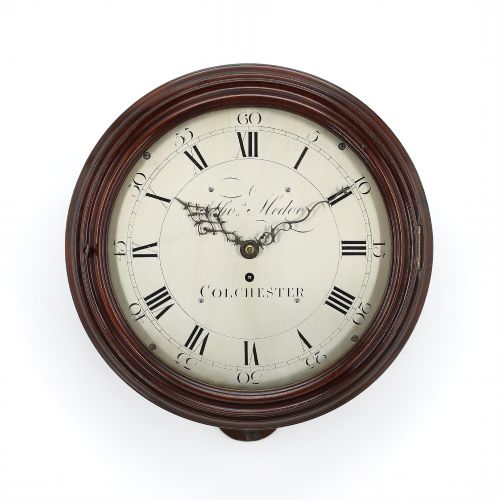


English Mechanical Wall Clock
An english mechanical wall clock brings precision timekeeping into domestic and public spaces through traditional fusee movements.
English Mechanical Wall Clock
An english mechanical wall clock serves as the primary category for dial clocks, drop-dial clocks, and railway timepieces found across this selection. These pieces date from the Georgian period through to the mid-twentieth century, encompassing Victorian, Edwardian, and later examples.
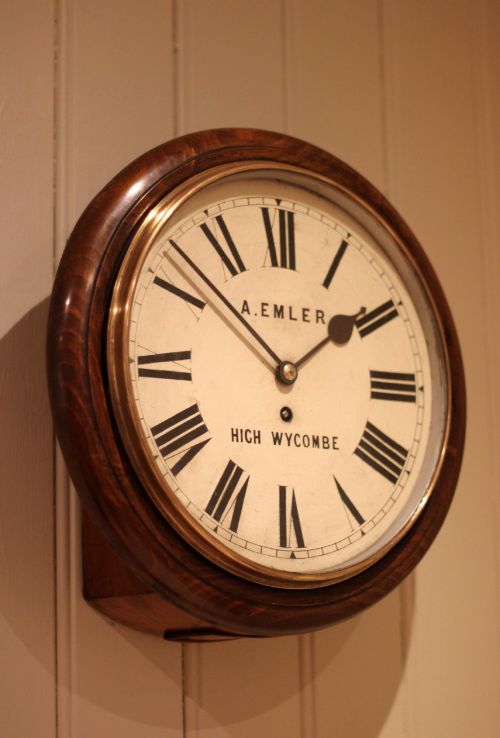
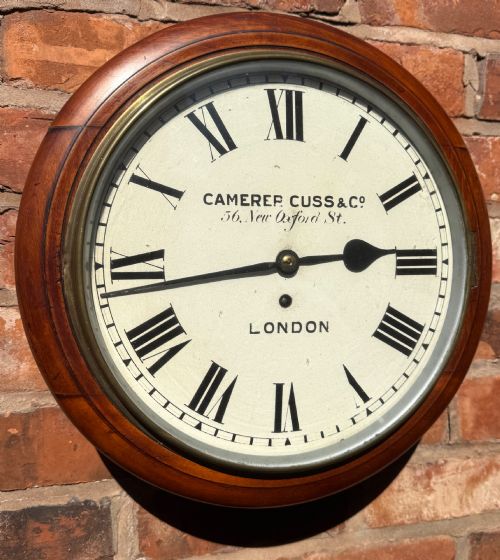
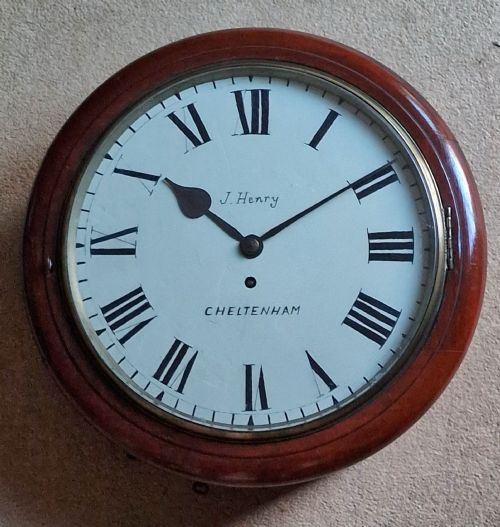
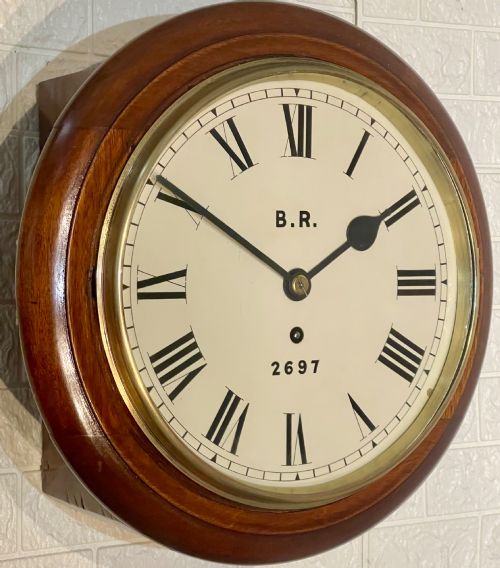
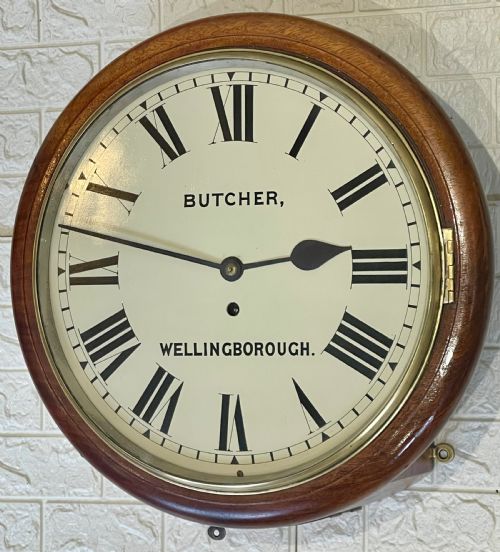
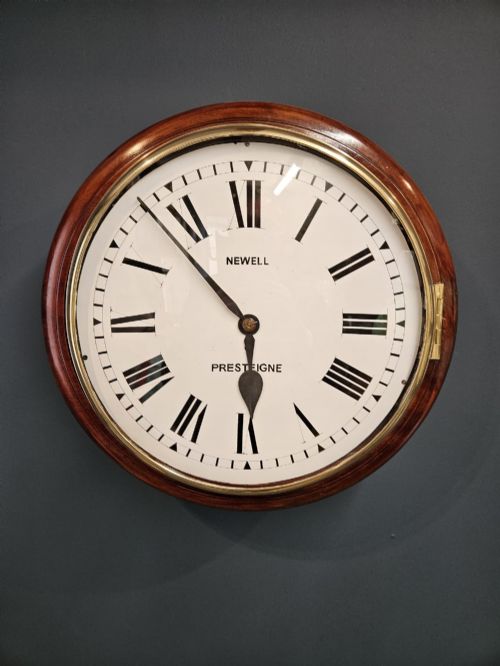
The most common form on this page is the fusee dial clock, often housed in a circular mahogany or oak case with a glass bezel. Many of these originated in railway stations, schools, and commercial offices before entering private collections.
How They Were Made
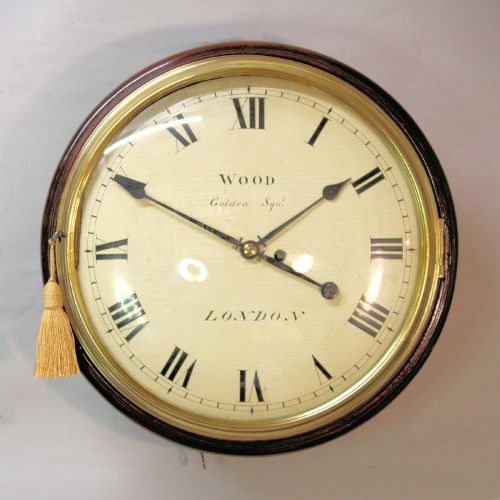
Cases utilise solid timbers such as mahogany, oak, rosewood, and beech, frequently shaped into circular or octagonal surrounds with brass bezels. Dial faces employ painted metal, wood, or convex surfaces protected by glass.
Movements rely on chain or wire-driven fusee mechanisms to maintain even tension as the mainspring unwinds. Makers incorporated verge escapements in earlier Georgian examples alongside standard pendulum regulation.
Some timepieces recorded factory shifts rather than the hours of the day, clocking workers in and out with mechanical precision.
What Varies In Quality
The crispness of dial lettering and the preservation of original painted or wooden faces distinguish standard utility clocks from finer retail or station pieces. Case timber selection and secondary carving also set individual examples apart.
The complexity and original maker of the fusee movement influence the standing of a clock. Signed dials from known regional or London makers command distinct regard compared to unsigned or later utilitarian timepieces.
Camerer Cuss And Co·Thomas Hedge·John Walker·Gledhill Brook·Butt Co Ltd Chester
The English Mechanical Wall Clock Glossary
- Fusee
- A conical pulley used with a cord or chain to equalise the torque of the mainspring as it runs down. This mechanism ensures consistent force is applied to the gear train for accurate timekeeping.
- Dial clock
- A wall-mounted timepiece featuring a prominent circular face and a short or absent trunk. They were widely utilised in public buildings, offices, and railway stations.
- Drop-dial clock
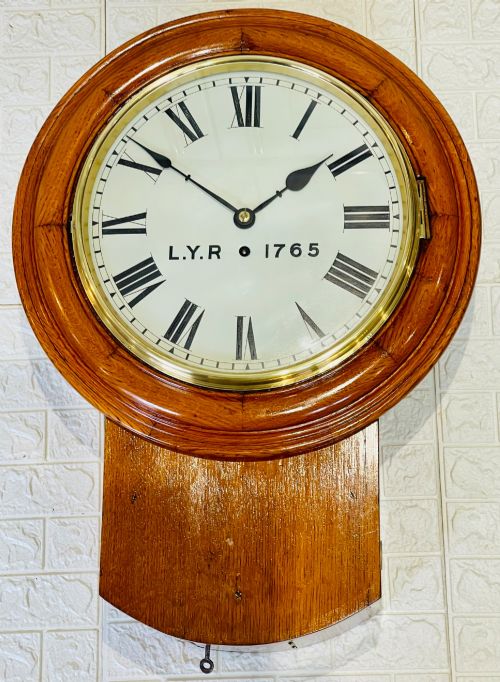
- A wall clock featuring a circular dial mounted above an extended wooden case or trunk. This lower section often houses the pendulum and allows space for a longer drop.
- Bezel
- The metal or wooden ring that holds the glass cover over the dial face. It typically hinges open to allow access for setting the hands.
- Verge escapement
- An early type of escapement mechanism utilising a crown wheel and pallets. It produces a distinct ticking rhythm and is commonly found in older Georgian pieces.
English Mechanical Wall Clock: Frequently Asked Questions
How do fusee movements work?
A fusee movement uses a conical pulley connected to the mainspring barrel by a chain or wire. As the spring unwinds, the chain pulls higher up the wider part of the cone, compensating for the dropping tension.
This clever mechanical arrangement delivers steady power to the escapement throughout the entire running cycle. It represents a hallmark of traditional British clockmaking.
Where were dial clocks originally used?
Dial clocks served as practical timekeepers in railway stations, provincial schools, post offices, and municipal buildings. Their clear faces allowed people to read the time from a distance.
Later models found their way into offices and domestic hallways. Railway companies often stamped the dials or cases with specific regional initials.
How do I date a wooden wall clock?
Dating relies on examining the timber species, case construction, dial materials, and the style of the bezel. Georgian pieces often feature distinct brass work and verge escapements, whilst Victorian examples frequently utilise chain fusee movements in mahogany or oak.
Maker signatures and railway company stampings provide further historical clues. Comparing the dial layout and woodwork style against known periods helps narrow down the decade of manufacture.
How should I hang a heavy wall clock?
A heavy mechanical wall clock requires secure fixing directly into wall studs or solid masonry using appropriate heavy-duty screws and wall plugs. The weight of timber cases and brass movements demands a robust support bracket.
Ensure the clock hangs completely plumb to allow the pendulum to swing freely and evenly. Adjusting the case feet or mounting points helps achieve the correct vertical alignment.