





Traditional Striking Wall Clock
A traditional striking wall clock brings the deep rhythm of a mechanical bell or gong into a room, measured out in mahogany, walnut, and rosewood cases.
Traditional Striking Wall Clock
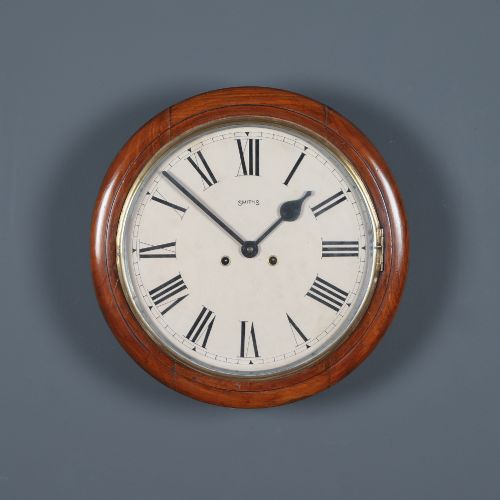
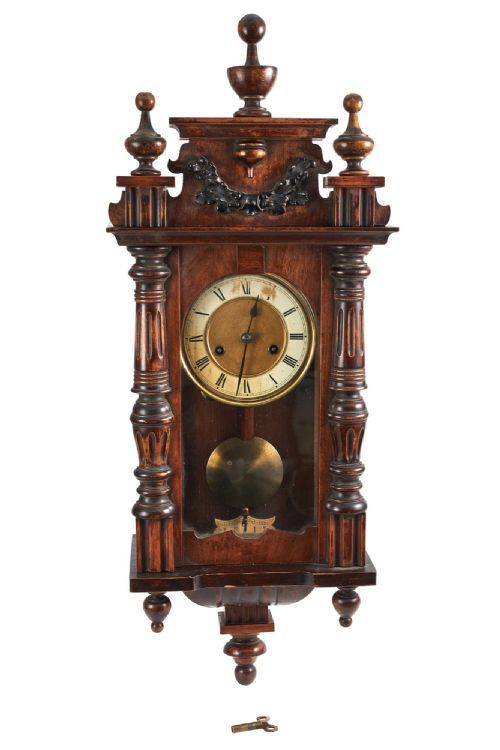
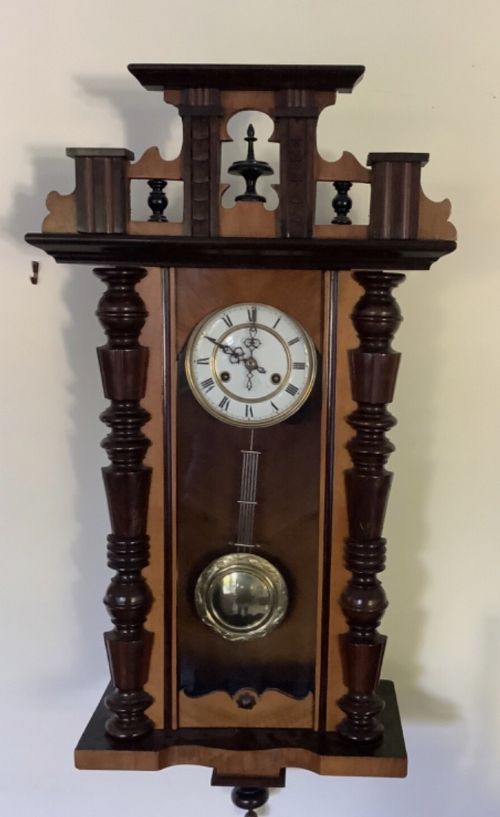
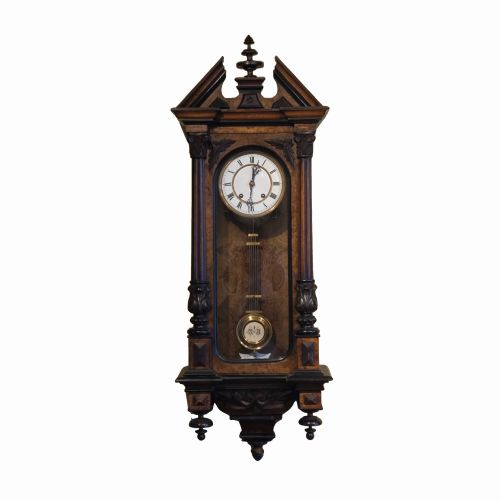
A traditional striking wall clock is an architectural timepiece designed to hang securely while marking the passage of hours and intervals through mechanical sound. The selections gathered here span the late nineteenth century into the early decades of the twentieth, encompassing British drop-dial pieces alongside German and Austrian regulators.
Buyers encounter classic round dial station clocks alongside more elaborate twin fusee and Vienna styles housed in rich timber frames. These pieces combine utility with domestic presence, relying on weights or springs to drive both the going train and the striking mechanism.
Originating from British workshops and continental makers such as Johann Baptist Beha, the traditional striking wall clock reflects the diverse cabinet-making and horological standards of the Victorian era. Each example uses visible pendulums and glass-fronted cases to reveal the steady operation within.
How they were made
Cases rely on substantial hardwoods including walnut, mahogany, and rosewood, often shaped into circular dial surrounds or elongated regulator trunks with glass inspection doors. Selected models incorporate brass bezels, mother of pearl inlay, and iron components to support the heavy movement.
The mechanical interiors depend on brass gear trains driven by fusee cones or twin weights, regulating time through a suspended pendulum and sounding the hours on bells or gongs. Dials feature enamelled segments or painted markers protected behind bevelled or flat glass panels.
Traditional Striking Wall Clock Retail Price Guide 2026
Typical asking prices for traditional striking wall clock among the pieces listed under this phrase on Sellingantiques today, from the lower quarter to the upper quarter. They describe what is for sale here now, not the wider market.
The selection includes walnut and mahogany cases spanning from eighteen-eighty to nineteen-thirty.
What varies in quality
Quality rests in the precision of the movement and the integrity of the cabinet work, distinguishing simple mass-produced items from intricate twin fusee regulator setups. Heavier timber cases with careful grain selection and original brass fittings stand apart from simpler utilitarian boxes.
The sophistication of the strike mechanism and the clarity of the enamelled dial further divide standard wall clocks from finer horological examples. Original components and balanced proportions determine the lasting character of each piece.
Johann Baptist Beha
The Traditional Striking Wall Clock Glossary
- Fusee
- A conical pulley used in better mechanical clocks to maintain an even pull on the gear train as the mainspring unwinds. This device ensures more consistent timekeeping throughout the power reserve.
- Drop-dial
- A clock design featuring a circular dial at the top mounted above an elongated wooden trunk that houses the pendulum. This proportion allows space for a swinging pendulum while maintaining a compact wall footprint.
- Regulator
- A high-precision clock designed for accuracy, typically featuring a long case, a visible pendulum, and a clean dial layout. These movements were often used to set other timepieces in a household or workshop.
- Enamel
- A durable vitreous coating fused to a metal dial base to provide a smooth, bright white surface for painted numerals. It offers longevity and resists fading over decades of exposure to light.
Traditional Striking Wall Clock: Frequently Asked Questions
How do I wind a striking wall clock?
Winding involves inserting a key into the winding holes on the dial face and turning it gently until resistance is felt. Care must be taken not to overwind the mainsprings or weights.
For twin fusee or double weight models, ensure both trains receive attention according to their specific intervals. Keeping a consistent winding schedule helps maintain accurate timekeeping and a steady strike.
Where should I hang a wall clock?
Select an interior wall that is stable and free from excessive vibrations, heavy door slams, or damp conditions. Solid masonry or properly anchored stud walls provide the necessary support for heavy hardwood cases.
Ensure the clock hangs completely vertical so the pendulum swings with an even beat. Proper mounting prevents unnecessary wear on the anchor and escape wheel.
What maintenance do these clocks need?
Periodic cleaning and oiling of the brass pivots and gear trains by a qualified horologist ensures the mechanical parts continue to function smoothly. Dust should be kept away from the movement using a soft brush.
Checking the suspension spring and ensuring the case remains secure on its mounting bracket prevents minor shifts from stopping the pendulum beat.