
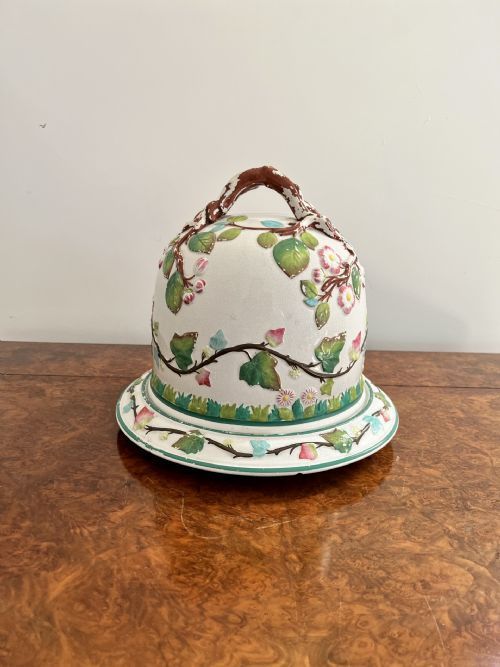


Victorian Cheese Keeper
A victorian cheese keeper brings a grand dining table centrepiece back to daily life, keeping your Stilton fresh beneath a heavy ceramic dome.
Victorian Cheese Keeper
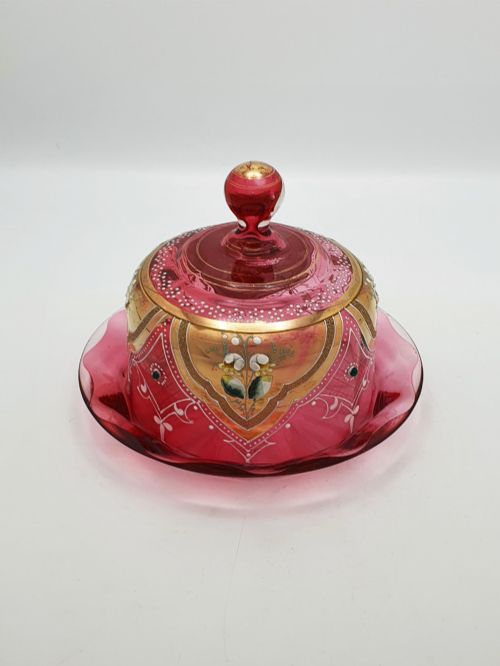
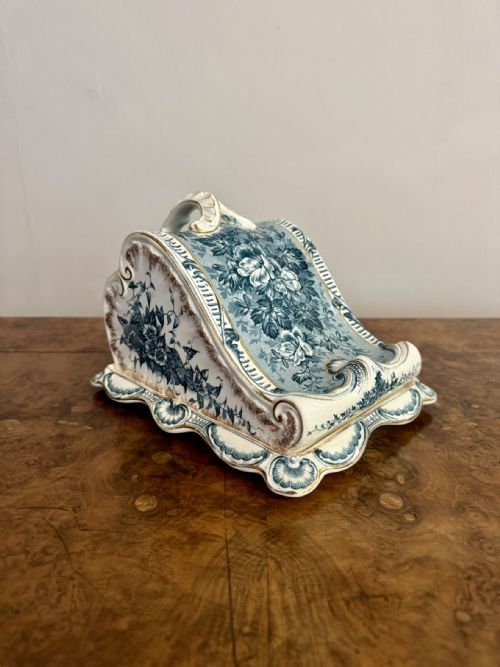
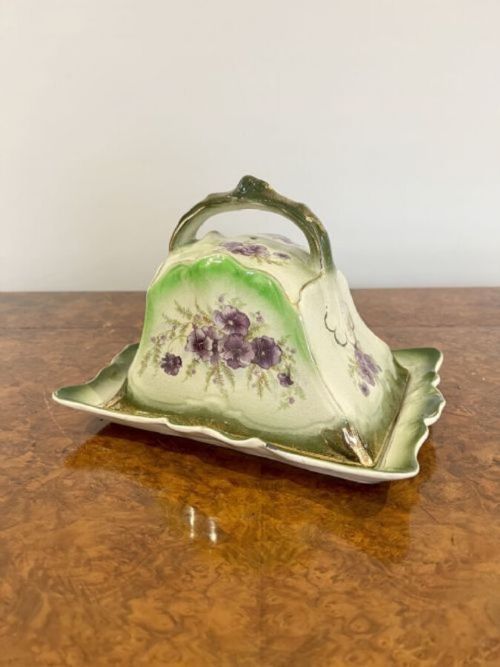
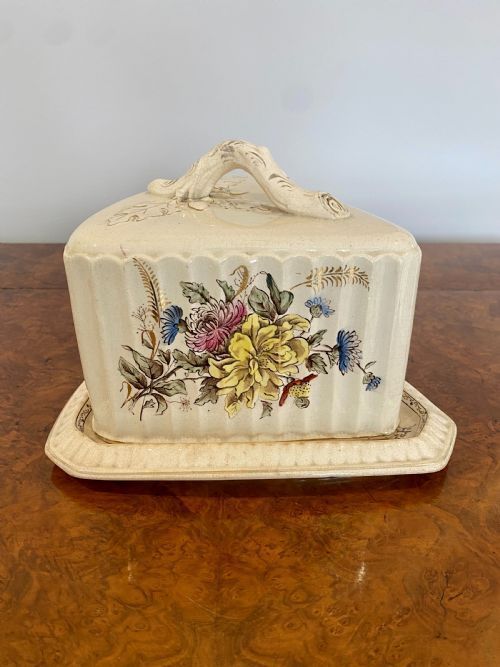
A victorian cheese keeper serves as a dedicated lidded vessel designed to preserve large wedges of hard cheese and Stilton on the dining table. These pieces combine a fitted base plate with a tall domed cover, often shaped specifically to accommodate large cheeses during the nineteenth century.
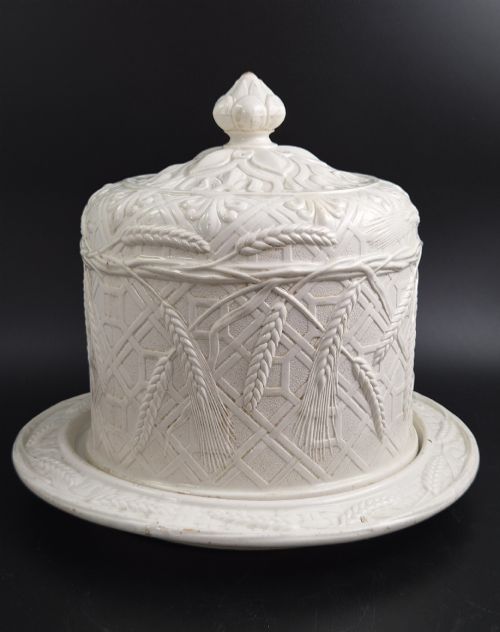
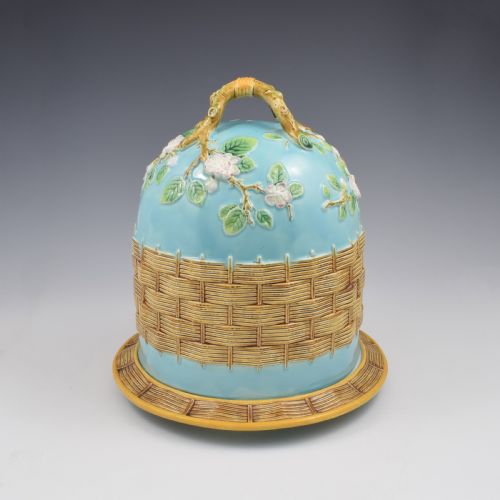
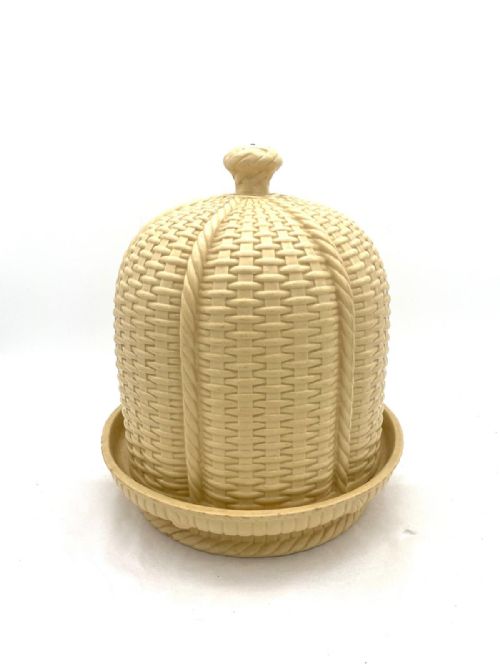
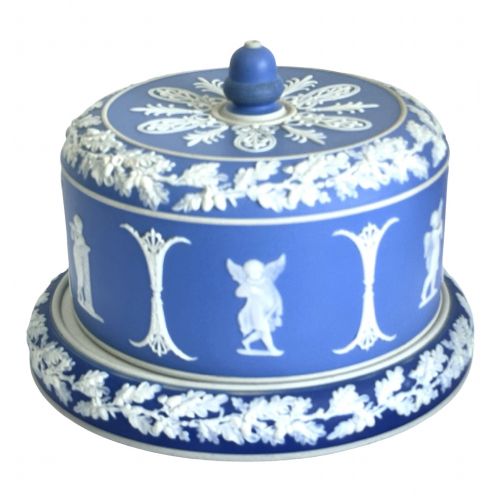
You will most frequently encounter earthenware and white ironstone versions on this page, alongside richly coloured Majolica and blue or drabware jasperware. Most examples date from the Victorian period through to the turn of the twentieth century, reflecting standard dining habits of the era.
Materials and Construction
Potters built these substantial ceramic vessels using earthenware, ironstone, and stoneware bodies, shaped to withstand daily household use. Glazed ceramic surfaces protected the porous clay beneath, while specialised techniques allowed for heavy moulded wall structures.
Decorative finishes ranged from hand-painted glaze applications to intricate moulded relief patterns such as wheat and lattice, basket weave, and apple blossom. Some rarer examples incorporated silver plate metalwork alongside pressed glass bodies.
Listings feature white ironstone, Majolica, jasperware, and glass materials across nineteenth-century periods.
Assessing Quality and Execution
The distinction between standard utility wares and the finest decorative examples lies in the crispness of the moulded relief work and the depth of the glaze. Pieces bearing named factory marks or complex polychrome Majolica glazes represent the upper tier of production.
Proportion and scale also dictate desirability, with exceptionally large domes and matching original stands commanding greater presence. The precision of the fit between the heavy cover and its base plate marks the competence of the original potter.
George Jones·Wedgwood·James Dudson·Copeland·John Maddock
The Victorian Cheese Keeper Glossary
- Jasperware
- A type of fine stoneware developed in the eighteenth century, famous for its matte surface and contrasting white relief decorations against coloured backgrounds.
- Majolica
- A colourful lead-glazed earthenware style popular during the Victorian era, characterised by rich botanical and naturalistic moulded designs.
- Ironstone
- A durable heavy ceramic developed as a robust alternative to porcelain, frequently utilised for large domestic serveware and white kitchen pieces.
- Drabware
- A nineteenth-century ceramic body coloured in muted grey-brown or olive tones, often decorated with delicate applied relief details.
- Stilton Dome
- A tall cylindrical cheese keeper specifically proportioned to house a whole or half wheel of traditional blue Stilton cheese.
Victorian Cheese Keeper: Frequently Asked Questions
How were cheese keepers used?
Victorians placed large wedges of cheese beneath the heavy ceramic dome at the end of a formal meal to prevent the cheese from drying out and to contain strong aromas in the dining room.
The cover was lifted to serve guests at the table, leaving the base plate to catch crumbs and support the remaining wedge.
Can I use mine for daily dining?
These ceramic vessels remain entirely functional for storing and serving hard cheeses in a modern kitchen or dining room. The unglazed rims and heavy ceramic bodies perform the same humidity-regulating function today as they did in the nineteenth century.
Hand washing is strongly recommended to protect the antique glazes and delicate relief work from modern dishwasher detergents.
Why do some have stands?
Many larger examples include a matching circular tray or stand designed to catch crumbs and provide a stable base for the heavy domed cover. The stand often shares the same moulded border pattern, such as wheat or basket weave, as the dome itself.
Matching bases and covers that share identical clay bodies and glaze tones indicate an original pairing.
How do I identify a Majolica keeper?
Victorian Majolica pieces are easily recognised by their vibrant, glossy coloured lead glazes poured over naturalistic moulded textures like apple blossoms or basket weave. These pieces often feature brilliant greens, browns, and pinks that give the surface a reflective, jewel-like quality.
The intense coloration distinguishes them instantly from plain white ironstone or drabware examples.