
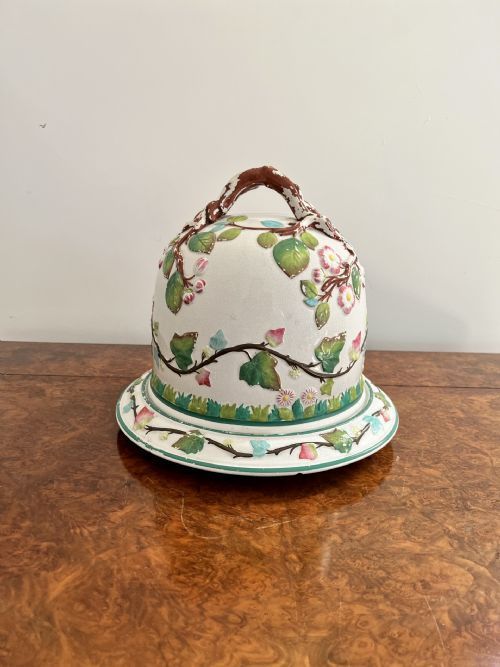


Earthenware Cheese Dome
These earthenware cheese dome pieces are practical Victorian and Edwardian tablewares designed to keep cheese fresh, combining utility with decorative presence.
Earthenware Cheese Dome
When you search for an earthenware cheese dome, you encounter domestic serveware designed for the Victorian and Edwardian dining table. These pieces typically comprise a fitted domed cover and a matching stand, intended to protect and present cheese.
The versions most commonly met on this page date from the nineteenth century, specifically around eighteen eighty, alongside nineteenth century and Edwardian examples. They take forms such as cheese dishes, cheese bells, and cheese domes, often intended for large household gatherings.
How they were made
Potters built these pieces from earthenware, ironstone, and glazed ceramic, applying majolica glaze, drabware finishes, and occasional gilding. These materials gave the bodies substantial weight and protected the porous clay beneath.
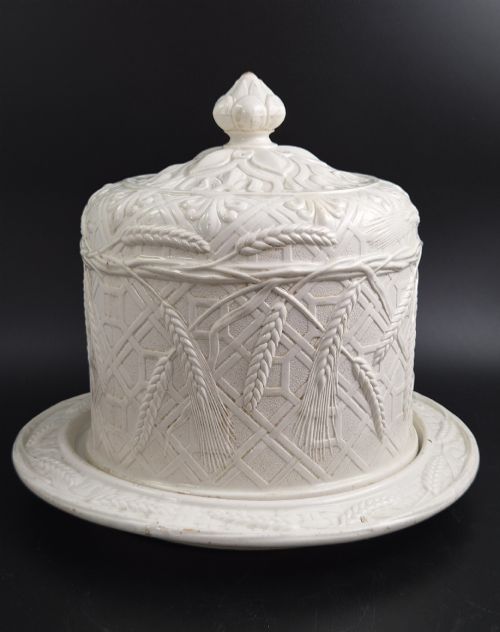
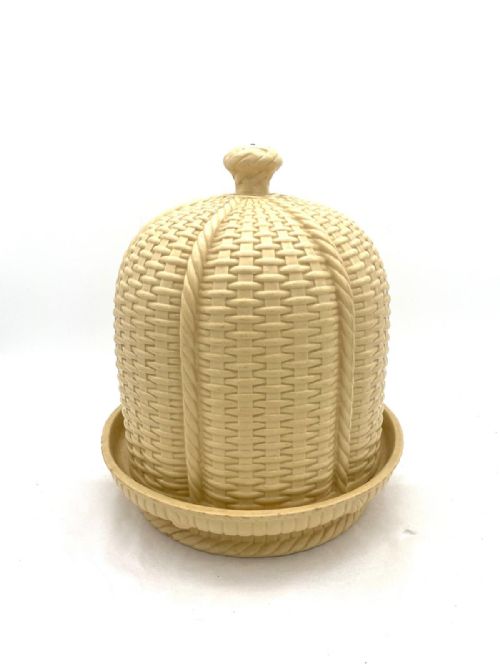
Moulds and hand-finishing shaped the distinctive relief patterns seen on the surface, including basket weave and wheat and lattice designs. Firing fixed the colourful majolica glazes or the crisp white ironstone bodies before final assembly.
Listings feature earthenware, ironstone, and majolica glazed ceramics from the nineteenth century, Victorian era, and Edwardian period.
What varies in quality
Quality rests in the crispness of the moulded decoration, whether in the fine lines of a wheat and lattice motif or the deep relief of a basket weave pattern. Stronger examples display sharp detail without softening in the clay body.
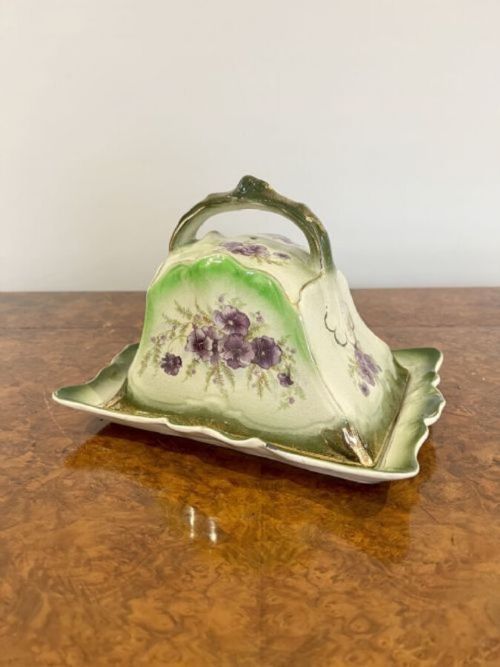
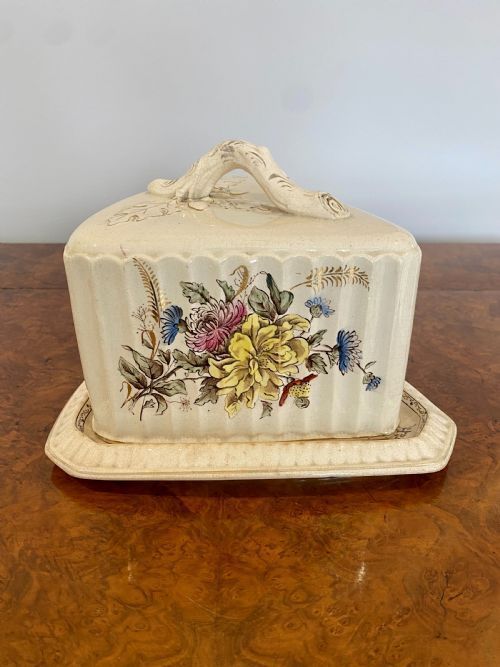
The application and richness of the glaze further separate standard items from finer works, particularly where majolica glazes pool with depth and varied colour. The harmony between the dome and its stand also marks the standard of production.
James Dudson
The Earthenware Cheese Dome Glossary
- Earthenware
- Porous ceramic pottery fired at lower temperatures than stoneware or porcelain. It requires a glaze to become impermeable to moisture.
- Majolica glaze
- A colourful, highly glossy lead-glazed earthenware technique popular in the nineteenth century. It produces rich, vibrant hues across relief-moulded surfaces.
- Ironstone
- A dense, durable type of earthenware patented in the nineteenth century. It mimics porcelain through its hard white body and strength.
- Drabware
- Unglazed or lightly glazed stoneware or earthenware in muted grey-brown or olive tones. It was widely produced during the mid-nineteenth century.
- Cheese bell
- An alternative name for a cheese dome, featuring a bell-shaped cover that rests on a flat plate. It keeps soft and hard cheeses covered between meals.
Earthenware Cheese Dome: Frequently Asked Questions
What is an earthenware cheese dome?
An earthenware cheese dome is a covered ceramic vessel created to store and present cheese on the dining table. It typically consists of a large domed cover resting upon a matching circular tray or stand.
These pieces date primarily from the Victorian and Edwardian eras, reflecting the domestic habits of nineteenth-century households. They range from plain white ironstone to richly coloured majolica wares.
How were cheese domes used?
Victorian households used cheese domes to protect large cheeses, such as Stilton or Cheddar, from drying out and from insects during meals. The heavy cover trapped moisture while keeping the cheese accessible on the sideboard.
They served a practical function in daily dining before domestic refrigeration became common. The matching stand caught crumbs and made it easy to transfer the cheese from the larder to the dining room.
How do I identify a Victorian cheese dome?
Victorian cheese domes often feature characteristic nineteenth-century stylistic markers, such as naturalistic relief moulding, basket weave textures, or vibrant majolica glazes. The weight of the earthenware and the proportion of the dome to the stand offer clues to its period.
Makers frequently employed ironstone or heavy earthenware bodies during this era. Examining the underside of the stand can also reveal manufacturing traits typical of the nineteenth century.
Are these cheese domes waterproof?
The glazed ceramic surfaces of these domes are generally non-porous and safe for normal contact with food. However, older earthenware bodies beneath the glaze may absorb moisture if the surface has sustained deep crazing or cracks.
Careful hand washing preserves the historic glaze and prevents moisture from entering any microscopic fissures in the clay. They function well for serving dry cheeses at room temperature.