
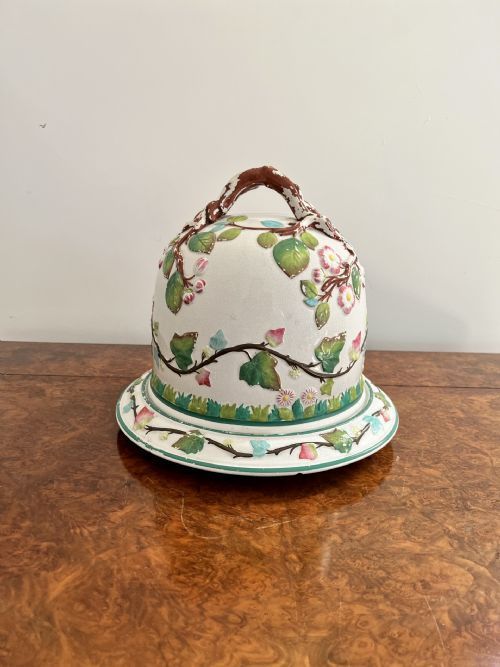


Victorian Earthenware Cheese Bell
These Victorian earthenware cheese bell pieces are heavy, covered domestic ceramics designed to keep cheese fresh on the table.
Victorian Earthenware Cheese Bell
A Victorian earthenware cheese bell comprises a large domed cover resting on a matched flat stand, designed to protect large rounds of cheese in nineteenth century households. The pieces seen here span the Victorian and Edwardian periods, including examples dated around 1845, 1875, 1880, and 1900.
The primary forms listed are cheese dishes, cheese domes, cheese bells, and serveware, often described as large English pottery. These items range from plain utilitarian vessels to highly decorated display pieces intended for the dining table.
Materials and glazing techniques
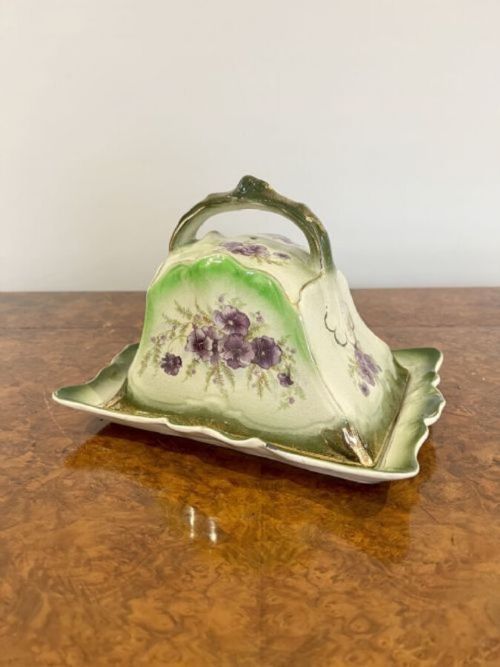
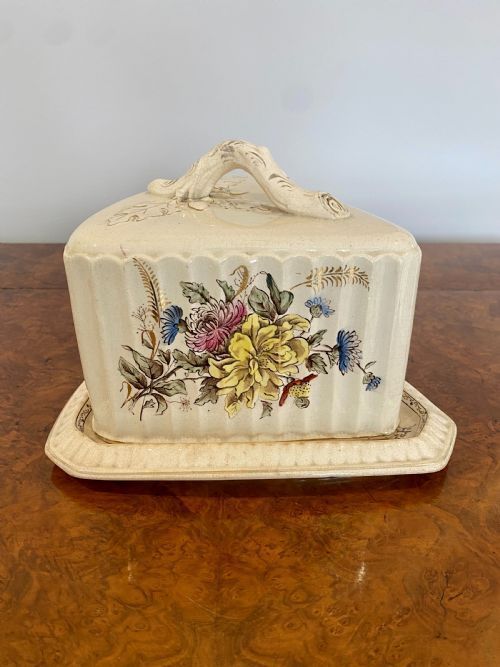
Potters built these cheese covers using earthenware, ironstone, and jasperware, shaped into substantial domed forms with fitted stands. The surfaces receive specialised finishes including standard glaze, glazed ceramic, majolica glaze, and occasional gilding.
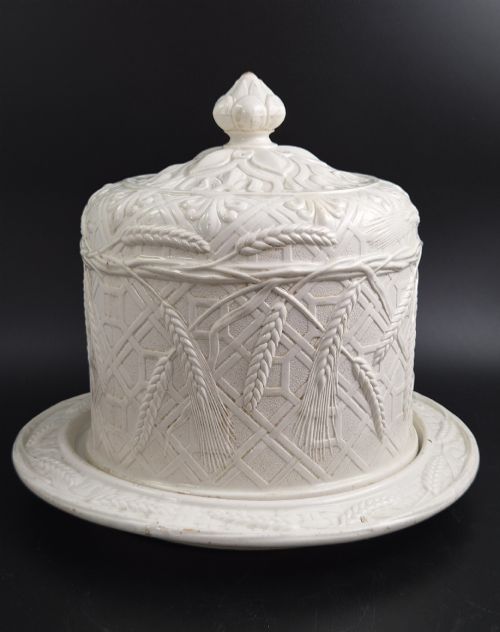
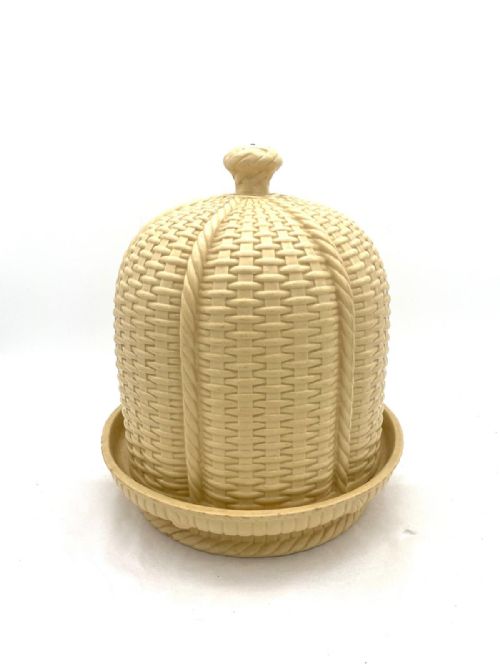
Moulded decorative techniques appear frequently, utilising tactile patterns such as basket weave, wheat and lattice, and traditional drabware bodies. The application of rich coloured majolica glazes creates vibrant, glossy surfaces across the nineteenth century examples.
The documented objects span the nineteenth century, including specific dates such as 1845, 1875, 1880, and the Edwardian year 1900.
Distinctions in craftsmanship and finish
Quality varies through the crispness of the moulded relief work, whether in delicate wheat and lattice patterns, basket weave textures, or classical jasperware sprigs. Finer examples maintain sharp detail across the entire dome and stand without blurring in the clay body.
The application and richness of the glaze dictate visual success, particularly on majolica pieces where colour depth and smooth coverage determine the piece's presence. Substantial size and complete matching stands further elevate the standing of individual domes.
James Dudson
The Victorian Earthenware Cheese Bell Glossary
- Cheese bell
- A large domed ceramic cover with a matching base, used originally to store and present cheese at the table. The bell shape traps moisture and protects the cheese from pests.
- Majolica glaze
- A colourful, glossy lead glaze applied over an earthenware body, popular during the Victorian era for vibrant tableware. It produces rich green, brown, and ochre tones.
- Ironstone
- A heavy, durable type of semi-vitrified earthenware developed in the nineteenth century for robust domestic utility. It offers superior strength compared to standard pottery.
- Drabware
- A utilitarian ceramic body coloured in muted grey-brown or olive drab shades, common in early nineteenth century kitchens. It provides a neutral background for moulded decoration.
- Jasperware
- A fine-grained, unglazed vitrified stoneware pioneered by English potters, featuring contrasting applied white reliefs. It appears on specialised Victorian serving pieces.
Victorian Earthenware Cheese Bell: Frequently Asked Questions
What is a cheese bell?
A cheese bell is a large ceramic cover shaped like a dome, paired with a flat stand to keep cheese fresh before refrigeration.
Victorian households used these heavy covers daily on the dining table to protect large cheeses from drying out.
How do I date a cheese dish?
Dating relies on material characteristics, such as heavy white ironstone from the mid nineteenth century or colourful majolica glazes from the eighteen eighties.
Moulded motifs like basket weave and drabware bodies also point to specific decades within the Victorian and Edwardian eras.
Are these domes microwave safe?
These antique earthenware and ironstone pieces are porous and contain historic glazes that are not suited for modern kitchen appliances.
Modern use should be restricted to display or gentle serving purposes to preserve the nineteenth century ceramic body.
How were cheese bells used?
Victorian families placed a wedge or small wheel of cheese on the flat ceramic stand and covered it with the heavy dome between meals.
The cover trapped natural humidity, keeping the cheese moist while keeping out dust and insects in the dining room.