
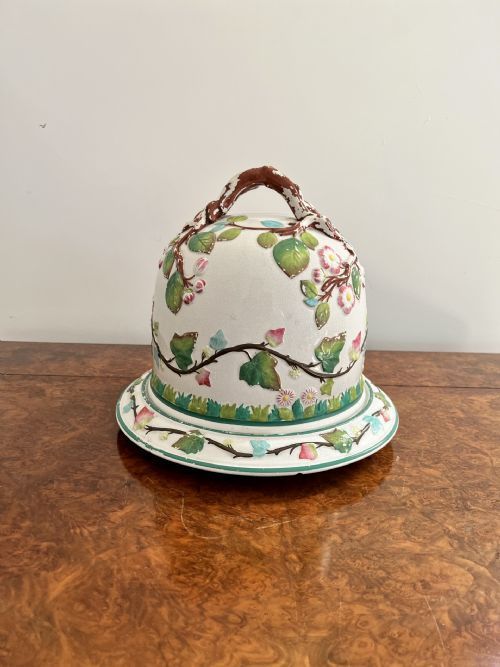


Earthenware Cheese Keeper
An earthenware cheese keeper is a practical Victorian table vessel designed to preserve cheese, and these heavy ceramic domes bring robust charm to any pantry.
Earthenware Cheese Keeper
When you search for an earthenware cheese keeper, you examine domestic serving vessels originating from the nineteenth century, most frequently dating from the Victorian era around eighteen-eighty. These pieces typically comprise a matching domed cover and a flat base stand designed to protect a wheel of cheese at the dining table.
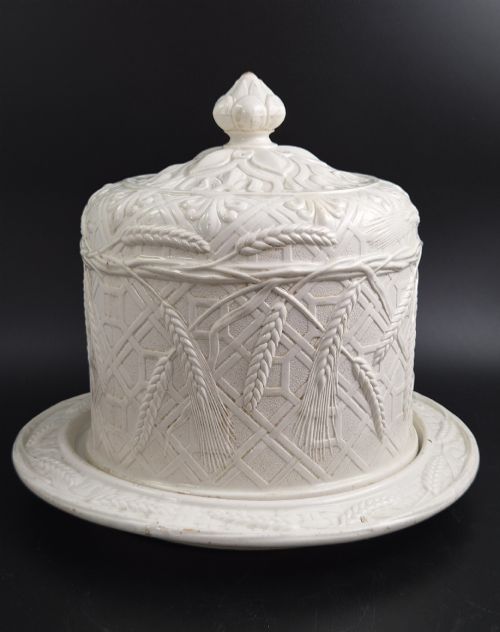
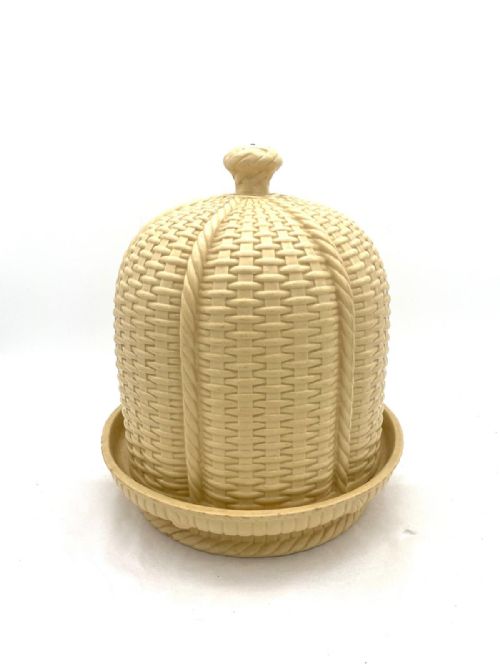
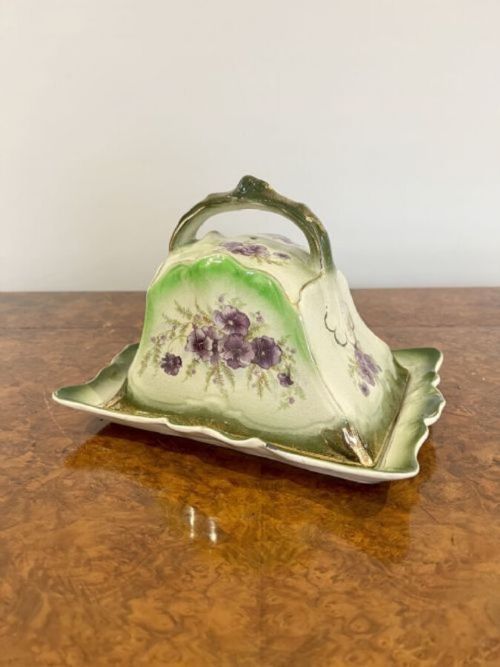
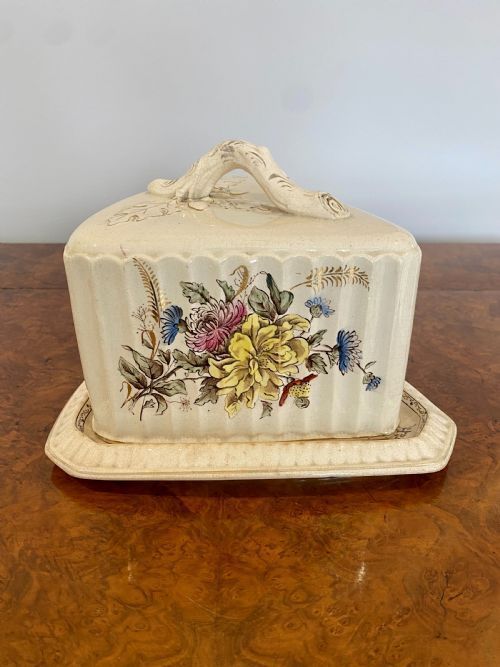
The most common formats on this page include large Victorian Majolica cheese dishes alongside utilitarian white ironstone and drabware versions. These heavy ceramic pieces reflect the practical storage needs of nineteenth-century households before the widespread use of refrigeration.
Moulded decorative motifs dominate these forms, ranging from basket weave and naturalistic foliage to the classical reliefs seen on jasperware. Each earthenware cheese keeper demonstrates the sturdy domestic utility typical of English pottery from the period.
Production and materials
Potters formed these cheese keepers from dense earthenware and ironstone bodies, shaping the heavy domes and matching stands in multi-part press moulds. This technique allowed workshops to produce complex exterior textures like basket weave patterns and high-relief botanical details.
Glazing played a vital functional role, sealing the porous ceramic body beneath glossy clear layers or rich, colourful Majolica glazes. Some Victorian examples also incorporated delicate gilding applied over the fired glaze to accent moulded rims and handles.
Victorian diners apparently required massive ceramic domes simply to prevent hungry household cats from absconding with the Stilton.
Judging quality and character
Quality in these earthenware cheese keepers rests on the crispness of the moulded relief and the depth of the applied glaze. Superior pieces retain sharp botanical or architectural details without blurring, whereas softer moulding indicates worn production moulds.
The harmony between the dome and its original stand separates standard utility wares from finer display pieces. Glaze coverage across large surfaces also dictates visual success, with rich, even Majolica colours providing greater presence than flat, unadorned surfaces.
James Dudson
The Earthenware Cheese Keeper Glossary
- Earthenware
- A porous pottery body fired at lower temperatures, requiring an impermeable glaze to hold moisture.
- Ironstone
- A dense, durable type of British semi-vitreous pottery developed to mimic Chinese porcelain.
- Majolica
- A colourful lead-glazed earthenware style popular in the Victorian era, known for vibrant tones and botanical relief moulding.
- Drabware
- Unglazed or subtly tinted stoneware and earthenware featuring muted greyish-brown or olive tones, typical of the mid-nineteenth century.
- Jasperware
- A fine-grained, unglazed stoneware developed by Josiah Wedgwood, characterised by white classical reliefs applied against a coloured ground.
Earthenware Cheese Keeper: Frequently Asked Questions
What is a cheese keeper used for?
These ceramic domes preserved large blocks of cheese in domestic settings before the arrival of modern refrigeration. The heavy cover trapped moisture and protected dairy from insects.
At the dining table, the matched base and dome served as an impressive centrepiece for breakfast or after-dinner courses.
How do I date a cheese keeper?
Stylistic clues and manufacturing materials help narrow the period of production for these ceramic pieces. Mid-nineteenth-century examples often favour drabware or heavy white ironstone.
Later Victorian specimens frequently display colourful Majolica glazes and naturalistic plant motifs. Maker marks stamped underneath the base provide the most precise chronological evidence.
Are dome and base pairs original?
Because these vessels consisted of two separate components used daily, lids and bases frequently became separated over generations. Matching pieces share identical clay bodies, glaze characteristics, and wear patterns.
Inspect the fit where the dome rests inside the base channel to check for period consistency.
How do I clean an antique cheese keeper?
Wash these ceramic pieces gently by hand using warm water and mild soap. Avoid harsh scrubbers that might damage nineteenth-century glazes or rub away delicate gilding.
Allow porous earthenware to dry completely before storing to prevent moisture entrapment.