
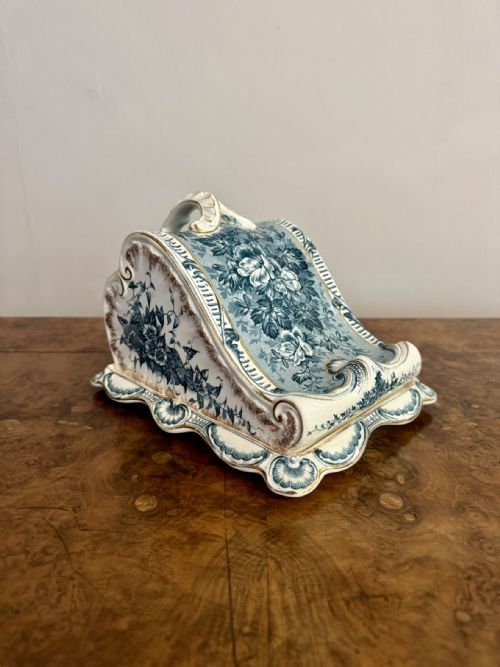
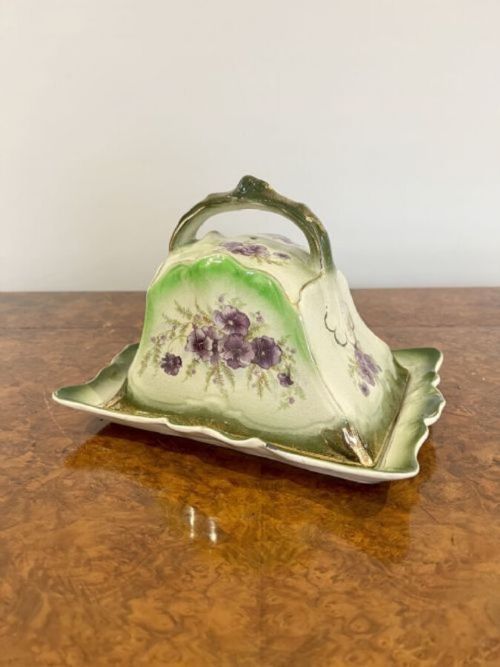
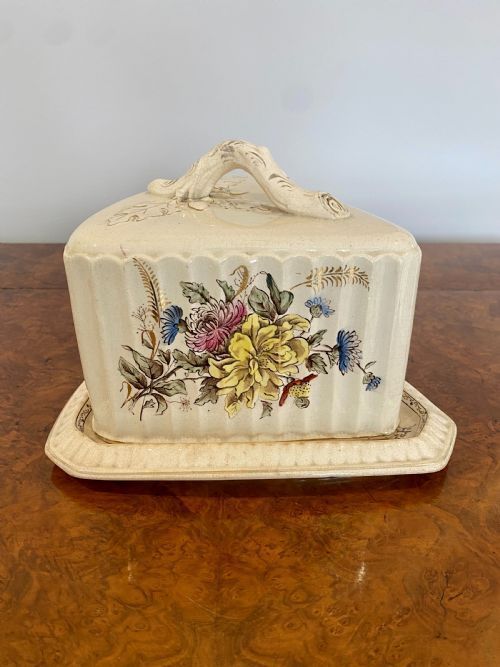
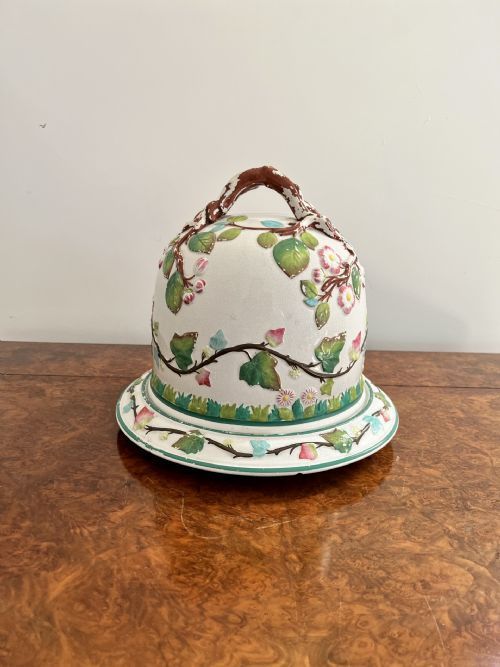


Antique Ceramic Cheese Cover
An antique ceramic cheese cover keeps the table tidy and draws the eye, fashioned by Victorian potters for the dining room.
Antique Ceramic Cheese Cover
An antique ceramic cheese cover protects a large wedge or whole cheese on the dining table while containing its aroma. These table pieces consist of a heavy domed cover paired with a matching stand or base.
Most examples found here date from the Victorian era, particularly the later decades of the nineteenth century. Common forms include tall Stilton domes and wide, shallow dishes designed for everyday family dining or formal gatherings.
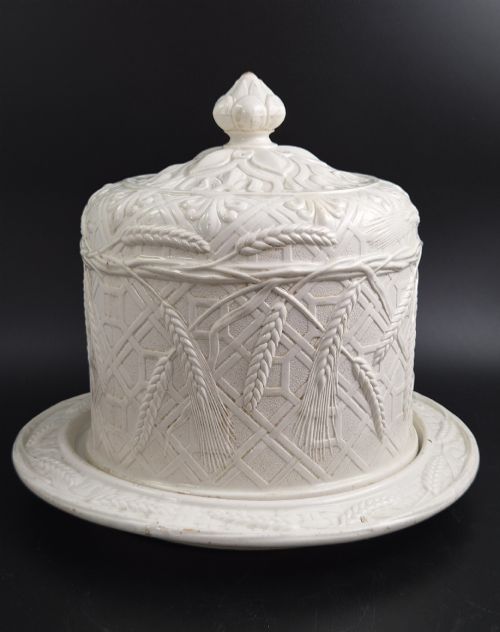
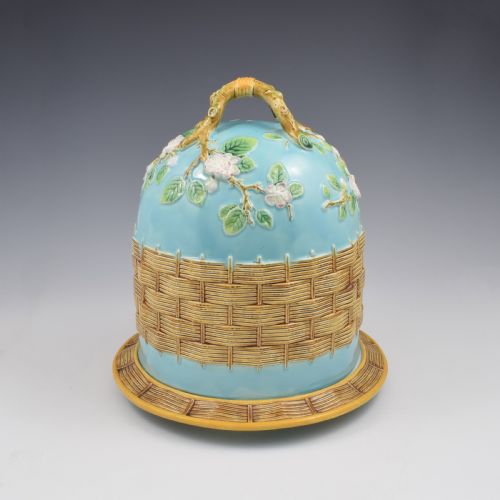
Makers shaped these wares in earthenware, stoneware, ironstone, and majolica. Certain pieces incorporate detailed moulded patterns such as wheat and lattice, basket weave, or apple blossom motifs.
How they were made
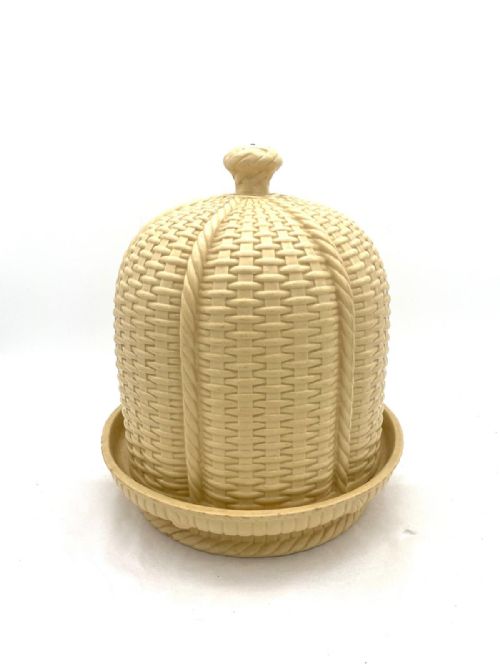
Potters shaped these large domes and stands using robust earthenware, ironstone, or stoneware bodies to support the heavy weight of the clay. Moulding techniques allowed workshops to produce high-relief surface decoration like basket weave and naturalistic fruit or floral sprays.
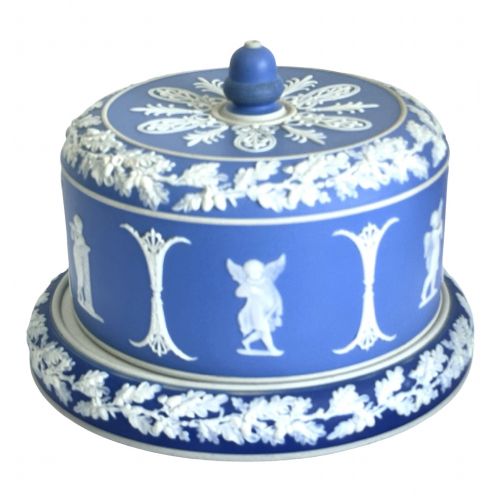
Glazes provided a smooth, hygienic barrier against moisture and cheese oils, ranging from bright majolica colours to crisp white ironstone. Unglazed or semi-glazed biscuit bodies appeared on specific jasperware pieces produced by notable factories.
The listings on this page span the nineteenth century, featuring earthenware, stoneware, and ironstone bodies decorated with majolica glazes and crisp white finishes.
What varies in quality
The crispness of the moulding separates ordinary utility wares from the finest examples. Sharp, deep relief work on naturalistic motifs like apple blossom or basket weave shows the skill of the original ceramicist.
Glaze application and colour saturation dictate the visual success of majolica and jasperware pieces. Even coverage without pooling or dry patches indicates better control inside the kiln.
George Jones·Wedgwood·James Dudson·Copeland
The Antique Ceramic Cheese Cover Glossary
- Cheese dome
- A large bell-shaped ceramic cover designed to fit over a stand and protect a block of cheese. This primary form is also referred to as a cheese bell.
- Ironstone
- A dense, durable type of heavy earthenware patented in the nineteenth century. It provided a strong white body for large serving pieces.
- Majolica
- A colourful, lead-glazed earthenware style popular during the Victorian period. It is known for rich, vibrant green, brown, and yellow tones over relief-moulded designs.
- Jasperware
- A fine-grained, unglazed stoneware developed with contrasting coloured backgrounds and white applied reliefs. It offers a distinct matte texture.
- Drabware
- A style of unglazed or softly glazed pottery featuring earthy grey, brown, or olive tones. It was common during the early and mid-nineteenth century.
Antique Ceramic Cheese Cover: Frequently Asked Questions
What is a cheese dome used for?
A cheese dome sits on the dining table to keep large blocks or Stilton cheeses fresh during meals. It traps moisture and contains strong odours while presenting the food in an attractive manner.
Victorian households used these heavy covers daily, lifting the dome by its top knob or handle to serve guests at the end of a meal.
How do I date a ceramic cheese dish?
Inspect the underside of the base for maker marks, registry diamonds, or impressed factory numbers. Different periods favoured distinct materials, such as heavy white ironstone in the mid-century or colourful majolica in the later decades.
Stylistic clues like basket weave and apple blossom relief work help narrow down the manufacturing era when no clear stamp is present.
Can I still use an antique cheese dish?
These ceramic covers function well for serving cheese at room temperature during gatherings. The glazed interior protects the clay and remains safe for food contact.
Take care when lifting the heavy dome and stand, as the weight requires two hands to move safely across the table.