

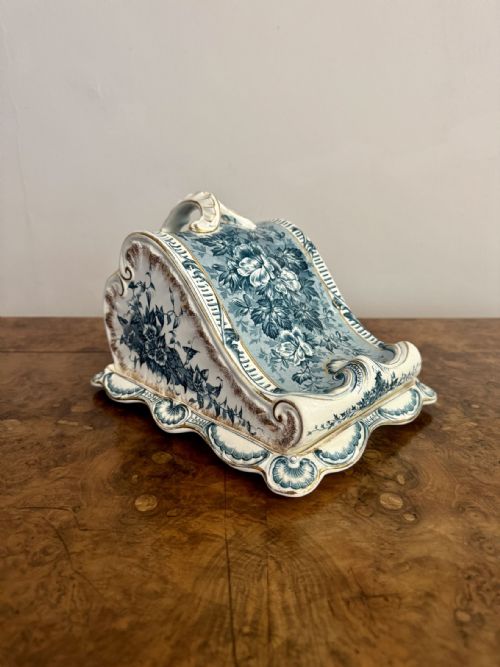
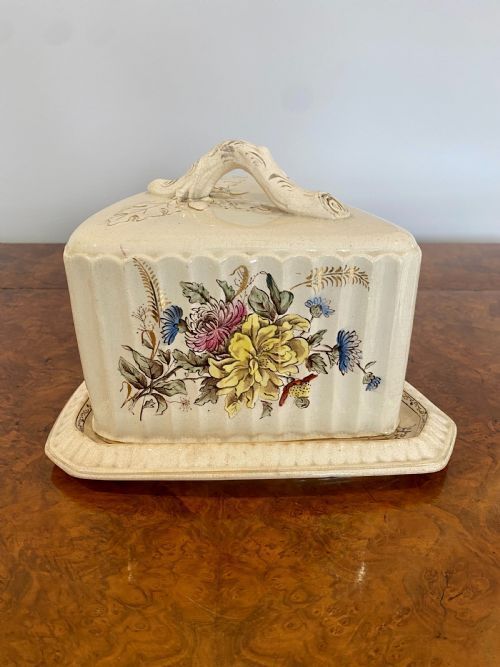
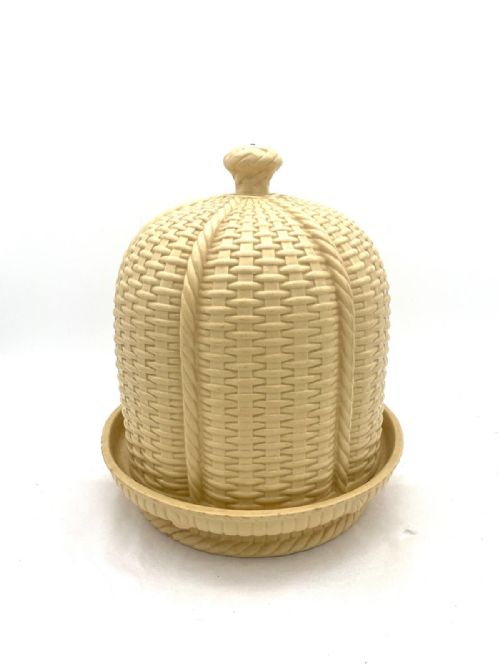


Vintage Ceramic Cheese Keeper
A vintage ceramic cheese keeper keeps your table tidy and preserves the damp of the cheese.
Vintage Ceramic Cheese Keeper
A vintage ceramic cheese keeper comprises a fitted base and a tall domed cover designed to protect dairy at the table. These vessels emerge primarily from the Victorian and Edwardian eras, spanning the late nineteenth and early twentieth centuries. You will most frequently encounter dome and stand combinations alongside traditional cheese dishes.
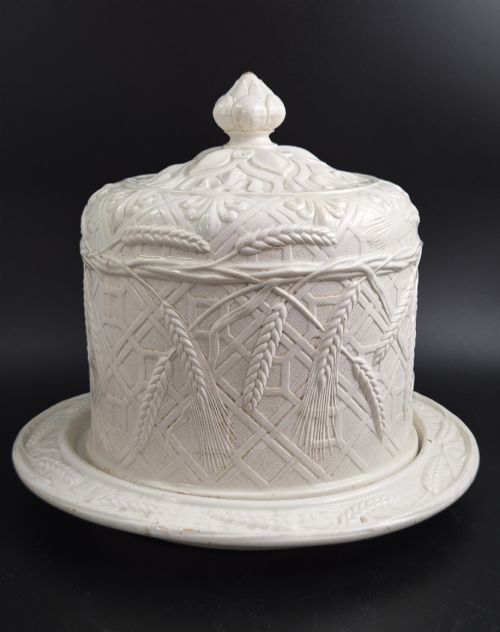
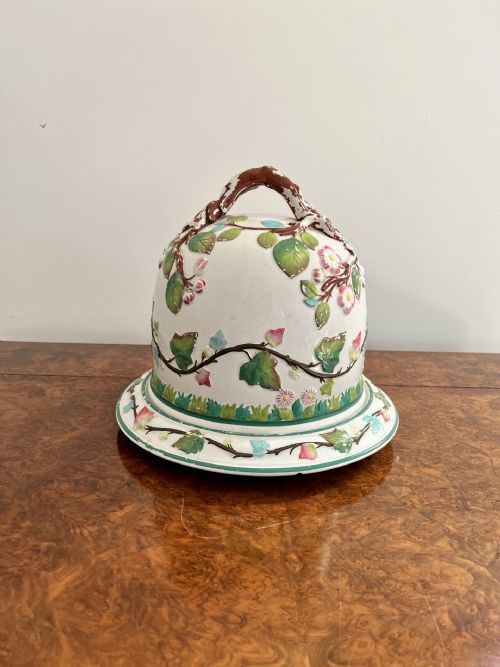
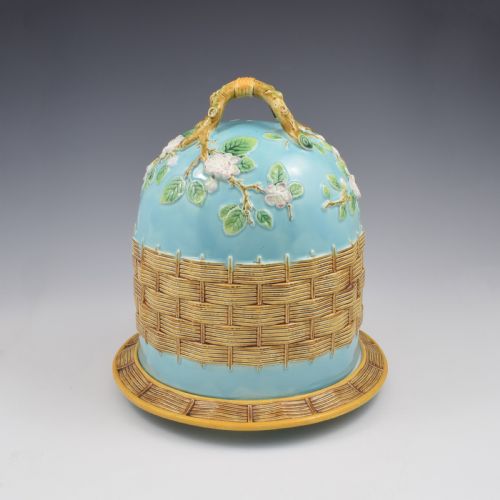
The forms vary from simple utilitarian ironstone to decorative Victorian Majolica and drabware. The listings show serveware ranging from plain white bodies to basket weave and apple blossom motifs. Each piece serves the practical purpose of keeping cheese moist while adding character to the dining room.
How they were made
Potters shaped these vessels using earthenware and ironstone, applying specialised glazes to seal the porous bodies. The manufacturing process often incorporated moulded relief patterns such as wheat and lattice or basket weave directly into the clay.
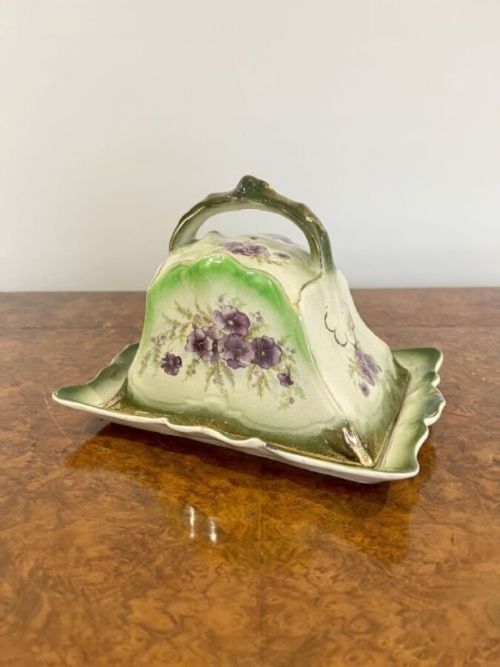
Makers finished many examples with surface embellishments including gilt accents and polychrome majolica glazes. These decorative techniques required careful second firings to fix the colours and gilding to the ceramic surface.
Vintage Ceramic Cheese Keeper Retail Price Guide 2026
Typical asking prices for vintage ceramic cheese keeper among the pieces listed under this phrase on Sellingantiques today, from the lower quarter to the upper quarter. They describe what is for sale here now, not the wider market.
What varies in quality
Quality rests upon the crispness of the moulded detail and the uniformity of the glaze application. Pieces featuring complex botanical or naturalistic modelling display a higher degree of sculptural skill than plain utilitarian domestic wares.
The handling of colour and the precision of any applied gilding distinguish standard production items from finer display pieces. A well-balanced form with a snug cover fit demonstrates superior workshop execution.
The Vintage Ceramic Cheese Keeper Glossary
- Ironstone
- A heavy, durable type of earthenware patented in the nineteenth century for hard-wearing domestic pottery. It provides a robust white body well suited to large kitchen and dining vessels.
- Majolica
- A colourful lead-glazed earthenware style popular during the Victorian period. This technique uses vibrant metallic oxide glazes over moulded relief designs.
- Drabware
- A utilitarian ceramic body coloured in muted grey-brown or olive tones. It was favoured for nineteenth-century kitchenware and dairy vessels.
- Cheese Dome
- The tall, bell-shaped cover that rests upon a matching stand or plate. It traps humidity to keep the cheese fresh.
Vintage Ceramic Cheese Keeper: Frequently Asked Questions
What is a vintage ceramic cheese keeper used for?
These vessels were designed to store cheese on the dining table or in the pantry while preventing it from drying out. The heavy cover traps ambient moisture, preserving the texture and flavour of the dairy between meals.
Beyond simple food storage, they served as decorative centrepieces during formal Victorian and Edwardian dining. Today, collectors use them both as functional kitchenware and as period display items.
How do I tell Victorian pieces from Edwardian ones?
Victorian examples often feature heavier moulding, ornate botanical motifs, and rich majolica or ironstone bodies. They frequently lean towards decorative Victorian styles with high relief work and textured surfaces.
Edwardian pieces tend toward simpler lines and lighter construction reflecting changing domestic tastes at the turn of the twentieth century. Examining the weight, form, and glaze style helps indicate the likely manufacturing period.
Can I use my cheese keeper for daily dining?
These robust earthenware and ironstone vessels remain entirely suitable for serving cheese during modern meals. The glazed ceramic interior provides a food-safe surface that will not absorb odours if cleaned properly after use.
Handle the heavy covers with care when moving them around the kitchen or table. Placing the stand on a stable surface prevents accidental chipping of the antique edges.