


Antique Pottery Cheese Cover
An antique pottery cheese cover is a Victorian table accessory that keeps dairy fresh and adds period charm to any sideboard.
Antique Pottery Cheese Cover
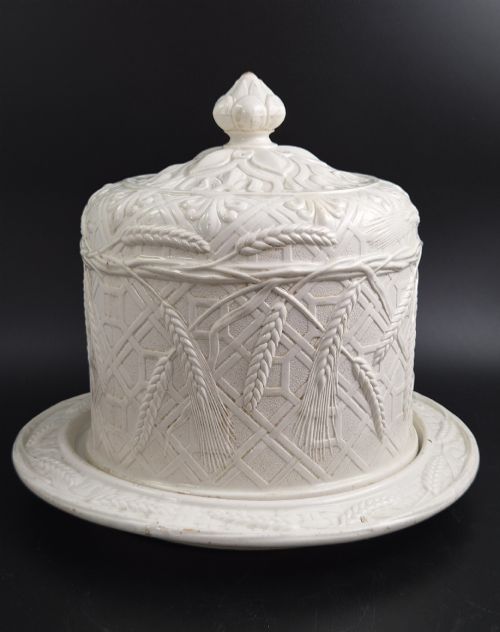
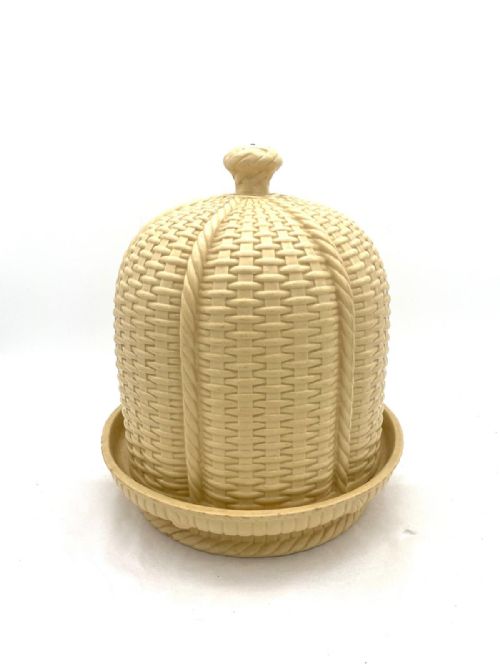
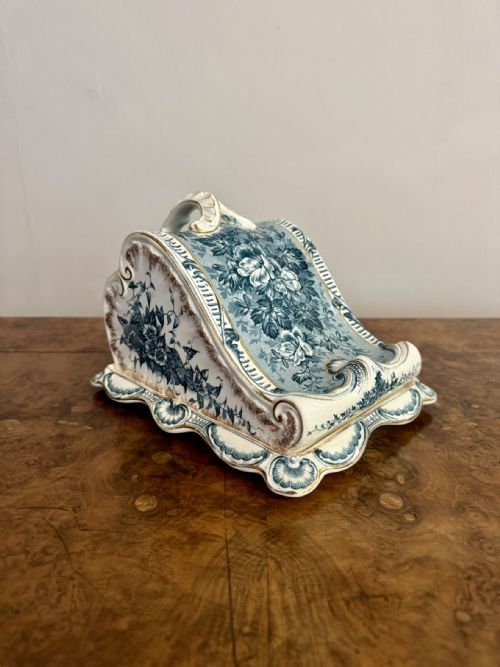
When you search for an antique pottery cheese cover, you encounter substantial serving pieces designed to protect Stilton and other hard cheeses on the Victorian dining table. These items typically comprise a domed cover paired with a matching stand, forming a complete cheese dish.
The pieces appearing on this page belong predominantly to the nineteenth century, spanning the Victorian era from about 1845 through the 1890s. Forms range from simple white ironstone domes to elaborate majolica and drabware creations.
Makers produced these covers in large English potteries, shaping them into distinctive cylindrical or bell-like domes often detailed with naturalistic motifs like wheat, lattice, or basket weave.
Materials and construction
Potters utilised robust earthenware, ironstone, and stoneware to form the heavy bodies required for these large cheese domes and stands. These dense ceramic fabrics withstand the rigours of heavy dining use while retaining the cool interior climate needed for cheese.
Glaze finishes play a vital role, sealing the porous ceramic bodies and often providing vibrant colour in the case of majolica wares or matte contrast in jasperware. Artisans applied moulded decoration directly into the clay body or over the surface, creating textured patterns such as basket weave and wheat designs.
Victorian diners required enormous ceramic bells just to keep the local mice away from the Stilton.
Judging quality in cheese covers
Quality rests heavily on the crispness of the moulded relief and the richness of the glaze, distinguishing finely detailed majolica and jasperware from plain utility pieces. Superior examples exhibit sharp botanical or architectural detailing that remains clear beneath the glossy or matte finish.
Proportion and matching components also dictate value, as an original matched stand and dome together command greater interest than a mismatched pairing. The weight and stability of the earthenware or ironstone further indicate the skill of the original pottery.
James Dudson
The Antique Pottery Cheese Cover Glossary
- Ironstone
- A heavy, durable type of earthenware patented in the nineteenth century that resists chipping. It forms the sturdy white body of many domestic serving pieces.
- Jasperware
- A fine-grained, unglazed stoneware developed with contrasting coloured clay reliefs. It offers a distinctive matte texture often associated with neoclassical designs.
- Drabware
- A style of utilitarian pottery featuring a dull, brownish-grey earthenware body. It was favoured for nineteenth-century kitchen and dairy ceramics.
- Cheese Bell
- An alternative name for a cheese dome that sits directly on a flat plate or stand. The tall bell shape traps air to preserve the moisture of large cheeses.
Antique Pottery Cheese Cover: Frequently Asked Questions
What is an antique pottery cheese cover?
An antique pottery cheese cover is a Victorian ceramic dome designed to sit on a matching stand and preserve large blocks of cheese on the dining table.
These pieces reflect the domestic habits of the nineteenth century when tables featured dedicated vessels for storing and serving Stilton and cheddar.
How were cheese covers used?
Victorian households used these covers to protect cheese from dust and drying out between meals, often keeping them on the sideboard or dining table.
The large domed lid trapped moisture and kept the cheese at a stable temperature while presenting it attractively to guests.
How do I date a cheese cover?
Dating relies on stylistic markers such as majolica glazes, drabware bodies, or ironstone construction characteristic of the nineteenth century.
Specific design motifs like basket weave and wheat patterns, alongside impressed registry marks, help narrow the period down to the Victorian era.
Can I still use these for cheese?
Many collectors still use these ceramic domes for serving cheese at room temperature during dinner parties.
The glazed earthenware and ironstone interiors remain entirely practical for food service, provided they are hand-washed gently.