
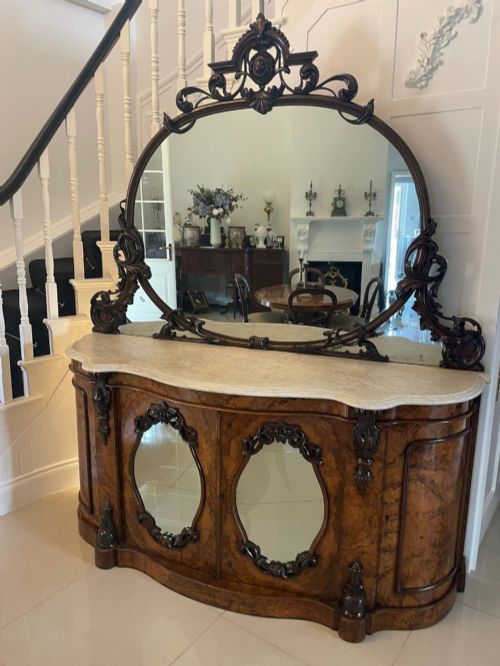
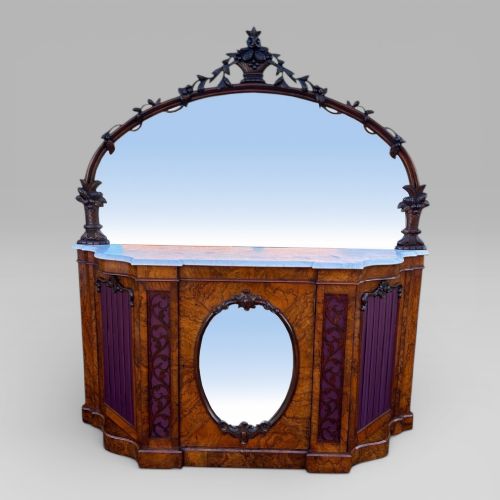
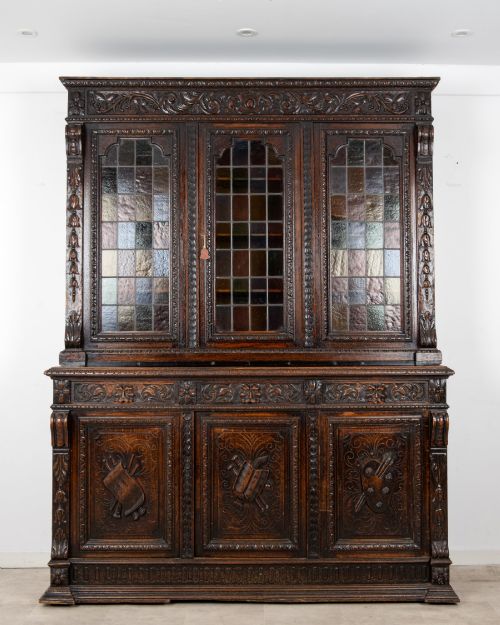
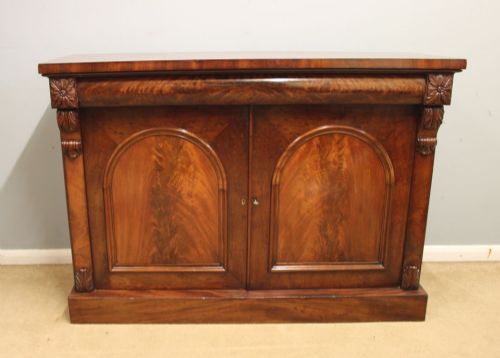
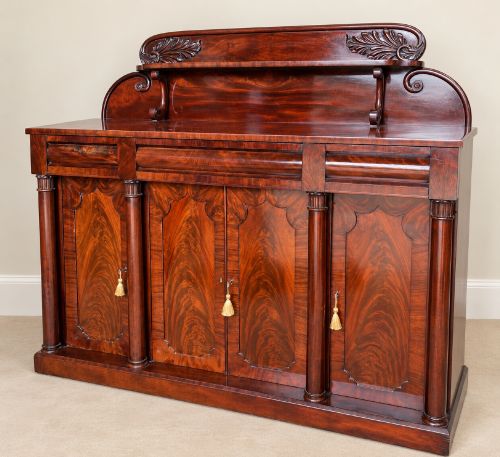
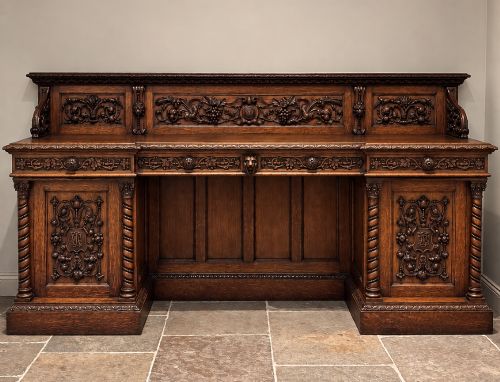

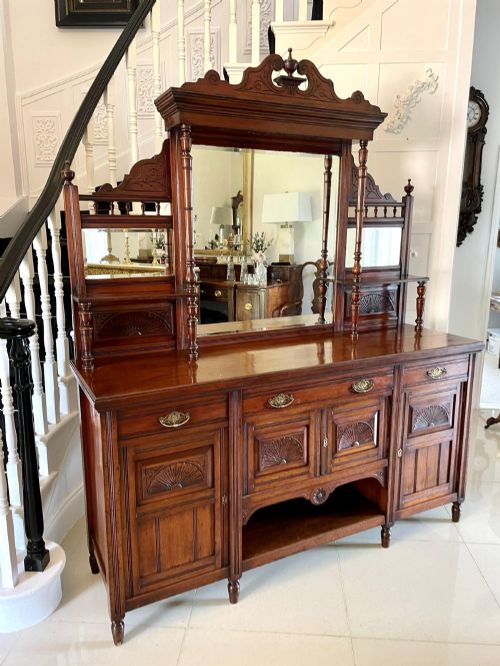
Victorian Carved Sideboard
A victorian carved sideboard brings heavy timber, deep relief panels and functional dining room presence into a modern interior.
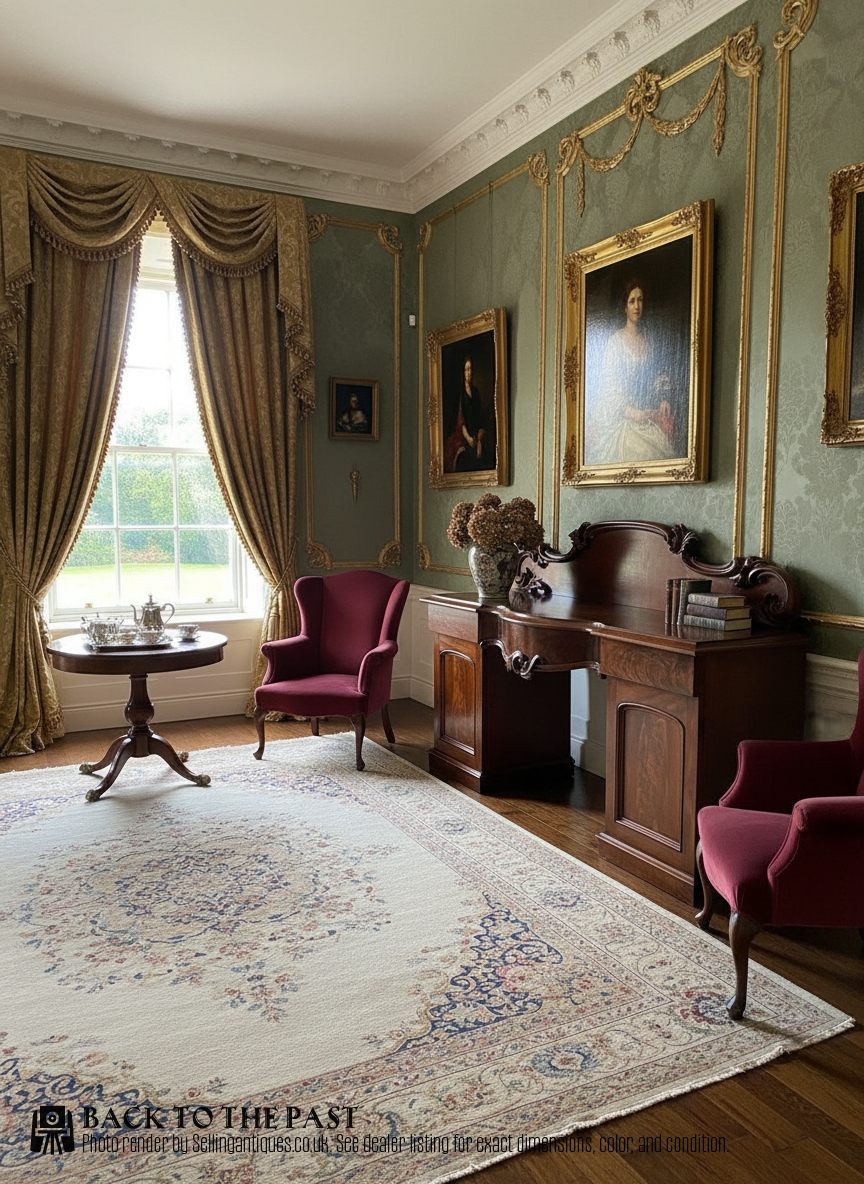
Victorian Carved Sideboard
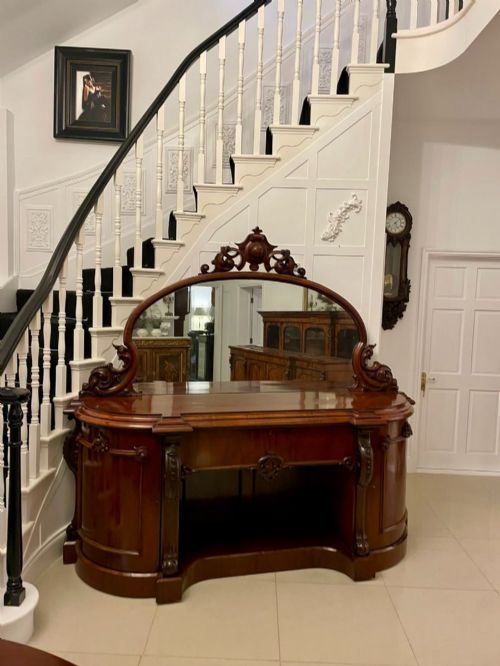
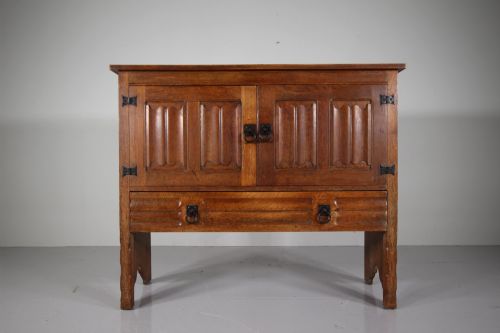
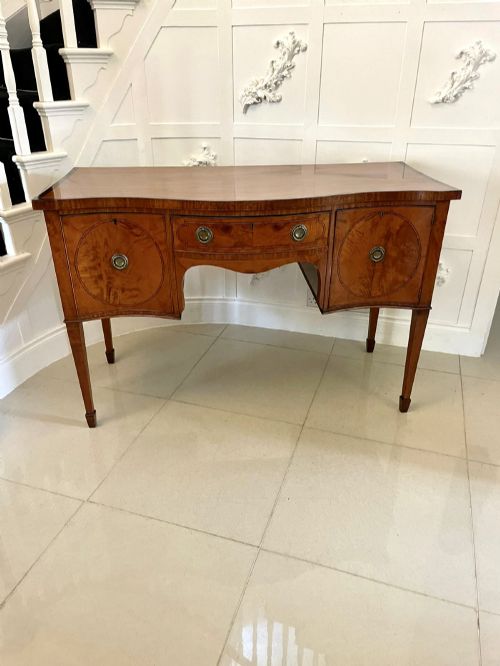
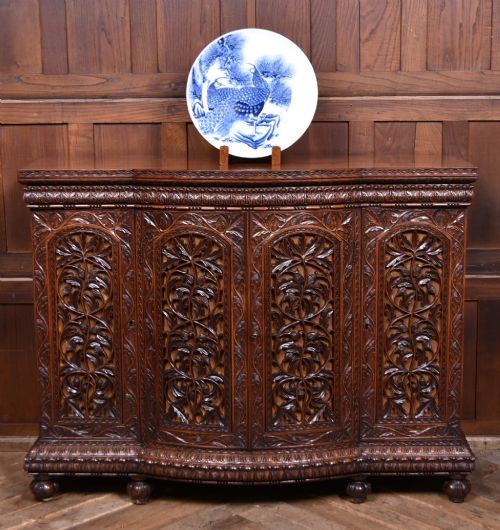
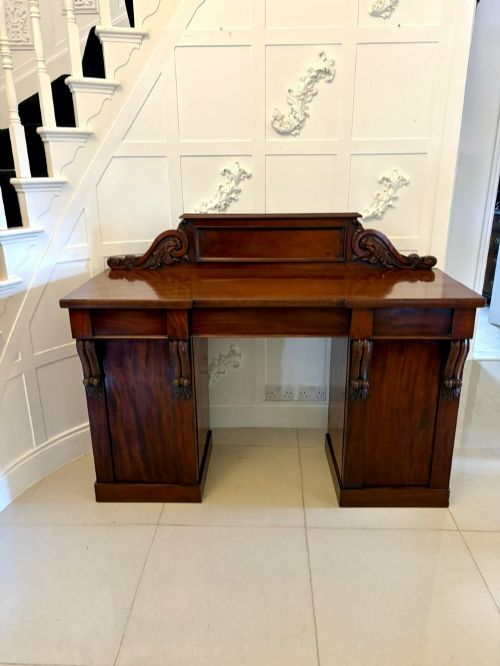
A victorian carved sideboard is a substantial dining or entertaining furniture piece designed for storage and display, originating predominantly across the nineteenth century.
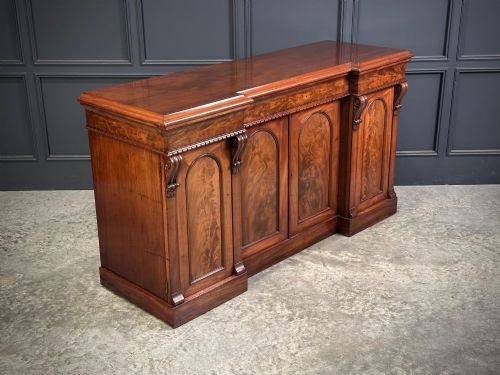
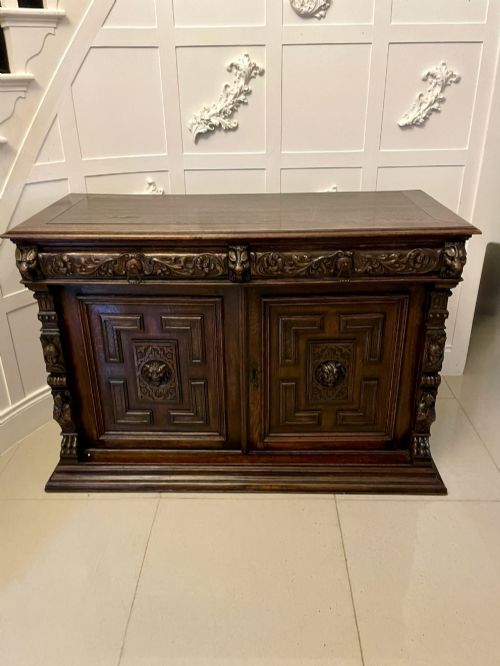
The versions most frequently met on this page include heavy oak pedestal designs, mirror-backed walnut credenzas and figured mahogany chiffoniers dating from the eighteen-fifties onwards.
Makers utilised architectural styles ranging from Gothic Revival and Renaissance Revival to plain vernacular expressions, producing both narrow proportions and monumental exhibition pieces.
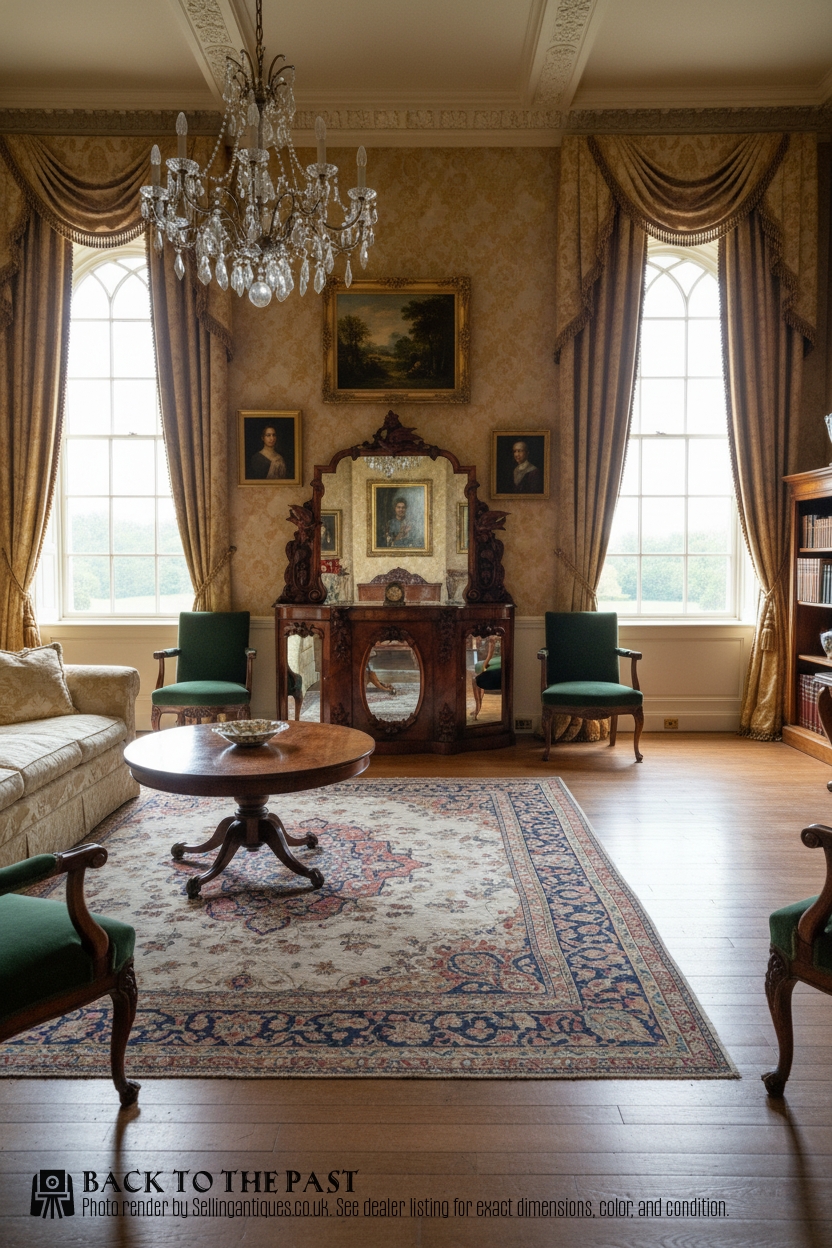
Materials and Construction
Cabinet makers constructed these pieces using dense domestic and exotic timbers such as oak, mahogany, walnut and burr walnut, frequently pairing solid framing with figured veneers.
Surface ornamentation relied on deep hand-carving, applied mouldings and turned pilasters, occasionally incorporating inset marble tops, mirrored glass backs and brass hardware.
Internal elements utilised secondary softwoods for drawer linings and carcase backs, built with traditional joinery methods suited to heavy daily domestic use.
Victorian Carved Sideboard Retail Price Guide 2026
Typical asking prices for victorian carved sideboard among the pieces listed under this phrase on Sellingantiques today, from the lower quarter to the upper quarter. They describe what is for sale here now, not the wider market.
Keep a sharp eye out for carved Green Man motifs hiding amongst the heavy oak foliage.
Indicators of Quality
The distinction between standard commercial output and exhibition grade work lies in the depth and crispness of the hand-carved relief work, particularly around foliate scrolls and figural motifs.
Superior examples employ highly figured timbers like flame mahogany or burr walnut selected with careful grain symmetry across doors and drawer fronts.
Robust structural integrity, original hardware, intact mirrored glass and integrated marble slabs separate well-preserved specimens from heavily altered or restored items.
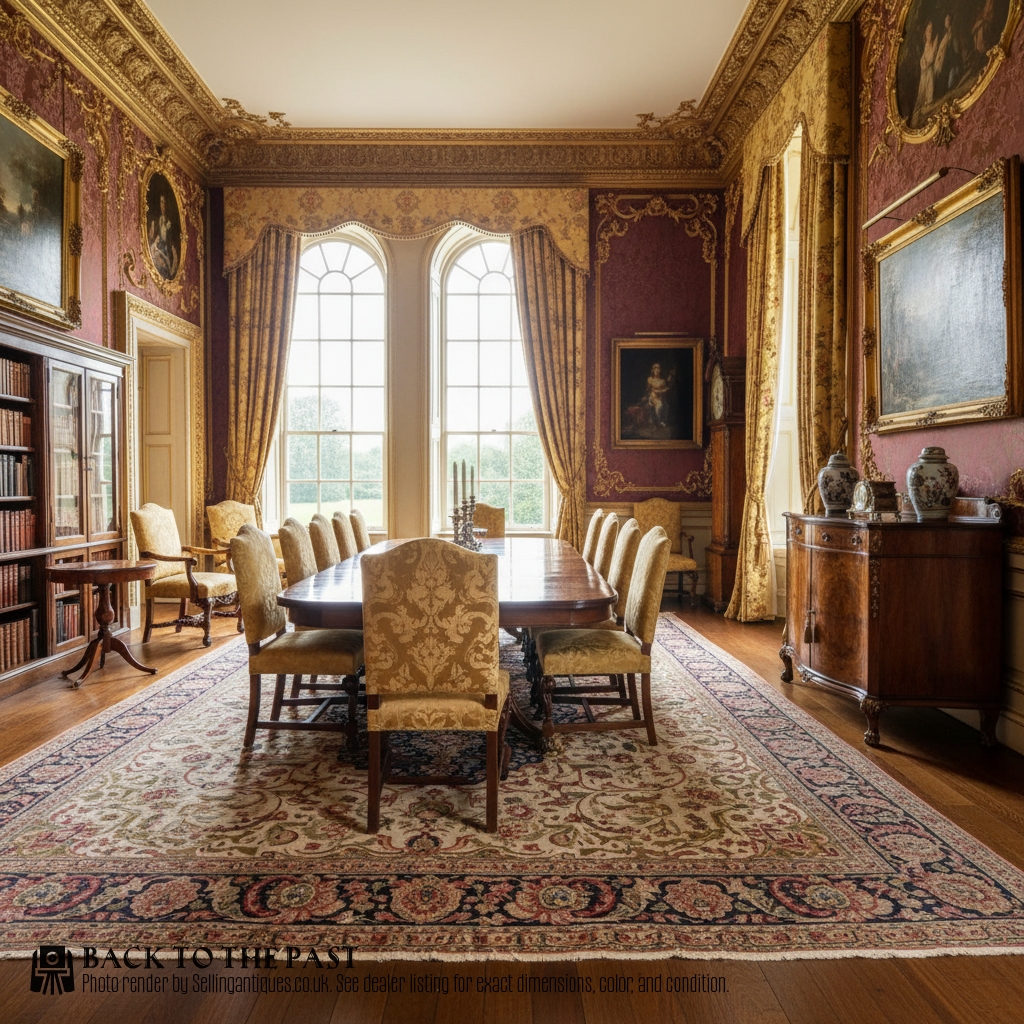
Shoolbred and Co·Maple and Co
The Victorian Carved Sideboard Glossary
- Credenza
- A low dining room cabinet or sideboard, frequently featuring mirrored glass backs and glazed or panelled cupboards. They gained popularity during the mid-nineteenth century for display purposes.
- Chiffonier
- A compact sideboard or cabinet equipped with enclosed lower cupboards and often a raised shelf tier above. They served smaller dining spaces and drawing rooms.
- Dumbwaiter
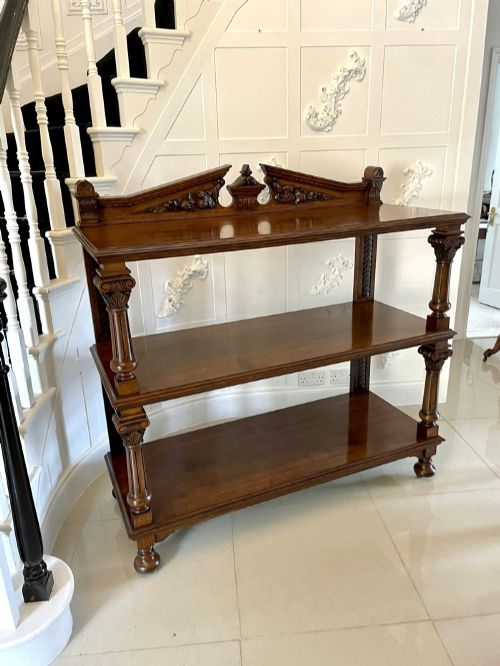
- A multi-tiered serving table or sideboard used for holding dishes and silverware during meals without requiring constant servant attendance.
- Gothic Revival
- An architectural and decorative style drawing inspiration from medieval ecclesiastical design. It is characterised by pointed arches, tracery and robust carved oak timber.
- Mirror-backed
- A sideboard configuration featuring an integrated upright wooden superstructure holding a large bevelled or flat mirror plate. This design reflected light and displayed porcelain.
- Serpentine
- A furniture front shaped with a continuous convex curve flanked by two concave curves. It demonstrates high-level cabinet making skill.
Victorian Carved Sideboard: Frequently Asked Questions
What is a mirror-backed sideboard used for?
These large pieces functioned primarily as the focal point of a Victorian dining room, offering cupboard space for heavy silver and linens.
The raised mirror shelf allowed hosts to display prized ceramics while brightening gaslit dining spaces by reflecting ambient room light.
How do I identify a Gothic Revival sideboard?
Gothic Revival pieces are instantly recognised by heavy dark oak construction, pointed arch mouldings, linenfold panelling and carved architectural motifs.
They often feature monumental proportions and deep relief carving influenced by medieval church architecture rather than classical revival trends.
Where should I place a large pedestal sideboard?
These heavy items require a principal dining room or a spacious hallway with sufficient wall space to support their substantial depth and height.
Ensure the floor structure can bear the considerable weight of solid oak or mahogany timbers, especially when paired with a heavy marble top.
How do I distinguish walnut from mahogany?
Mahogany displays a straight, reddish-brown grain that darkens with age and sun exposure into a rich, deep hue.
Walnut presents a cooler grey-brown tone with pronounced, swirling grain patterns and intricate burr figures across large flat surfaces.