


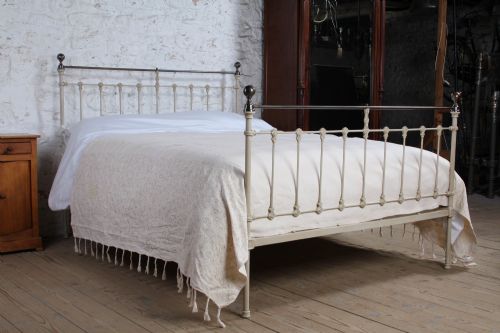

Victorian Brass King Bed
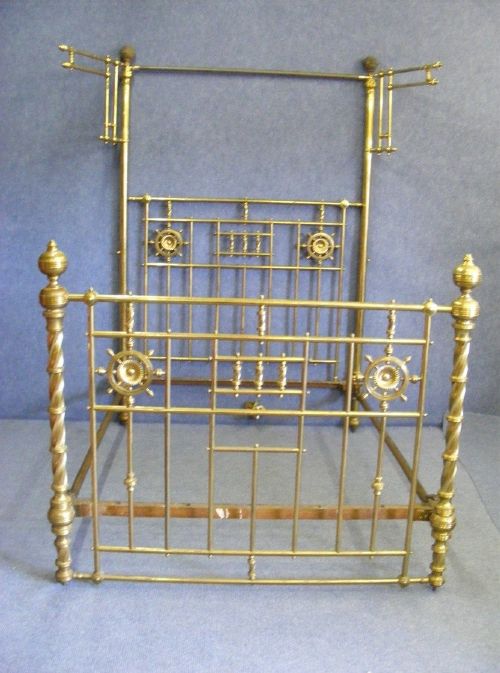
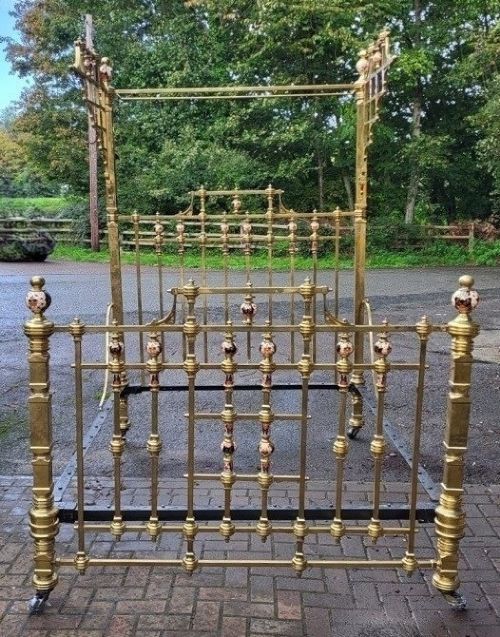
A victorian brass king bed brings substantial nineteenth-century presence and warm metallic character into a modern bedroom.
Victorian Brass King Bed
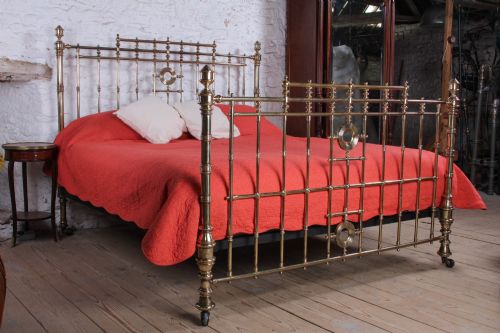
A victorian brass king bed combines generous sleeping proportions with robust period engineering, mostly dating from the nineteenth and early twentieth centuries. These pieces originate primarily from Victorian, Edwardian, and nineteenth-century workshops, encompassing both all-brass constructions and mixed iron-and-brass frames.
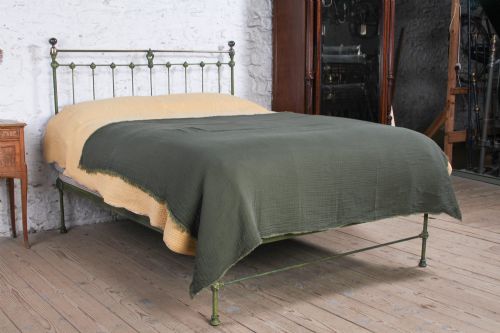
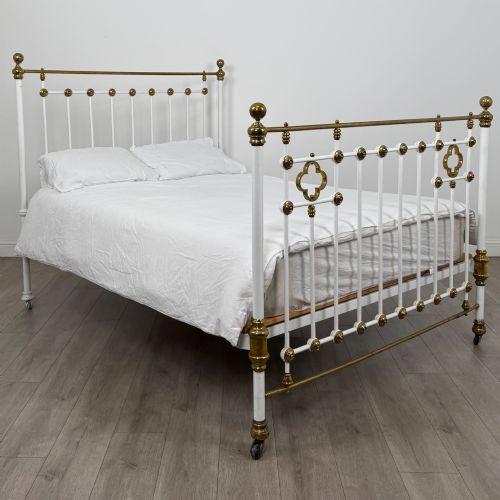
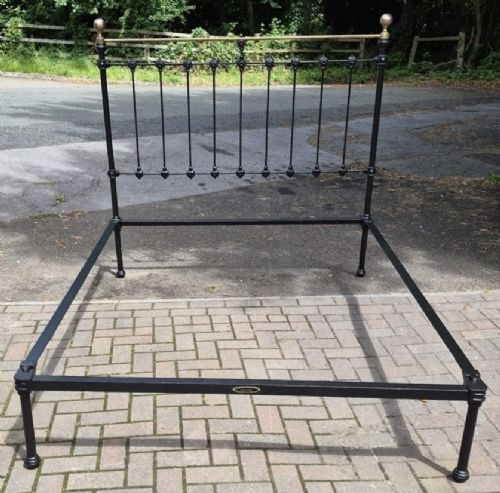
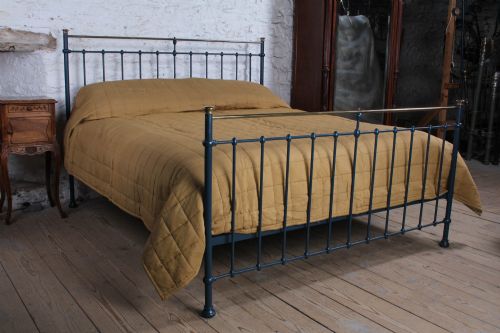
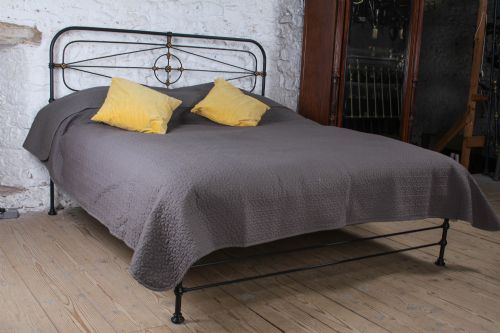
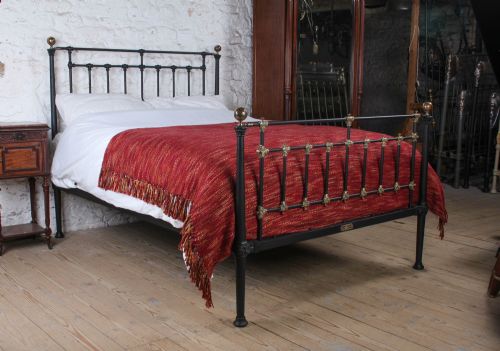
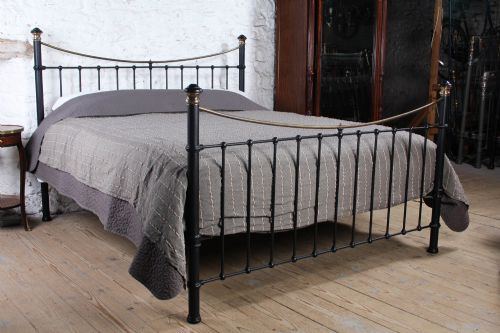
Buyers encounter numerous regional and stylistic variations on this page, ranging from standard straight-rail headboards to half tester canopies and French-inspired hospital designs. Many examples integrate cast iron frames finished in black, cream, or coloured paint alongside polished brass components.
The assortment includes specialised forms such as no-end beds, low-end frames, and ornate Gothic Revival or Aesthetic Movement pieces. Makers and retailers of the period, including Winfield and Maple & Co, produced these substantial frames to suit larger domestic spaces.
Materials and Construction
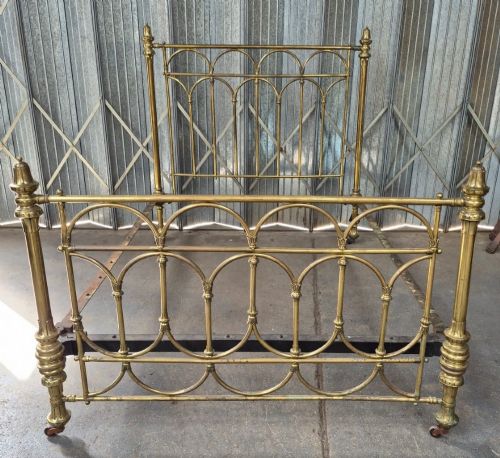
Construction relies heavily on a combination of heavy cast iron for structural stability and bright brass for decorative tubing, spindles, and finials. Frames frequently employ painted metal surfaces, japanned lacquer, or ceramic and porcelain details integrated into the metalwork.
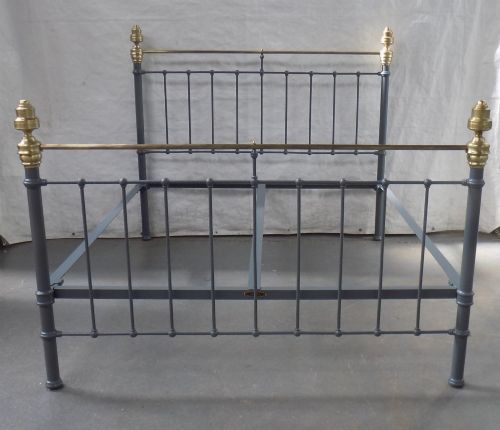
Joinery and assembly typically involve robust metal fittings, tapered posts, and secure side rails designed to support considerable weight. Decorative elements are achieved through detailed brass castings, attractive spindles, and applied colour finishes including ivory, basalt blue, and green paint.
Current listings feature pieces spanning the Victorian and Edwardian eras, utilising brass, cast iron, painted metal, and ceramic details.
Assessing Quality and Merit
Quality in these beds rests upon the weight and integrity of the castings, the crispness of the brass detailing, and the originality of the components. Superior examples display substantial brass tubing, well-defined decorative finials, and intact maker marks.
The balance between the structural iron frame and the decorative brass elements dictates the overall harmony of the piece. Higher-tier examples feature exhibition-quality finish work, complex half tester canopies, or specialised artistic styles such as Arts and Crafts and Gothic Revival.
RW Winfield·Maple & Co·James Shoolbread & Co·Heals
The Victorian Brass King Bed Glossary
- Half Tester
- A canopy bed where the tester extends only partway over the head of the bed rather than the full length. This style provides a commanding architectural presence while maintaining open floor space at the foot.
- Dip Rail
- A headboard or footboard rail that curves downward toward the centre in a gentle arc. This contour softens the linear geometry of metal bedframes.
- Japanned Lacquer
- A European imitation of East Asian lacquer work applied to iron components to produce a glossy, durable black finish. It offers protection against corrosion while adding a deep reflective surface.
- Finial
- A decorative terminal ornament screwed or fitted to the top of bedposts and uprights. These brass details often feature turned or cast ornamentation.
- No End Bed
- A bed frame featuring a headboard but lacking a high footboard, creating an open profile. This configuration suits smaller rooms and simplifies the making of larger mattresses.
Victorian Brass King Bed: Frequently Asked Questions
How do I fit a modern mattress?
Many nineteenth-century frames were manufactured to slightly different dimensions than standard modern mattresses. Careful measurement of the internal side rails ensures proper support and fit for contemporary bases.
Adapting slats or adding a modern low-profile foundation helps achieve the correct height and stability without altering the historic frame.
Are iron and brass beds sturdy?
The combination of heavy cast iron structural elements and solid brass components provides exceptional structural integrity. These frames were built to withstand decades of daily use.
Routine maintenance involves checking and tightening the joint bolts periodically to keep the assembly rigid and prevent squeaking.
How do I clean brass safely?
Polishing brass requires a gentle cloth and a mild metal cleaner formulated to preserve historic patinas. Abrasive scrubbing should be avoided to protect fine castings and applied lacquers.
Painted iron sections benefit from simple dusting and occasional cleaning with a damp cloth, keeping moisture away from any exposed metal joints.