

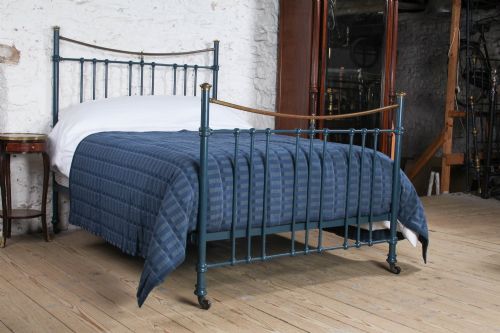
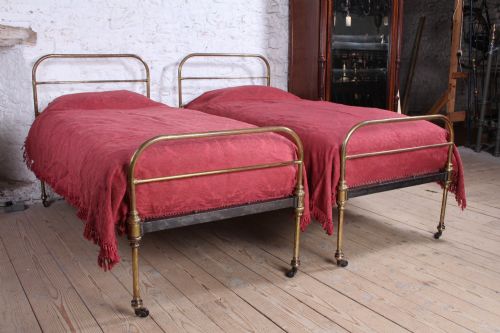


Brass Bed with Castors
A brass bed with castors combines heavy metal frames with easy mobility, offering a solid sleeping platform that moves across floors without fuss.
Brass Bed with Castors
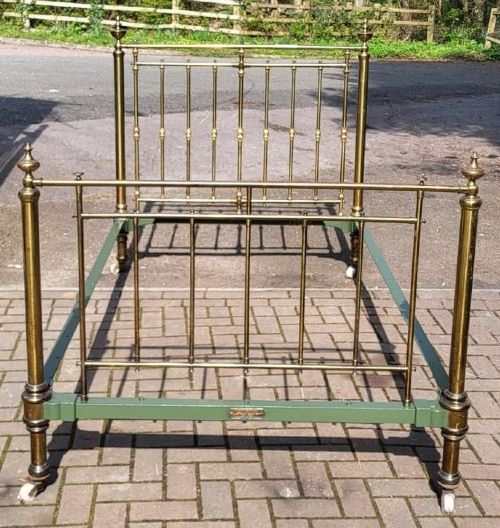
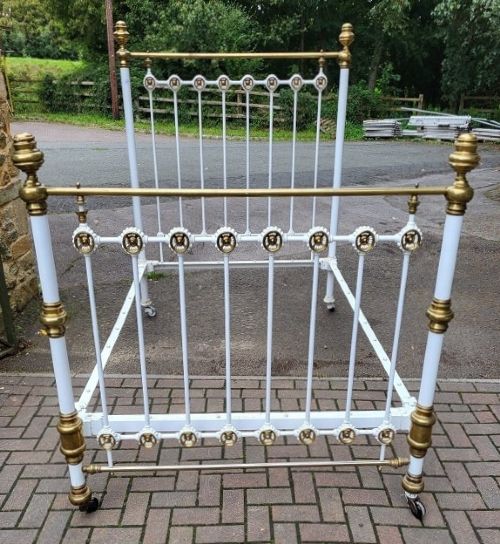
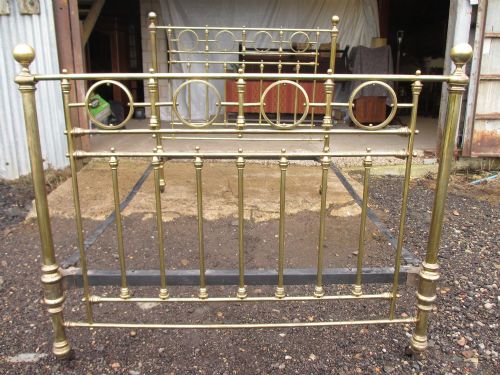
A brass bed with castors appears primarily in Victorian and early twentieth-century designs, spanning double, king, and single sizes. These pieces bring substantial metal framework into the bedroom, often paired with iron elements.
Most examples rely on metal slot-in frames or iron sides to support the structure above the castors. These functional wheels allow the heavy metal furniture to shift position smoothly.
Construction and Materials
Makers built these bedsteads using brass tubing alongside cast iron components for structural strength. Frames often combine visible brass surfaces with iron slot-in supports.
Metalwork techniques of the period produced both square tube sections and highly ornate decorative castings. Wheels were fitted directly to the base of the uprights to create the functional castors.
Brass Bed with Castors Retail Price Guide 2026
Typical asking prices for brass bed with castors among the pieces listed under this phrase on Sellingantiques today, from the lower quarter to the upper quarter. They describe what is for sale here now, not the wider market.
Listings demonstrate materials including brass, cast iron, and iron across Victorian and nineteen hundred periods.
Assessing Quality and Design
Quality separates simple utility frames from pieces featuring elaborate Victorian ornamentation and substantial gauge metal. Finer examples display careful finishing on the brass tubing and more complex casting work.
The integration of the frame with original castors dictates the authentic character of each piece. Superior items maintain cohesive proportions between the heavy bedstead and its rolling supports.
The Brass Bed with Castors Glossary
- Castors
- Small wheel attachments fitted to the base of furniture legs or bedposts to permit rolling movement. They help reposition heavy metal frames easily.
- Bedstead
- The complete framework of a bed, including headboard, footboard, and side rails. This term frequently appears in historic listings.
- Square Tube
- A hollow metal profile with a square cross-section used in constructing bed frames. This shape often signals French twentieth-century design influence.
- Double Size
- A standard mattress proportion accommodated by many historic frames. These wider options provide traditional sleeping space.
Brass Bed with Castors: Frequently Asked Questions
How do I date a brass bed?
Dating relies on stylistic clues like Victorian ornamentation or the cleaner lines of nineteen hundred French pieces. Construction details such as iron slot-in frames also help place the piece in its era.
Material choices like square brass tubing point toward specific manufacturing periods. Comparing these elements with documented examples clarifies the age.
Are these beds sturdy?
Historic metal frames utilise heavy brass and cast iron to ensure long-term stability. The combination of rigid side rails and solid corner joints creates a robust sleeping platform.
Modern mattress support integration may vary depending on whether the bed includes its original base. Proper assembly of the iron slot-in frame ensures complete rigidity.
Can I move a brass bed easily?
The inclusion of original castors permits smooth rolling across flat floor surfaces. This mobility assists with cleaning and repositioning the heavy metal furniture.
Care is required when rolling the bed across thick carpets or uneven floorboards to protect the small wheels. Lifting the frame slightly during relocation prevents strain on the lower legs.
What sizes are available?
Listings typically include single, double, and king-size options to suit different bedroom layouts. Historic sizing conventions sometimes require careful measurement for modern mattresses.
Double and king frames provide generous proportions within Victorian and early twentieth-century designs. Single variants offer compact alternatives for smaller rooms.