



Gold Brass Bed Frame
A gold brass bed frame brings nineteenth-century presence to a bedroom, offering sturdy construction and gleaming metalwork that anchors a sleeping space.
What these pieces are
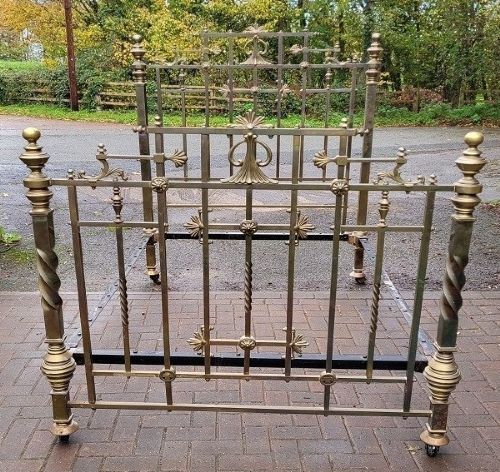
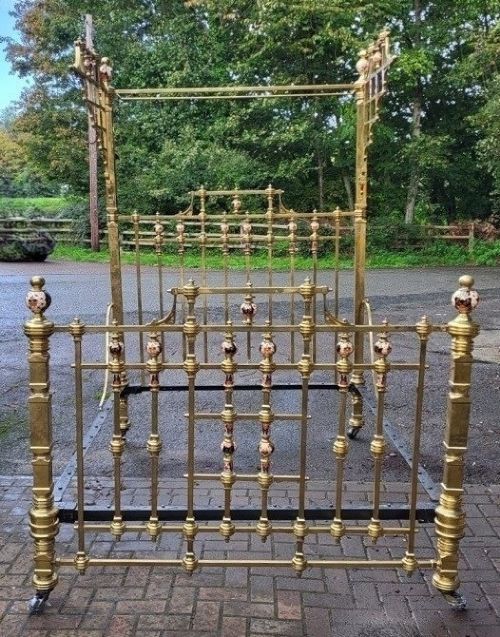
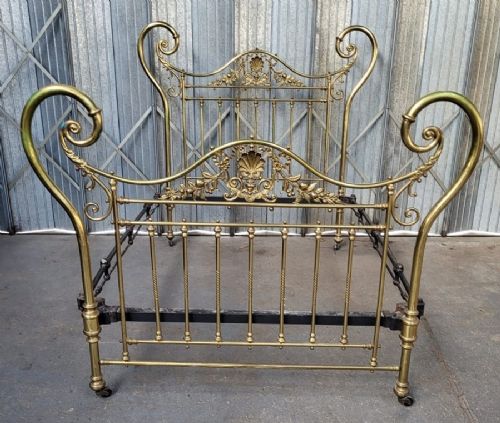
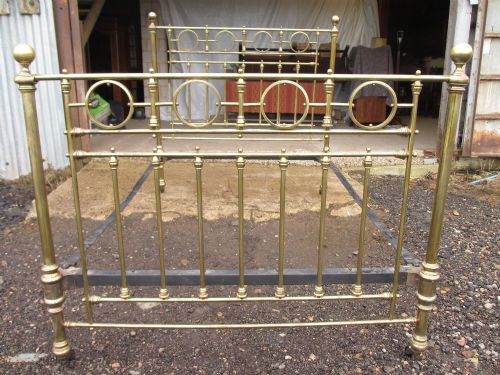
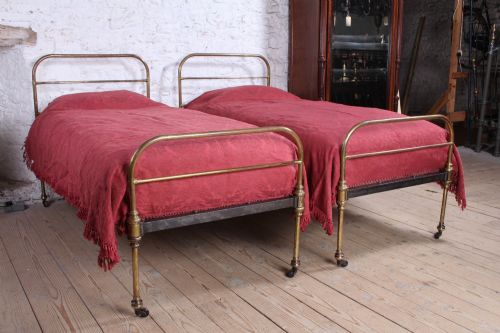
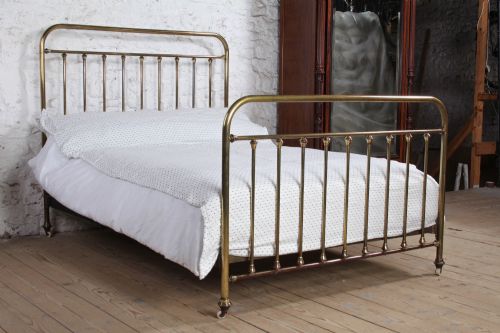
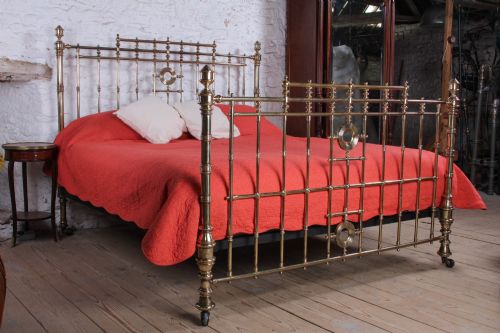
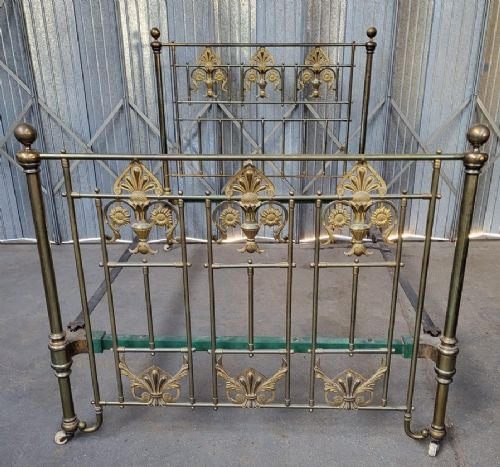
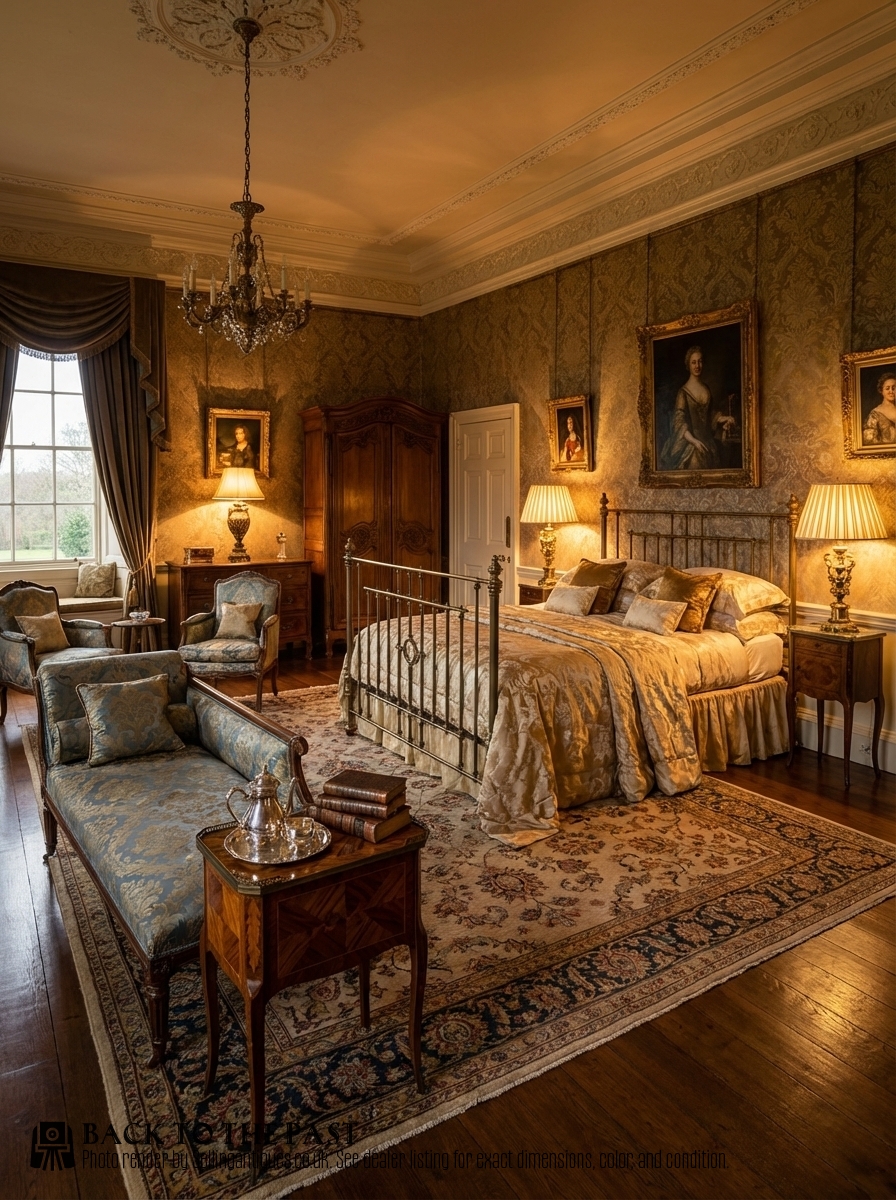
When searching for a gold brass bed frame, buyers encounter Victorian pieces dating from eighteen seventy to eighteen eighty, alongside general nineteenth-century examples. These items appear as double size, single size, and large king size bedsteads, often featuring ornate detailing.
The dominant forms listed are beds and bedsteads originating from the Victorian period, combining metal tubing with structural iron components. Most examples on this page reflect the aesthetic of nineteenth-century British domestic furnishings, designed for substantial rooms.
How they were made
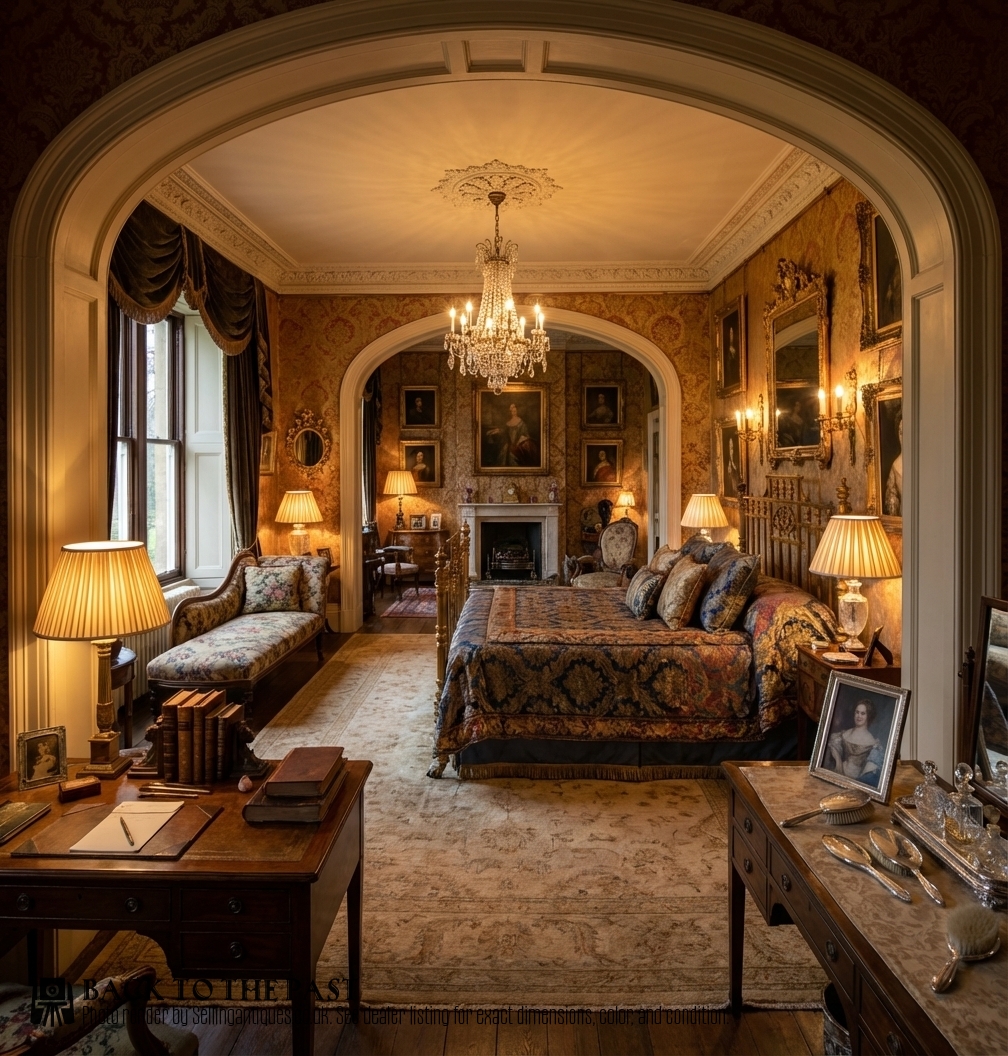
Makers constructed these bed frames using brass combined with cast iron and iron for the internal or slot-in frames, ensuring structural rigidity. Ceramic elements also feature alongside the metalwork in some designs, providing contrasting detail.
The fabrication relies on nineteenth-century foundry techniques, joining brass tubing and decorative castings to iron supports. Pieces frequently include castors to allow movement of the heavy assembled bedstead across the floor.
Retail Price Guide 2026
Typical UK retail prices for gold brass bed frame, calculated from the Sellingantiques database of over a million retail prices indexed since 2003. This retail price guide relies exclusively on Sellingantiques data; no external sources or auction records are used, so the figures do not describe the wider market.
Current listings feature Victorian pieces exclusively from the years eighteen seventy and eighteen eighty, alongside broader nineteenth-century examples.
What varies in quality
Distinctions in quality rest upon the complexity of the brass ornamentation and the overall scale of the bedstead, ranging from standard single frames to large king size and seven-foot formats. Ornate Victorian castings and substantial sizing distinguish the more ambitious pieces from simpler utilitarian models.
The integrity of the combination between the brass components and the iron slot-in frames determines the structural refinement of the bed. Surviving original castors and the condition of the metal finish further separate standard examples from finer ones.
The Gold Brass Bed Frame Glossary
- Bedstead
- The framework of a bed, comprising the headboard, footboard, and side rails. In these listings, they are primarily formed from brass and iron.
- Castor
- A small wheel mounted on a swivel assembly attached to the legs of the bed. These allow the heavy nineteenth-century frames to be repositioned.
- Slot in frame
- An iron structural support system designed to lock the headboard and footboard together securely. This method provides the necessary tension for the mattress base.
- Victorian
- Pertaining to the reign of Queen Victoria, spanning the nineteenth century. Pieces from this era often display robust proportions and decorative metal casting.
Frequently Asked Questions
How do I assemble a Victorian brass bed?
These bedsteads typically utilise an iron slot in frame that connects the headboard and footboard without requiring complex tools. The side rails wedge firmly into the designated sockets to create a rigid structure.
Once the main frame is locked together, the mattress base rests securely within the internal ledges. Checking that all metal joints sit flush ensures the bed remains stable.
What sizes are available in these antique beds?
The selection includes single beds, double size bedsteads, and larger king size or seven-foot formats. Dimensions vary according to nineteenth-century standards, which often differ slightly from modern mattress sizes.
Buyers should verify the internal measurements of the frame against their specific mattress requirements. Larger ornate examples require substantial bedroom space to accommodate their proportions.
Are these beds made entirely of brass?
While referred to as brass beds, makers frequently incorporated cast iron and iron for the internal slot in frames and structural supports. This combination provided the necessary strength to support heavy nineteenth-century mattresses.
Visible exterior elements and decorative components utilise brass, sometimes accompanied by ceramic details. The iron framework remains largely hidden once the bed is assembled and dressed.
How do I care for nineteenth-century brass?
Maintenance involves gentle dusting and occasional cleaning with appropriate metal care products designed for antique brass. Avoiding harsh abrasives preserves the natural patina accumulated over the decades.
Inspecting the iron castors and frame connections periodically ensures smooth movement and structural stability. Regular care keeps the metalwork bright without stripping its historical character.