


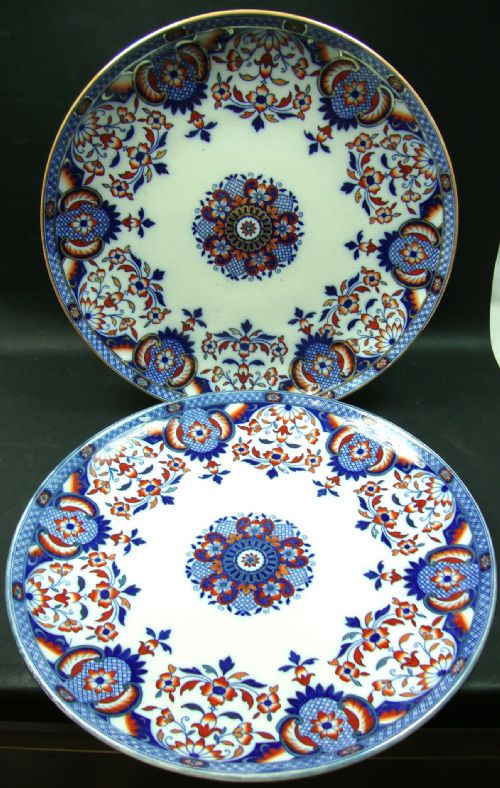


Victorian Aesthetic Movement Pottery
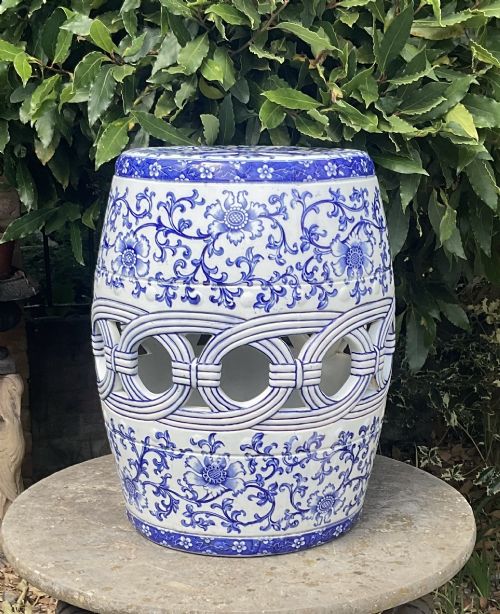
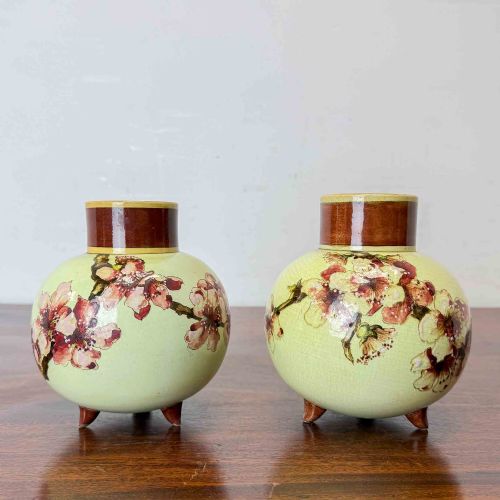
Victorian aesthetic movement pottery brings together Japanese and Persian decorative influences on ceramic vases, plates, and garden seats.
Victorian Aesthetic Movement Pottery
Victorian aesthetic movement pottery encompasses ceramic pieces produced during the nineteenth century, featuring distinct styles that break away from traditional Victorian ornamentation. Buyers searching for victorian aesthetic movement pottery encounter plates, vases, ewers, and garden seats that display eclectic global inspirations, notably Japanese and Persian motifs.
The objects appearing in this category include cabinet plates, decorative bowls, and bathroom sets created by major factories. Minton, Doulton, and Wedgwood productions dominate the forms, frequently combining traditional British ceramic shapes with non-Western design principles.
Materials and production
Potters utilised earthenware, porcelain, and glazed ceramic bodies as the foundation for these works. Decoration was applied using enamel, glaze, and gold leaf, often incorporating gilt highlights and blue and white colour schemes.
Techniques varied from slip-raised patterns to transfer printing and hand-painted details. Makers employed specialised glazes and faience methods to achieve textured surfaces, while certain workshops added brass mounts to ceramic components.
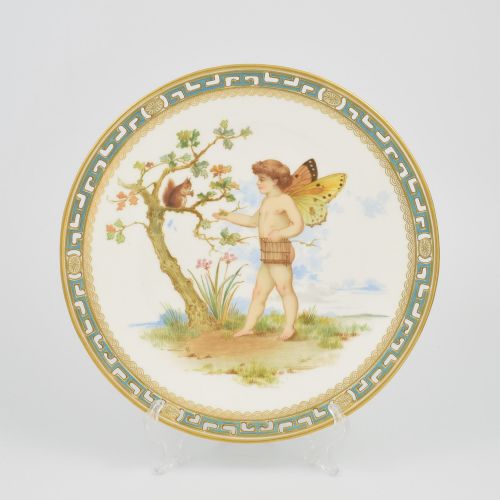
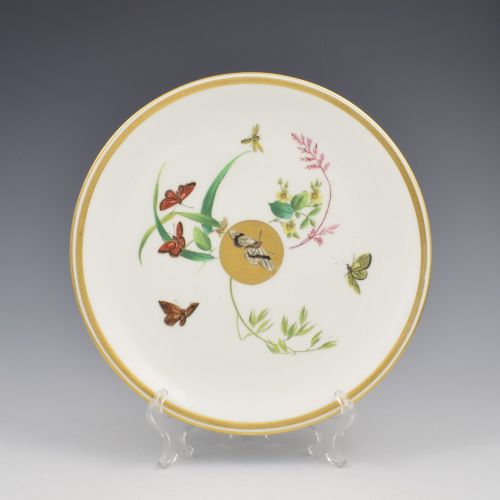
Squirrels and fairies share shelf space with herons and cherry blossoms on these nineteenth-century plates.
Assessing quality
Quality in these ceramics rests upon the crispness of the moulded form and the precision of the hand-applied decoration. Pieces designed by named artists or produced with intricate gilt sunbursts and detailed animal or botanical motifs sit at the higher end of the range.
The complexity of the glaze and the success of the firing process determine the visual depth of the surface. Greater artistic ambition in the Japanese or Persian styling separates standard factory output from exceptional studio-influenced pieces.
Minton·Doulton Lambeth·Doulton Burslem·Bretby·Minton and Hollins·Wedgwood
The Victorian Aesthetic Movement Pottery Glossary
- Earthenware
- A porous pottery body that requires glazing to become watertight. It formed the base for many decorative tiles, jugs, and garden seats of the period.
- Faience
- Tin-glazed earthenware decorated with opaque colours over a white glaze. This technique allowed potteries to achieve rich, painterly surface effects on vases and platters.
- Gilt
- A thin layer of gold applied to the ceramic surface to highlight specific design elements. It frequently outlines Japanese motifs or sunburst patterns on plates.
- Imari
- A decorative style characterised by a palette of iron red, underglaze blue, and gilt. British factories adopted this aesthetic for round ceramic chargers and plates.
- Porcelain
- A fine, vitrified ceramic material made from clay containing kaolin. It results in a hard, white, translucent body suitable for delicate cabinet plates and vases.
Victorian Aesthetic Movement Pottery: Frequently Asked Questions
How do I identify a Victorian aesthetic movement piece?
Look for design motifs drawn from Japanese prints or Persian manuscripts applied to nineteenth-century ceramic forms like plates and vases.
Factory marks from makers such as Minton or Doulton often appear on the underside, sometimes accompanied by specific date codes or designer names.
Were these ceramic pieces used daily?
Many items, including bathroom sets, ewers, and garden seats, served practical household functions in nineteenth-century domestic spaces. Other forms like cabinet plates and decorative vases were strictly ornamental.
Plates and bowls were frequently displayed on specialised wall brackets or shelves rather than used at the dining table.
What styles influenced this pottery?
The aesthetic movement drew heavily from Anglo-Japanese design, incorporating birds, butterflies, and flora into asymmetrical compositions. Persian influences also shaped the ornamentation of ewers and vases.
This departure from conventional Victorian historicism prioritized visual harmony and exotic pattern over strict realism.
How should I care for antique ceramic pieces?
Dust these items gently with a dry, soft cloth to protect fragile gilt and enamel decorations from abrasion. Avoid submerging pieces with applied brass mounts or delicate surface finishes in water.
Display them away from direct sunlight to prevent fading of the hand-painted glazes over time.