
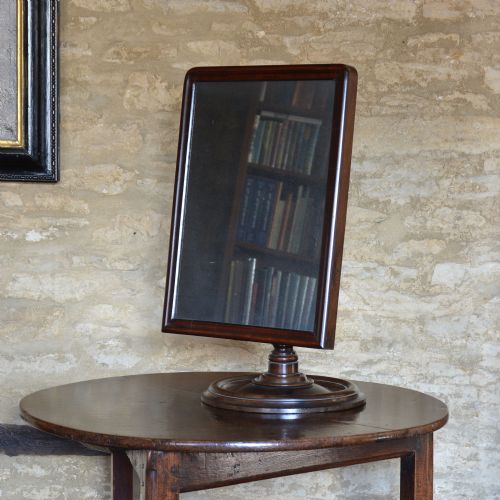
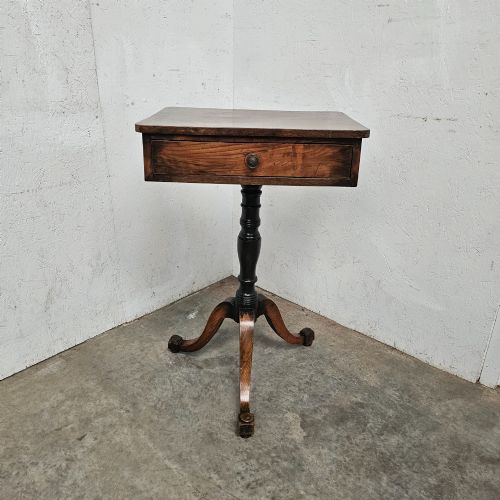
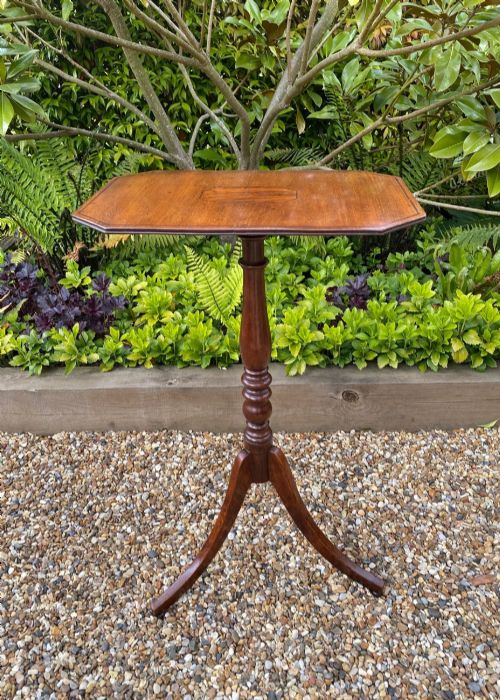
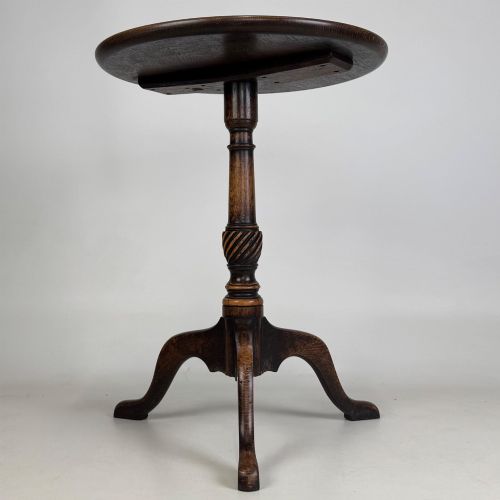
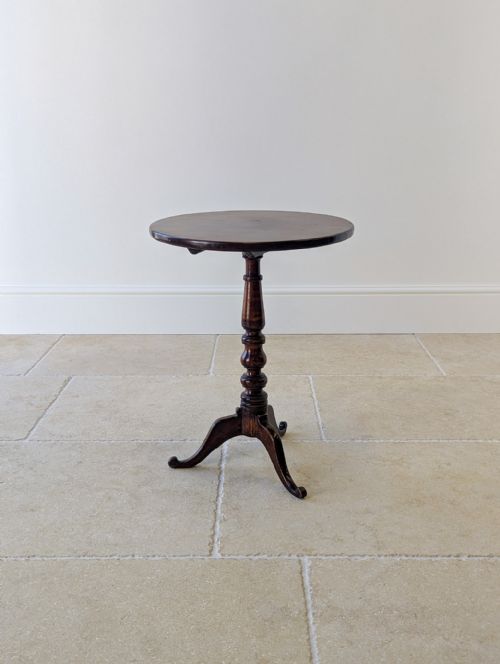

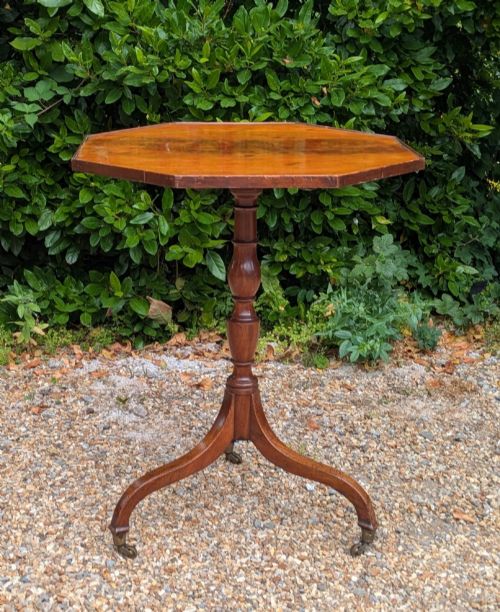
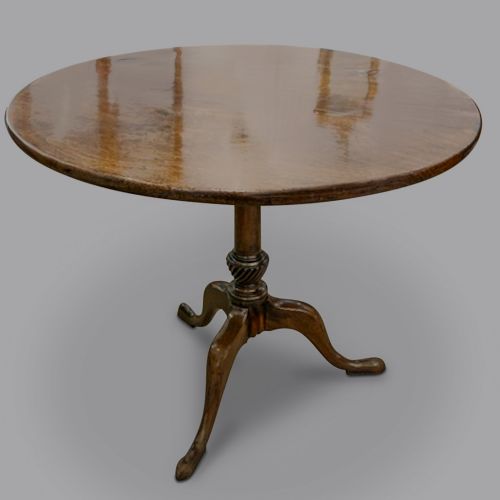
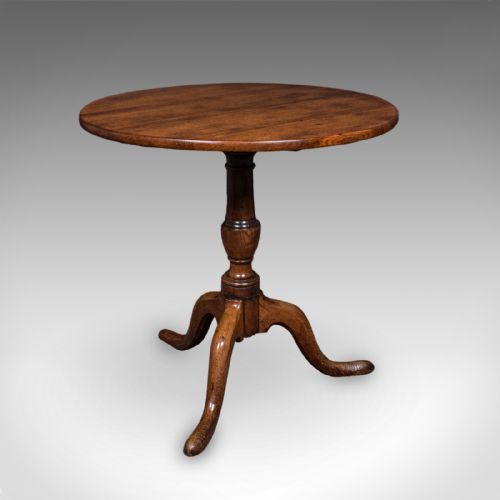
Turned Stem Table
A turned stem table is a compact support raised on a central column, prized for its versatile proportions and historic character.
Turned Stem Table
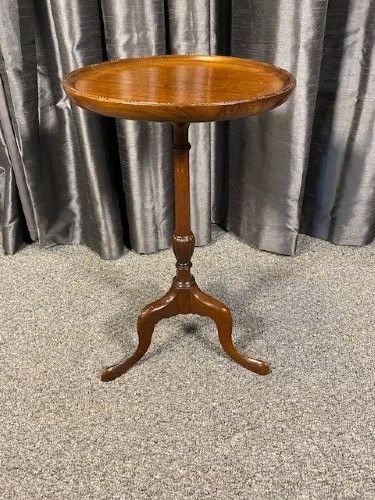
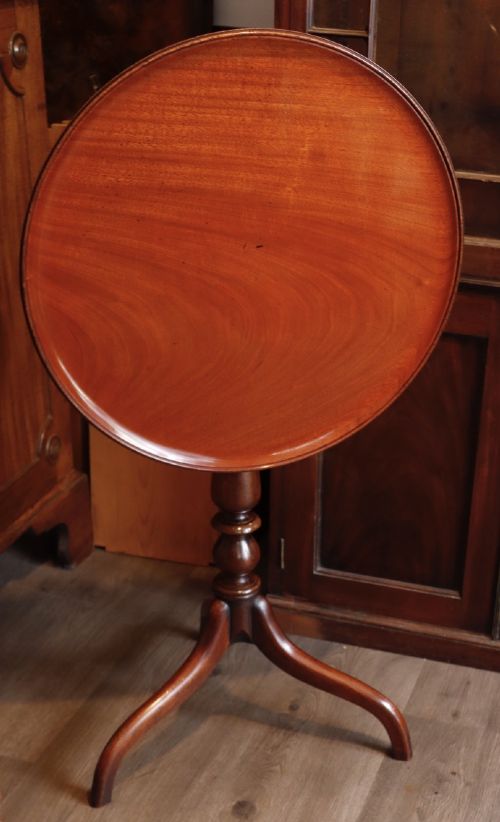
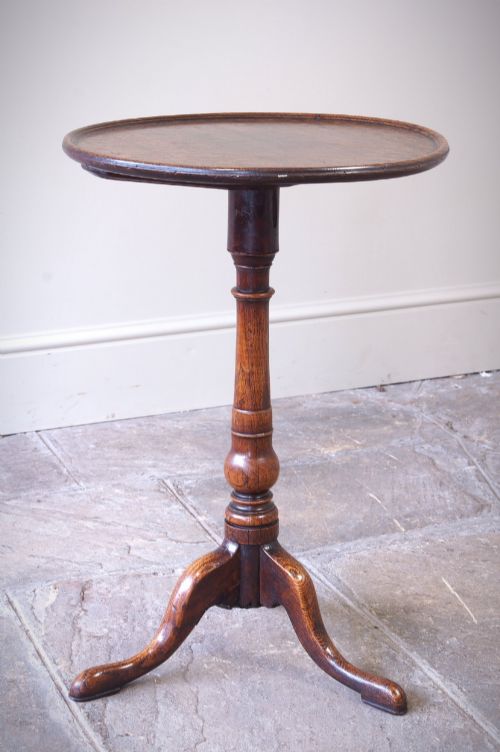
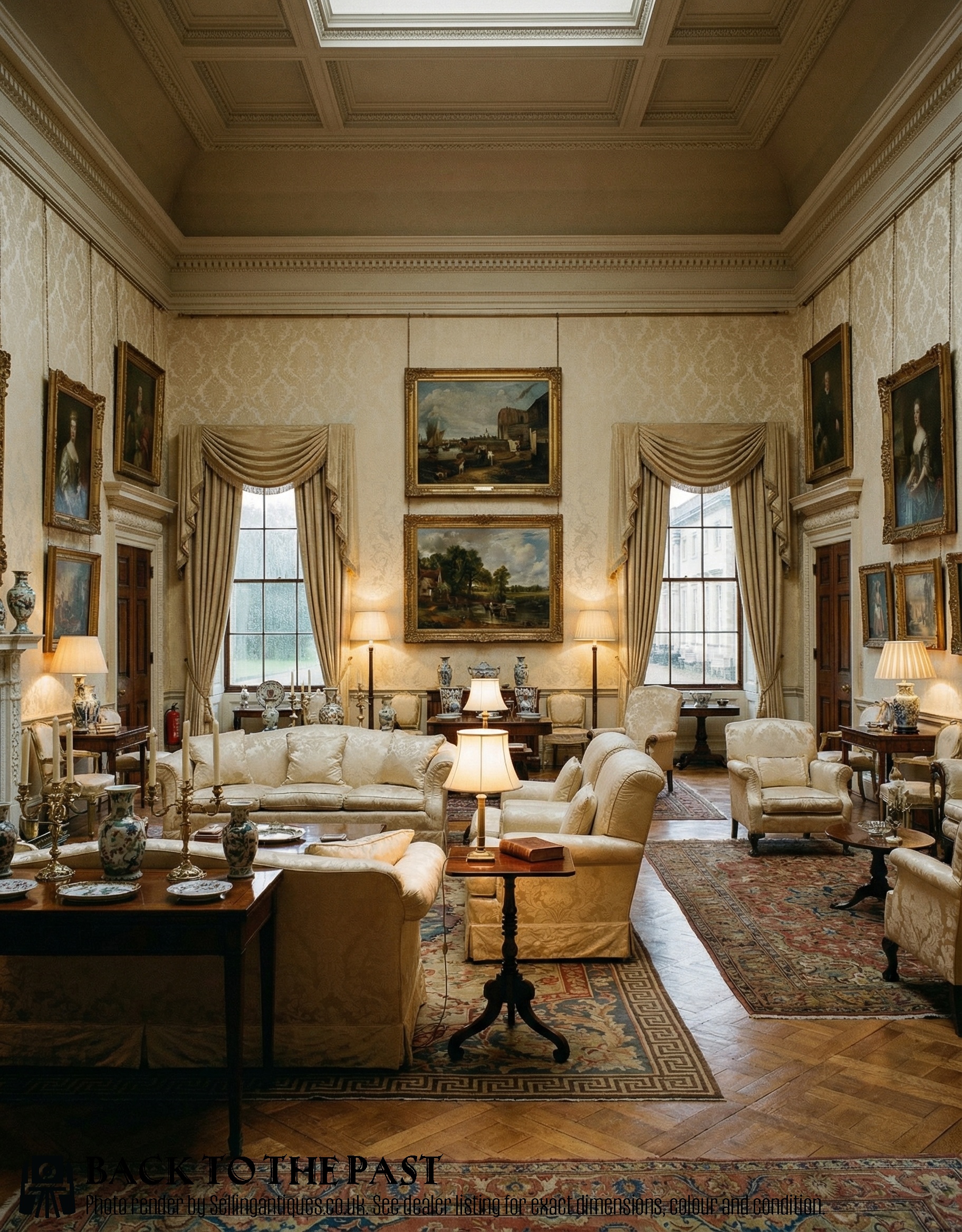
A turned stem table typically appears as a compact occasional, wine or lamp table designed to sit beside seating or in smaller spaces. These pieces rest on a central column, often supported by three legs in a tripod arrangement that provides stability without bulk.
The turned stem table category spans several centuries, drawing heavily on Georgian and Victorian periods. Examples range from simple country furniture in oak and elm to finely finished mahogany and walnut pieces made for formal parlours.
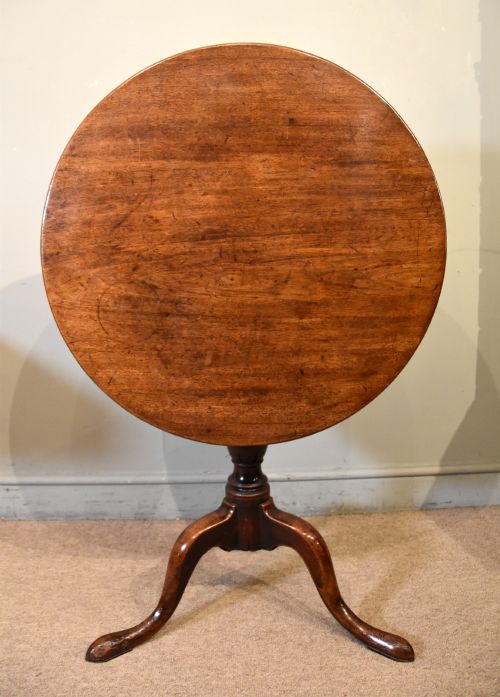
Buyers encounter variations that include tilt-top mechanisms, circular tops, and occasional or side tables adapted for holding candles, wine or lamps. Each form demonstrates how domestic furniture evolved to suit changing household needs.
Materials and construction
Cabinet makers utilised a variety of native and imported timbers, relying predominantly on mahogany, oak, fruitwood, and walnut for the structural elements and tops. Secondary woods like beech or elm appear in country pieces, while boxwood provides decorative contrast in inlay and stringing.
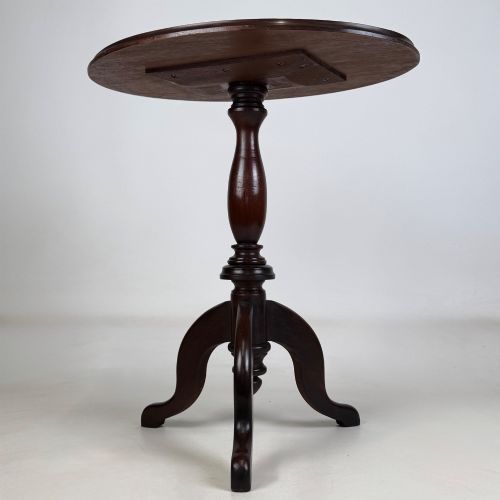
The central turned column is shaped on a lathe, producing vase, baluster, or columnar profiles that screw or peg into the tabletop and leg assembly. Tripod bases are commonly jointed with dovetail or lap joints to ensure the legs remain secure under weight.
Many examples incorporate tilt-top mechanisms using brass catches or wooden blocks, allowing the top to fold flat against the stem when not in use. Surface finishes are typically polished with wax or shellac to bring out the grain of the wood.
Distinguishing quality
The sophistication of the timber selection dictates much of the visual appeal, from plain country oak to finely figured flame mahogany and contrasting specimen woods. Finer pieces demonstrate careful matching of wood grains across circular tops and balanced proportions between the stem and the legs.
The execution of the turning on the central stem reveals the maker's skill, showing crisp mouldings, smooth curves, and precise symmetry rather than flat or hesitant cuts. Tripod legs that transition gracefully into pad, snake, or claw-and-ball feet indicate higher workshop standards.
Structural integrity in the pivoting mechanism or block ensures the tabletop sits level without excessive wobble. Quality is further evident in the retention of original brass hardware and the absence of clumsy repairs to the central stem block.
The Turned Stem Table Glossary
- Tilt-top
- A tabletop mounted on a hinged block that rotates vertically for storage. This clever mechanism allowed tables to be tucked against walls when not in use.
- Tripod base
- A three-legged support system radiating from a central pillar. It prevents rocking on uneven floors by ensuring all three feet maintain contact.
- Wine table
- A small occasional table designed to hold a glass and bottle near a chair. They frequently feature circular tops and slender turned stems.
- Baluster
- A moulded vertical shaft with a swelling contour resembling a small pillar. It forms the central turned stem on many Georgian and Victorian tables.
- Treen
- Small handmade wooden objects produced by turning or carving. The category includes utilitarian items like table salt bowls and stem cups.
Turned Stem Table: Frequently Asked Questions
What is a turned stem table used for?
These pieces function primarily as occasional furniture, serving as convenient stands for lamps, books, or drinks beside a chair or sofa. Their compact footprint makes them suitable for filling awkward corners or small spaces in a room.
Historically, smaller variants such as wine tables and candle stands were moved around the home to provide a portable surface wherever light or refreshment was needed.
How do I date a turned stem table?
Dating relies on examining the timber species, the style of the turning on the stem, and the method of construction used on the underside. Georgian pieces often feature elegant mahogany proportions and delicate tripod bases, while Victorian versions can be heavier with more elaborate mouldings.
Tool marks, screw types, and the presence of secondary woods like oak or beech provide further clues to whether a piece originates from the eighteenth or nineteenth century.
Are tilt-top mechanisms original?
Many tables from the Georgian and Regency periods were built with functional tilt-top mechanisms to save space when stored against a wall. Examining the block beneath the top reveals whether the hinges, wooden catches, and pivot pins match the age of the rest of the frame.
Subsequent replacements or reinforced blocks are common in pieces that saw heavy domestic use over the centuries.
How do I care for antique wood tables?
Maintain the finish by applying a microcrystalline wax or traditional beeswax periodically to nourish the timber and protect the surface from moisture. Avoid placing tables near direct heat sources or in strong sunlight, which can dry out the wood and fade polished mahogany or walnut.
Use coasters and felt pads under objects to prevent rings and scratches on the antique top.