


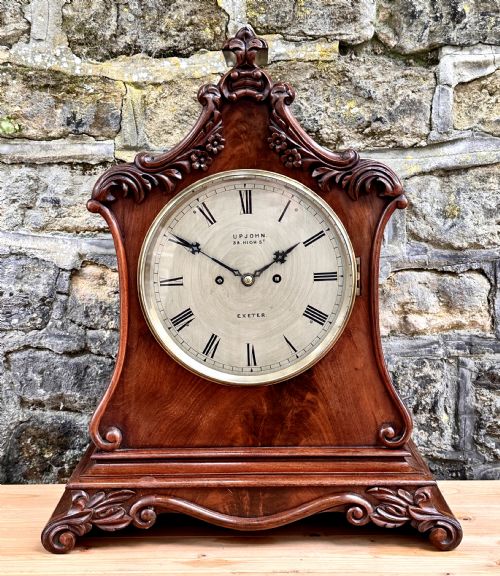
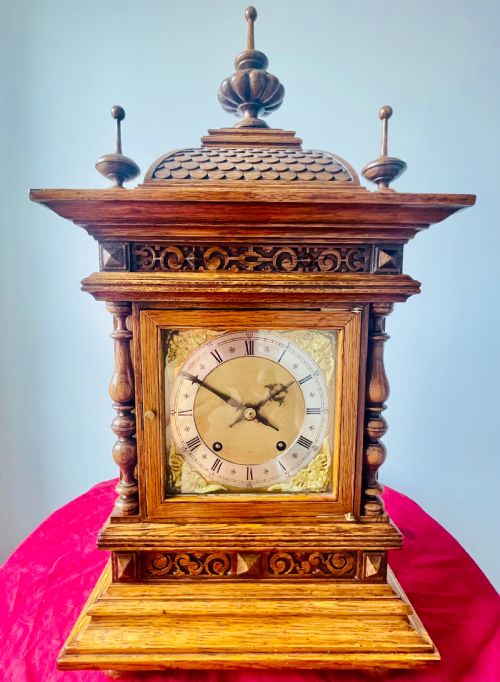
Traditional Wooden Mantel Clock
A traditional wooden mantel clock brings mechanical presence and rich cabinet timbers like mahogany and walnut directly to a room.
Traditional Wooden Mantel Clock
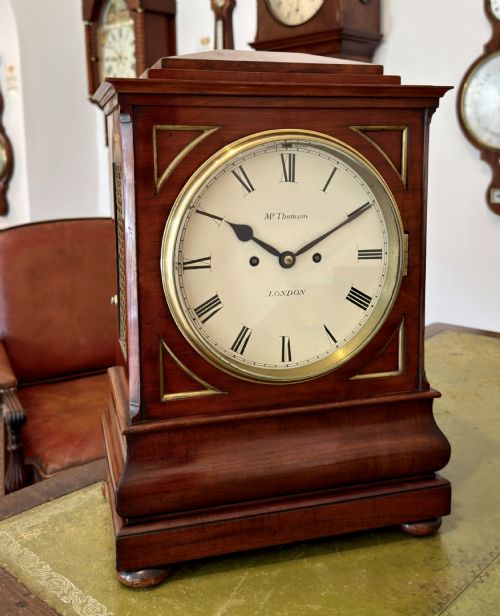
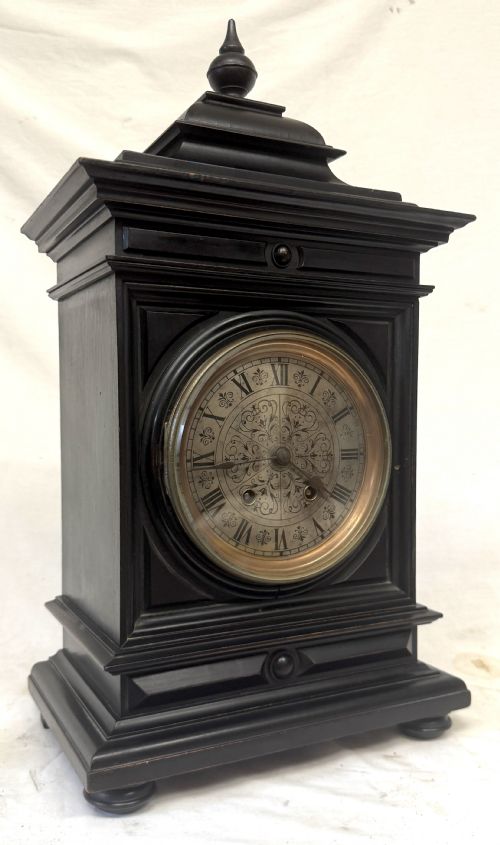
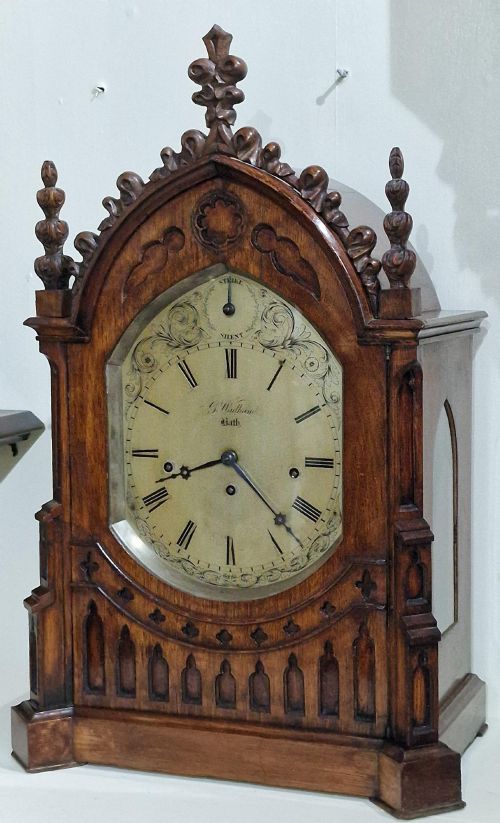
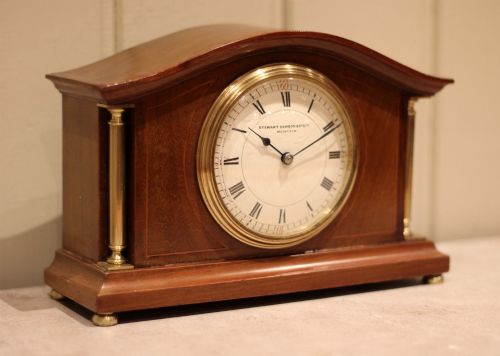
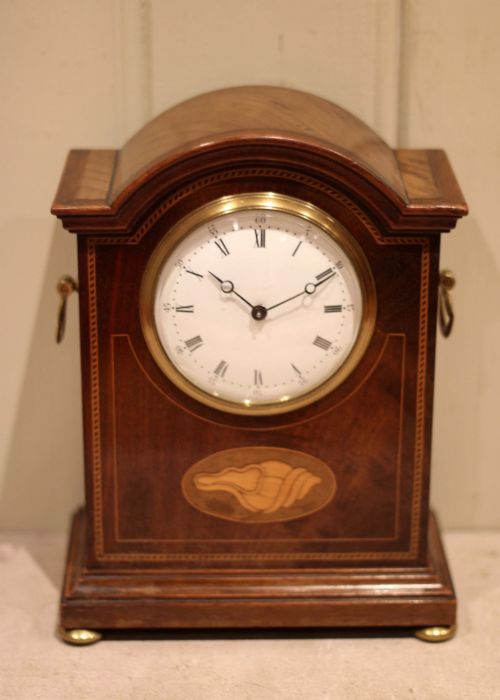
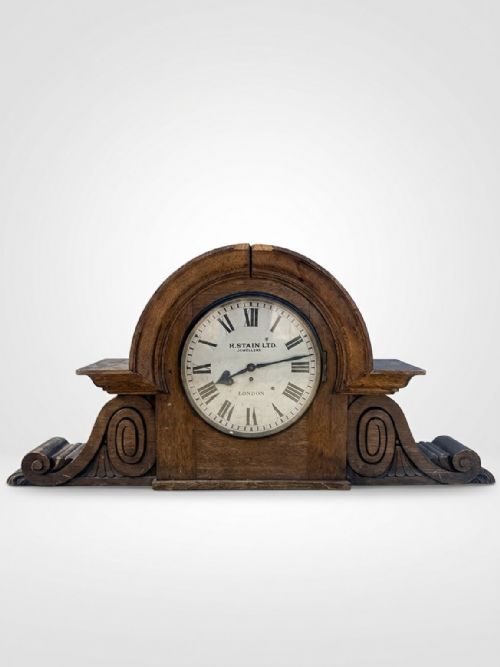
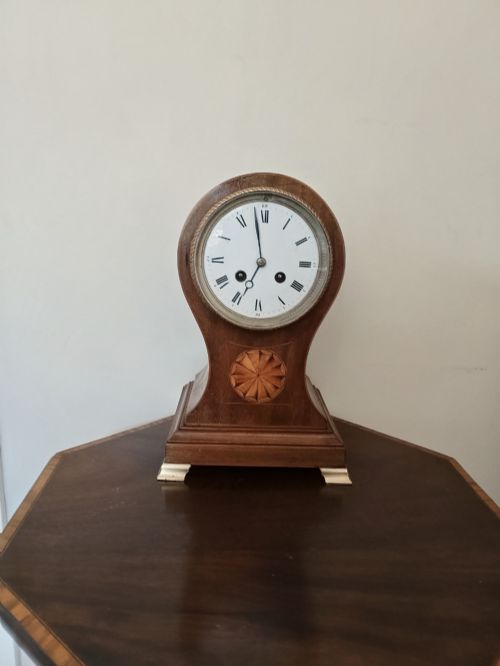
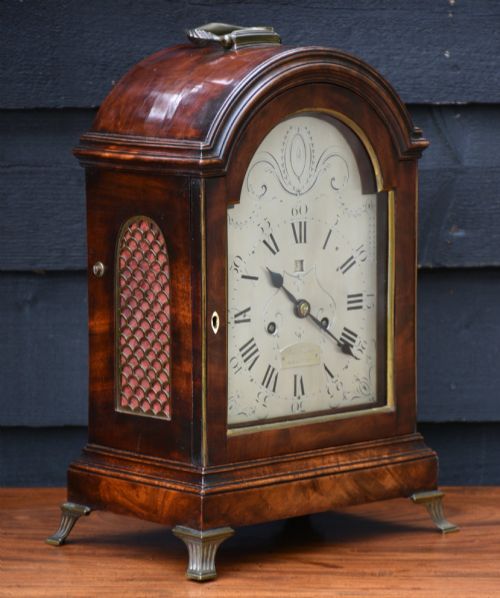
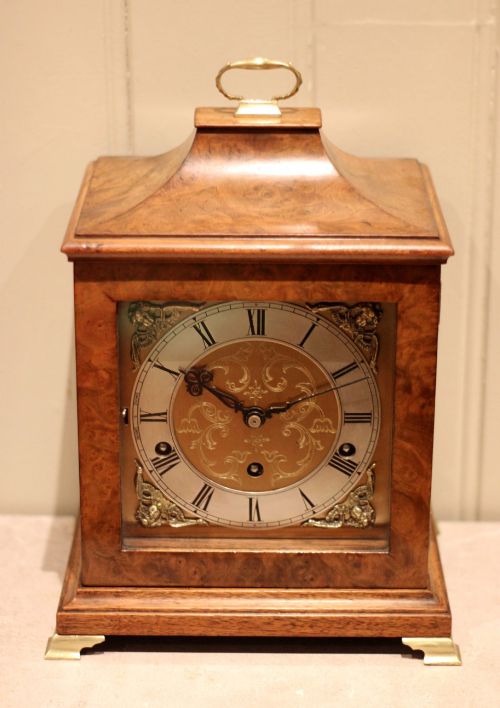
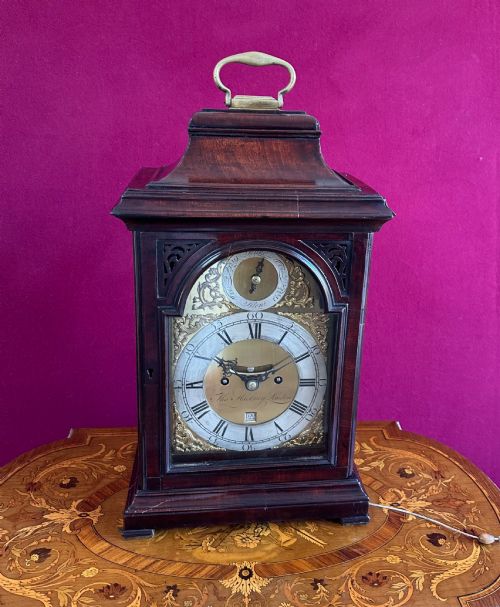
A traditional wooden mantel clock is typically housed in a mahogany, walnut, or oak case, originating from periods spanning the Georgian era through to the Edwardian years and the early twentieth century. You will frequently encounter mahogany and walnut bracket clocks or timepiece formats featuring brass details, enamel dials, and glass covers.
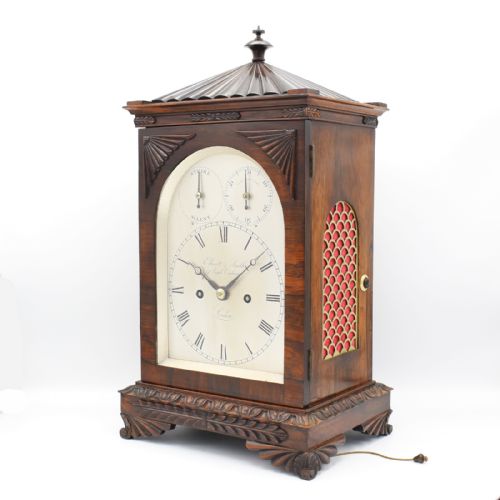
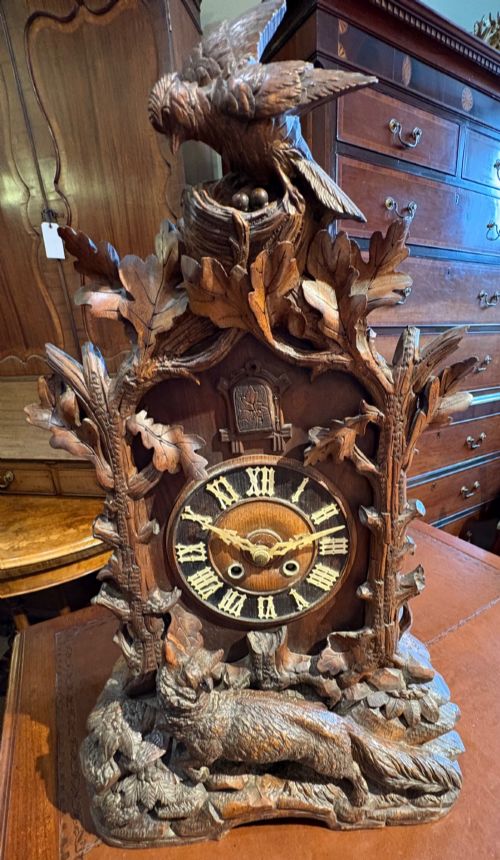
Makers ranged from London watchmakers such as Thomson, Ellicott & Smith, and Webster to German firms like H.A.C. and Winterhalder, producing everything from simple 8-day movements to complex fusee and striking mechanisms. Styles vary from restrained Georgian and Regency architectural cases to decorative Edwardian inlay and Black Forest carvings.
The selection includes compact table clocks and library clocks alongside large bracket clocks with Westminster chimes. Most pieces rely on mechanical movements housed in wooden housings designed to sit securely upon a mantelpiece or bracket shelf.
Materials and construction methods
Cases rely heavily on dense hardwoods like mahogany, walnut, satinwood, and ebonised wood, often enhanced with fine stringing or marquetry inlay. Skilled cabinet makers constructed these housings to protect delicate gear trains while presenting a polished exterior to the room.
Movement plates, fusee cones, and bezels utilise cast brass, paired with protective curved or flat glass lenses over white enamel or silvered dials. Iron and steel components govern the escapements, driving weights, and strike trains housed securely within the timber shells.
Movements range from simple 8-day timepieces to complex fusee mechanisms and Westminster chime systems.
Discerning the standard of execution
Quality rests in the precision of the cabinet work, from the depth of the mahogany grain and the crispness of the Edwardian inlay to the stability of the wood joints. Superior examples exhibit matched veneers, carefully fitted glass bezels, and robust architectural proportions without warping.
Mechanical sophistication dictates the upper tier, separating simple timepiece movements from complex triple fusee or quarterly striking mechanisms by notable makers. The legibility of the enamel or silvered dial and the fineness of the brass hands also mark the distinction between standard production and fine workshop output.
Thomson of London·Mappin & Webb·Winterhalder·L. Vick of Stroud·Cording of London
The Traditional Wooden Mantel Clock Glossary
- Bracket clock
- A portable table clock originally designed to sit upon a matching wall bracket to project sound. These pieces often feature sturdy carrying handles on top.
- Fusee
- A conical pulley used in mechanical clocks to maintain even drive force as the mainspring unwinds. This mechanism ensures consistent timekeeping across the running duration.
- Verge movement
- An early escapement type utilising a crown wheel and pallet geometry to regulate the swing of the pendulum. It represents traditional mechanical engineering from the eighteenth century.
- Timepiece
- A clock that indicates the time of day without incorporating a striking train or chiming mechanism. These simpler movements focus purely on steady hour and minute display.
- Silvered dial
- A metal clock face treated with a silver solution to produce a matte finish that highlights engraved numerals. This technique reduces glare behind the glass bezel.
Traditional Wooden Mantel Clock: Frequently Asked Questions
How do I wind a mechanical mantel clock?
Use the designated key on the winding arbours in the dial face, turning gently until you feel resistance. Avoid over-winding to protect the internal mainspring.
Keep the winding key stored safely nearby, and ensure the clock stands on a level surface to maintain an even beat from the pendulum.
What is the difference between a timepiece and a striking clock?
A timepiece simply tells the time without making any sound on the hour or half-hour. These movements require only a single winding train for the hands.
Striking and chiming clocks include extra gear trains, hammers, and gongs or bells to sound the passage of time. They require separate winding holes for the time and strike functions.
Where should I place a wooden mantel clock?
Position the clock on a stable mantelpiece, sideboard, or dedicated wall bracket away from direct sunlight, radiators, and damp walls. Wood cases react to extreme temperature shifts.
Ensure the surface is entirely flat so the mechanical pendulum or balance wheel swings with a symmetrical tick.
How do I identify the period of a wooden clock?
Look to the architectural style of the wooden case, such as clean Georgian lines, Regency brass mounts, or Edwardian string inlay. The dial design and font styles also offer clear clues to the decade of manufacture.
Maker signatures inscribed on the brass movement plates or dials often allow precise dating against historical records.