

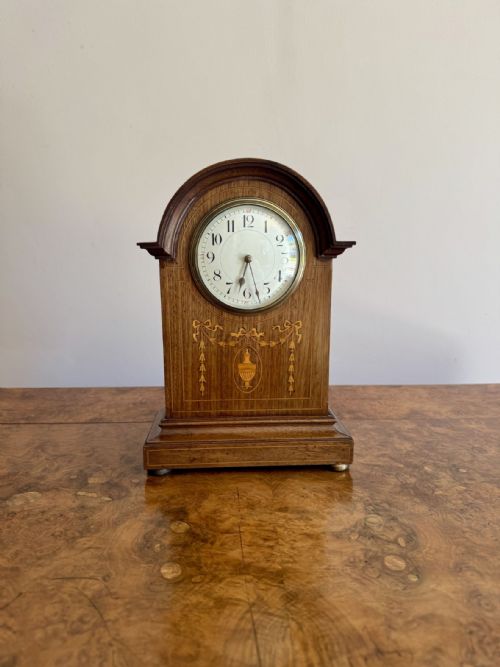


Inlaid Mahogany Mantel Clock
An inlaid mahogany mantel clock brings architectural timber and precise brass movement together on a shelf, anchoring a room with quiet purpose.
Inlaid Mahogany Mantel Clock
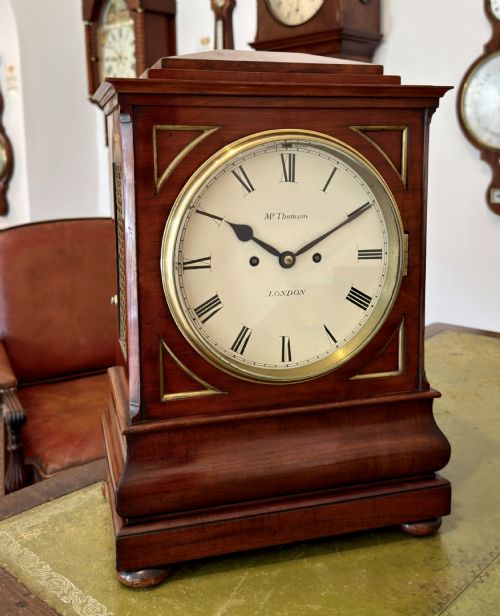
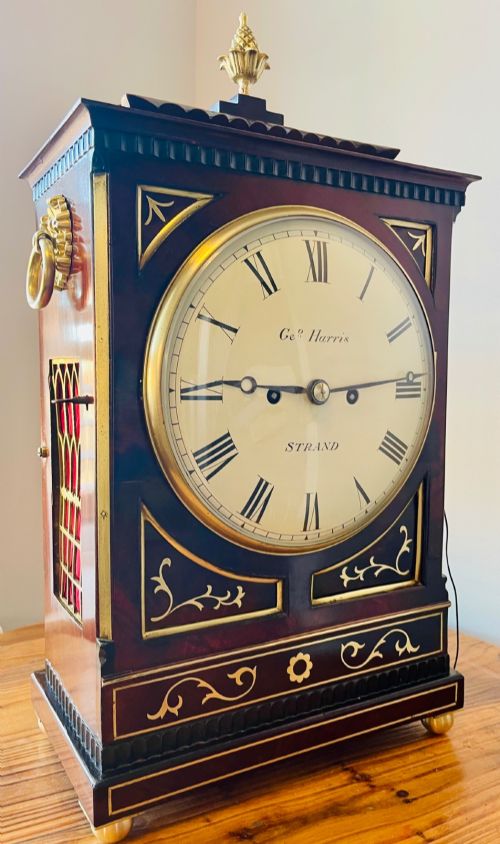
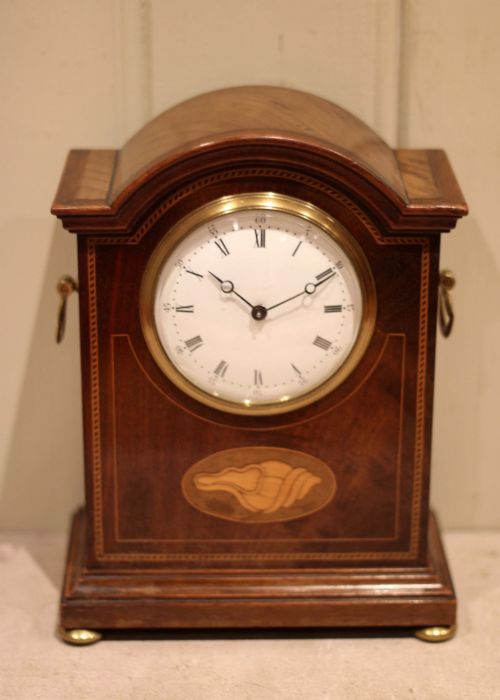
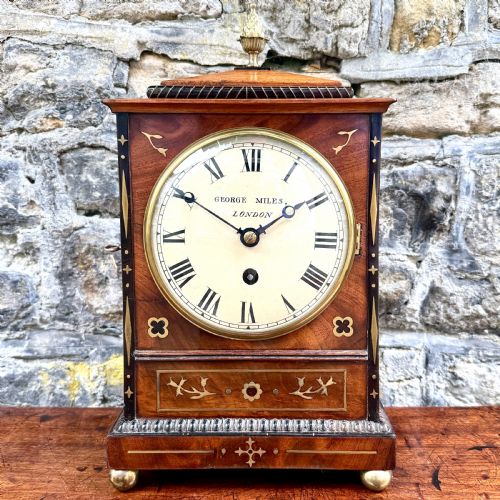
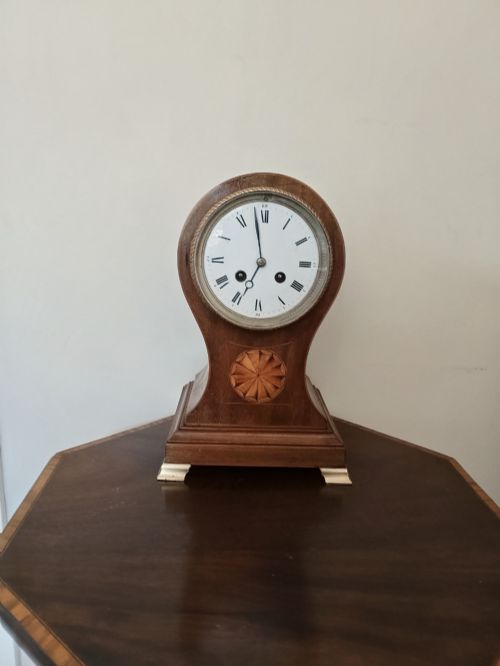
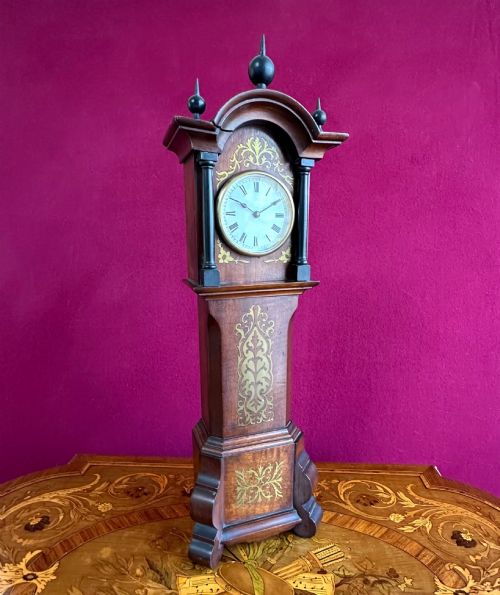
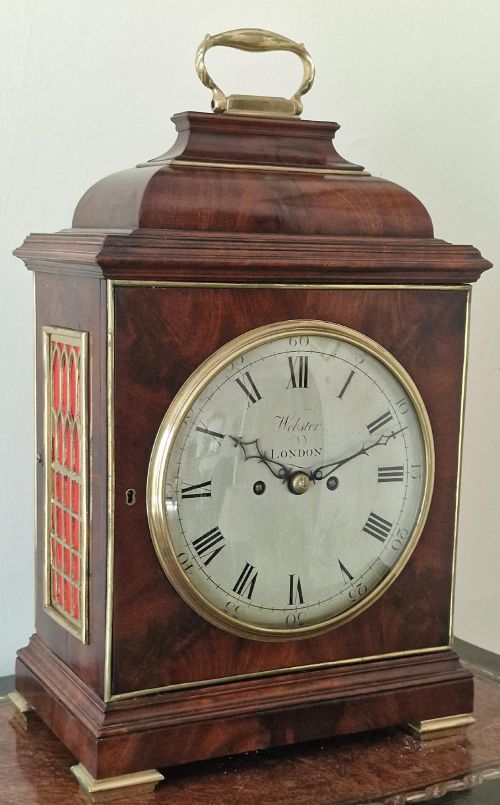
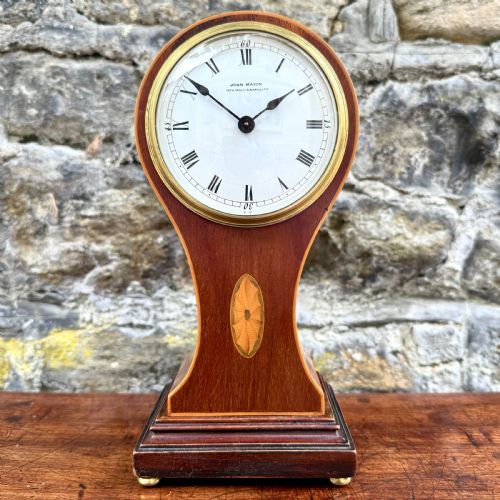
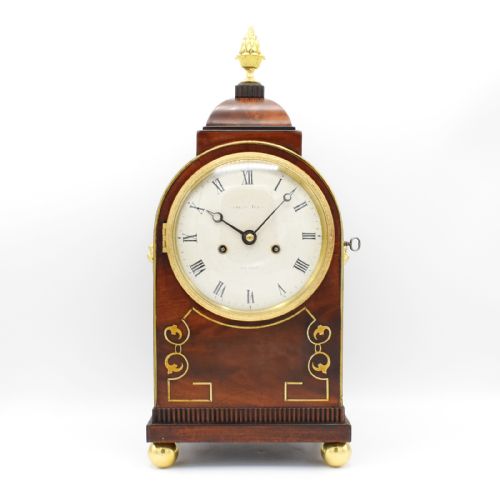
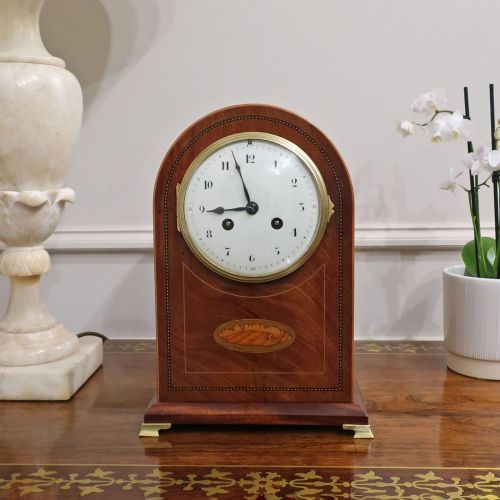
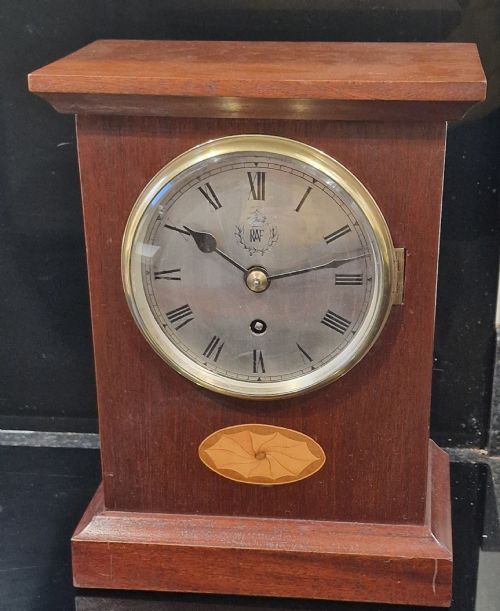
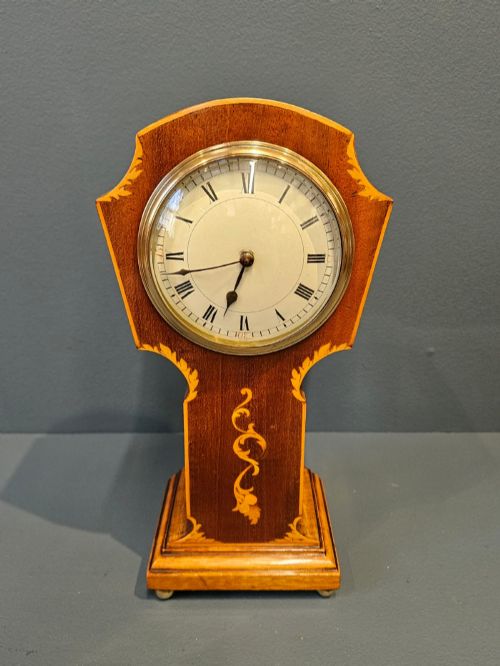
An inlaid mahogany mantel clock sits comfortably on furniture surfaces, taking the form of bracket clocks, tall bracket styles, and shaped balloon or lancet cases. The pieces span Georgian, Regency, Victorian, and Edwardian periods, demonstrating how cabinet makers adapted domestic timepieces across centuries.
Edwardian productions appear most frequently on this page, often featuring delicate contrasting wood stringing and shell motifs. Earlier Regency and Georgian examples tend toward architectural bracket shapes with heavy brass handles and bracket feet, while Victorian interpretations often lean into French balloon silhouettes.
How they were made
Makers built solid or veneered mahogany bodies, then channelled surfaces to receive light wooden insertions of satinwood and boxwood. Brass inlay, delicate brass fretwork grilles, and cast feet completed the exterior casework.
Internal mechanical components relied on brass plates, steel pivots, and fusee or spring-driven gear trains. Silvered or white enamel dials bore Roman or Arabic numerals, protected behind hinged glass doors set in brass bezels.
Some Edwardian balloon clocks have subtle waistlines that make them look ready to float away from the mantelpiece entirely.
What varies in quality
The refinement of the cabinet work dictates the grade of the piece, visible in the crispness of the boxwood and satinwood stringing and the depth of the mahogany grain. Hand-engraved backplates and substantial brass movements distinguish workshop pieces from mass-produced late items.
Proportion and architectural harmony separate standard domestic items from superior examples. Cases with well-matched veneers, original brass mounts, and clean dial signatures by known makers command attention.
Thomson of London·Webster London·George Orpwood·Bush of London·L Vick of Stroud·Thomas Moss·Cording of London·Bryson Edinburgh·W Burton·Sharman D Neill·Mappin and Webb·Charles Fletcher·Asprey London
The Inlaid Mahogany Mantel Clock Glossary
- Bracket clock
- A portable table clock originally designed to sit on a wall bracket to aid projection of sound. Many later examples sat directly on mantelpieces or tables.
- Fusee
- A conical pulley used in spring-driven clocks to equalise the declining power of the mainspring as it unwinds. This mechanism improves timekeeping accuracy across the power reserve.
- Inlay
- A technique where contrasting materials such as satinwood, boxwood, or brass are inserted into recessed cavities in the mahogany surface to form decorative patterns.
- Balloon case
- A rounded, curved clock case silhouette that narrows toward the base, popular during the late Regency and Edwardian eras.
- Striking movement
- A clock mechanism that chimes the hours or quarters on bells or gongs alongside the primary timekeeping train.
Inlaid Mahogany Mantel Clock: Frequently Asked Questions
How do I wind my clock?
Most spring-driven clocks use a small matching winding key inserted into holes on the dial face. Turn the key gently until resistance indicates the mainspring is fully tensioned.
Avoid overwinding the mechanism, as this strains the spring steel. Consult the specific train layout to know whether the striking side requires independent winding.
Where should I place a mantel clock?
Position the clock on a stable, level surface away from direct sunlight, dampness, and active heat sources. Heavy oak or marble mantelpieces provide sturdy support without transmitting floor vibrations.
Ensure the surface is level so the pendulum or balance wheel beats evenly. A tilted case causes the movement to stop or lose time.
How do I tell a Georgian clock from an Edwardian one?
Georgian and Regency versions typically employ robust architectural mahogany cases, often featuring brass bracket feet, carrying handles, and heavy pad tops. The joinery is heavier and internal movements heavier.
Edwardian interpretations favour lighter wood figures, delicate satinwood stringing, and balloon or lancet silhouettes. Inlays are more prolific, and the overall proportions are slender.
What is a single fusee movement?
A single fusee movement drives only the timekeeping train via a chain or gut line wound around a cone-shaped pulley. This arrangement ensures steady power delivery to the escapement.
Clocks with this mechanism lack striking trains, focusing purely on accurate hours and minutes recorded on the dial.