




Brass Feet Bracket Clock
These brass feet bracket clock pieces combine timber cases and metal mounts, offering both timekeeping and proportion for a mantel or table.
Brass Feet Bracket Clock
A brass feet bracket clock is a portable timepiece designed to sit securely on a bracket, table, or mantelpiece. The pieces listed under this phrase span periods from the Georgian and Regency eras through to the Victorian, Edwardian, and 19th-century periods.
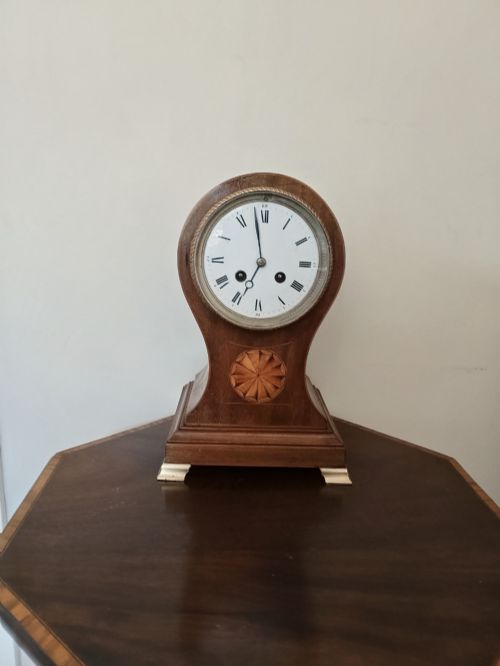
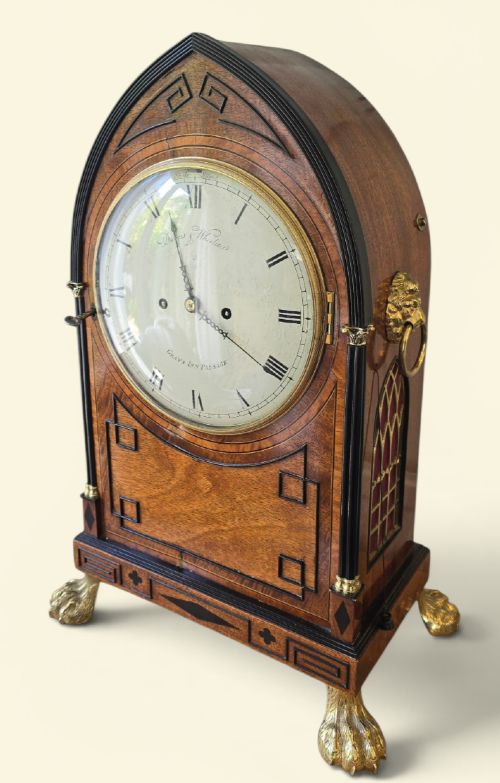
Most examples encountered here take the form of mantel clocks or table clocks housed in wooden cases. These range in design from lancet-top and balloon styles to break-arch and library formats.
Makers recorded in the evidence include London watchmakers and provincial clockmakers such as Bush of London, Desbois & Wheeler, L. Vick, Hyde of Salisbury, Louis Recordon, Joseph Jump, Leplastrier, and Plumbly & Tupman.
Materials and construction
Cases are constructed predominantly from mahogany, ebony, and rosewood, sometimes enhanced with satinwood inlay or glass panels. These timbers provide a sturdy housing for the internal movements while offering polished dark surfaces.
Dials commonly feature enamel finishes, paired with brass feet and bezels that elevate the timber base. Fusee movements and striking mechanisms provide the functional heart of these mantel and table clocks.
Brass Feet Bracket Clock Retail Price Guide 2026
Typical asking prices for brass feet bracket clock among the pieces listed under this phrase on Sellingantiques today, from the lower quarter to the upper quarter. They describe what is for sale here now, not the wider market.
Listings feature mahogany, rosewood, ebony, and satinwood cases enclosing fusee movements.
Assessing quality
Quality rests in the crispness of the timber veneer, the delicacy of any satinwood inlay, and the retention of original brass feet. Cases finished in ebony or finely figured mahogany display superior cabinetmaking.
The sophistication of the movement, whether a simple timepiece or a striking fusee mechanism by a named maker, dictates the standing of the piece. Signed dials from notable London workshops elevate the work above provincial alternatives.
Bush of London·Desbois & Wheeler·L. Vick of Stroud·Hyde of Salisbury·Louis Recordon·Joseph Jump of London·Leplastrier of London·Plumbly & Tupman
The Brass Feet Bracket Clock Glossary
- Bracket clock
- A portable spring-driven clock originally designed to stand on a wall bracket to project sound. They evolved into free-standing mantel and table timepieces.
- Fusee
- A conical pulley connected to the mainspring by a chain or cord, designed to equalise the power of the spring as it unwinds. This mechanism improves timekeeping consistency.
- Lancet-top
- A case shape featuring a pointed, arched top resembling a lancet window. It is characteristic of certain Regency and Georgian clock designs.
- Break-arch
- A clock dial or case top featuring a central arched section flanked by shoulders. This architectural form appears on several 19th-century examples.
- Veneer
- A thin layer of superior timber applied to a secondary wood base. Ebony and mahogany veneers create decorative exterior surfaces on these clock cases.
Brass Feet Bracket Clock: Frequently Asked Questions
What is a bracket clock?
A bracket clock is a portable timepiece housed in a wooden case, designed to sit on a table, mantel, or shelf. They often feature brass feet and mechanical movements.
Historically, these clocks sat on wall brackets to help distribute sound through a room, though today they function primarily as mantel or table clocks.
How do I wind a fusee clock?
Winding requires a dedicated key inserted into the dial aperture to tension the mainspring via the fusee chain. Care must be taken not to overwind the movement.
Most surviving examples from the Georgian and Victorian periods utilise this fusee system to maintain steady tension and accurate timekeeping.
How do I date a mahogany clock?
Dating relies on stylistic clues in the case architecture, such as a lancet-top or break-arch form, alongside the timber choice and dial design. Regency and Georgian cases often show simpler, cleaner lines than later Victorian iterations.
Signatures or maker inscriptions on the dial or movement provide the most reliable chronological markers.
Where should I place my clock?
These clocks suit stable flat surfaces such as mantelpieces, sideboards, or dedicated clock brackets where they remain undisturbed. A level surface ensures the pendulum or balance wheel operates correctly.
Keep the timber away from direct heat sources and strong sunlight to protect the mahogany, ebony, or rosewood finish.