


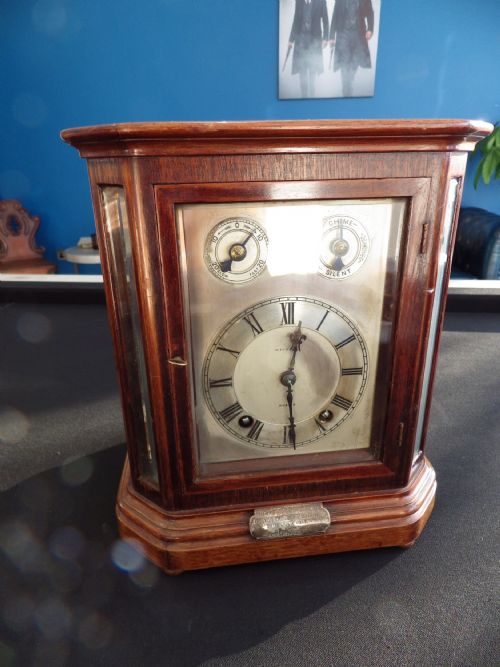


Mahogany Spring Driven Clock
A mahogany spring driven clock brings the rich tone of dark timber and precise mechanical movement into a room, offering both practical timekeeping and historic character.
Mahogany Spring Driven Clock
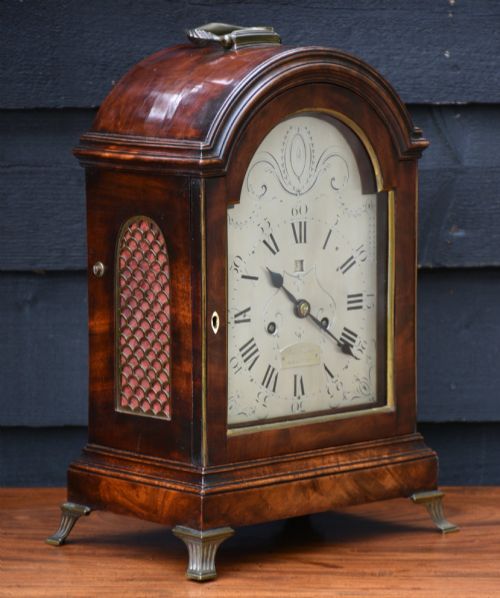
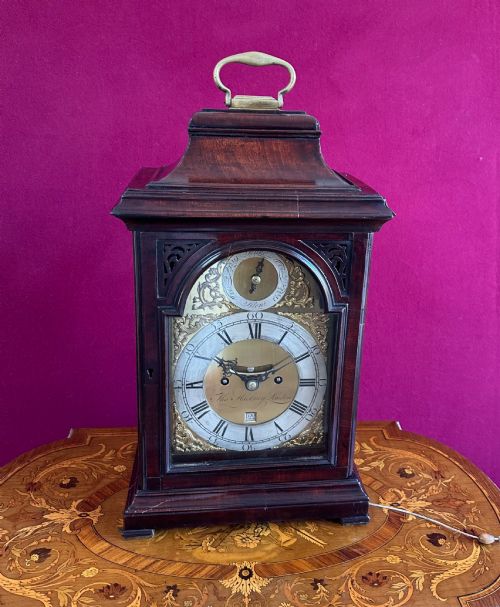
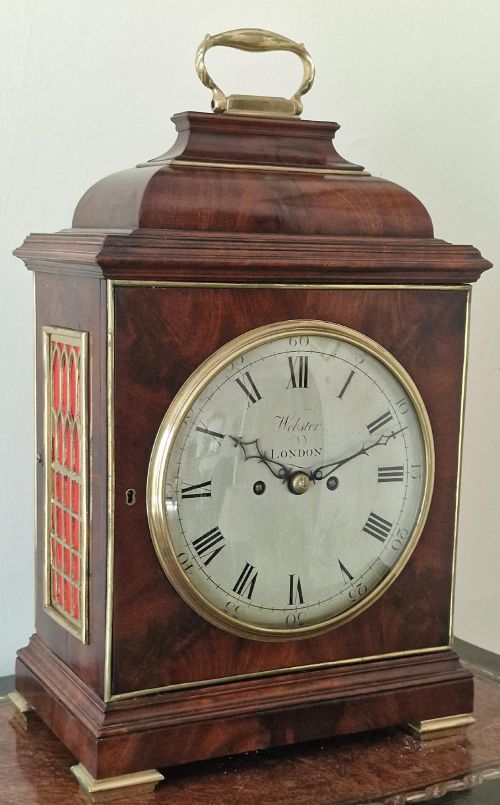
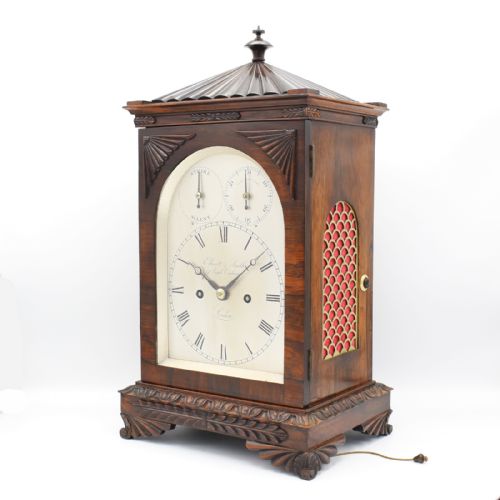
A mahogany spring driven clock sits comfortably on a bracket, mantel, or wall, serving as a primary timekeeper for the home. When searching for a mahogany spring driven clock, buyers encounter various forms such as bracket clocks, table clocks, and wall clocks spanning Georgian, Regency, and Victorian periods.
The selection ranges from bell-top and caddy-top designs to lancet shapes and architectural steeple cases. London makers dominate the output, alongside provincial makers from Edinburgh, Norwich, and Manchester, showing how widely distributed clockmaking was across Britain.
Materials and construction
Cases rely on solid and veneered mahogany, frequently contrasted with ebony details or brass mounts and inlay. Brass provides durable framing for movements and decorative dial surrounds.
Internal mechanisms utilise metal gears driven by coiled springs, operating alongside enamel or silvered metal dials and protective glass plates. Verge escapements and fusee movements regulate the power delivered to the hands.
Listings feature mahogany housings paired with brass, ebony, and silvered metal across Georgian, Regency, and Victorian eras.
Factors of distinction
Quality rests in the crispness of the timber cabinet work and the sophistication of the internal movement, such as twin fusee configurations. The presence of signed dials by recognised makers elevates a piece above standard provincial work.
Originality of the case elements, including brass handles, sound frets, and matching brackets, determines the integrity of the object. Finer examples display meticulous proportion and balanced dial execution.
Webster London·Ellicott Smith·Mappin Webb·Thomas Moss·Cording of London·Paul Philip Barraud·Leplastrier of London·Brockbanks of London·James Maitland London
The Mahogany Spring Driven Clock Glossary
- Bracket clock
- A portable table clock designed to sit on a matching wall bracket or furniture surface. These often feature carrying handles on top.
- Fusee
- A conical pulley used in spring-driven clocks to equalise the torque of the mainspring as it unwinds. This mechanism helps maintain steady timekeeping.
- Verge escapement
- An early type of clock escapement that controls the release of power from the gear train. It creates the characteristic ticking rhythm.
- Silvered metal
- A metal dial plate treated with a silver solution to create a matte white finish for engraved numerals. This treatment offers high legibility against dark cases.
Mahogany Spring Driven Clock: Frequently Asked Questions
Where should I place it?
Position the clock on a stable, level surface away from direct sunlight, radiators, and draughts. A sturdy mantel or dedicated bracket works best.
Stability is essential for maintaining the correct beat of the mechanical escapement.
How do I read the different periods?
Georgian and Regency examples tend to show classical proportions, bell tops, and brass bracket feet or mounts. Victorian pieces often introduce bolder architectural cases or alternative top shapes like lancets.
Examining the dial style, wood grain treatment, and internal movement type helps confirm the era of manufacture.
How often does it need servicing?
Mechanical clocks generally require professional cleaning and oiling every few years to prevent wear on the brass pivots and gears. Regular maintenance ensures steady operation.
Environmental dust and thickened lubricants can impede the delicate spring-driven mechanism over time.