
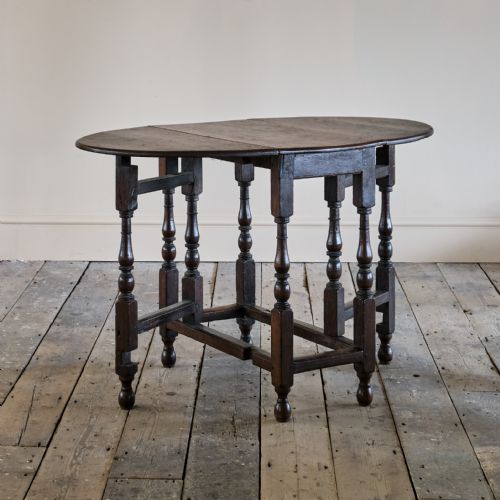
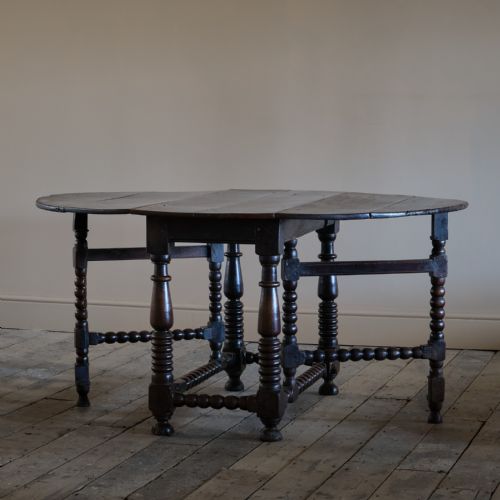


Traditional Oak Drop Leaf Table
A traditional oak drop leaf table offers folding side flaps for flexible space, spanning seventeenth-century originals to twentieth-century revivals.
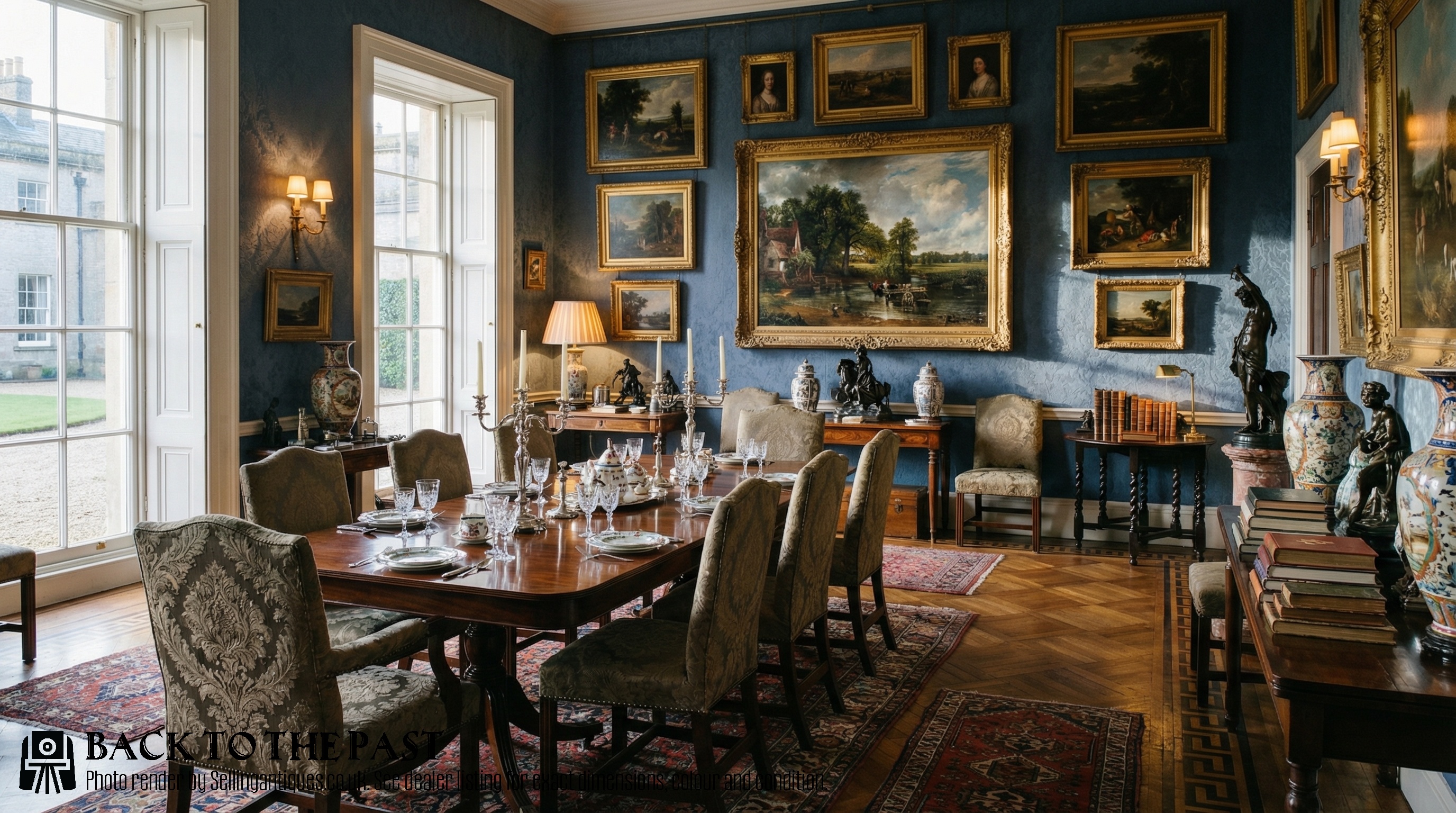
Traditional Oak Drop Leaf Table
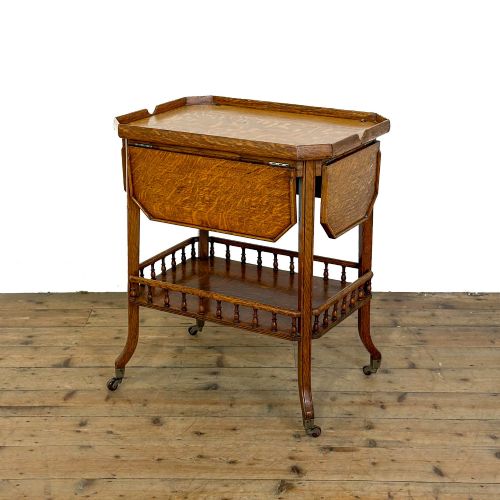
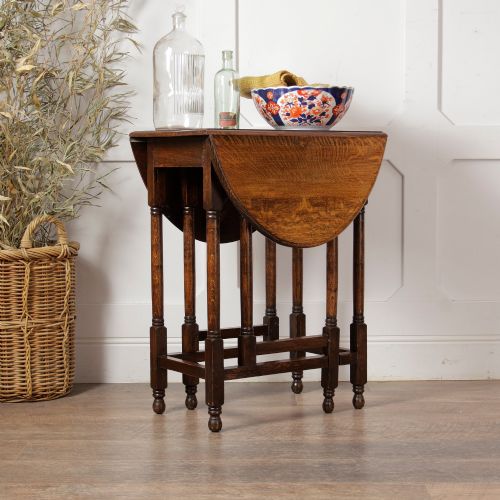
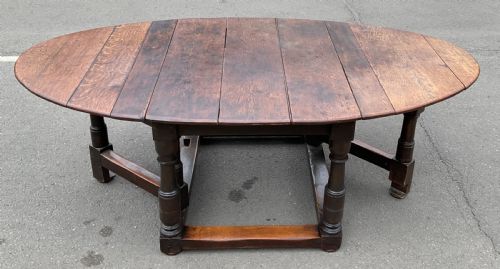
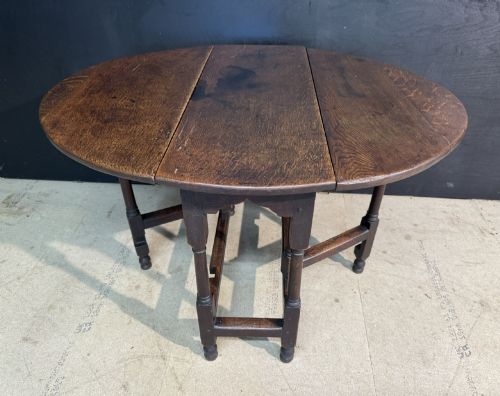
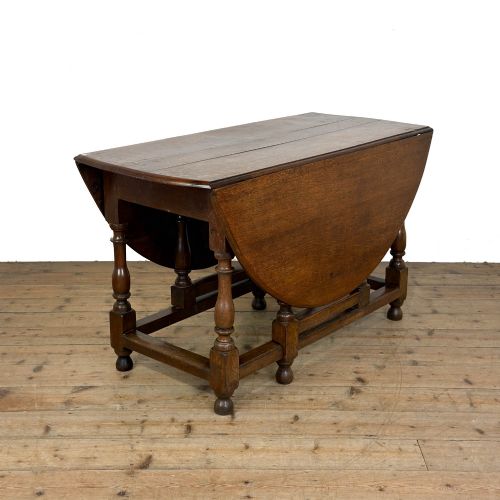
A traditional oak drop leaf table provides a space-saving surface with hinged flaps that drop down when not in use. These pieces appear in forms ranging from large dining tables and gatelegs to smaller coffee tables, side tables, and tea trolleys.
The selection includes seventeenth-century and eighteenth-century examples alongside nineteenth-century pieces and twentieth-century revivals from the nineteen-twenties and nineteen-thirties.
Buyers encounter solid oak construction frequently, accompanied by hardware in brass and iron, and occasional secondary woods such as mahogany.
How they were made
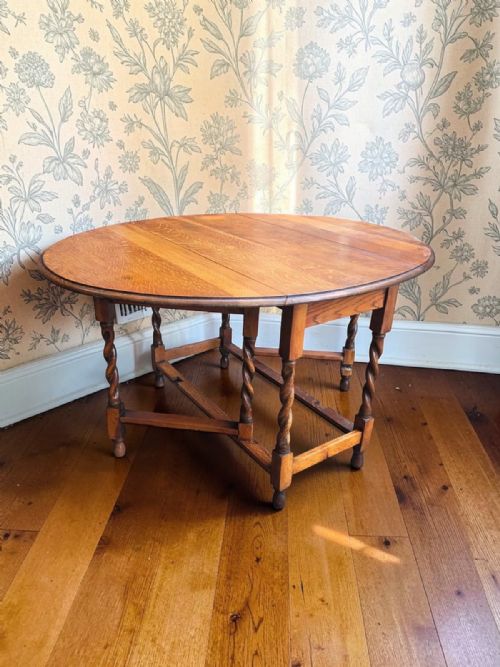
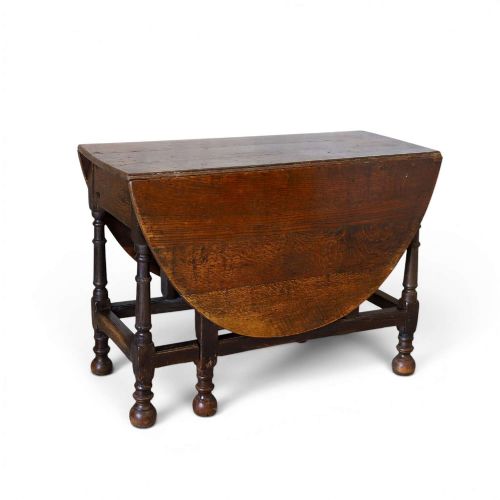
Cabinet makers utilised solid oak to construct frames, tops, and swing legs that support the folding leaves. Turning techniques produced structural components such as barley twist and bobbin turned legs.
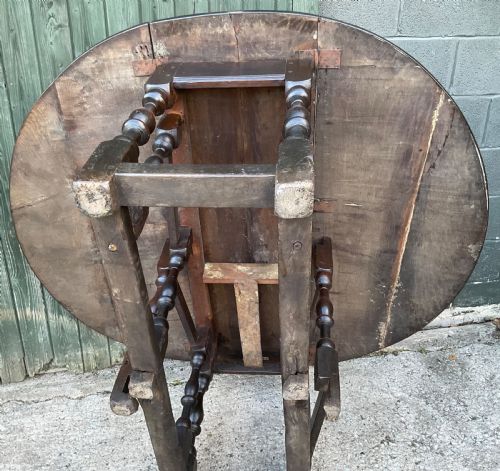
Original iron or brass hinges secure the drop sides to the central fixed top, allowing the leaves to pivot smoothly on gateleg actions.
Materials recorded across the selection include solid oak, brass, iron, metal, mahogany, and leather.
What varies in quality
The integrity of the timber frame and the smoothness of the gateleg mechanism dictate the grade of an example. Superior pieces retain original hinges, patinated surfaces, and sturdy turned supports without excessive replacement timber.
The Traditional Oak Drop Leaf Table Glossary
- Gateleg table
- A table with hinged flaps supported by legs that swing outward like a gate to hold the leaves aloft.
- Bobbin turning
- A form of woodturning on a lathe that creates a series of rounded spheres resembling bobbins along the length of a leg.
- Barley twist
- A spiral turning style resembling a twisted rope, commonly found on seventeenth-century and revival table legs.
- Drop leaf
- A table top configuration comprising a fixed centre section and movable side flaps connected by hinges.
- Patina
- The surface sheen and colour developed on wood through age, handling, and wax polishing over centuries.
Traditional Oak Drop Leaf Table: Frequently Asked Questions
How do I seat people around a gateleg table?
Swing the supporting gate legs outward from the frame to lock the drop flaps into a horizontal position, creating an extended surface for dining.
Ensure the swinging legs are positioned securely beneath the leaves to distribute weight evenly before placing items on the ends.
Are these tables suitable for small rooms?
Drop leaf designs fold down compactly against walls or into narrow profiles when floor space is needed.
Raising one or both flaps adapts the surface area instantly for dining, working, or side placement.
How do I identify a seventeenth century piece?
Early examples often display bobbin turned or heavy turned underframes, pegged tenon joints, and dense timber with deep patination.
Construction details on older tables reveal hand-working marks and period-appropriate iron or brass hardware.
What is the difference between a dining and coffee table version?
Dining variants stand at standard table height with substantial gateleg framing designed to hold weight and accommodate chairs.
Coffee table versions are built lower to the floor, often originating from twentieth-century adaptations or smaller occasional formats.