
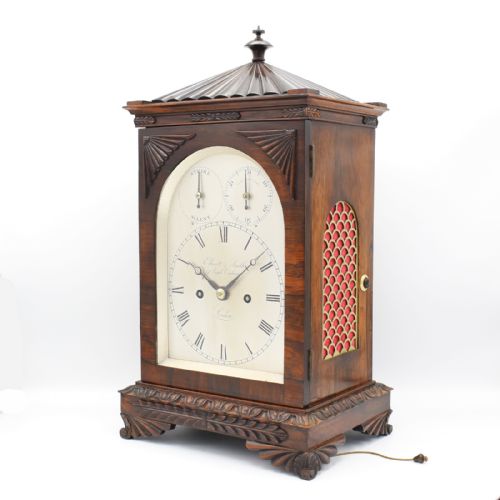
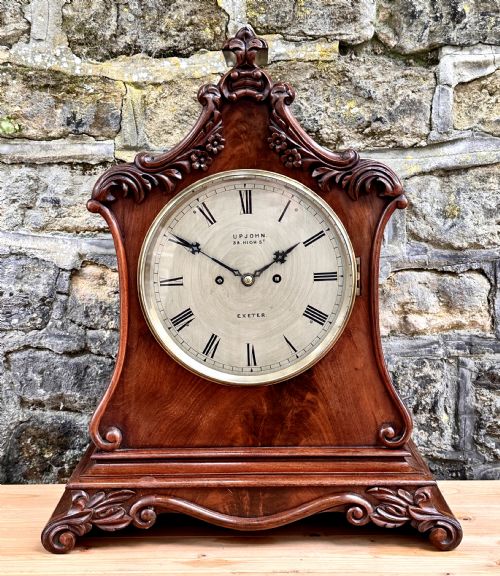


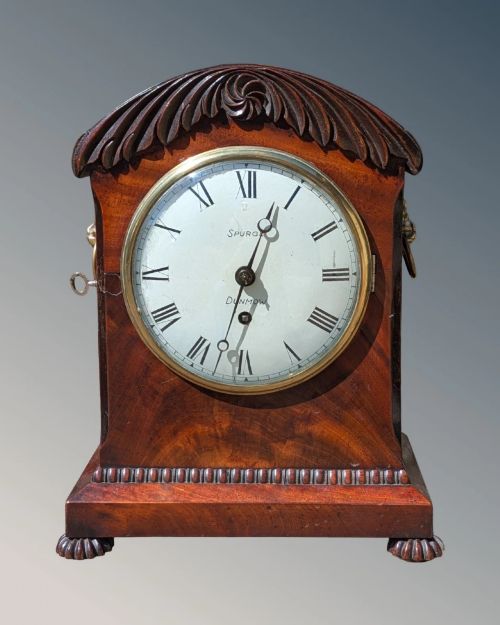


Traditional English Bracket Clock
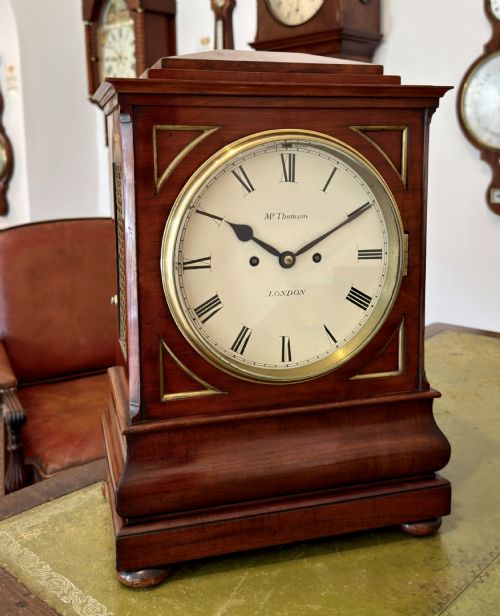
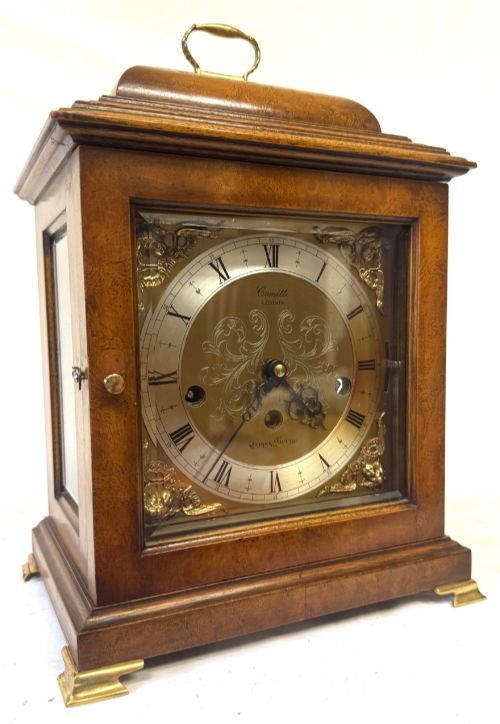
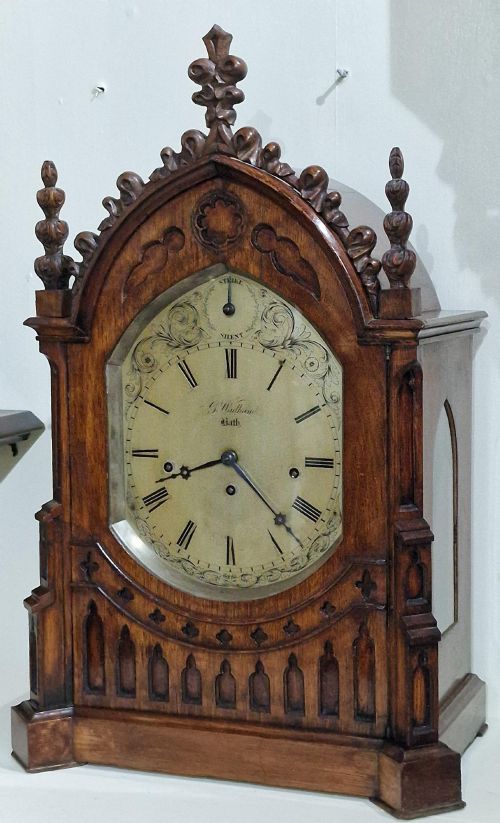
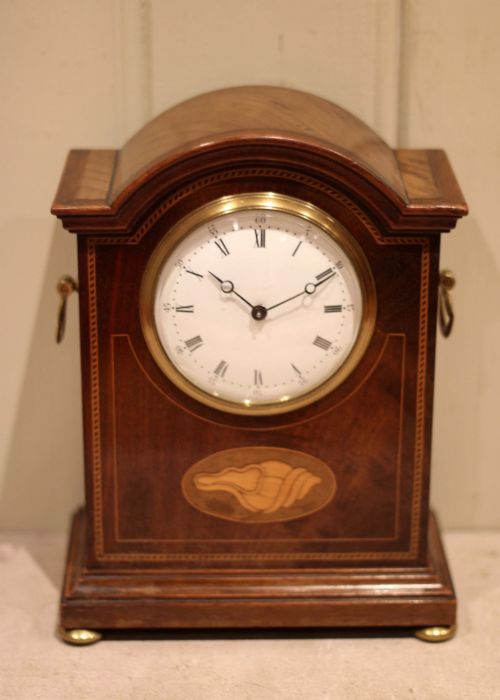
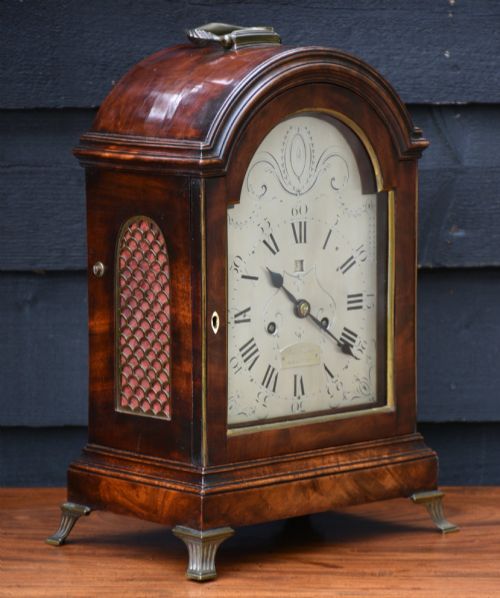
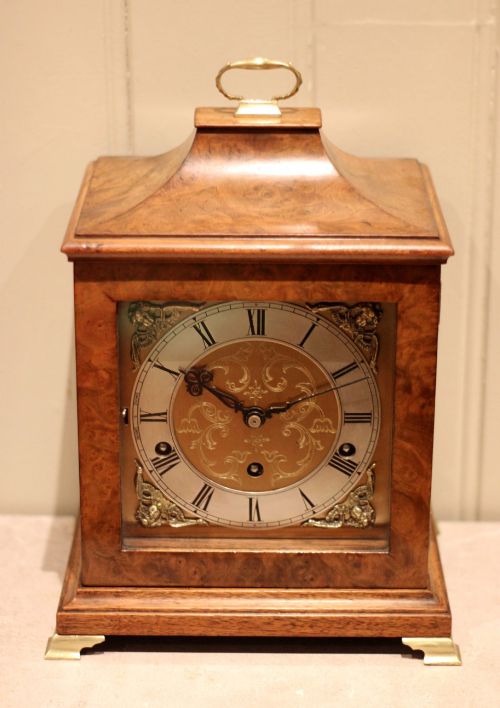
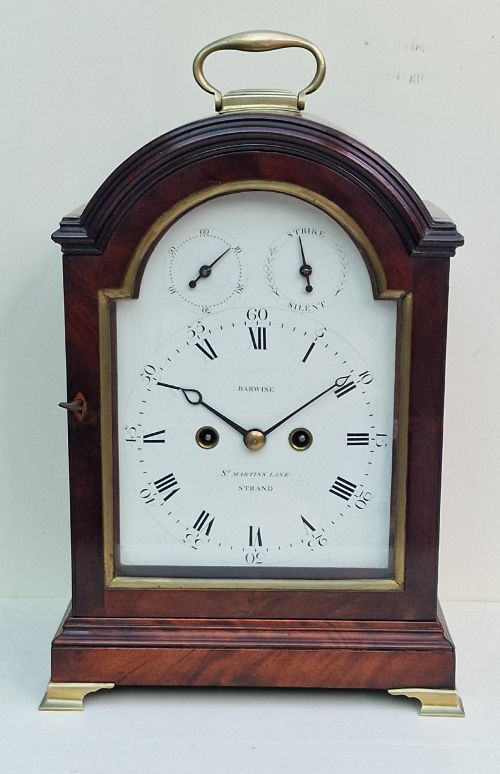
A traditional english bracket clock brings the steady tick of mahogany, brass and fusee movements into a room.
Traditional English Bracket Clock
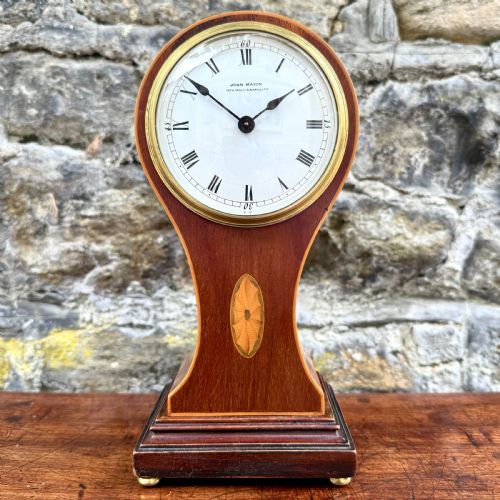
A traditional english bracket clock is primarily a table or mantel timekeeper housed in a wooden case, though wall clocks with built-in brackets also appear.
Most examples found here date from the Georgian, Regency and Victorian periods, constructed with mahogany, walnut or oak cases.
Forms range from simple library timepieces and balloon shapes to elaborate triple-fusee and quarter-striking models.
Materials and movements
Cases are predominantly mahogany, walnut and oak, frequently accented with brass dials, bezels and carrying handles, alongside glass panels to view the dial and movement.
Movements rely on fusee mechanisms, ranging from single to triple fusee setups, driving striking trains or chimes on bells.
The standard of craftsmanship
Quality reveals itself in the crispness of case woodwork, the depth of dial engraving and the complexity of the internal fusee movement.
Signed backplates and works by recorded makers elevate an example far above unsigned utility pieces.
Thomson of London·George Wadham·Barwise·Ellicott & Smith·John Spershott·L. Vick·Webster Cornhill London·Spurge Dunmow·Thomas Moss·John Witherston·Cording of London·Mappin & Webb·Connell of London·Phillips Brothers·Barrett London·Henry Deykin·J. A. Wheatley·Budgen Croydon·Funnell of Brighton·Frodsham & Baker·John Taylor·Desbois & Wheeler
The Traditional English Bracket Clock Glossary
- Bracket clock
- A portable table or mantel clock, originally designed to sit on a wall bracket to project sound.
- Fusee
- A conical pulley connected to the mainspring by a chain or cord, ensuring even power delivery as the spring unwinds.
- Dial
- The face of the clock, typically made of brass or enamel and signed by the maker.
- Striking movement
- A mechanism that sounds the hours or quarters on bells or gongs.
Traditional English Bracket Clock: Frequently Asked Questions
Where should I place a bracket clock?
These clocks are designed for stability on sturdy mantelpieces, tables or dedicated wall brackets where the movement can remain level.
Keeping them away from direct sunlight and drafts preserves both the timber case and the internal mechanics.
What is a fusee movement?
A fusee is a conical drum inside the clock that equalises the pull of the mainspring as it runs down.
This ingenious mechanism ensures the clock maintains consistent timekeeping throughout its running period.
How do I date an antique clock?
Dating relies on stylistic clues in the mahogany, walnut or oak case, alongside the design of the brass dial and feet.
Signatures on the movement or dial pointing to known makers also help place the piece within the Georgian, Regency or Victorian eras.