
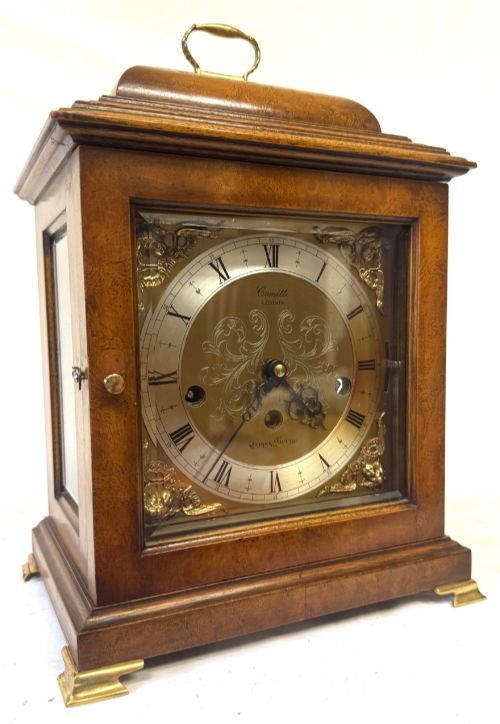
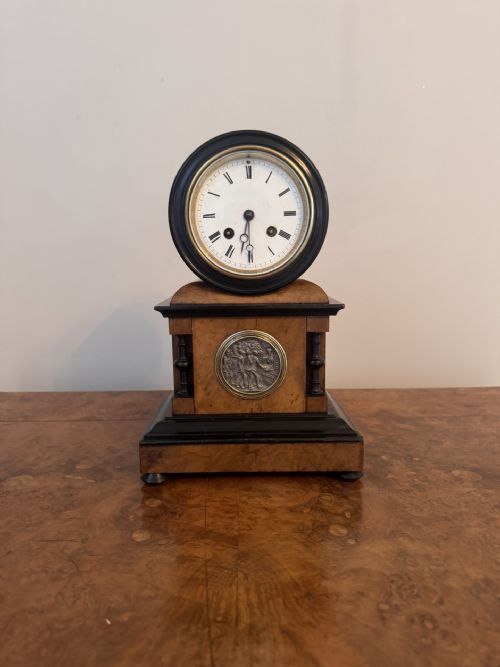
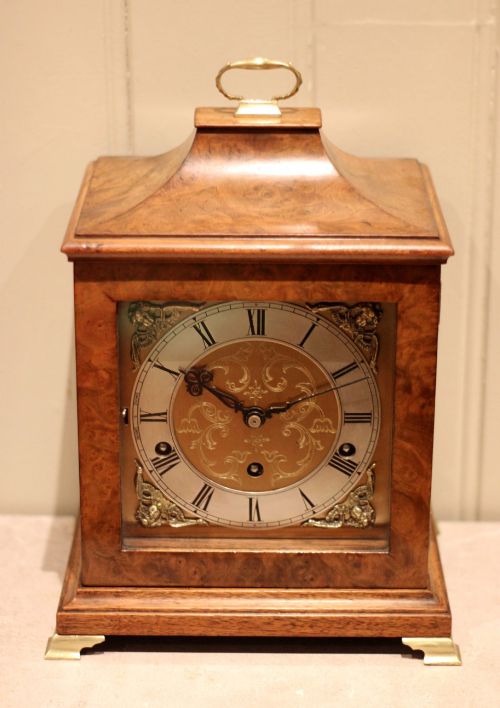
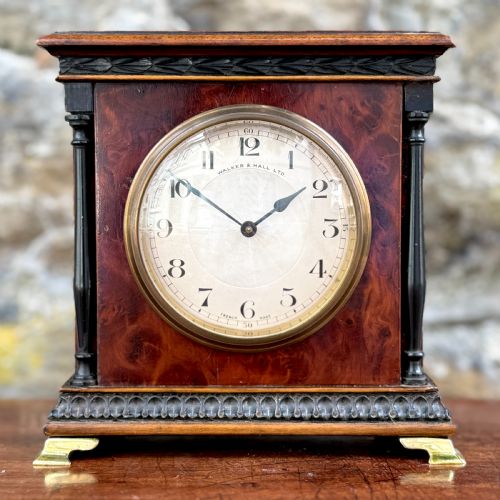
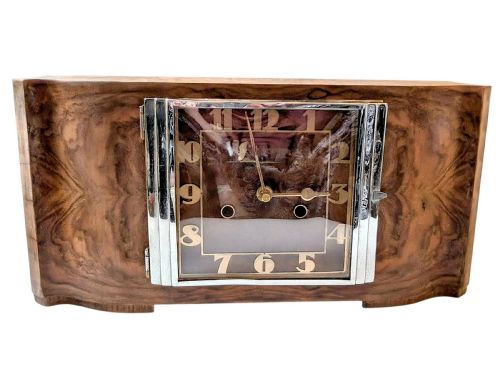
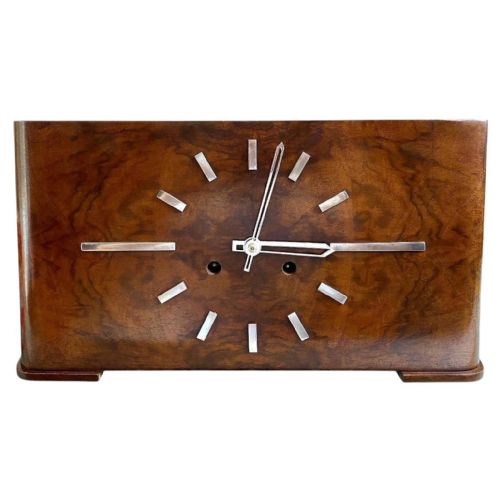


Burr Walnut Mantel Clock
A burr walnut mantel clock brings rich timber figuring and dependable mechanical movement into a room, joining practicality with cabinet-maker skill.
Burr Walnut Mantel Clock
A burr walnut mantel clock sits upon a shelf, desk or bracket, functioning both as a reliable timepiece and a focal point of interior joinery. These objects span the nineteenth and twentieth centuries, taking forms such as arch tops, basket top designs and lyre shapes.
The versions most commonly met on this page range from Victorian and Edwardian examples to Art Deco and mid-century pieces. Makers working across England and continental Europe housed precise movements inside these distinctive wooden cases.
What varies in quality
The richness and symmetry of the burr walnut veneer dictate much of the visual appeal, separating standard timber selections from exceptionally figured cases. Finer examples display a continuous, unblemished grain wrap that follows the architectural contours of the arch top or bracket case.
Mechanical pedigree also defines the piece, distinguishing standard time-only movements from complex multi-tune chiming mechanisms produced by renowned makers. The integration of quality cast ormolu mounts, heavy bevelled glass and clean enamel dials further separates the ordinary from the exceptional.
Listings feature cases constructed from burr walnut, ebonised wood, fruitwood and amboyna, accented with brass, chrome, enamel and gilt ormolu.
Comitti Of London·Mappin And Webb·Walker And Hall·Haller·Lenzkirch·Elliott Of London·Baldwin Of Loughborough·Thwaites And Reed
The Burr Walnut Mantel Clock Glossary
- Bracket clock
- A portable clock designed originally to sit on a wall bracket or table. Many examples feature a carrying handle on top.
- Ormolu
- Gilded bronze or brass used for decorative mounts and feet. This material adds metallic contrast to the wooden clock case.
- Timepiece
- A clock that tells the time without striking the hours or playing chimes. It requires a simpler movement than a chiming clock.
- Ting tang
- A two-bell quarter-striking movement. The mechanism sounds a two-note sequence on the quarters.
Burr Walnut Mantel Clock: Frequently Asked Questions
How often should a mechanical mantel clock be wound?
Most mechanical mantel clocks require winding every eight days to maintain accurate timekeeping.
Failing to wind the movement regularly can cause the clock to stop, though over-winding should be strictly avoided.
Where is the best place to put a mantel clock?
These clocks belong on stable surfaces like mantelpieces, sideboards, desks or dedicated wall brackets.
Keeping the surface level ensures the pendulum swings evenly and the escapement ticks without stopping.
How do I identify an Edwardian burr walnut clock?
Edwardian pieces often feature softer inlaid details and lighter veneers reflecting early twentieth-century taste.
Comparing the case proportions and dial style against documented Victorian and Art Deco examples helps confirm the period.
What maintenance does a burr walnut case need?
The wooden case requires minimal care beyond dusting with a soft, dry cloth to protect the polished veneer.
Direct sunlight and sudden temperature changes should be avoided to prevent the walnut from drying out or cracking.