
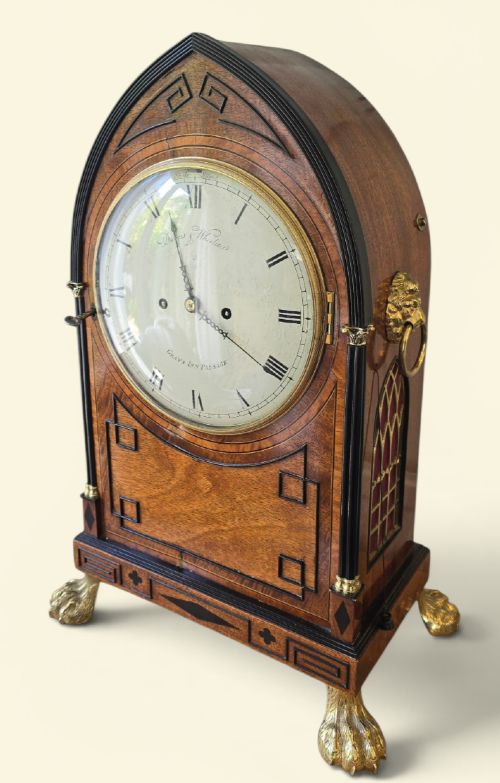

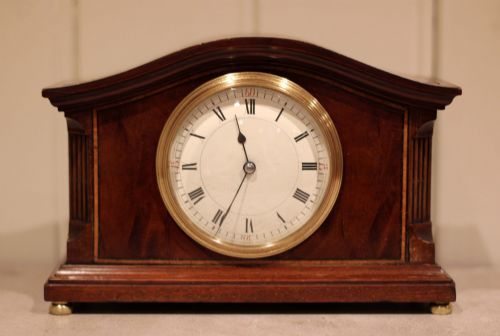
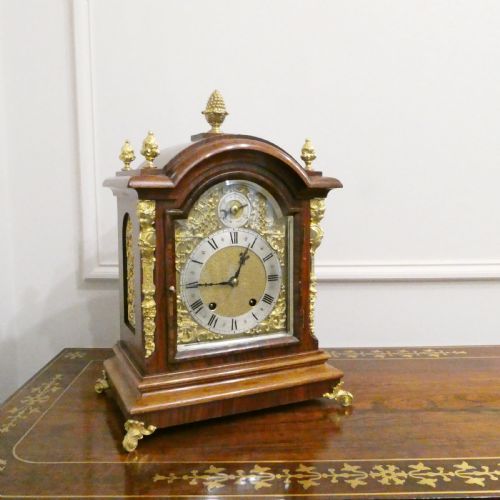
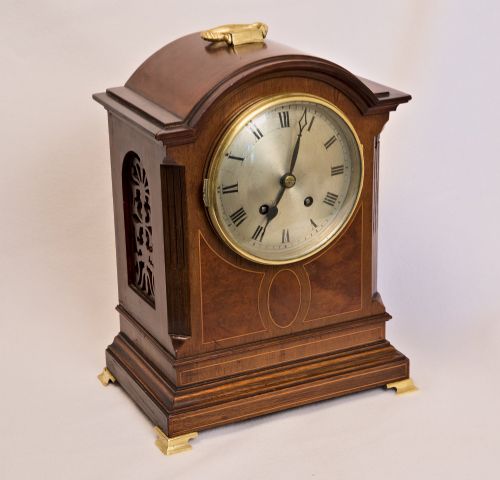


Arch Top Mantel Clock
An arch top mantel clock brings architectural form and mechanical precision to a room, driven by centuries of cabinetmaking and horological skill.
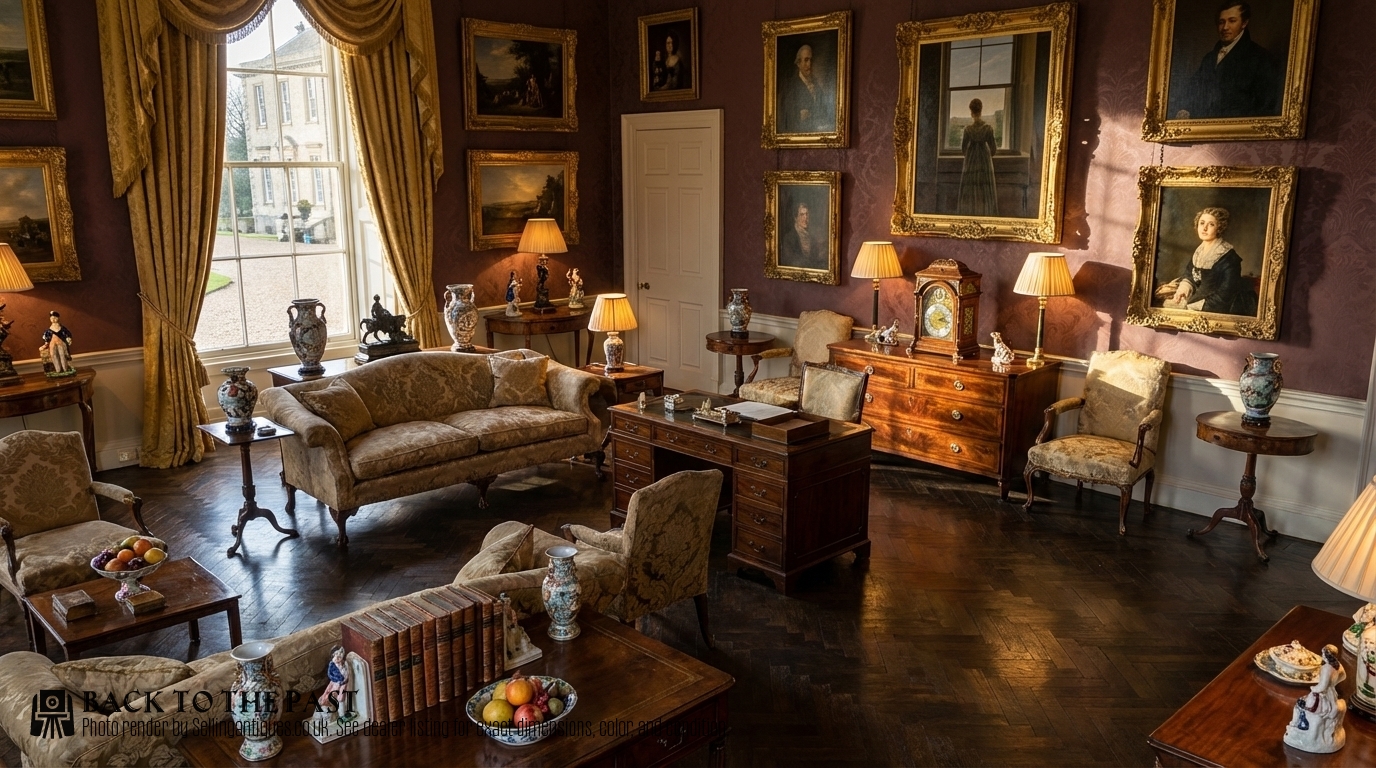
Arch Top Mantel Clock
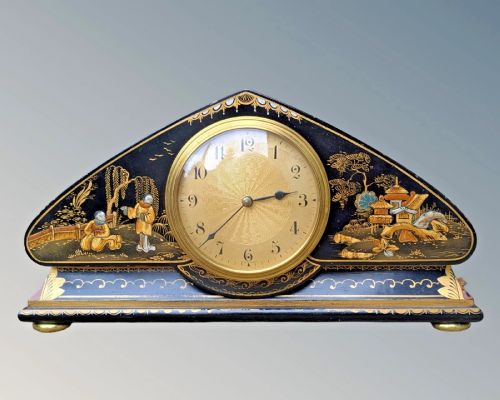
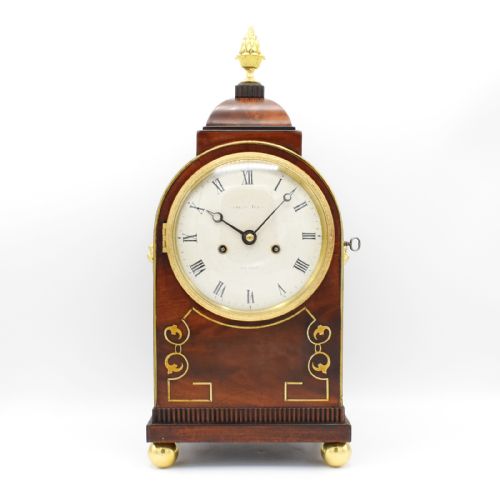
An arch top mantel clock combines a curved upper case silhouette with a domestic clock movement intended for display on a shelf or mantelpiece. These pieces span periods from the Georgian and Regency eras through to the Victorian, Edwardian, and early twentieth century.
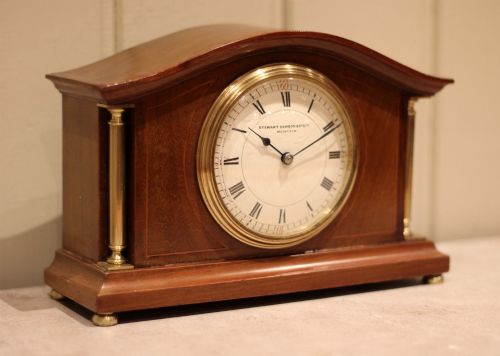
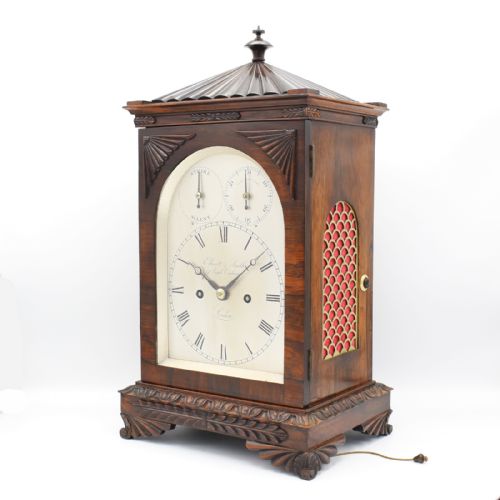
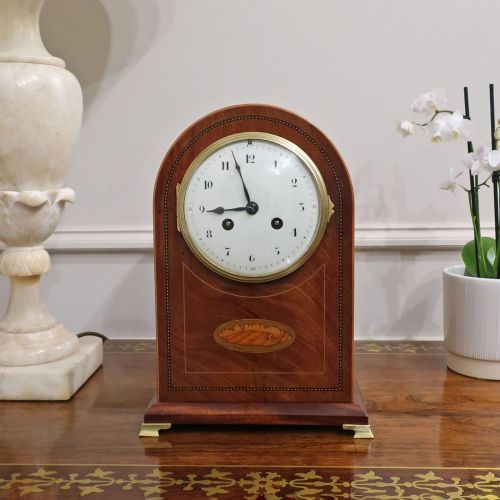
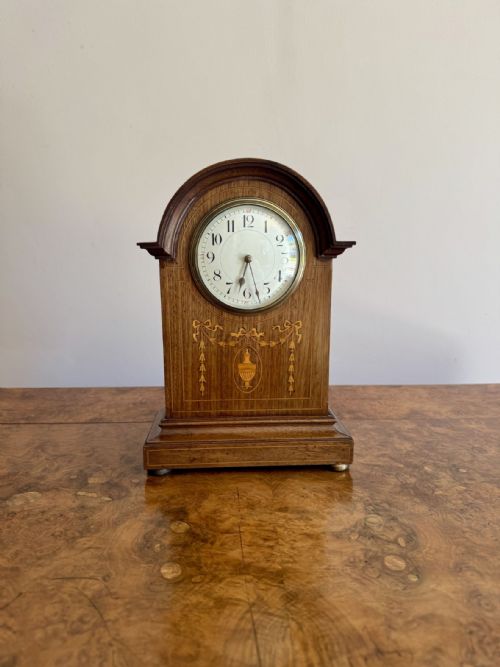
The most frequent examples encountered on this page are mahogany cases featuring inlaid decoration or brass mounts, often dating from the Edwardian period or the nineteenth century. Forms range from simple timepieces to striking bracket clocks with complex escapements.
Makers and retailers represented across these pieces include provincial workshops as well as noted London and continental houses, creating a diverse selection of domestic timekeepers.
Materials and Construction
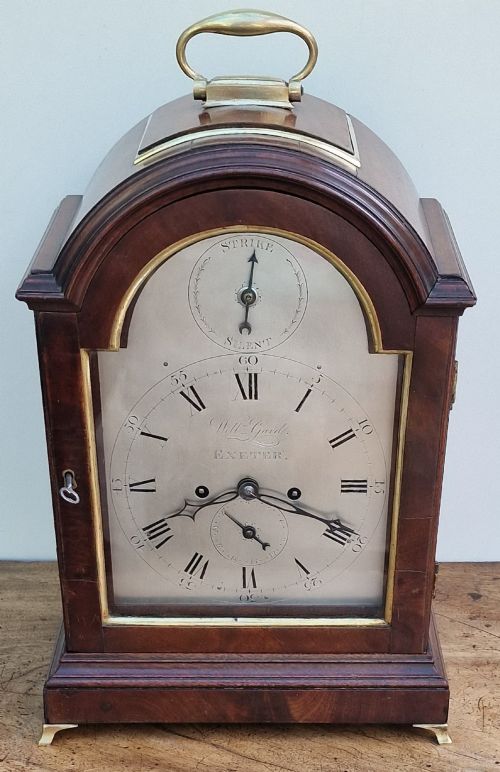
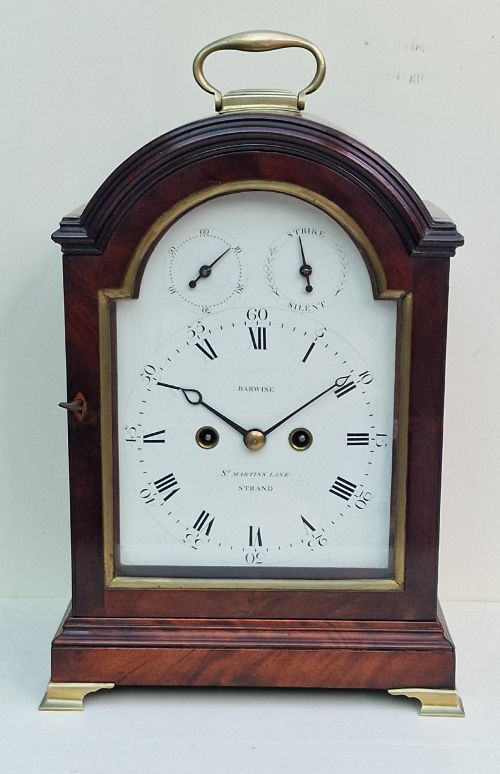
Movements rely on mechanical systems like fusee drives, twin fusee trains, and verge escapements, paired with enamelled or silvered metal dials protected by glass panels. Specialised striking mechanisms, including ting-tang arrangements, govern the auditory output of these clocks.
The selection includes pieces spanning the Georgian, Regency, Victorian, Edwardian, and early 20th century periods.
Evaluating the Pieces
Distinction across the range rests upon the crispness of the cabinetwork, the depth and execution of the wood inlay, and the integration of brass mounts. Finer examples display harmonious proportions where the arched silhouette balances precisely with the dial layout.
Internal craftsmanship dictates the standing of a clock, marked by the finish of the movement plates and the reputation of the horologist who signed the dial. Originality of components and the preservation of surface patina further separate standard production from exceptional examples.
William Gard Exeter·Barwise London·Charles Pratt London·Ellicott Smith·Desbois Wheeler·Schneckenburger·S Simpson Southampton·Cording of London·Phillips Brothers·Wilkinson Leicester·Hyde of Salisbury·Louis Recordon·Perigal London·Lenzkirch·Winterhalder Hofmeier·John McGregor Wick·Perigal Duterrau·Harrods
The Arch Top Mantel Clock Glossary
- Fusee
- A conical pulley used in spring-driven clocks to maintain an even pull as the mainspring unwinds. This mechanism helps ensure steady timekeeping throughout the power reserve.
- Verge escapement
- An early type of clock escapement featuring a crown wheel and vibrating balance or pendulum. It represents traditional mechanical engineering in older bracket clocks.
- Ting-tang
- A striking mechanism that sounds two different notes on quarters or half-hours. It employs two hammers and two bells or gongs.
- Silvered dial
- A metal clock face treated with a silver compound to produce a matte finish, typically engraved with numerals and maker details. This treatment provides high contrast against dark wooden cases.
- Bracket clock
- A portable table clock originally designed to sit on a wall bracket or a furniture surface. Many examples feature carrying handles on top of the case.
Arch Top Mantel Clock: Frequently Asked Questions
What is an arch top mantel clock?
An arch top mantel clock is a portable timepiece housed in a wooden case featuring a curved upper profile. These clocks were designed to sit on mantelpieces, tables, or specialised wall brackets in domestic interiors.
They combine decorative cabinetwork in timbers like mahogany or walnut with mechanical movements driven by springs and weights. The resulting objects serve both a practical timekeeping function and a decorative role in a room.
How do you wind a fusee movement?
Winding a fusee movement involves inserting a key into the dial aperture and turning it clockwise until the mainspring is fully tensioned. Care must be taken not to overwind the mechanism as it reaches the end of its reserve.
The fusee cone regulates the power delivery from the spring, so steady turns ensure the internal chain or cord winds correctly around the spiral grooves.
How do you date an antique clock?
Dating an antique clock involves examining the style of the wooden case, the materials used, and any signatures inscribed on the dial or movement. Cabinet styles shifted from Georgian architectural forms to Edwardian inlaid designs over the centuries.
Additional clues come from the type of escapement, the complexity of the movement, and records of the maker or retailer stamped onto the brass plates.
Where should a bracket clock be placed?
A bracket clock should be placed on a stable, level surface away from direct sunlight, dampness, and major temperature fluctuations. Historically, they rested on dedicated wall brackets or sturdy mantelpieces.
Placing the clock on a level foundation ensures the pendulum or balance wheel beats evenly, which is essential for accurate mechanical timekeeping.
What does a ting-tang strike mean?
A ting-tang strike refers to a specific two-hammer chiming arrangement that sounds two distinct notes at the quarters or half-hours. The hammers hit two separate bells or gongs in sequence.
This acoustic feature provides a gentle auditory signal rather than a full hour chime, a detail often found in nineteenth-century bracket clocks.