

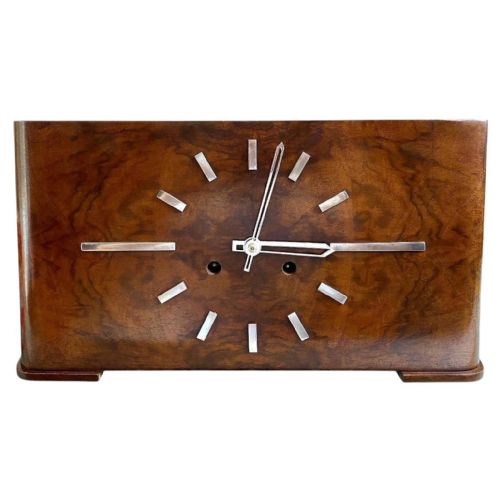


Walnut Shelf Clock
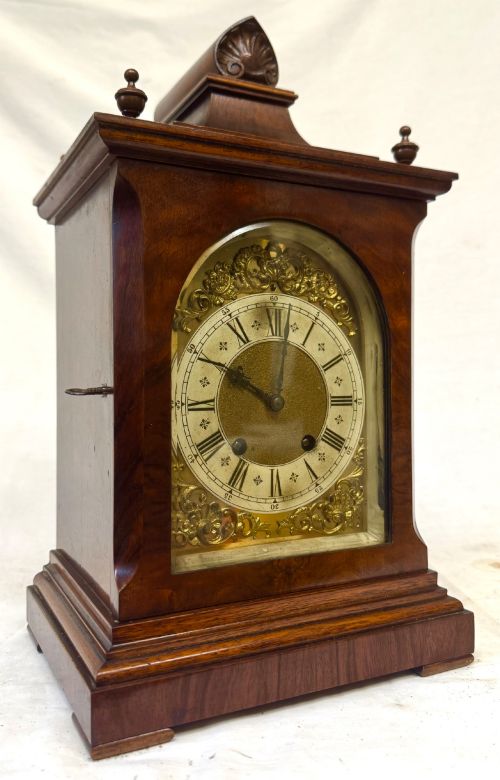
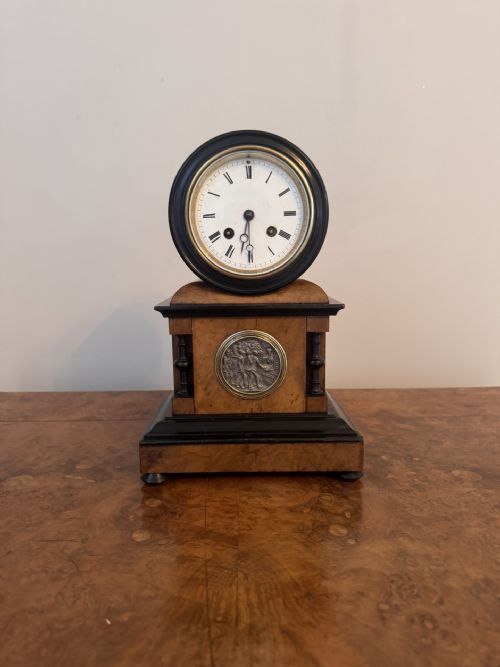
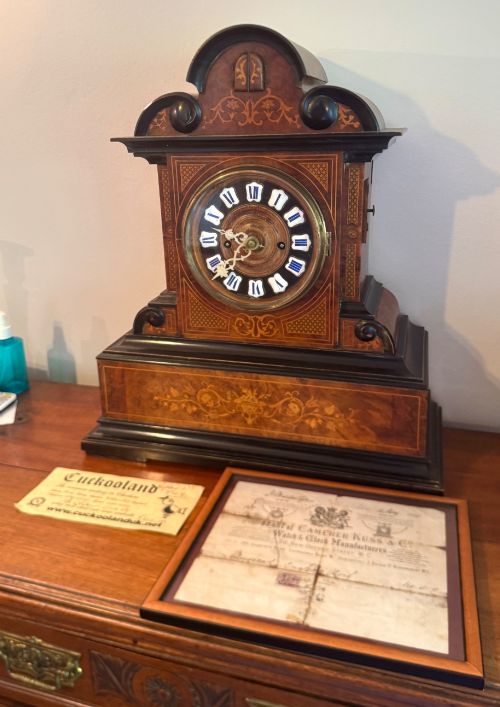
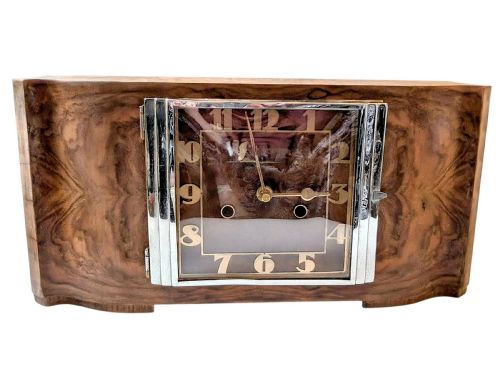
These walnut shelf clock examples combine timber cases with reliable mechanical movements, offering functional timekeeping alongside period character for a mantelpiece.
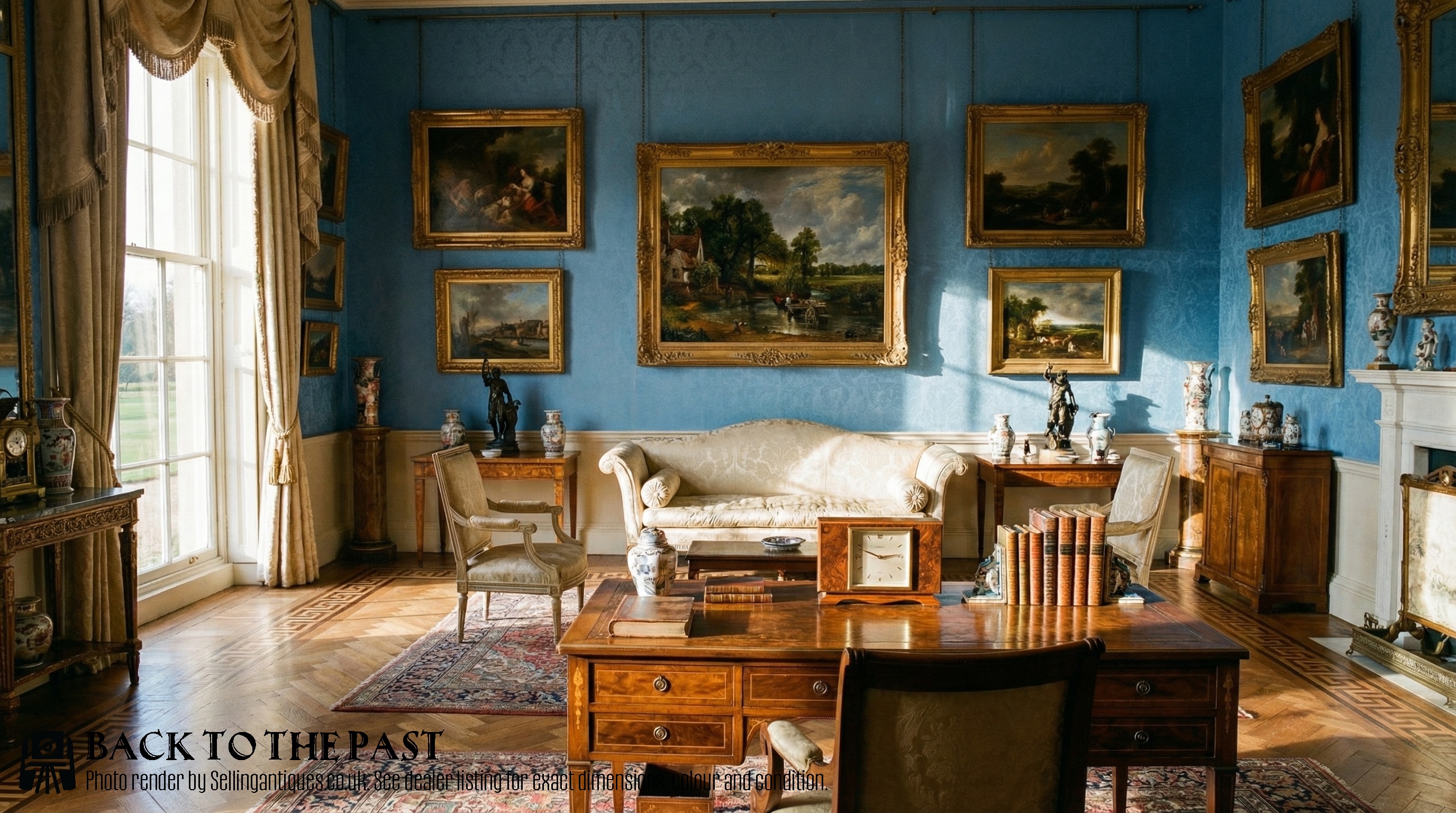
Walnut Shelf Clock
A walnut shelf clock sits comfortably on mantelpieces and brackets, bringing warm timber tones and functional timekeeping to a room. Buyers searching for a walnut shelf clock encounter pieces ranging from Victorian and Edwardian traditional designs to geometric Art Deco models.
The selection includes compact pendulum clocks, bracket forms, and chiming mantel pieces produced across the nineteenth and twentieth centuries. Makers from Britain, Germany, and France contributed to this variety, utilising diverse movement types and cabinet proportions.
Many examples feature figured veneers, glass inspection doors, and brass dials, reflecting the prevailing aesthetic tastes of their respective decades. These timepieces served both domestic utility and decorative display in period interiors.
Materials and construction methods
Cabinet makers utilised solid walnut and decorative veneers such as burr walnut applied over secondary carcases, sometimes combining ebonised details or marquetry. Glass protected the dial faces, while brass featured extensively in bezels, pendulum bobs, and mechanical plates.
Some timekeepers feature lyre-shaped wooden bodies complete with delicate gilt ormolu mounts reminiscent of classical musical instruments.
Distinctions in construction and finish
Quality depends upon the precision of the cabinet work, the choice of figured veneer timber, and the reputation of the movement maker. Finer pieces display crisp carving, balanced proportions, and high-grade mechanical movements from established workshops.
Simpler models rely on straightforward timber cases and standard time-only or striking movements, whereas superior examples often feature intricate marquetry, ormolu mounts, or complex chiming mechanisms.
H.A.C.·Lenzkirch·Haller·Elliott·Perivale·Bravingtons Ltd·Connell of London·Pfeilkreuz Junghans
The Walnut Shelf Clock Glossary
- Bracket clock
- A portable timekeeper originally designed to sit on a wall bracket or shelf. These pieces typically feature a carrying handle and detailed timber or brass casework.
- Burr walnut
- A prized timber harvested from walnut tree growths, producing swirling, highly decorative grain patterns. Cabinet makers utilised this veneer on prominent exterior surfaces.
- Veneer
- A thin layer of superior wood applied over a stable base carcase. This technique allowed craftsmen to display decorative grain figures without using solid expensive timber throughout.
- Mantel clock
- A domestic timekeeper designed to stand on the shelf above a fireplace. These objects developed diverse architectural styles across the nineteenth and twentieth centuries.
- Pendulum
- A suspended weight that swings to regulate the speed of a clock movement. Its regular oscillation ensures accurate timekeeping within mechanical shelf clocks.
Walnut Shelf Clock: Frequently Asked Questions
How do I wind a mechanical shelf clock?
Most spring-driven models require a matching winding key inserted into the dial holes to tension the mainsprings.
Care should be taken not to overwind the movement, stopping as soon as resistance is felt.
What periods do these clocks cover?
The selection spans from the nineteenth century through the Edwardian era and into the Art Deco period of the 1920s and 1930s.
Victorian and Edwardian pieces tend towards traditional woodwork, while later items embrace geometric styling.
Are these clocks suitable for daily use?
Many mechanical movements remain robust enough for regular timekeeping and striking when properly set up on a level surface.
Setting the beat accurately ensures the pendulum maintains a steady rhythm.
How do I identify a veneer case?
Veneered surfaces display continuous, highly decorative grain patterns across panels that would be impossible to achieve with solid planks.
Edges and corners may reveal the thin layer of superior timber meeting the secondary carcase underneath.