

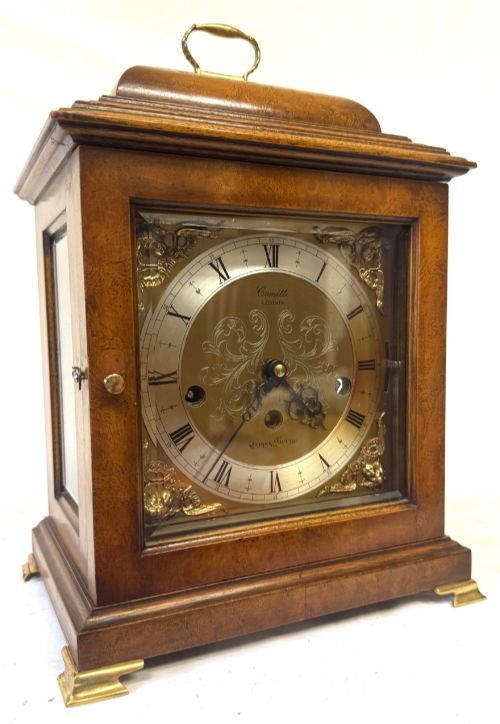
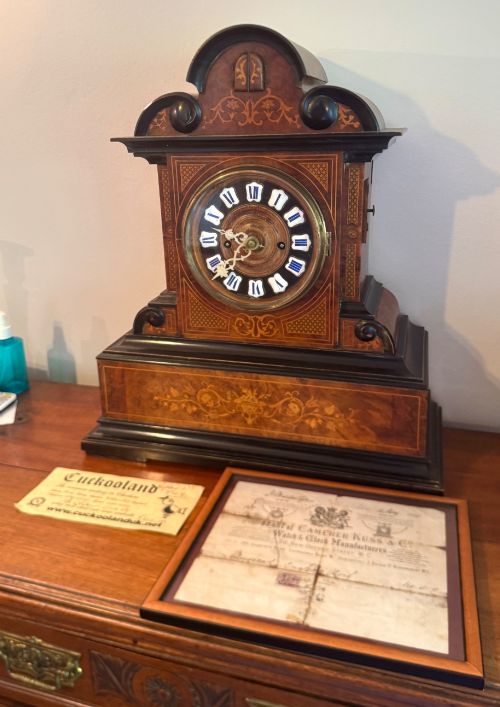

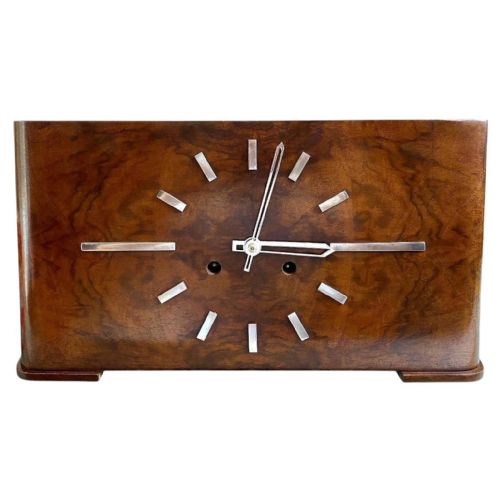


Brown Walnut Table Clock
These brown walnut table clock examples bring rich timber grain and reliable mechanical movement straight to a mantelpiece.
Brown Walnut Table Clock
A brown walnut table clock sits on a desk or mantel, bringing timekeeping and timber presence into a room. When you search for a brown walnut table clock, you encounter various periods ranging from the eighteenth century to the mid-twentieth century.
Examples originate from makers and workshops in England, Germany, and France. You will find pieces driven by eight-day movements, fourteen-day strikes, and multi-tune mechanisms.
Materials and construction
Cabinetmakers utilised solid walnut, burr walnut, and walnut veneer to shape the wooden housings. Marquetry inlay, ebonised details, and carved woodwork add texture and contrast to the timber cases.
Dials incorporate brass, enamel, and chrome elements protected behind glass plates. Movements rely on metal gears and traditional escapements to drive the striking and chiming functions.
Some Black Forest examples feature hand-carved wooden details that bring woodland creatures right onto the shelf.
Judging quality in these clocks
The fineness of the timber veneer or the depth of the hand-carved woodwork dictates the immediate visual appeal of the case. Burr walnut selections and intricate marquetry display superior cabinetmaking skill compared to plain timber housings.
Internal mechanical complexity separates standard timepieces from finer productions. Multi-tune movements, specialised escapements, and signed dials by established makers elevate the mechanical merit of the piece.
H.A.C.·Comitti Of London·Mappin & Webb·Haller·Elliott of London·Bravingtons Ltd of London·John Taylor of London
The Brown Walnut Table Clock Glossary
- Mantel clock
- A portable clock designed to stand upon the mantelpiece above a fireplace. These domestic timepieces often feature decorative wooden cases and striking mechanisms.
- Bracket clock
- A portable spring-driven clock originally built with a bracket to hang upon a wall or rest on a table. Later versions retained the name while functioning as large table clocks.
- Escapement
- The mechanical linkage that converts rotational power into controlled impulses for the pendulum or balance wheel. The tic tac escapement is one traditional form controlling the beat.
- Walnut veneer
- A thin layer of decorative walnut timber applied over a secondary wood base. This technique permits intricate grain patterns across the visible surfaces of the clock case.
- Marquetry
- The art of applying pieces of veneer to a structure to form decorative patterns and pictures. Floral and geometric motifs frequently adorn the timber panels.
Brown Walnut Table Clock: Frequently Asked Questions
How do I wind a mechanical desk clock?
Insert the winding key into the designated arbour on the dial face and turn it gently until you feel resistance. Avoid over-winding, as this can damage the internal spring.
Ensure you support the clock case with one hand while operating the key with the other. Regular winding keeps the movement running at a consistent beat.
What is a bracket clock?
A bracket clock is a portable spring-driven timepiece designed to sit on a table or shelf. The term originates from the wall brackets that early versions rested upon.
These pieces often feature sturdy carrying handles on top and elaborate dial arrangements inside glazed doors.
Where should I place a wooden mantel clock?
Position your clock on a stable, level surface away from direct sunlight, radiators, and damp areas. Temperature fluctuations can affect the wood and the metal movement inside.
Placing the clock firmly on a mantelpiece or desk ensures the pendulum or balance wheel beats evenly.
How do I identify an Art Deco clock?
Art Deco clocks display geometric forms, streamlined silhouettes, and contrasting materials like chrome and walnut veneer. The design emphasises clean lines and modern styling popular around the 1920s and 1930s.
Dials often feature stylised numerals and bold geometric chapter rings.