
Traditional Dining Server
Traditional dining server pieces bring formal service and timeless storage to the dining room through substantial timber construction.
Traditional Dining Server
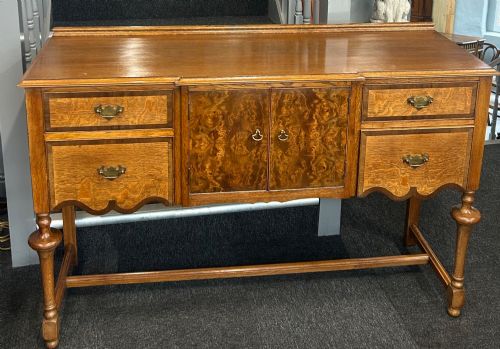
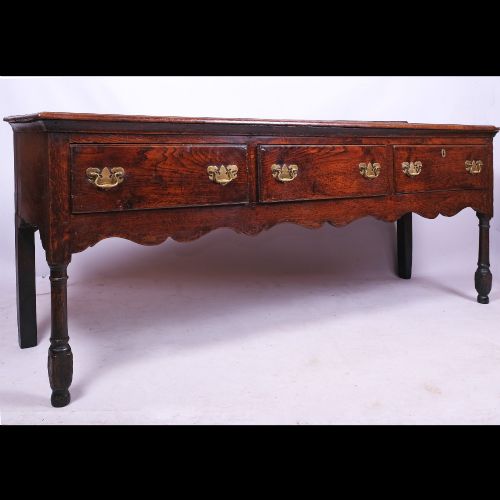
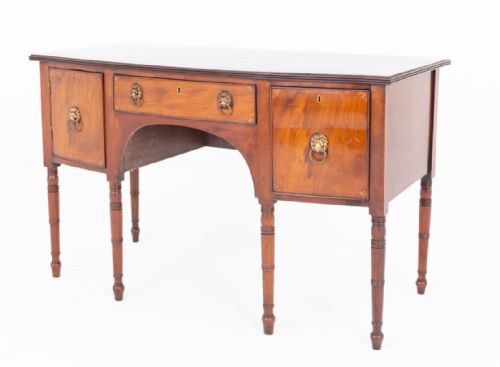
A traditional dining server encompasses large sideboards, serving tables, and dresser bases designed to assist with meal service and tableware storage. These pieces trace their origins through the Georgian, Victorian, and Edwardian periods, appearing in durable woods built for daily domestic use.
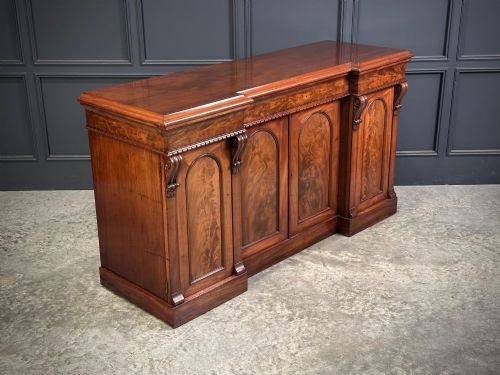
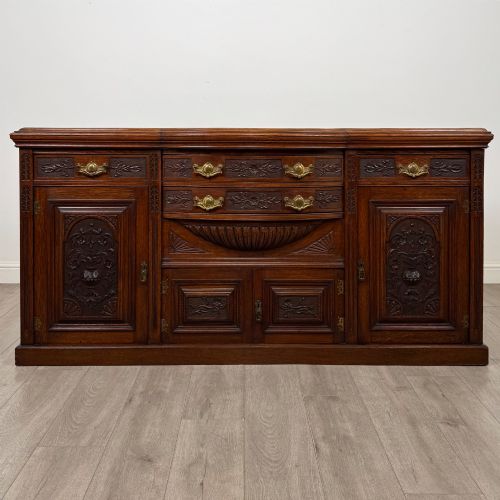
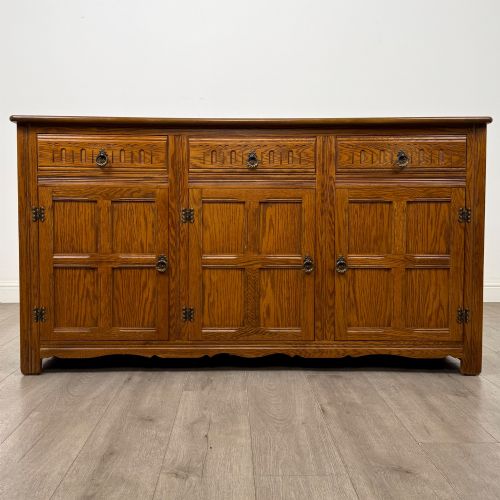
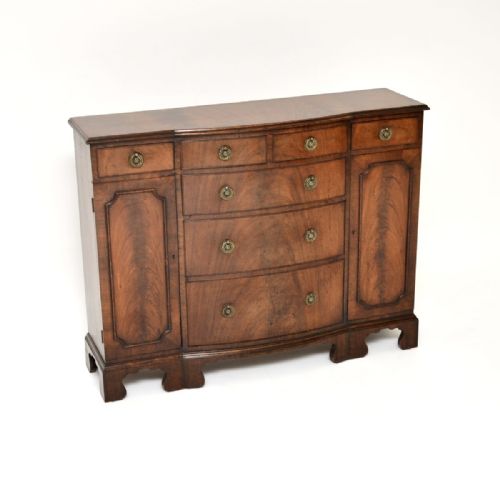
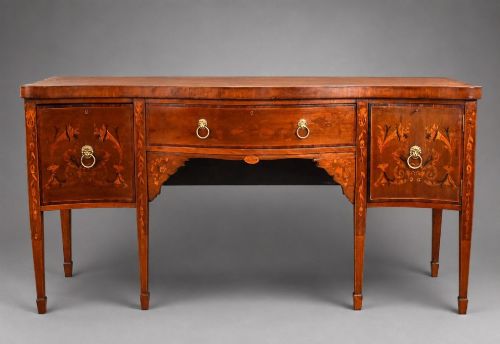
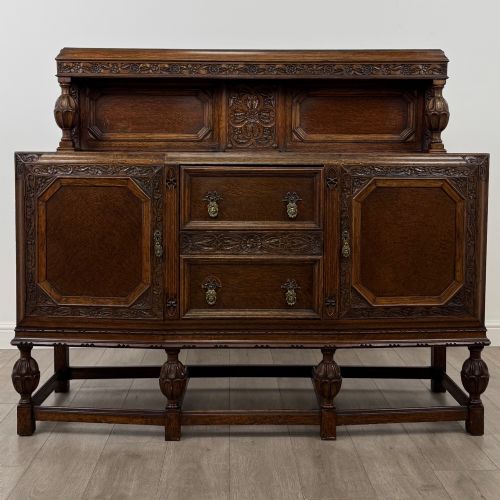
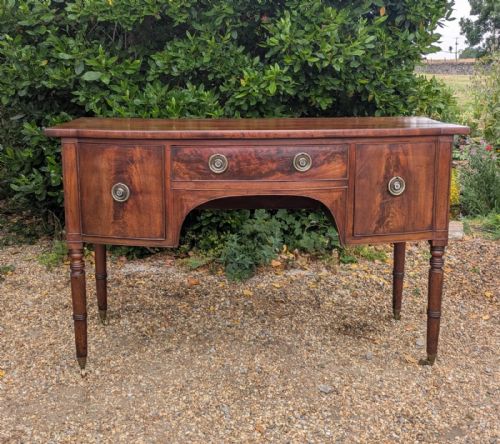
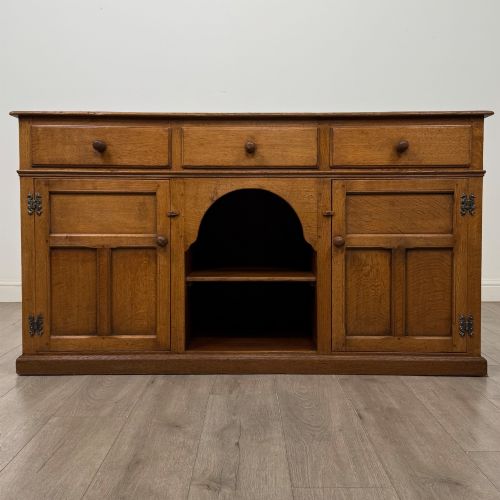
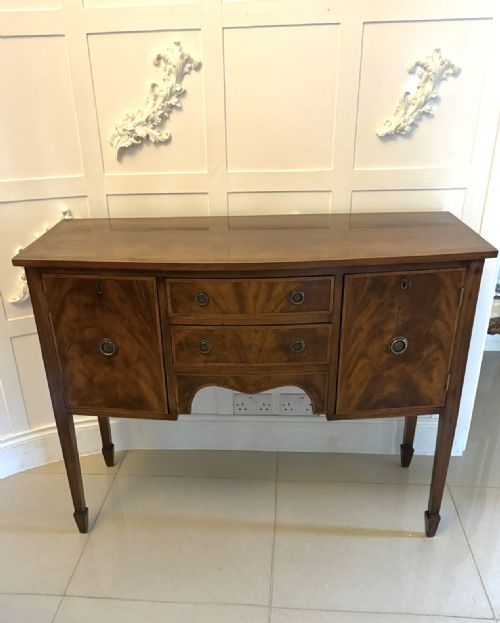
The pieces most frequently met on this page are mahogany sideboards and oak dresser bases originating from the nineteenth and early twentieth centuries. They combine enclosed cupboards with flat top surfaces meant for holding dishes during a family dinner.
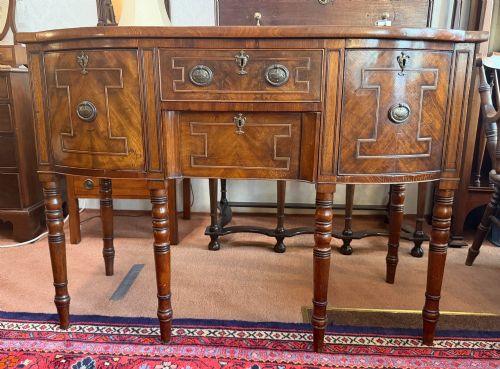
Buyers select these forms to anchor a dining room with period character while gaining practical storage for linens and serving platters. Their proportions range from compact bow-front cabinets to long breakfront designs suited for larger spaces.
Factors That Determine Quality
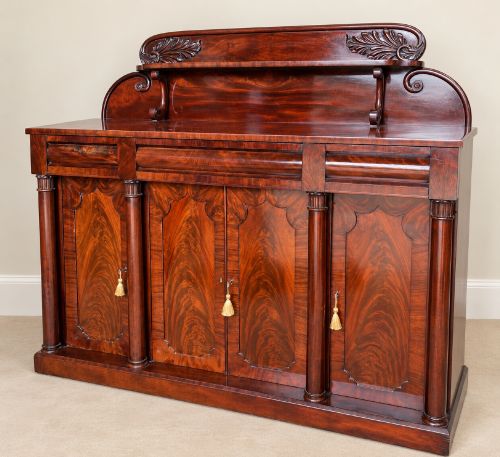
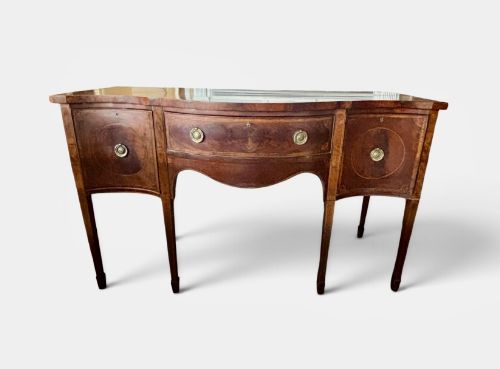
The caliber of a traditional dining server rests on the selection of timber and the precision of its veneers. Pieces featuring figured flame mahogany or matched burr walnut demonstrate superior material choice by the original cabinet maker.
Structural integrity and the crispness of hand-carved ornamentation separate standard utility items from finer examples. Well-executed serpentine curves and intact original brass fittings indicate a higher grade of manufacture across Georgian and Victorian workshops.
Styles represented include Victorian, Georgian, Regency, Edwardian, and Jacobean Revival across various formats like sideboards, chiffoniers, and dresser bases.
The Traditional Dining Server Glossary
- Dresser Base
- An open or closed lower cabinet derived from country houses, often constructed in solid oak. It provides robust surface space and deep drawer storage.
- Breakfront
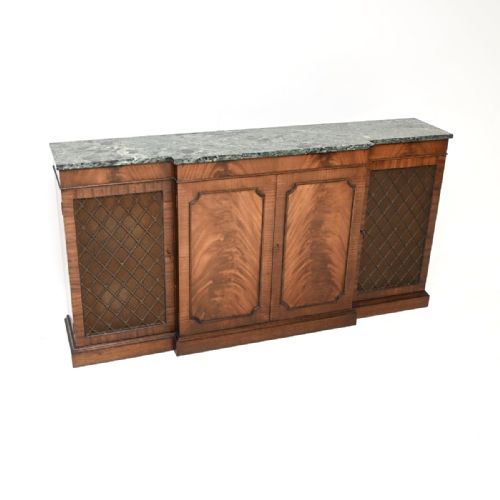
- A cabinet design where the central section projects forward from the flanking outer sections. This architectural arrangement creates dynamic shadow and depth.
- Bow-front
- A convex curved cabinet front that swells outward in the centre. This shape softens the room's geometry while maximising internal storage capacity.
- Chiffonier
- A compact sideboard or low cabinet equipped with shelves or a mirror back. It gained popularity during the Victorian era for smaller entertaining spaces.
Traditional Dining Server: Frequently Asked Questions
What is a traditional dining server used for?
These pieces function as dedicated storage units for dining room essentials, including heavy platters, cutlery, and table linens. During meals, their wide top surfaces serve as staging areas for dishes and serving bowls.
Historically, they assisted households by keeping dining accessories close at hand without cluttering the main dining table. Today, they continue to serve this practical purpose while displaying decorative items.
How do I tell a Georgian server from a Victorian one?
Georgian servers generally display restrained classical proportions, straight or bow fronts, and precise mahogany veneers with delicate inlay work. Their design focuses on symmetry and understated elegance.
Victorian pieces tend to be heavier in scale, often incorporating richer carving, darker finishes, and sometimes mirror backs or marble tops. The joinery and hardware styles shift accordingly to reflect the industrial and aesthetic changes of the nineteenth century.
Can I use a server in a modern dining room?
These wooden cabinets adapt readily to contemporary interiors by providing much-needed storage space that flat-pack furniture lacks. Their natural timber tones and classic silhouettes ground modern minimalist decor with tactile warmth.
Placing a mahogany sideboard or oak dresser base in an open-plan living area introduces traditional craftsmanship and practical surface space for everyday dining.
What woods were commonly used for these servers?
Mahogany and oak form the vast majority of the timber seen across these historical periods. Craftsmen utilised solid boards for structural frames and applied flame mahogany veneer to drawer fronts for dramatic grain patterns.
Walnut, pine, and brass elements also appear regularly, reflecting regional British traditions and changing stylistic preferences between the eighteenth and early twentieth centuries.