




Mahogany Tier Server
A mahogany tier server brings tiered timber shelving to dining spaces for service and display, rooted in eighteenth and nineteenth century traditions.
Mahogany Tier Server
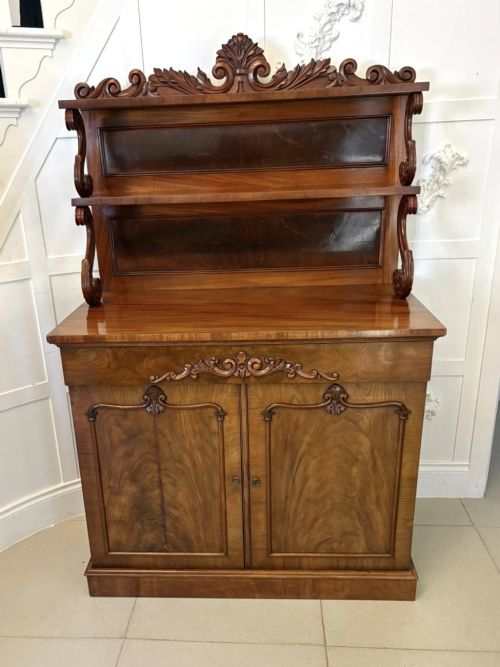
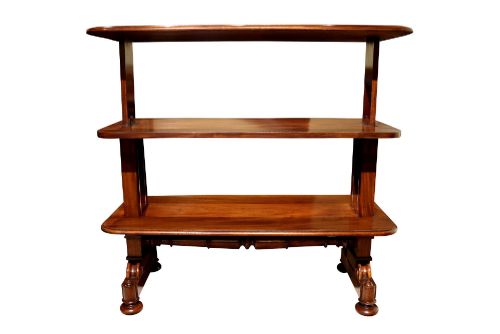
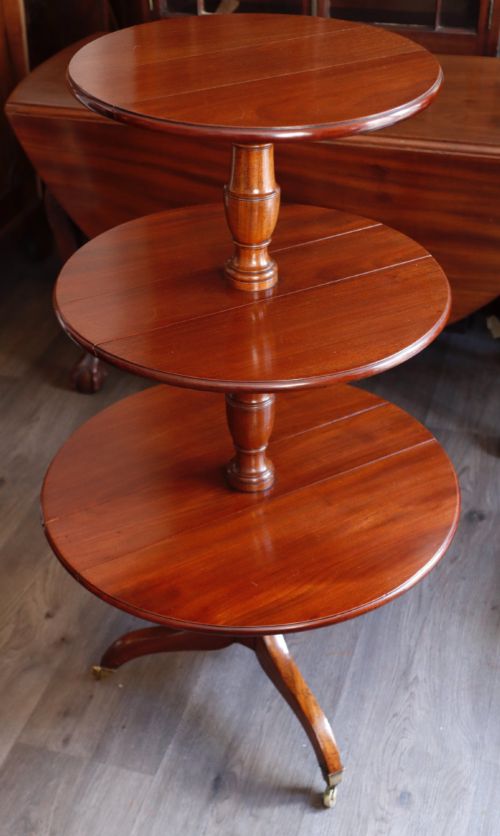
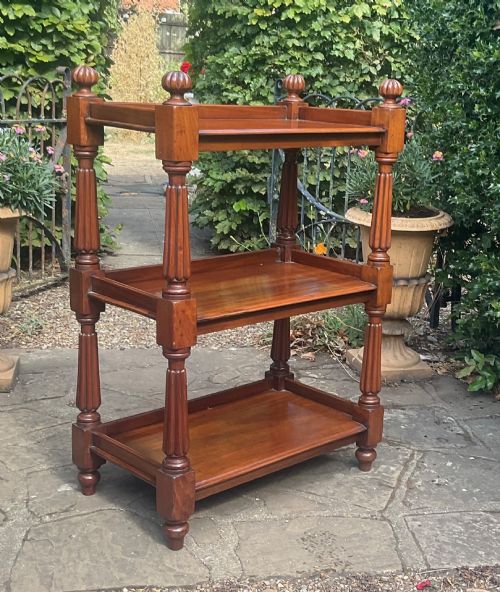
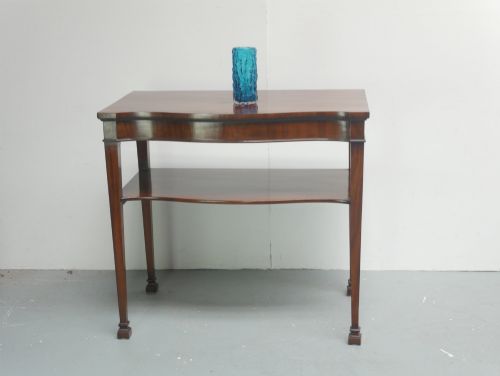
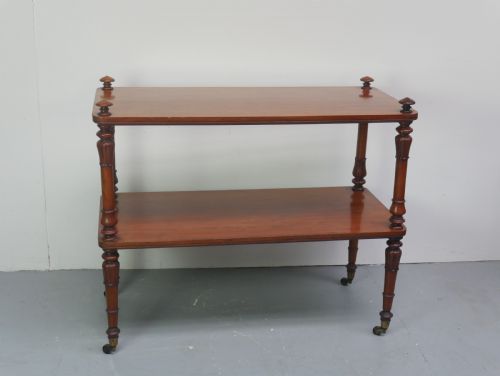
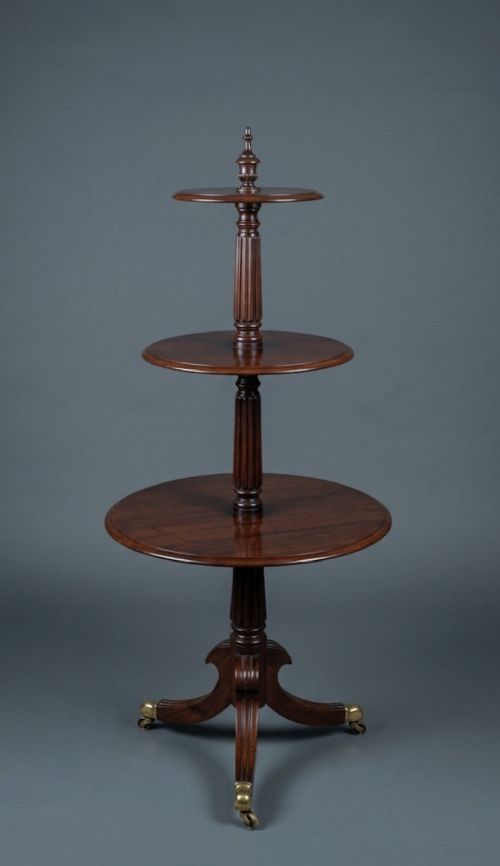
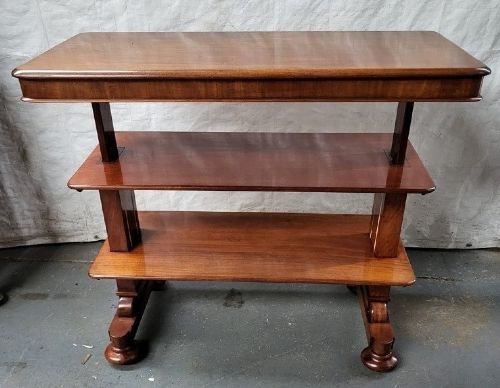
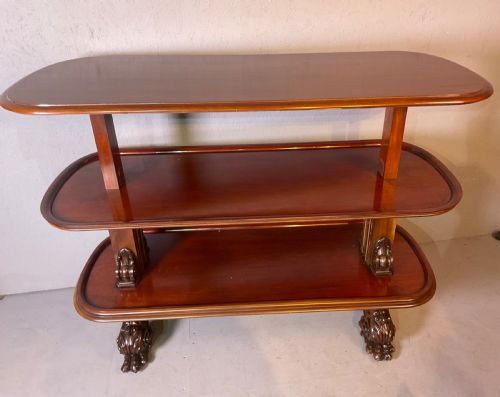
A mahogany tier server is typically encountered as a dumb waiter, buffet, or étagère, offering multiple stacked surfaces for holding dining provisions. These multi-level pieces range from circular revolving tiers supported on tripod bases to substantial rectangular or oval side tables with graduated shelves.
The selections span the Georgian, Regency, William IV, and Victorian periods, showing how dining room furniture evolved from eighteenth-century mechanical service pieces into nineteenth-century display sideboards and whatnots. Pieces appear in various formats including drop-leaf designs, slim stands, and metamorphic versions with rise and fall mechanisms.
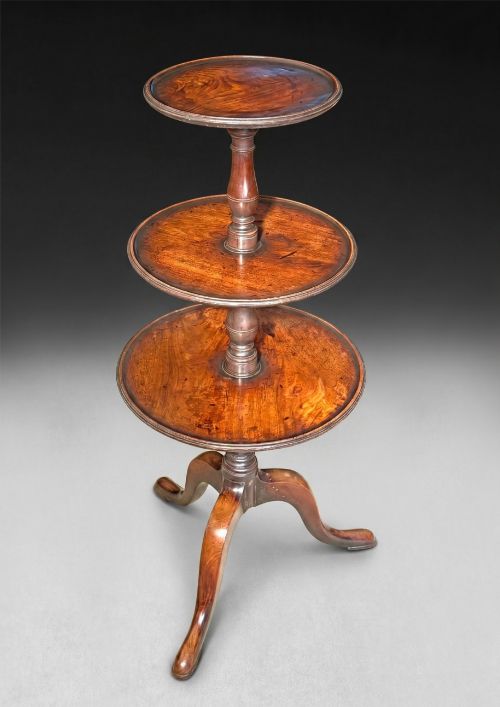
Buyers seeking a mahogany tier server will frequently find circular graduating tiers dating from the George III era alongside later Victorian three-tier buffets fitted with original castors. The form functions equally well as a serving station or a freestanding display surface in contemporary interiors.
Distinctions in craftsmanship
Quality separates pieces through the selection of timber figures, such as dense flame mahogany veneers, and the crispness of turned wood columns and pedestals. Superior examples display balanced proportions across multiple tiers and maintain smooth operation in revolving mechanisms or rise and fall adjustments.
The integration of original hardware, including brass castors and pivoting joints, elevates an object's authenticity and structural integrity. Finer pieces reflect disciplined workshop execution, evidenced by tight joinery on tripod bases and precise edge moulding along each shelf.
Some nineteenth-century versions include a revolving lazy susan or mechanical rise and fall tiers for effortless dining service.
The Mahogany Tier Server Glossary
- Dumb waiter
- A freestanding tiered piece of dining furniture designed to hold plates, glasses, and dishes without the aid of servants. These items typically feature two or three circular graduating trays revolving on a central pillar.
- Étagère
- An open piece of furniture with multiple tiers for displaying small objects or serving items. The form provides accessible open shelving across several vertical levels.
- Tripod base
- A three-legged support structure commonly found beneath the central pillar of circular dumb waiters. This configuration ensures stable placement on uneven dining room floors.
- Rise and fall
- A mechanical feature allowing the height of tiers to be adjusted via a central screw or ratchet mechanism. Such adaptations demonstrate ingenious nineteenth-century engineering.
- Flame mahogany
- A veneer cut from timber where the grain resembles flickering flames, highly prized for decorative table tops and shelves. The striking pattern occurs naturally at the junction of branches and the main trunk.
Mahogany Tier Server: Frequently Asked Questions
What is a mahogany tier server?
A mahogany tier server is a multi-level wooden furnishing designed to hold food, tableware, or decorative objects across stacked horizontal surfaces.
These pieces encompass historical forms such as dumb waiters, tiered buffets, and étagères originating from the Georgian and Victorian eras.
How were dumb waiters used historically?
Dining rooms utilised these tiered stands to place extra courses, wine bottles, and cutlery within arm's reach of diners.
By holding provisions on revolving or stationary shelves, the furniture reduced the need for servants during private family meals.
How do I identify a Georgian tier server?
Georgian examples often feature circular graduating tiers supported by a slender central column above a tripod base with pad or spade feet.
These eighteenth-century pieces emphasise restrained classical turning and solid mahogany construction without heavy Victorian ornamentation.
Where can I use a tiered server today?
Living spaces adapt these multi-level stands as side tables, drinks cabinets, or display étagères for books and ceramics.
Their vertical format provides substantial surface area for placement while occupying a modest footprint on the floor.