


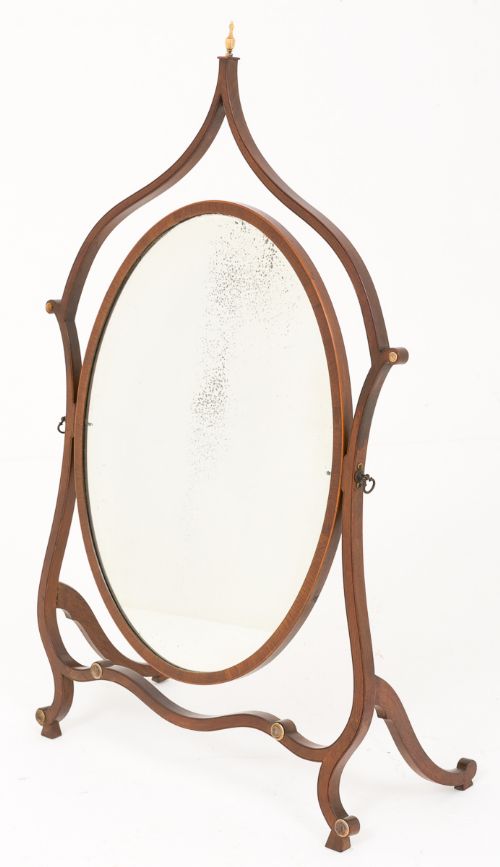
Traditional Cheval Glass
A traditional cheval glass gives you a full-length view in a freestanding frame that tilts on pivots, combining practical utility with a striking period presence.
Traditional Cheval Glass
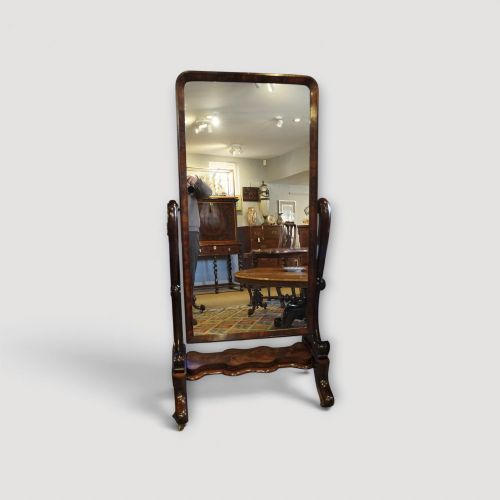
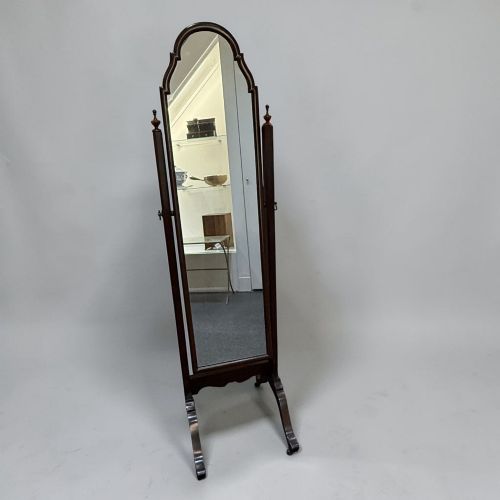
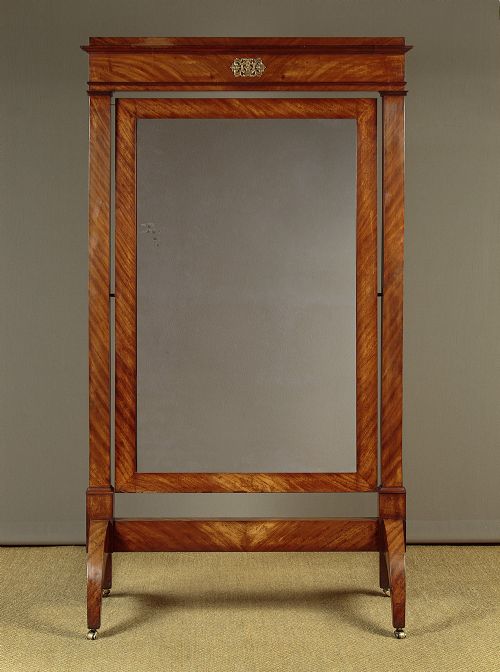
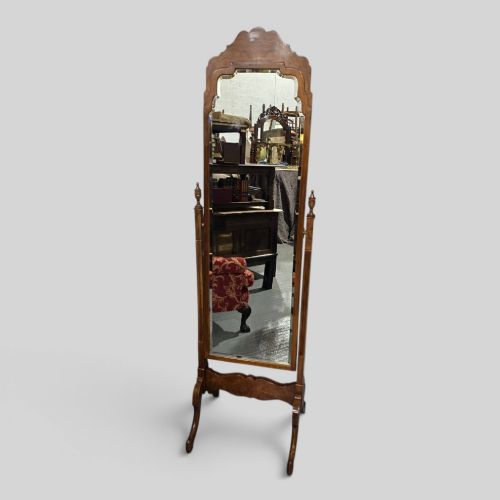
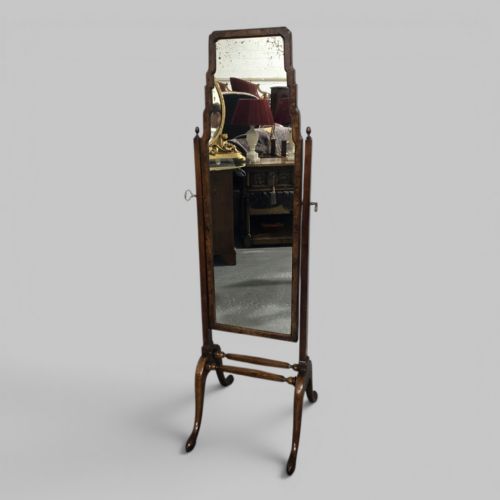
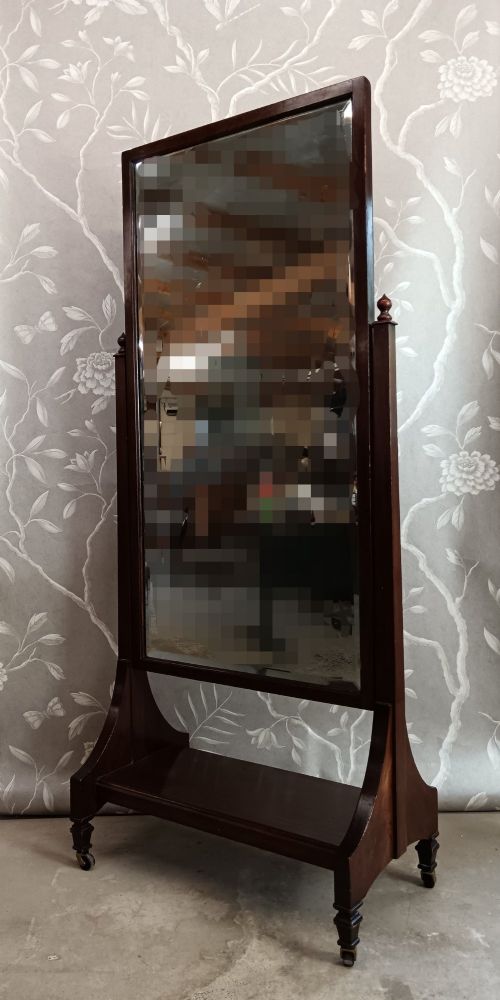
When you search for a traditional cheval glass, you encounter tall, freestanding swing mirrors designed for full-length dressing and room reflection. The examples available on this page span several distinct eras, including Georgian, Victorian, Regency, and early twentieth-century interpretations.
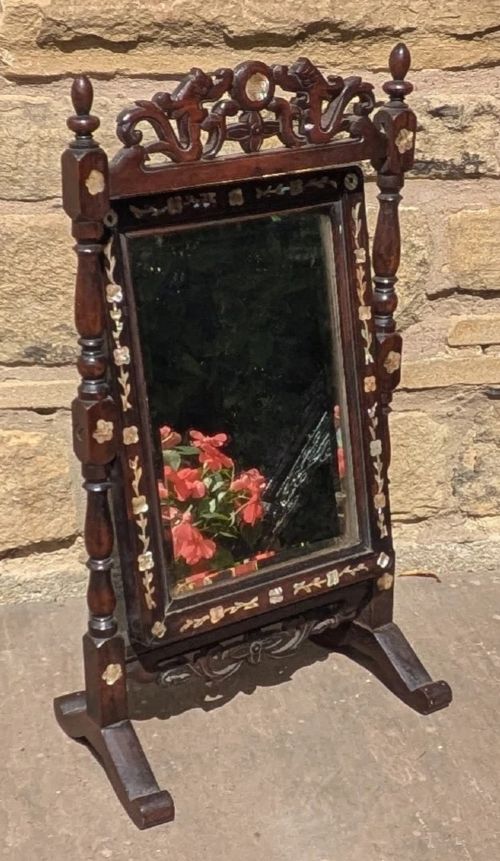
The primary forms on show are full-length floor standing cheval mirrors and dressing mirrors. You will most frequently meet mahogany and walnut frames, alongside occasional hardwood pieces set with mother of pearl or constructed from pitch pine.
How they were made
Cabinetmakers constructed these frames using dense timbers like mahogany, walnut, and hardwood, often shaping the uprights and bases with turned elements or classical stylistic influences such as Queen Anne, Hepplewhite, and Regency. The mirror glass itself sits securely within a movable frame suspended on brass pivots, allowing the plate to tilt smoothly.
Makers incorporated specialist decorative techniques where appropriate, evident in the intricate mother of pearl inlay found on Chinese Qing hardwood pieces. Structural stability relied on sturdy floor-standing feet or trestle bases designed to support the weight of the swinging glass.
Listings feature traditional cheval glass forms spanning the Georgian, Regency, and Victorian periods, alongside early twentieth-century interpretations.
What varies in quality
The distinction between standard examples and the finest pieces lies in the choice of timber figure and the sophistication of the period styling. Burr walnut and finely figured mahogany denote superior material selection by the original cabinetmaker.
Construction nuance also sets pieces apart, particularly the elegance of the turning, the precision of the brass pivoting hardware, and the integration of decorative elements like inlay work. Finer items demonstrate a harmonious proportion between the height of the glass and the stability of the base.
The Traditional Cheval Glass Glossary
- Cheval glass
- A tall, freestanding mirror suspended on vertical pivots within a frame, allowing the glass to swing freely. This form became essential for full-length dressing in bedchambers.
- Pivots
- The metal pins or screws fitted to the sides of the mirror frame that insert into the upright supports. They allow the glass to tilt at various angles.
- Burr walnut
- A highly prized timber veneer showing swirling, knotty grain patterns. Furniture makers utilised it on select surfaces to create rich visual texture.
- Toilet mirror
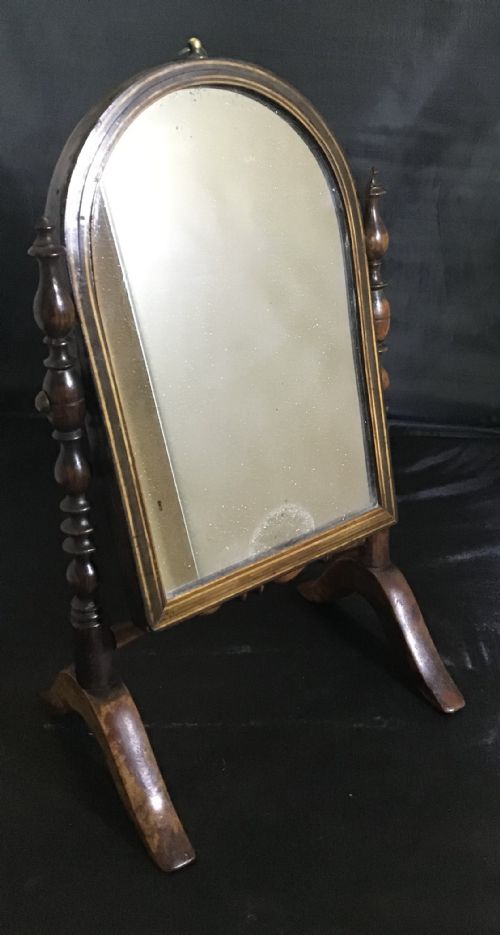
- A smaller swing mirror designed to sit upon a dressing table or chest of drawers rather than stand independently on the floor.
- Hepplewhite style
- A light, elegant neoclassical design idiom characterised by tapered legs and shield or oval shapes, popularised in the eighteenth century.
Traditional Cheval Glass: Frequently Asked Questions
Where should I place a traditional cheval glass?
These tall mirrors function best in bedrooms, dressing rooms, or hallways where full-length reflection is useful and sufficient floor space allows the frame to sit securely.
Because the mirror tilts on pivots, position it away from cramped corners so you can adjust the angle freely without obstruction from surrounding furniture.
How do I tilt the mirror safely?
Support the weight of the glass gently with one hand while loosening or adjusting the brass tension screws on the side pivots with the other. Avoid forcing the movement if the mechanism feels stiff, as excessive pressure can strain the wooden uprights.
Ensuring the floor beneath the heavy base is level will keep the swing frame balanced and prevent uneven stress on the pivot hardware.
How do I tell a Georgian piece from a Victorian one?
Georgian and George III pieces generally display restrained, elegant proportions with refined timber veneers and subtle stylistic cues like tapered uprights. Victorian examples often feature heavier mahogany or pitch pine construction with bolder turned elements and larger floor-standing dimensions.
Examining the underlying timber, backboards, and construction fixings helps clarify the manufacturing period when style alone offers mixed clues.