
Traditional Brass Table Lighting
Traditional brass table lighting brings warm metal glow and period character to interiors through converted oil lamps, heavy candlesticks, and classical columns.
Traditional Brass Table Lighting
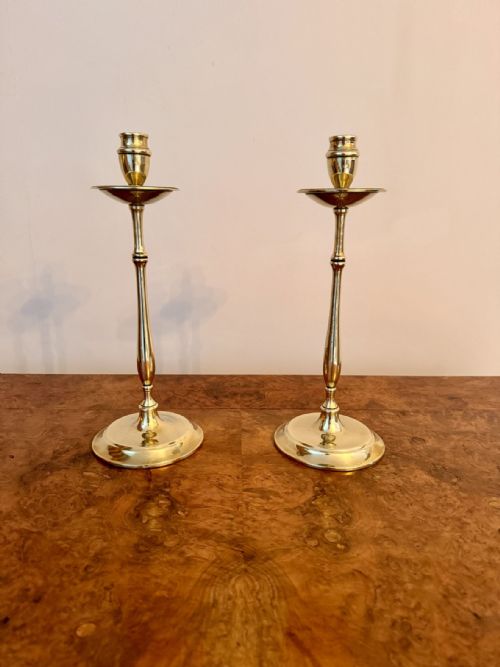
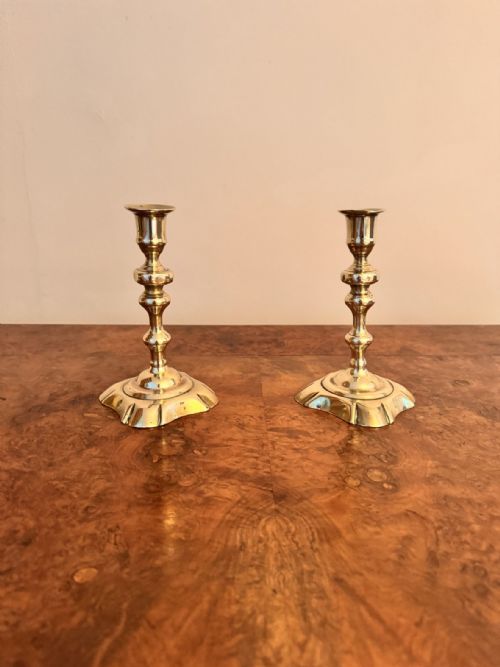
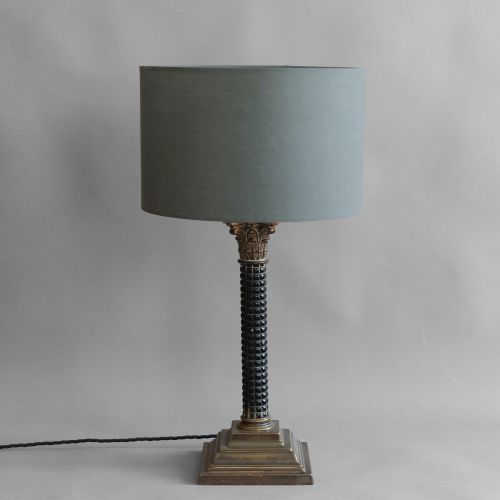
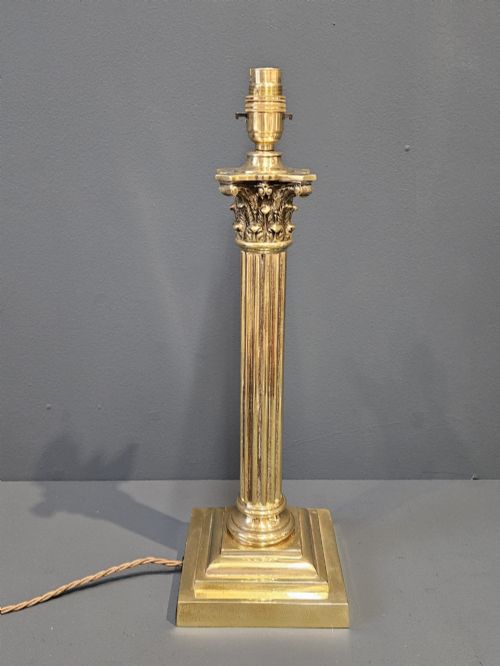
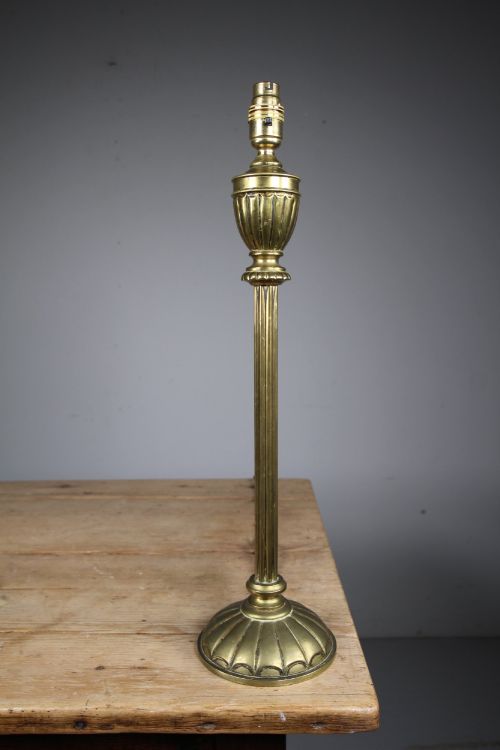
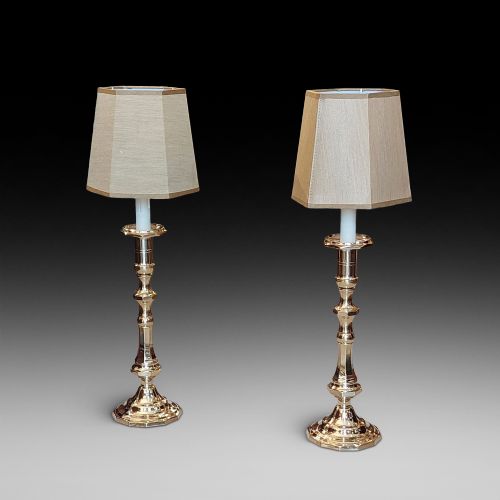
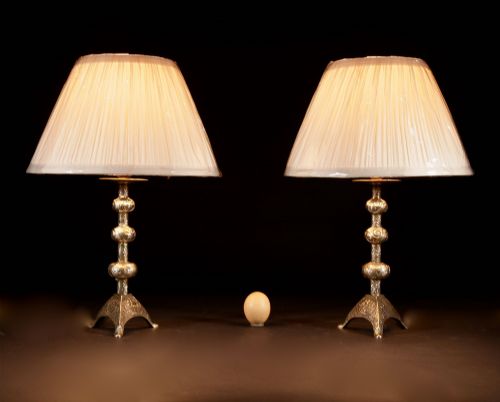
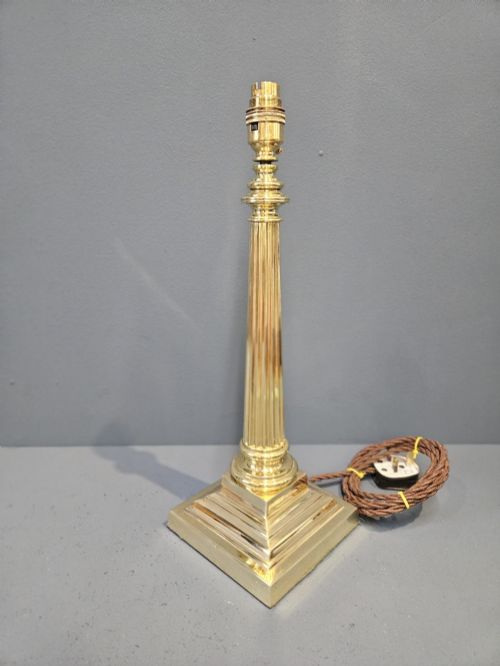
Traditional brass table lighting encompasses a broad selection of period fixtures, ranging from converted seamed candlesticks to elaborate Victorian oil lamps and classical column table lamps. Pieces frequently draw on Georgian, Victorian, and Edwardian designs, often incorporating architectural elements like Corinthian capitals or reeded columns.
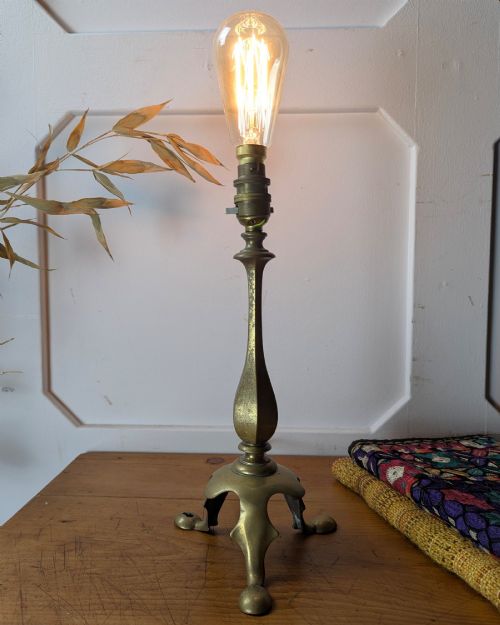
The version most commonly met on this page is the nineteenth-century or early twentieth-century brass table lamp, often adapted from earlier oil burners or cast candlesticks. These items combine utility with decorative presence, frequently featuring fabric shades or retained metal burners.
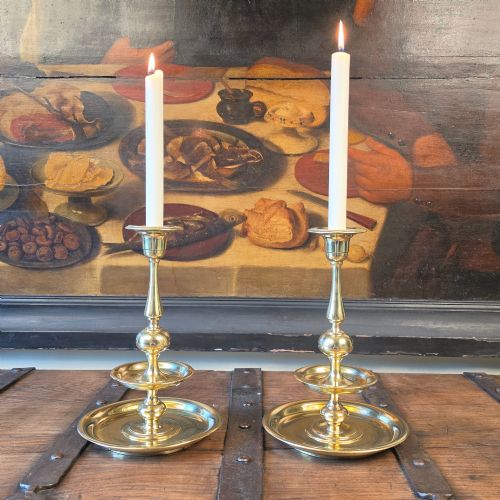
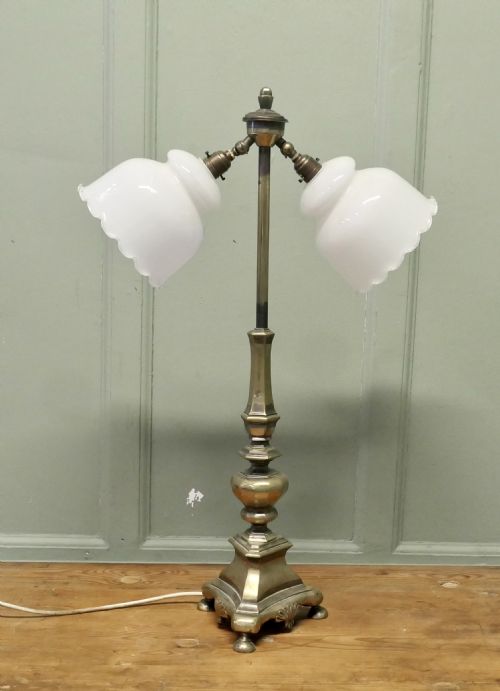
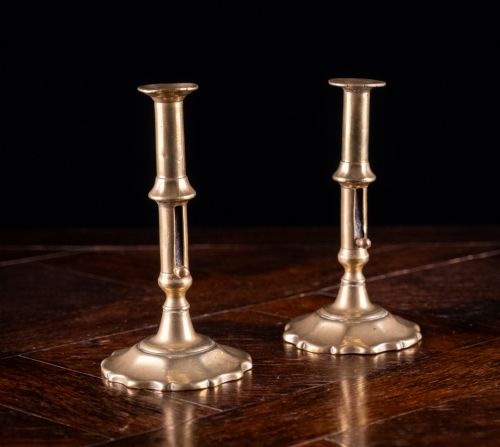
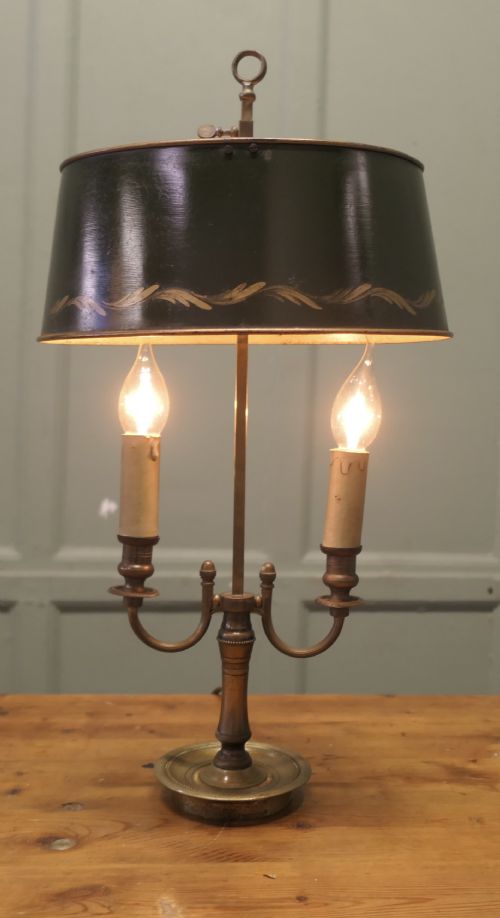
Beyond standard lamps, the inventory includes specialised forms such as green toleware bouillotte desks lamps, twin angled reading lights, and heavy ejector candlesticks. Originating from English, French, and Indian workshops, these objects display diverse regional interpretations of classical metalworking.
How they were made
Many early examples utilise seamed construction techniques where sheet metal is folded and joined, alongside heavy cast brass components that provide stable weight to bases. Candlesticks and column lamps often rely on precision casting to achieve sharp architectural detailing such as fluting and acanthus leaf decoration.
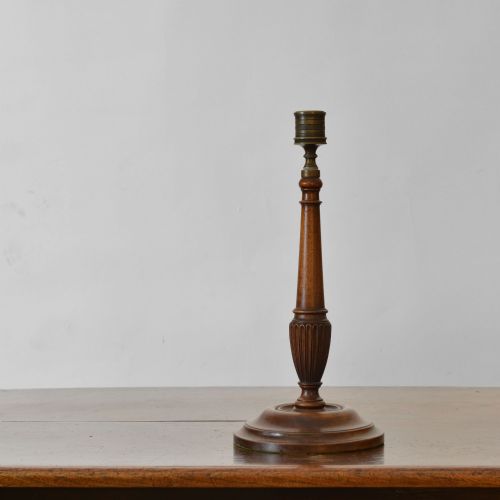
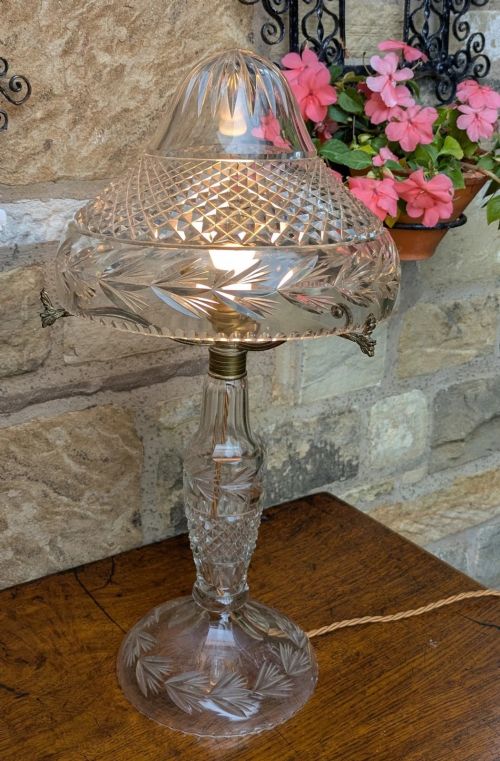
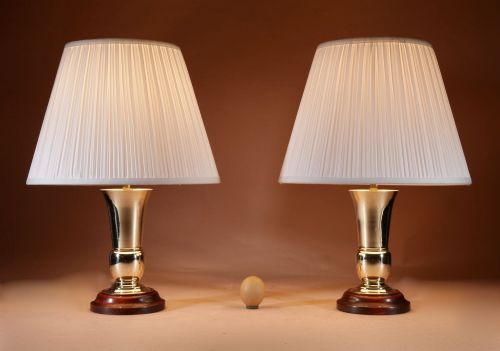
Surface treatments and finishes vary according to period manufacture, with polished brass, patinated metal, and combination pieces incorporating mahogany bases or cut crystal elements. Electrified conversions integrate internal wiring into historical oil lamp reservoirs and hollow columns without losing the original silhouette.
Some nineteenth-century student lamps come complete with their original miniature cleaning implements tucked neatly into the brass framework.
What varies in quality
The distinction between standard production and superior examples rests upon the crispness of the casting and the structural integrity of the metalwork. Finer pieces exhibit deeply chased ornamentation, well-defined column capitals, and substantial gauge brass that resists bending.
Proportion and originality also dictate worth, as matching pairs with intact original components, such as working ejector mechanisms or period-correct shades, command greater appreciation. The balance of the piece, down to the weight of the base and the tightness of the joints, marks the difference between utilitarian factory output and careful craftsmanship.
J.T. & Co
The Traditional Brass Table Lighting Glossary
- Ejector candlestick
- A type of candlestick containing an internal sliding mechanism designed to push out the remaining stub of a wax candle. This clever device prevents wax from becoming lodged deep within the socket.
- Corinthian column
- An architectural column style featuring an ornate capital decorated with acanthus leaves. It serves as a popular motif for tall Victorian and Edwardian table lamps.
- Bouillotte lamp
- A French desk or table lamp featuring a central shaft, adjustable shade, and a saucer base to catch wax drips. They frequently employ a twin-light setup paired with toleware metal shades.
- Duplex burner
- A double-wick oil lamp mechanism developed in the nineteenth century to produce significantly brighter illumination. Lamps featuring this system often retain large etched glass tulip shades.
- Seamed brass
- Sheet brass joined along a visible vertical seam, common in eighteenth-century manufacture before advanced extrusion methods took over. This technique leaves a distinct historical signature on early candlesticks.
Traditional Brass Table Lighting: Frequently Asked Questions
How do I safely convert an old oil lamp?
Converting an antique oil lamp to electricity requires retaining the original brass collar and burner housing to preserve historical integrity. Qualified electricians can run concealed internal wiring through the central reservoir without drilling destructive new holes.
For best results, pair the electrified conversion with a period-appropriate fabric or glass shade that matches the proportions of the original brass column. This maintains visual balance while making the antique suitable for modern daily use.
Can I polish antique brass safely?
Polishing antique brass removes the natural aged patina that collectors value, so gentle dusting with a dry cloth is usually preferred. Aggressive chemical cleaners strip away historical darkening and can permanently damage delicate surface details on cast ornamentation.
If cleaning is strictly necessary, use a non-abrasive wax formula specifically formulated for historical metals to lift surface grime without exposing bright raw brass. Allow a gentle warmth to remain in the finish rather than striving for a mirror-like shine.
How do I date a brass candlestick?
Dating relies on manufacturing clues such as seamed construction, base weighting methods, and stylistic cues borrowed from prevailing architectural movements. Eighteenth-century examples often feature wider drip pans and heavier cast forms compared to lighter Victorian production.
Maker marks stamped onto the base or underside provide definitive clues when present, though many older pieces remain unsigned. Comparing the turning marks and metal thickness against known historical periods confirms the age.
Where should I place a heavy table lamp?
Heavy brass and column lamps require sturdy sideboards, desks, or large console tables capable of supporting substantial metal weight safely. Ensure the placement avoids high-traffic areas where trailing electrical cords might be snagged by passing movement.
Positioning these fixtures away from direct moisture protects the patinated metal finish from accelerated oxidation and tarnishing. Their directional height makes them well-suited for reading corners or creating focal points in darker room angles.