


Baluster Stem Candle Holders
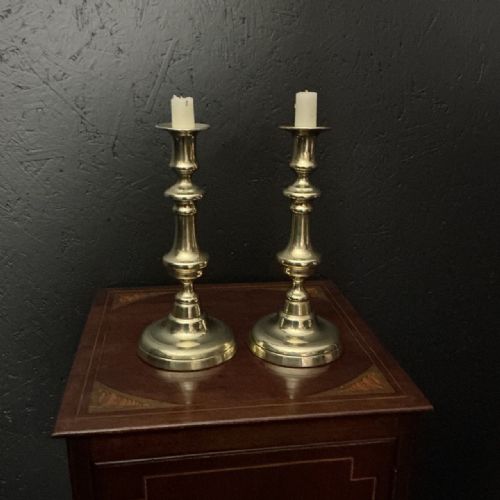
Baluster stem candle holders bring substantial weight and architectural presence to a room, offering both reliable illumination and period character.
Baluster Stem Candle Holders
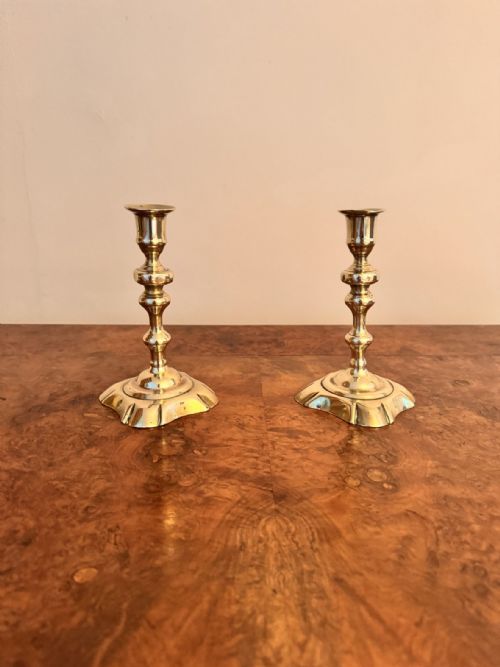
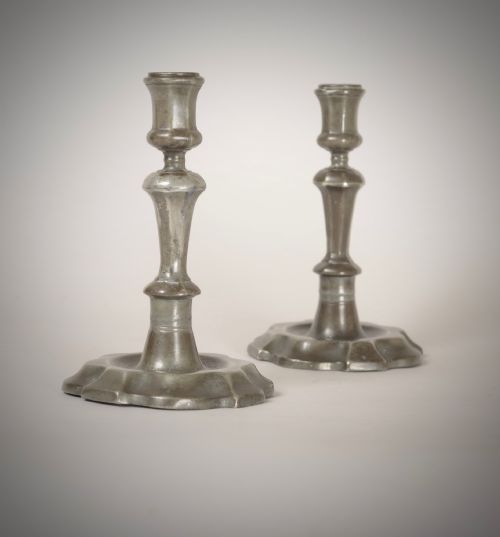
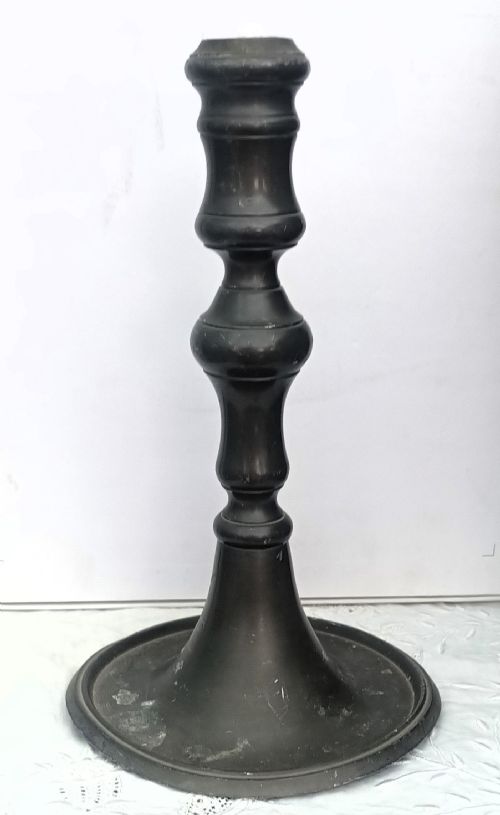
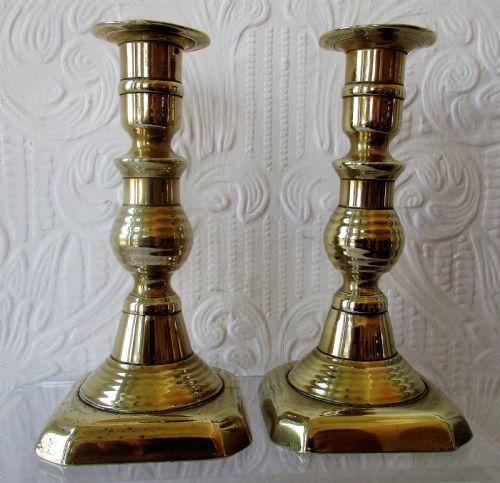
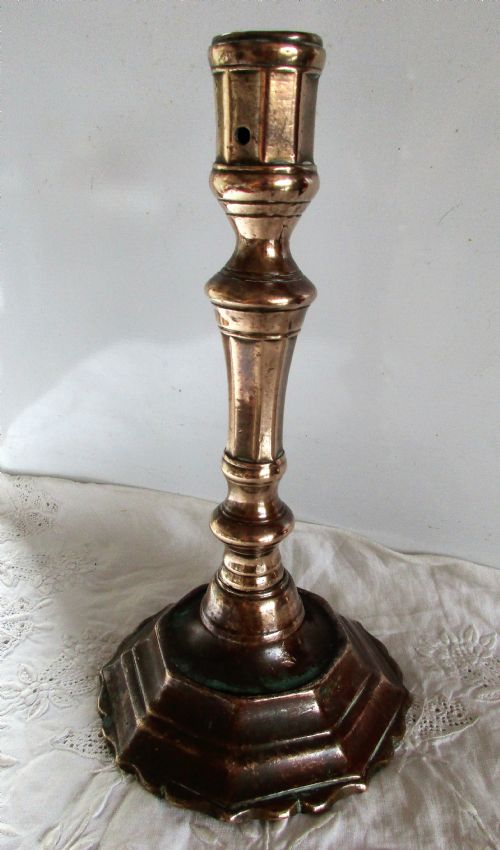
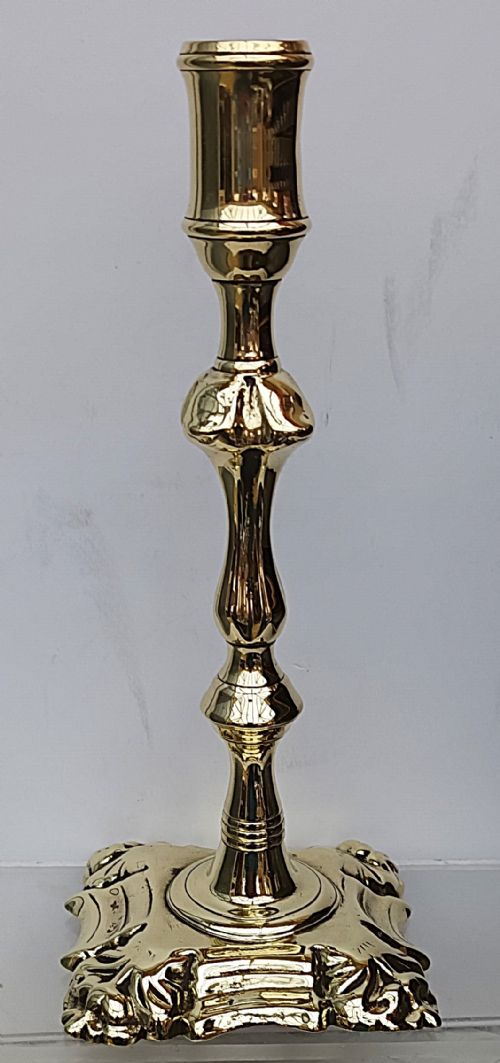
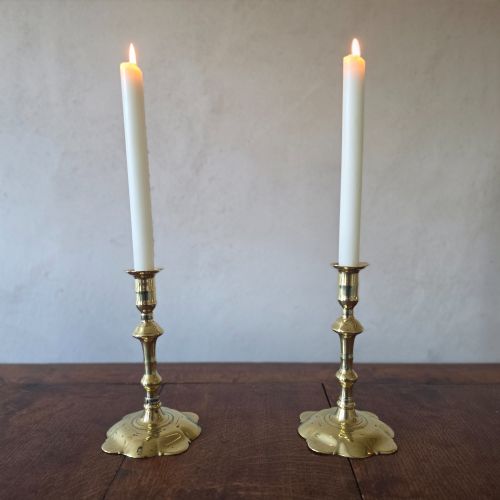
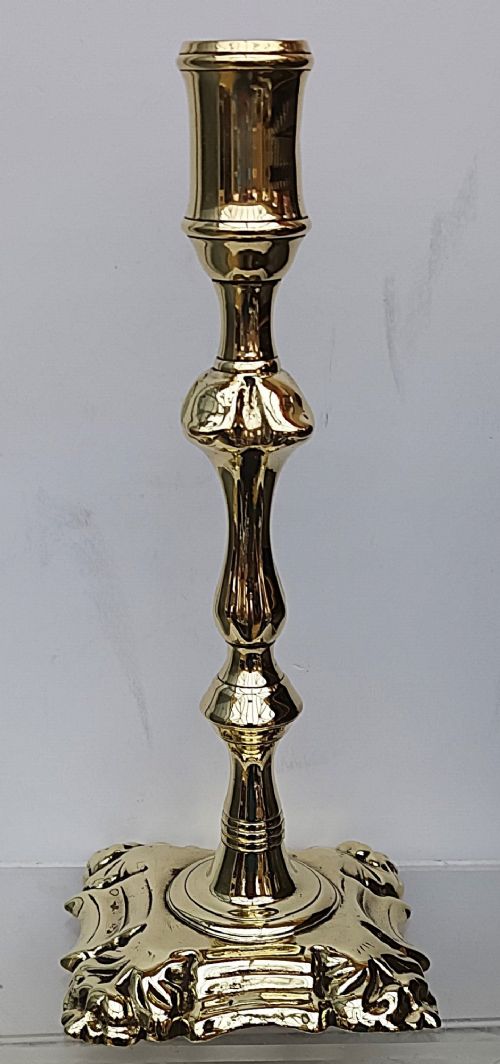
Baluster stem candle holders are candlesticks and candelabra defined by their swelling, vase-shaped columns which draw on centuries of architectural design. When you search for baluster stem candle holders, you encounter brass, pewter, bronze, sterling silver, copper, silver plate, and blown glass examples spanning the seventeenth, eighteenth, and nineteenth centuries. The brass pairs from the eighteenth century appear most frequently on this page, often featuring hexagonal or petal bases.
The forms range from compact seventeenth-century revival models to taller Victorian variations and Edwardian interpretations. You will find single sticks alongside matched pairs and two-light candelabra, reflecting how domestic lighting evolved from utilitarian necessity to formal table display. Styles stretch across Georgian, Queen Anne, Stuart, and Dutch Baroque idioms, showing how makers reinterpreted classical turning techniques over generations.
Materials and construction methods
Metal versions - predominantly cast brass, pewter, and bronze - were produced using traditional foundry techniques where molten metal filled sand or loam moulds before being finished on a lathe. Components like the baluster stem, drip pan, and base were frequently cast separately and joined, yielding solid objects with tangible heft. Silver and silver-plate examples involved similar metalworking craft, while blown glass pieces relied on skilled manipulation of hot metal to achieve hollow stems.
Surface finishing completed the manufacture, with turners smoothing the metal to accentuate the profile of the central swell. Over time, manufacturing shifted from sand-casting to more mechanised production methods by the Victorian era, though heavy cast components remained standard for quality tablewares. These varied fabrication techniques determine how each piece reflects candlelight today.
Current listings feature items from the 17th Century, 18th Century, and 19th Century, alongside specific dates from 1700 to 1893.
Distinguishing quality in older lighting
Quality rests in the crispness of the casting and the proportional harmony of the baluster profile. Superior examples display sharp definition along the turned rings and mouldings without the softening that occurs when moulds become worn. Weight also matters, as heavier brass and bronze castings provide better stability and demonstrate a more generous use of metal.
The integrity of construction separates fine specimens from ordinary ones, particularly in how securely the base meets the stem and whether original components remain intact. Finish and patination play a role, with untouched surfaces showing age naturally rather than through aggressive cleaning. Matched pairs command greater attention than assembled ones where minute differences in height or turning betray separate origins.
The Baluster Stem Candle Holders Glossary
- Baluster
- A vertical architectural support with a swelling, vase-like profile. This shape forms the central column of the candlesticks on this page.
- Petal base
- A foot shaped like overlapping flower petals, frequently seen on brass candlesticks from the early eighteenth century. This design adds stability and visual ornamentation.
- Heemskerk
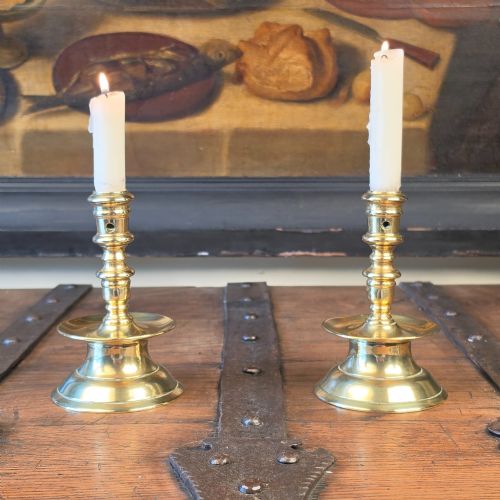
- A heavy, bell-based brass candlestick type originating in the Netherlands during the seventeenth century. These sturdy items typically feature multiple drip rings along the stem.
- Britannia standard
- A higher grade of silver purity introduced by English law in the late seventeenth century. It contains more pure silver than sterling, marked by specific hallmarks.
- Taperstick
- A miniature candlestick designed to hold a thin wax taper used for melting sealing wax on letters. They share the same baluster construction as their larger counterparts.
- Drip pan
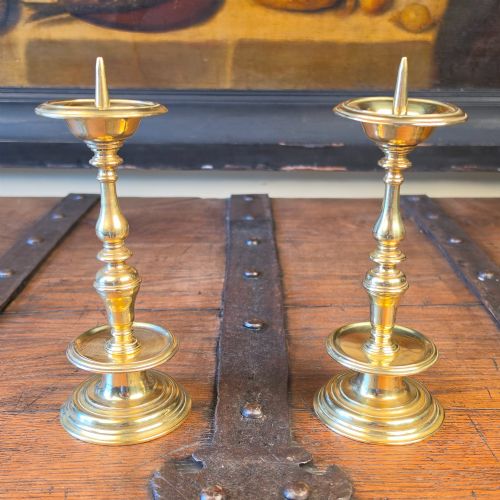
- A wide flange or saucer positioned below the nozzle to catch molten wax. This functional element protects tables and linens from dripping wax.
Baluster Stem Candle Holders: Frequently Asked Questions
How do I clean old brass candlesticks?
Dust them gently with a soft cloth to preserve the accumulated patination of decades or centuries. Avoid harsh chemical polishes that strip away the dark oxidation valued by collectors.
If cleaning is necessary, warm soapy water and a soft brush will remove surface grime without damaging the metal surface underneath.
How can I tell an eighteenth-century stick from a Victorian revival?
Examine the casting marks, base construction, and assembly methods under magnification. Eighteenth-century pieces often show rougher casting sand remnants inside and distinct tool marks from lathe turning.
Victorian revival pieces attempting seventeenth or eighteenth-century styles usually feature heavier, more uniform machine finishing and different base weights.
Why do brass candlesticks have a small hole in the stem?
That aperture is a casting vent used during the traditional manufacturing process to allow gases to escape from the molten metal mould. Its presence confirms that the piece was cast hollow in a multi-part foundry setup.
Makers did not view this as a flaw, but rather as an ordinary technical necessity of period brass-founding.