


Knopped Stem Brass Candlesticks
These knopped stem brass candlesticks offer the enduring weight and character of Georgian and Victorian lighting.
Knopped Stem Brass Candlesticks
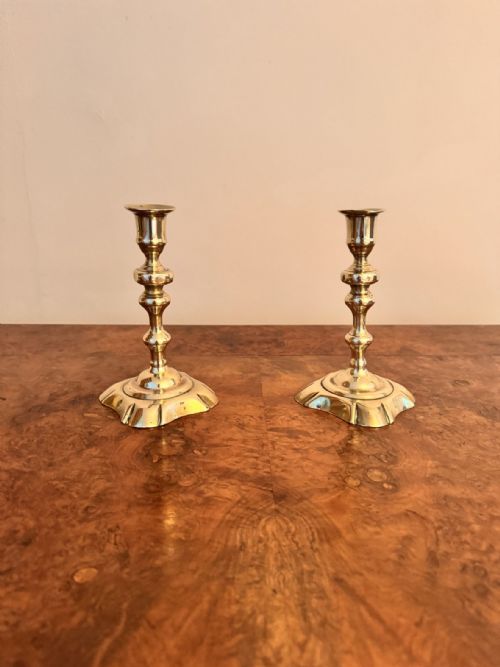
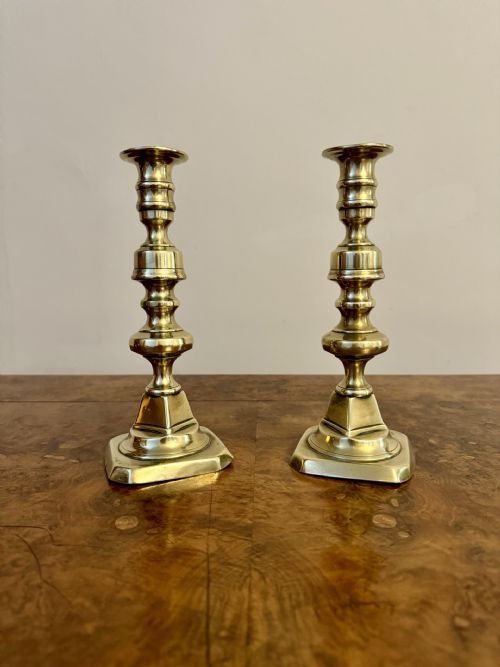
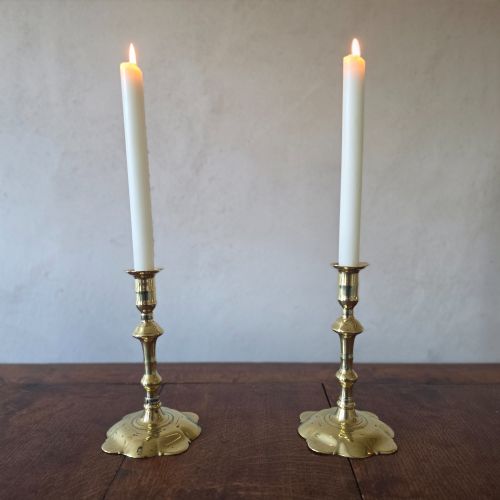
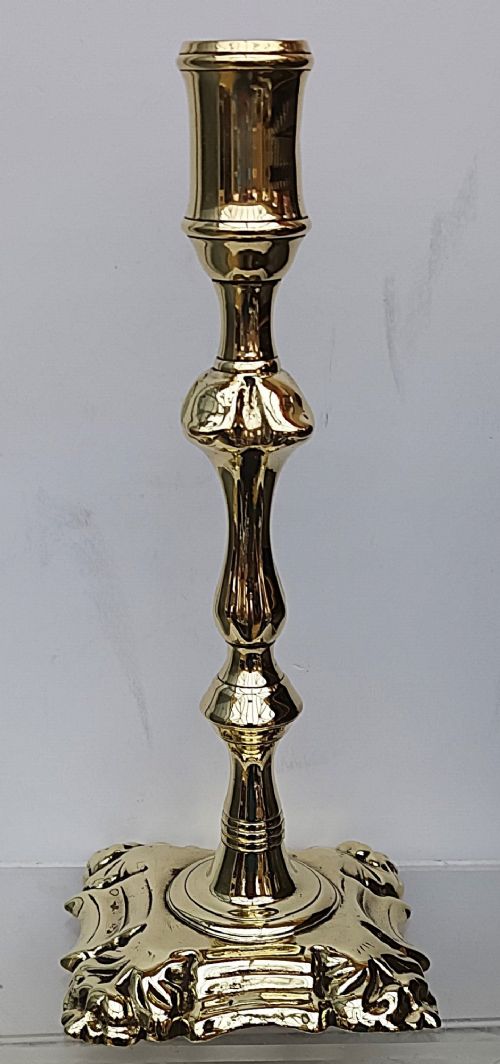
When you search for knopped stem brass candlesticks, you are looking at domestic lighting raised through shaped stems that feature prominent decorative swellings or nodes. The examples you meet on this page span the eighteenth century, the Victorian era, and into the twentieth century, bringing functional metalwork into the modern interior. Most pieces appear as pairs, maintaining symmetry for mantelpieces, sideboards, and dining tables.
The forms on offer draw from Georgian, Victorian, and Gothic Revival styles, ranging from plain domestic items to ecclesiastical designs. Eighteenth-century examples often display petal bases and multi-knopped stems, while later nineteenth-century pieces utilise heavier cast construction and shaped columns. These objects survive as testaments to changing domestic habits, shifting from primary light sources to decorative mantel ornaments.
How they were made
The construction relies on brass and cast brass, utilising techniques suited to durable metalware. Early pieces involve seamed construction where sheet metal is shaped and joined, alongside cast components that provide structural solidity.
Foundries shaped the metal through casting and turning on lathes, creating the characteristic multi-knopped stems and spreading bases. The interaction between cast sockets, stems, and bases results in sturdy domestic lighting designed for daily use.
Listings span from the eighteenth century to the twentieth century, featuring both brass and cast brass materials across Georgian and Victorian styles.
What varies in quality
Quality in these items rests upon the crispness of the casting and the balance of proportions between the base, stem, and sconce. Multi-knopped stems with sharp definition and substantial weight indicate superior manufacture compared to simpler, softer castings.
The survival of original components, such as matching bases and undamaged sconces, separates standard utilitarian lighting from finer examples. Surface tone and tactile warmth also distinguish pieces that have aged gracefully through handling and polishing.
The Knopped Stem Brass Candlesticks Glossary
- Knoop
- A decorative swelling or knob on the stem of a candlestick. This feature adds visual rhythm and tactile interest to the vertical column.
- Petal base
- A spreading base shaped like lobes or petals, commonly found on early eighteenth-century examples. It provides a stable footing while offering decorative flourish.
- Sconce
- The cup at the top of the candlestick that holds the candle. It catches melting wax and secures the light source.
- Seamed brass
- Brass sheet rolled and joined along a vertical seam, typical of earlier manufacturing methods before advanced casting took over. This technique is often visible on the underside or interior of the stem.
Knopped Stem Brass Candlesticks: Frequently Asked Questions
How old are these brass candlesticks?
The pieces span from the eighteenth century through the Victorian period and into the twentieth century. Dating relies on stylistic cues, manufacturing methods, and known historical forms.
Earlier examples from the 1700s feature seamed construction and petal bases, while later Victorian and 1930s pieces show heavier cast elements and ecclesiastical designs.
Are they sold as pairs?
Many of the listings on this page consist of matching pairs, which makes them suitable for mantelpieces or sideboard displays. Symmetrical lighting was standard in period interiors.
Singular pieces also appear, offering individual character for smaller spaces or mixed arrangements on a table.
How do I clean brass candlesticks?
Maintenance depends on personal preference regarding patina and surface brightness. Gentle dusting helps preserve the aged metal tone over time.
Harsh chemical polishes should be avoided to protect the historical surface and any underlying metal character built up over centuries.
What styles are represented here?
The selection includes Georgian, Victorian, and Gothic Revival designs, alongside ecclesiastical forms. Each style reflects the aesthetic priorities of its specific era.
Early pieces focus on balanced proportions and multi-knopped stems, whereas later nineteenth-century items introduce heavier cast columns and shaped profiles.