

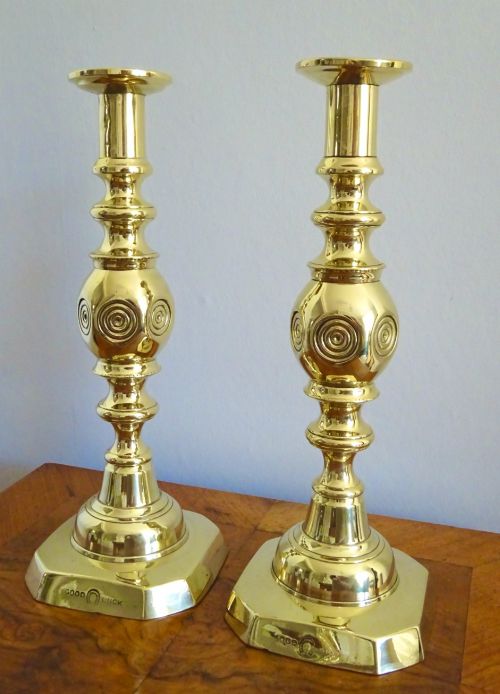


Vintage Cast Brass Candlesticks
These vintage cast brass candlesticks bring substantial weight and warm metallic character to any room, spanning centuries of domestic lighting.
Vintage Cast Brass Candlesticks
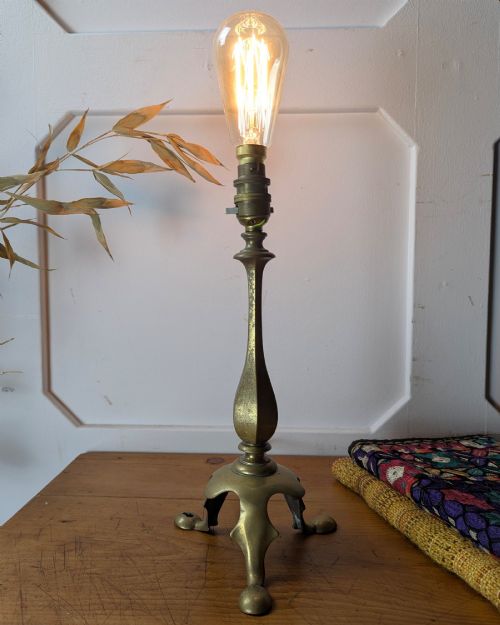
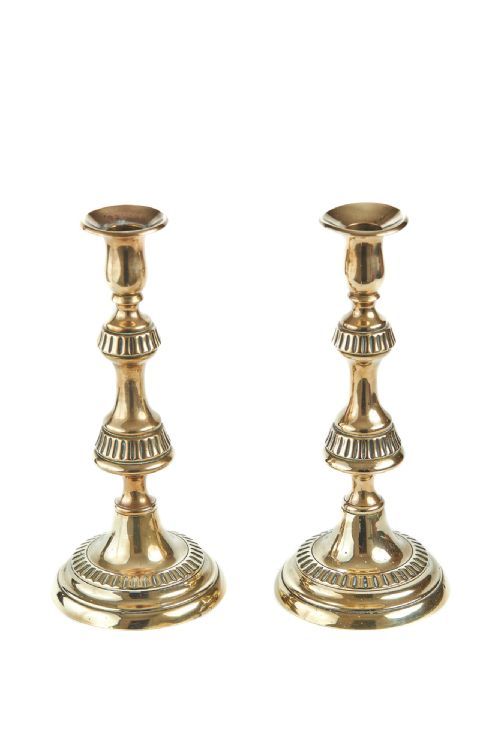
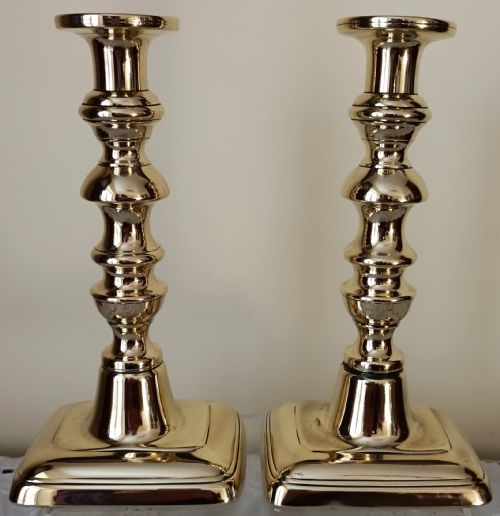
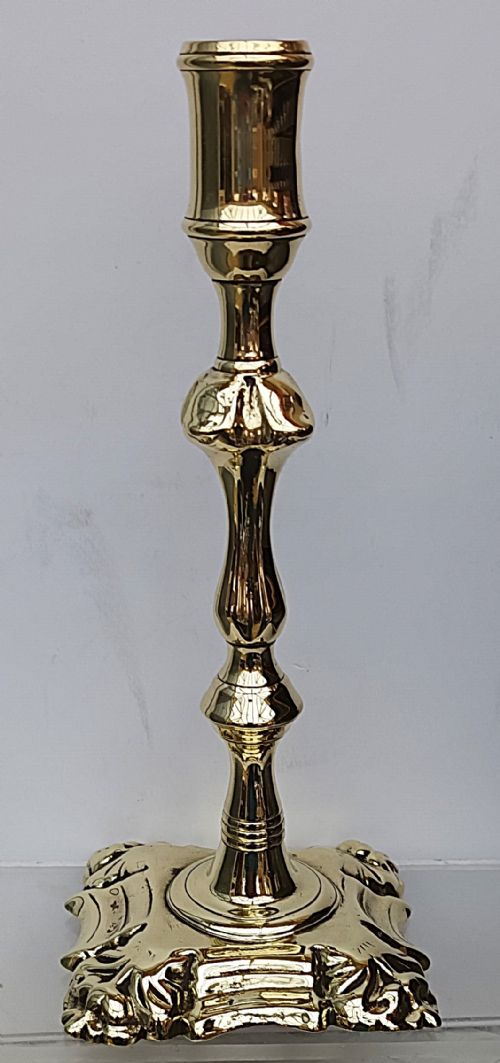
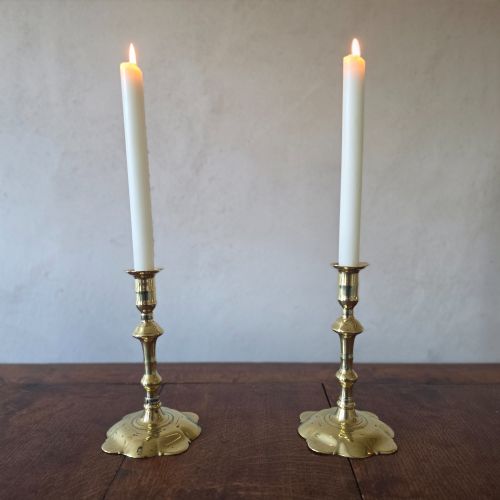
Vintage cast brass candlesticks comprise sturdy metal holders designed to support tallow or wax candles, emerging in domestic interiors from the eighteenth century onward. These pieces range from simple utilitarian stems to ornate Victorian designs, incorporating variations such as chambersticks and table lamps.
The selections on this page span several key periods, including the Georgian, Regency, and Victorian eras, alongside early twentieth-century examples. Buyers frequently encounter matched pairs, which remain popular for mantelpieces and dining tables due to their symmetrical presence.
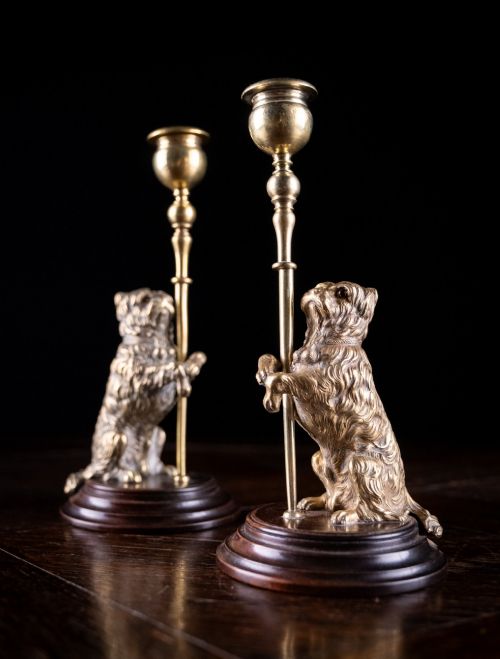
Makers and foundries utilised durable copper-zinc alloys to shape these items, resulting in varied forms from column candlesticks to figural designs depicting animals or heraldic motifs. Their enduring appeal lies in combining practical illumination with sculptural domestic artistry.
How they were made
Foundries produced these items using traditional metal-casting methods, pouring molten brass into sand or lost-wax moulds to form distinct components like stems, bases, and bobeches. Artisans then joined these separate sections through threaded fittings, soldering, or by using internal iron rods.
Makers finished the cast surfaces through turning on lathes to refine profiles, followed by hand-polishing or applying patination to achieve specific surface textures. Certain examples incorporate applied elements of bronze, ormolu, and marble to enhance the visual depth of the design.
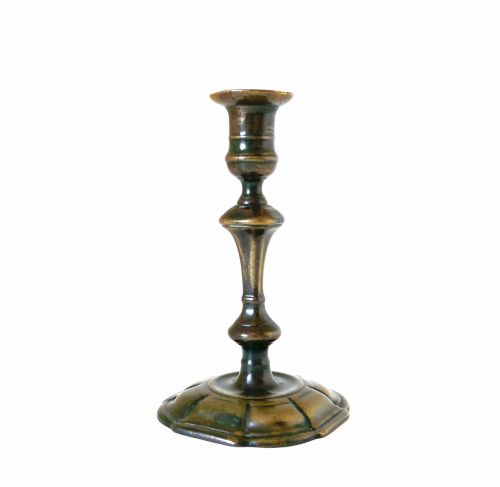
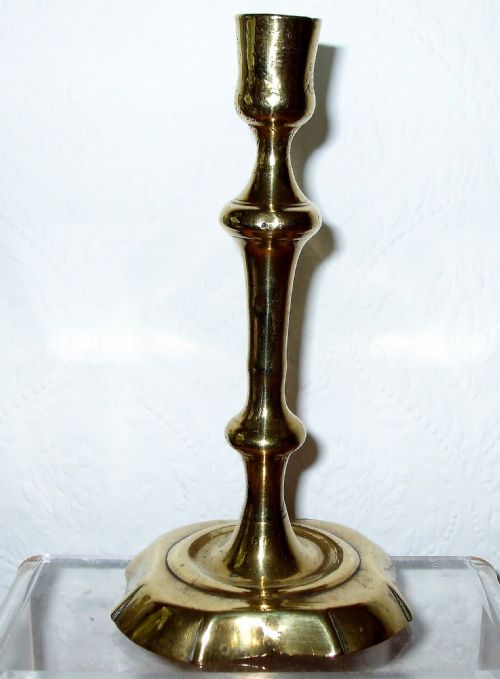
Listings feature brass, bronze, and ormolu materials across Georgian, Victorian, and Regency periods.
What varies in quality
Quality depends upon the crispness of the casting detail and the weight of the metal utilised in construction. Heavier examples with deep, sharp relief on decorative motifs indicate superior craftsmanship and higher grade raw materials compared to lighter, thinly cast alternatives.
The integrity of the assembly also determines standard, with top-tier pieces maintaining straight vertical alignment across the stem and secure, wobble-free seating at the base. Original patination and minimal modern intervention preserve the historical integrity of the piece.
J.T. & Co·Wm. Tonks & Sons
The Vintage Cast Brass Candlesticks Glossary
- Bobeche
- A removable drip pan fitted just below the candle socket to catch falling wax and protect the stem. This small saucer often matches the decorative detailing of the base.
- Chamberstick
- A low candle holder featuring a wide saucer base and a loop handle for carrying illumination through bedchambers. Many include a small metal cone snuffer resting in the tray.
- Ejector candlestick
- A clever mechanical design containing an internal push-rod mechanism to force out stubborn candle stubs. This mechanism typically operates via a small side lever.
- Ormolu
- Gilded bronze ornamentation applied to furniture and lighting fixtures to provide a rich golden decorative accent. Artisans produced this finish using a dangerous mercury amalgamation technique.
- Patina
- The surface sheen and darkening acquired by brass through age, handling, and oxidation over many decades. Collectors value an undisturbed patina for its historical authenticity.
Vintage Cast Brass Candlesticks: Frequently Asked Questions
How do I clean old brass candlesticks?
Clean these items gently using warm soapy water and a soft cloth to remove dust and accumulated wax residue. Avoid harsh abrasive commercial dips that strip away desirable historical patination.
Dry the metal thoroughly after washing to prevent spotting. A light application of microcrystalline wax can help protect the surface from further tarnishing.
Were these items meant for dining tables?
Domestic lighting served multiple purposes throughout the Georgian and Victorian periods, moving between dining rooms, parlours, and hallways as needed. Taller column designs provided ambient light for formal meals.
Shorter chambersticks and Brighton buns travelled safely from room to room before fixed gas and electric lighting became standard in homes.
How can I tell an 18th-century piece apart from a later copy?
Examine the construction methods and the weight distribution across the base and stem. Eighteenth-century examples often utilise multi-part seamed construction with distinct filing marks left by hand tools.
Later reproductions frequently display uniform machine tooling and lack the subtle asymmetry found in genuine period foundry work.