




Traditional Afghan Runner Carpet
These traditional afghan runner carpet examples bring enduring tribal character to corridors and hallways through rich wool pile and geometric motifs.
Traditional Afghan Runner Carpet
When you search for a traditional afghan runner carpet, you enter a field defined by nineteenth-century and early twentieth-century village and tribal weaving. The pieces here include long rugs, hallway runners, and tribal carpets originating from various groups across Afghanistan.
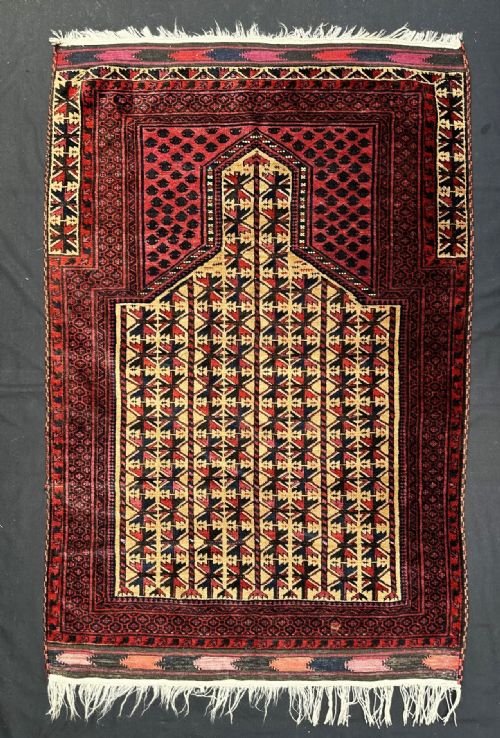
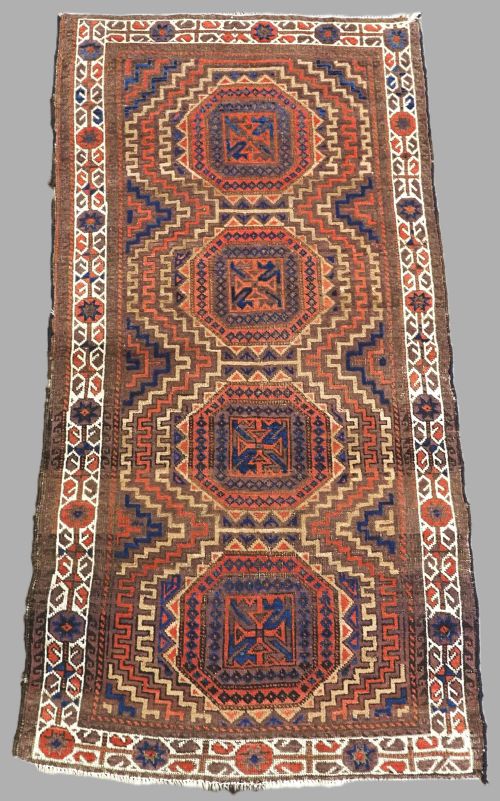
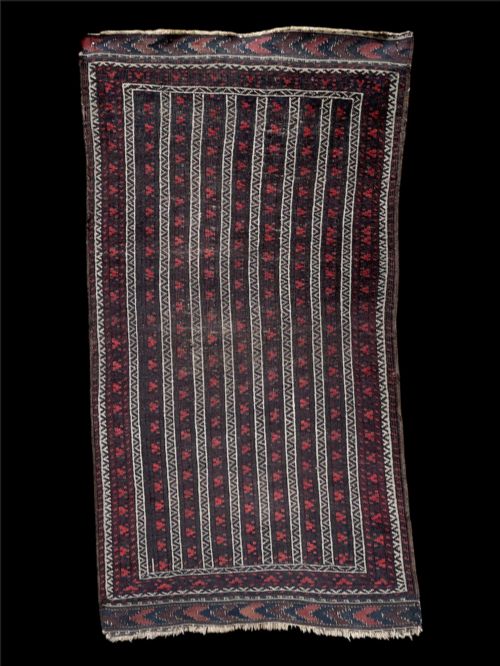
You will frequently encounter Baluch, Ersari Turkmen, and Timuri pieces spanning the periods from eighteen eighty to nineteen thirty. These formats serve practical purposes in corridors while displaying regional patterns like guls and mihrabs.
The selection ranges from small village prayer rugs to larger main carpets and kilims woven in parts. Each piece reflects the distinct aesthetic traditions of western and northern Afghan makers.
Materials and construction methods
Weavers utilised hand-spun wool and occasional goat hair for the pile and foundation, providing robust structural integrity. Natural dyes supply the deep reds, golds, and contrasting dark tones observed across the inventory.
Cotton appears in foundations alongside wool, while certain flatweaves incorporate construction techniques like being woven in two parts before joining. These traditional methods ensure the durability required for heavy foot traffic in domestic spaces.
Traditional Afghan Runner Carpet Retail Price Guide 2026
Typical asking prices for traditional afghan runner carpet among the pieces listed under this phrase on Sellingantiques today, from the lower quarter to the upper quarter. They describe what is for sale here now, not the wider market.
Materials documented across the inventory comprise hand-spun wool, cotton, goat hair, and natural dyes.
Distinctions in quality and execution
The distinction between ordinary village work and superior weaving lies in the handling of natural dyes and the crispness of motifs such as the gul or kalam donneh. Finer knots per square inch and supple, hand-spun wool elevate a textile from a simple floor covering to a sophisticated tribal art object.
Proportion and border design balance also separate standard pieces from exceptional examples. A well-executed runner maintains straight edges and harmonious colour saturation throughout its length.
The Traditional Afghan Runner Carpet Glossary
- Gul
- A repeating medallion motif often associated with Turkmen and Baluch tribal carpets. These octagonal or gabled designs form the primary visual structure of many central Asian textiles.
- Kilim
- A flatwoven textile produced without a pile by tightly interweaving warp and weft threads. These pieces offer geometric chevron patterns and lighter weight than knotted carpets.
- Kalam Donneh
- A repeating pattern resembling a pencil box or stylized shrub, common in western Afghan weaving. This motif adds linear rhythm to Baluch and Timuri main carpets.
- Kelleh
- A large format carpet proportions-wise longer than it is wide, distinct from square or runner formats. These substantial pieces served major rooms in traditional settings.
Traditional Afghan Runner Carpet: Frequently Asked Questions
How do I place a runner in a hallway?
Position the runner centrally in the hallway, leaving an equal margin of bare floorboards visible on all sides. This arrangement protects high-traffic zones while framing the tribal patterns effectively.
Ensure you place a quality underlay beneath the textile to prevent slipping and reduce pile compression over time.
How should I clean a wool carpet?
Vacuum the rug gently on a low suction setting without the rotating beater bar engaged, moving in the direction of the pile. Avoid vigorous shaking or beating which can damage old wool foundations.
Address spills immediately by blotting with a clean damp cloth rather than rubbing, and consult a specialist for professional washing.
What is the difference between Baluch and Ersari styles?
Baluch rugs typically feature deep indigo and rich red grounds with intricate minor guls, goat hair details, and strong western Afghan influences. They often present compact formats suitable for intimate spaces.
Ersari Turkmen pieces display larger turreted guls and expansive red fields with greater overall scale. Their design vocabulary derives directly from northern traditions.
Are these carpets suitable for daily use?
Hand-spun wool and natural dyes create resilient surfaces capable of withstanding ordinary domestic foot traffic. Regular rotation helps distribute wear evenly across the length of the runner.
Keeping them away from continuous direct sunlight preserves the saturation of the natural dyes over decades of living.
How do I identify a prayer rug?
Look for the distinctive arched mihrab shape at one end of the field, which was designed to be pointed toward Mecca during daily devotions. Some unusual examples feature multiple mihrabs arranged across the weaving.
These pieces generally measure smaller than hallway runners and focus the viewer's attention toward the central niche.