

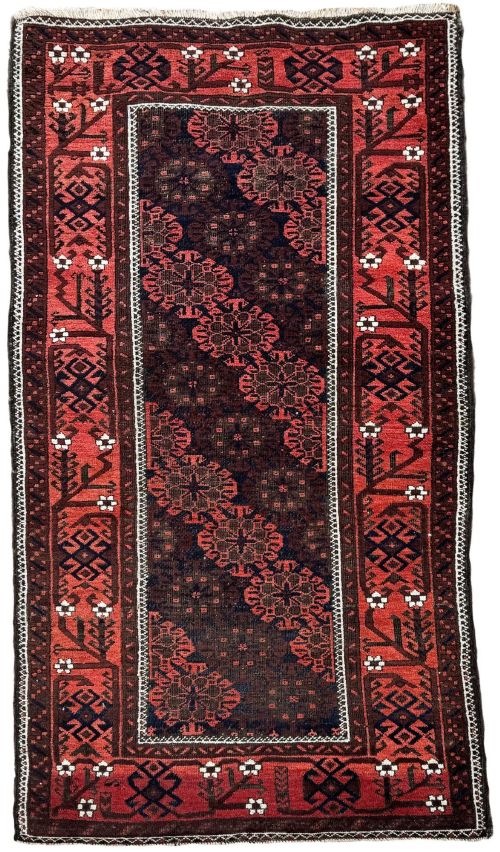


Dark Brown Red Runner
These dark brown red runner pieces are tribal and nomadic floor coverings woven from wool and goat hair.
Dark Brown Red Runner
A dark brown red runner brings together tribal and nomadic weaving traditions from Persia, Afghanistan, and surrounding regions. Buyers searching for a dark brown red runner encounter antique pieces originating from the nineteenth century up to the early twentieth century, spanning periods such as 1880, 1890, 1900, 1920, and 1930.
The selections on this page predominantly consist of tribal Baluch, Timuri Baluch, Mahdad Khani Baluch, and Kurdish rugs and runner rugs. These narrow formats and longer carpets display traditional designs including calyx lattices and Turkmen guls.
Originating from workshops and nomadic camps in regions like Khorasan and Western Afghanistan, these floor coverings reflect deep cultural weaving practices. The physical evidence shows distinct formats ranging from compact mats to long narrow runners suited for hallways and corridors.
Materials and construction methods
Weavers constructed these pieces utilising wool, hand-spun wool, and cotton foundations, frequently incorporating resilient goat hair for durability along the outer edges. Natural dyes provide the enduring palette of deep browns, reds, and contrasting accents seen across the structures.
The combination of hand-spun wool and natural colourants creates the characteristic depth found in these tribal weavings. Artisans tied dense knots by hand, ensuring each runner or rug maintained structural integrity over generations of daily use.
Dark Brown Red Runner Retail Price Guide 2026
Typical asking prices for dark brown red runner among the pieces listed under this phrase on Sellingantiques today, from the lower quarter to the upper quarter. They describe what is for sale here now, not the wider market.
Goat hair often appears in the outer edges of these tribal runners, chosen for its stubborn resilience against heavy nomadic foot traffic.
Evaluating the standard of weaving
Quality in these tribal weavings rests upon the fineness of the knotting and the handled consistency of the hand-spun wool. Superior examples display precise geometric layouts, such as well-executed calyx lattice patterns or clear Turkmen guls, executed with tight structural foundation.
The selection of natural dyes also dictates the visual depth and longevity of the piece. Master weavers achieved richer, more light-responsive tones through careful mordanting and dyeing processes, whereas lesser examples show less variation in hue.
The Dark Brown Red Runner Glossary
- Baluch
- A term describing tribal rugs and runners woven by various nomadic groups originating from the borderlands of Persia and Afghanistan. These pieces typically feature dark palettes and geometric motifs.
- Runner
- A long, narrow format of rug specifically suited for hallways, corridors, and staircases. The evidence shows antique examples measuring over two metres in length.
- Natural Dyes
- Colourants derived from plant, root, and insect sources rather than synthetic chemicals. They age gracefully and develop a rich patina over decades.
- Gul
- A medallion or repeating octagonal motif often found in Turkmen and related tribal weaving traditions. These designs symbolise specific tribal lineages and heritage.
- Calyx Lattice
- A repeating geometric trellis pattern resembling flower calyxes, seen in Khorasan and other regional antique rugs.
Dark Brown Red Runner: Frequently Asked Questions
Where were these runners made?
The pieces originate from tribal and nomadic groups across Persia, Western Afghanistan, and regions like Khorasan.
Weavers in these areas produced long runners and rugs using traditional local materials and geometric designs.
What materials are used?
Makers relied primarily on wool, hand-spun wool, cotton, and occasional goat hair for structural borders.
Natural dyes were employed to colour the fibres in deep brown and red tones that endure today.
How do I date these pieces?
Dating relies on structural analysis, stylistic markers, and historical records placing them in periods from the nineteenth century through the 1930s.
Examining the wear, knot structure, and natural dye palette helps contextualise the era of manufacture.
How should I care for a runner?
Place the runner in low-moisture areas with a quality underlay to prevent sliding and excessive wear.
Gentle vacuuming without a rotating brush roll helps preserve the hand-spun wool pile and natural foundations.