





1920s Afghan Tribal Rug
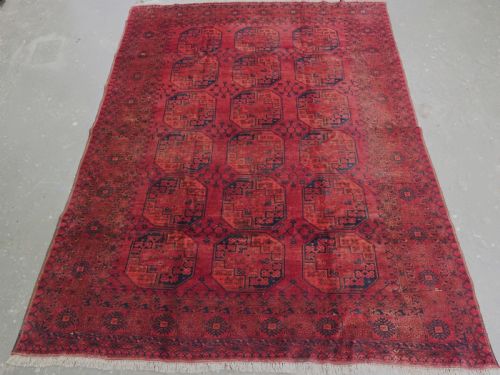
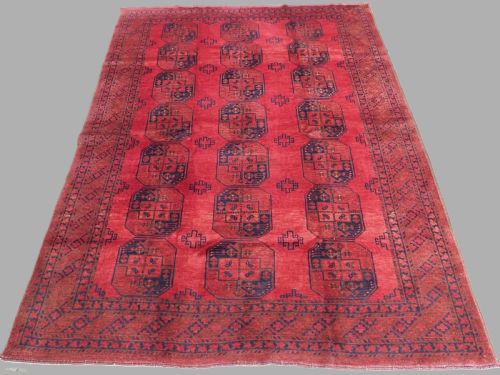
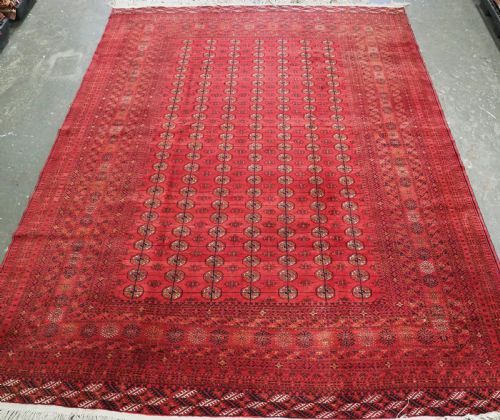
A 1920s afghan tribal rug brings rich wool texture and deep red colour into a room, offering authentic village craftsmanship from the early twentieth century.
1920s Afghan Tribal Rug
When searching for a 1920s afghan tribal rug, buyers encounter hand-knotted village carpets, runner rugs, and prayer rugs originating from various tribal groups.
The most common examples on this page include Ersari, Baluch, Kizil Ayak, and Pashtun village pieces featuring traditional motifs, warm red tones, and geometric layouts.
Alongside floor coverings, the selection contains utilitarian forms such as storage or grain bags and flat-woven kilims created for nomadic or village life.
Materials and Weaving Methods
These textiles rely primarily on hand-spun wool and natural dyes to achieve deep, rich colours and soft, glossy textures that develop a faded patina over time.
Weavers combine wool foundations with cotton elements where structural durability is required, maintaining a hard-wearing finish across carpets and utility bags.
1920s Afghan Tribal Rug Retail Price Guide 2026
Typical asking prices for 1920s afghan tribal rug among the pieces listed under this phrase on Sellingantiques today, from the lower quarter to the upper quarter. They describe what is for sale here now, not the wider market.
Some weavers cleverly integrated ram horns and stars into prayer arches, ensuring divine protection alongside daily utility.
Assessing Quality and Character
Quality rests in the handling of the wool and the depth of the natural dyes, where softer, glossier piles and richer red tones elevate a piece.
The precision of traditional tribal designs, unusual border layouts, and well-preserved kilim ends contribute significantly to the visual interest of individual rugs.
The 1920s Afghan Tribal Rug Glossary
- Mihrab
- A niche design representing a doorway or prayer arch, frequently seen repeated on prayer rugs. Multiple arches appear as double or triple mihrabs.
- Gul
- An octagonal medallion motif used across Turkmen and Afghan tribal weaving. It forms the primary repeating pattern in many classical carpet designs.
- Kilim
- A flat-woven textile produced without a pile. Long kilim ends often feature geometric chevrons or striped patterns.
- Balist
- A utilitarian storage or grain bag woven on a loom. These pieces typically combine a flat-weave back with a decorative pile front.
- Seh Mihrab
- A design layout featuring three prayer arches placed side by side. It remains a distinct characteristic of specific village prayer rugs.
1920s Afghan Tribal Rug: Frequently Asked Questions
How do I identify a prayer rug?
Prayer rugs feature a distinctive architectural niche known as a mihrab, often shaped like an arch or pointed dome. This design directed the user toward Mecca during daily devotions.
Many examples on this page also incorporate repetitive motifs like lotus leaves or multiple arches within a compact format suitable for smaller spaces.
Where were these rugs made?
These textiles originate from various tribal groups and villages across Afghanistan, including Ersari, Baluch, Kizil Ayak, and Pashtun communities. Each group utilised distinct regional patterns and colour palettes.
Local weavers produced these pieces for domestic use, trade, or storage, resulting in diverse formats ranging from large carpets to compact grain bags.
Are these rugs durable for daily use?
Constructed from hand-spun wool and traditional materials, these heavy-duty carpets are inherently hard-wearing. Their robust construction suits them well for everyday placement in active living areas.
Proper placement on a quality underlay helps protect the wool foundation and extends the active lifespan of older textiles.
What colours are typical for this period?
Warm reds dominate the palette, ranging from deep rich tones to softer, faded patinas shaped by natural dyes and age. These primary hues often contrast with dark outlines and secondary accent colours.
Over decades of light and wear, the natural dyes mellow gently, creating a harmonious visual depth unique to early twentieth-century pieces.