

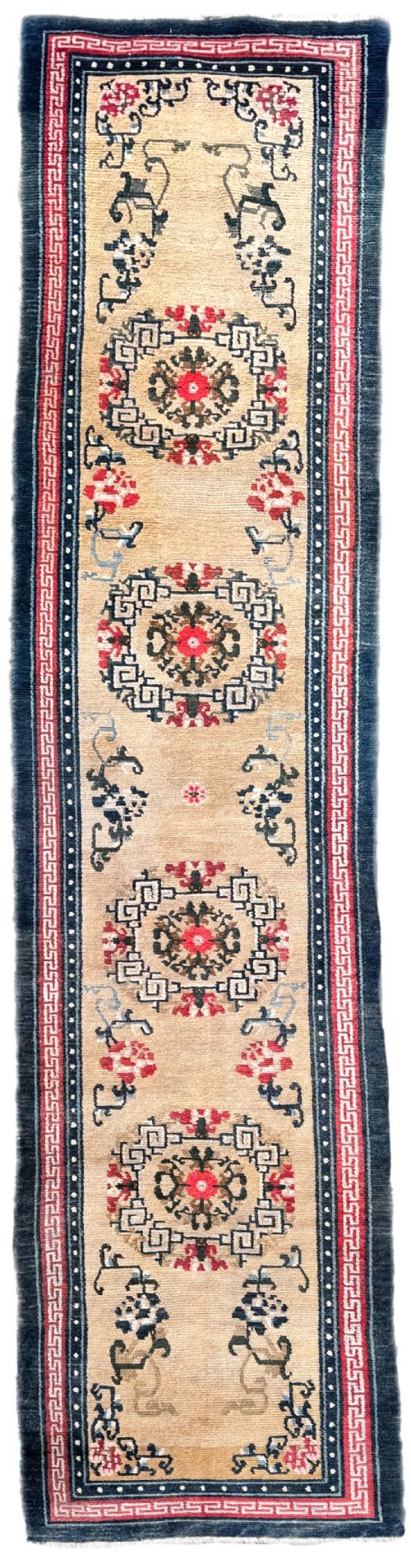

Wool Carpet for Hallway
When you need a wool carpet for hallway spaces, these long format runners bring texture and heritage underfoot.
Wool Carpet for Hallway
A wool carpet for hallway use takes the form of an elongated runner designed to span narrow domestic passages and landings. These pieces range from compact proportions to exceptionally long formats reaching over thirty feet.
The selections encountered here originate from Persian, Caucasian, Turkish, Kurdish, and Tibetan weaving traditions. Dating primarily from the late nineteenth and early twentieth centuries, they bring authentic historical character to domestic circulation spaces.
Materials and construction
The primary material found across these listings is wool, often paired with cotton for structural foundations. These natural fibres provide the durability required for high-traffic corridors while maintaining a dense, resilient pile.
Traditional handweaving methods govern the creation of each piece, producing flat surfaces or knotted piles. Artisans utilise locally sourced materials shaped by regional weaving heritage.
Wool Carpet for Hallway Retail Price Guide 2026
Typical asking prices for wool carpet for hallway among the pieces listed under this phrase on Sellingantiques today, from the lower quarter to the upper quarter. They describe what is for sale here now, not the wider market.
One exceptional corridor runner stretches out to an impressive thirty-two feet in length.
Assessing quality and condition
Quality rests in the precision of the weave and the integrity of the foundation materials. Denser knotting and well-preserved pile secure longevity in demanding corridor settings.
Patina and natural wear reflect the history of each textile. Examples retain varying degrees of original texture, with some items showing deliberate signs of age.
The Wool Carpet for Hallway Glossary
- Runner
- A long, narrow carpet format specifically proportioned for corridors, hallways, and staircases. These pieces provide floor covering for transitional spaces.
- Pile
- The upright yarn loops or cut ends that form the soft surface of a carpet. This layer absorbs foot traffic and displays the woven design.
- Knot
- An individual loop of wool tied around warp threads to build the pile of a handmade carpet. Knot density varies between regional weaving traditions.
- Warp
- The vertical threads stretched tightly on a loom that form the structural foundation of the textile. Weft threads are interlaced across these foundational strands.
- Patina
- The surface appearance acquired by materials through age and use. In older textiles, this indicates natural softening of colours and wool texture.
Wool Carpet for Hallway: Frequently Asked Questions
How do I choose the right length?
Measure your passage carefully, leaving visible floorboards or stone exposed around the edges for balanced proportions. Long runners can span extended halls, while shorter formats suit compact entryways.
Consider the traffic patterns in your home when selecting dimensions. A proper fit ensures the rug stays flat and does not obstruct doors.
Are these runners suitable for busy halls?
Wool and cotton construction provides natural resilience against regular foot traffic. These materials withstand daily use while maintaining their structural integrity.
Proper underlay helps secure the runner to the floor and cushions the impact of footsteps. This extends the working life of vintage textiles.
How do I clean an antique wool runner?
Gentle surface cleaning and regular light vacuuming without a rotating brush help maintain wool fibres. Professional specialist cleaning is recommended for deeper maintenance.
Avoid excessive moisture and harsh chemical treatments. Prompt attention to spills preserves the natural oils within the wool.
How do I identify regional styles?
Regional characteristics appear in the geometric or floral motifs, border arrangements, and colour palettes. Persian, Caucasian, and Anatolian traditions each employ distinct design vocabularies.
Comparing structural details such as fringe finishing and edge binding provides further clues to origin. Reference guides help connect specific patterns to historical weaving districts.