
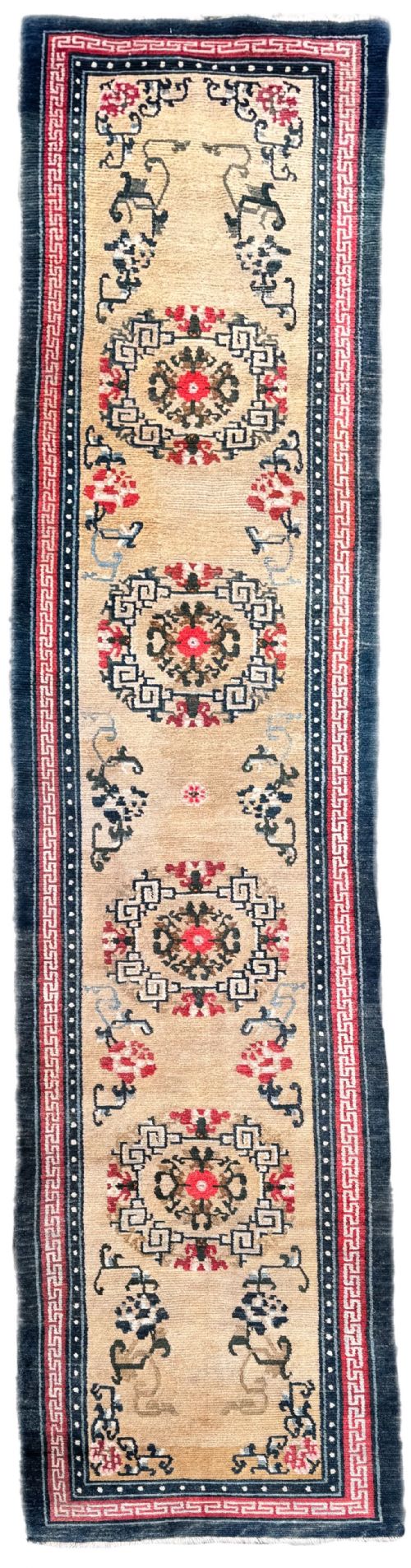
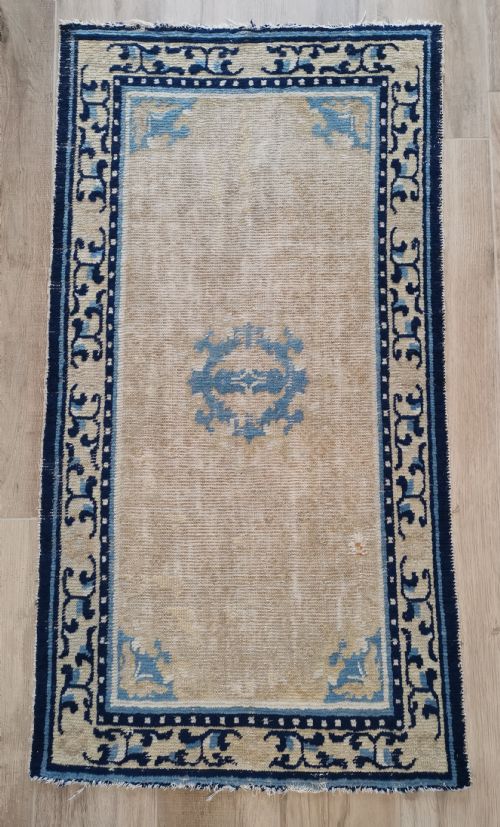
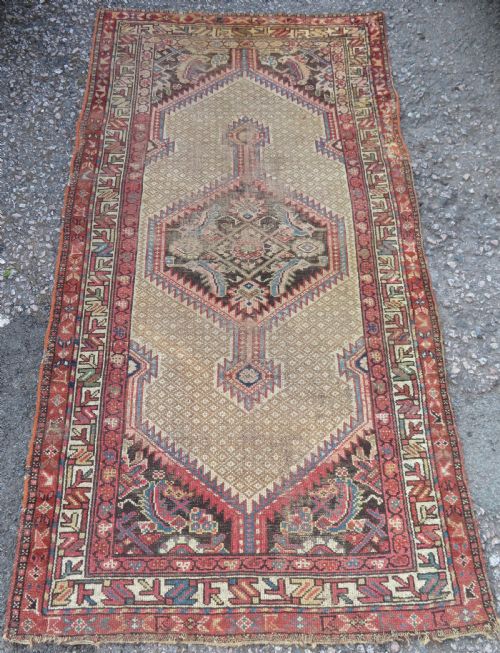
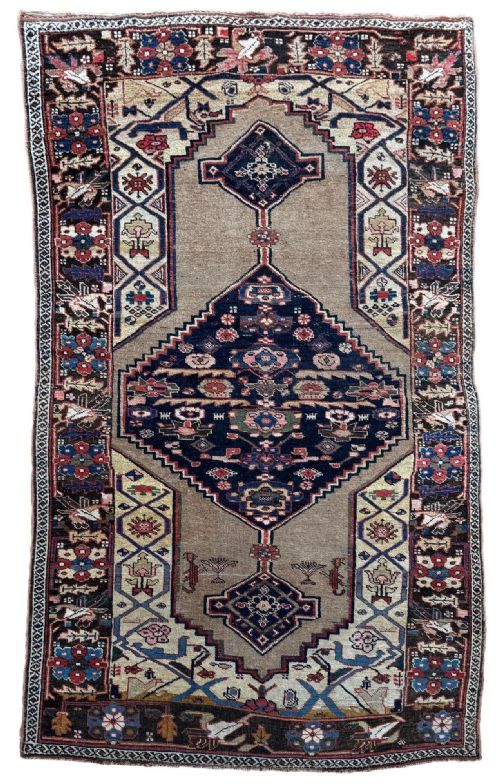
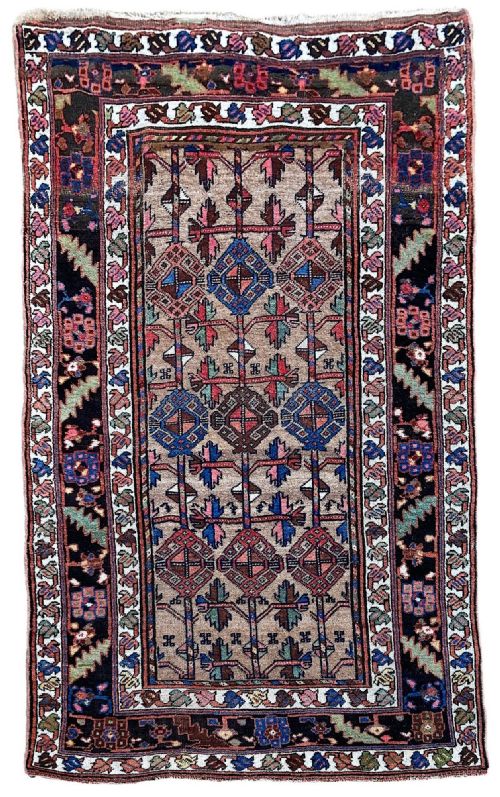


Beige Wool Runner Rug
A beige wool runner rug brings warmth and linear rhythm to a long hallway, shaped by tribal weavers across Persia, Anatolia, and beyond.
Beige Wool Runner Rug
A beige wool runner rug is a long, narrow floor covering designed for corridors, hallways, and transitional spaces. When searching for this specific format, buyers encounter pieces originating from Persian tribal traditions, particularly Serab and Kurdish workshops, alongside examples from wider Anatolian and Asian regions. These runners serve the practical purpose of protecting high-traffic wooden floors while adding grounded texture to narrow architectural spaces.
The inventory on this page spans the late nineteenth century into the early decades of the twentieth century, with production dates resting primarily around nineteen hundred. Buyers are most likely to meet hand-knotted tribal runners featuring neutral or camel grounds, which derive their natural tone from undyed wool or traditional village dyeing methods. The forms range from moderately proportioned hallway lengths to exceptionally long narrow formats designed for grander corridors.
Regional variations define the selection, with Persian Serab runners appearing frequently alongside Baluch and Kurdish pieces. These textiles carry the distinct weaving habits of their respective villages, utilising narrow formats that suit domestic passages. Each piece reflects the utility and aesthetic choices of rural weavers working with durable local materials.
Materials and Construction
The primary material found across these listings is wool, frequently complemented by cotton foundations and occasional use of camel hair for natural tonal variation. Weavers knotted these fibres by hand, building dense pile structures designed to withstand decades of foot traffic in domestic hallways. The integration of hand-spun wool gives many pieces a tactile depth and subtle irregularity in texture.
Natural foundations of cotton or wool provide the structural grid into which the pile is knotted. Artisans employed traditional village techniques, securing the rows with sturdy warp and weft threads that maintain the linear stability of a narrow runner. This construction method ensures the rug lies flat and retains its shape along extended corridors.
Listings feature wool, cotton, camel hair, and jute across nineteenth and early twentieth-century village origins.
Assessing Quality and Execution
Quality in these runners rests on the density of the hand-knotted pile and the precision of the village weaving. Finer weaves allow for crisper geometric lines and greater durability under heavy use, separating standard village production from exceptional regional pieces. The choice of materials also influences the handle, with hand-spun wool and camel hair yielding a softer touch and richer ageing.
The integrity of the structural foundation dictates longevity in a narrow format. Well-made runners maintain straight edges and uniform width across significant lengths, avoiding the distortion common in hastily produced textiles. The subtlety of the natural colour palette and the harmony of the tribal motifs complete the assessment of a superior piece.
The Beige Wool Runner Rug Glossary
- Runner
- A long, narrow carpet format specifically proportioned for hallways, corridors, and stairs. These pieces guide movement through a home while protecting timber floors.
- Pile
- The vertical or upright loop of yarn that forms the textured surface of a rug. This layer absorbs foot traffic and displays the woven design.
- Warp
- The stationary vertical threads stretched across a loom that form the structural skeleton of a rug. Weft threads are woven horizontally across these warp strands.
- Camel hair
- The soft undercoat fibre of a camel used in traditional weaving to provide a durable, un-dyed neutral brown or beige ground. It offers natural warmth and distinctive texture.
Beige Wool Runner Rug: Frequently Asked Questions
Where should I place a runner rug?
A runner rug belongs in high-traffic, linear spaces such as hallways, corridors, entryways, and narrow galley kitchens. Their proportions guide the eye and soften timber or stone flooring.
They also function effectively alongside long beds or in transitional landings where standard rectangular carpets prove too wide.
How do I clean an antique wool runner?
Gentle, regular vacuuming without a rotating brush roll prevents dust from settling into the wool pile. Professional antique textile cleaning is recommended for deeper maintenance.
Avoid excessive water and harsh chemical detergents, which can damage natural village dyes and fragile wool foundations.
Are these runners durable for daily use?
Hand-knotted wool runners from the nineteenth and early twentieth centuries were built for domestic endurance. Dense pile construction and sturdy wool fibres handle normal hallway foot traffic exceptionally well.
Using a quality underlay prevents slipping and cushions the foundation against hard subfloors.
Why is beige common in tribal rugs?
Beige tones often arise naturally from undyed sheep fleece or camel hair utilised by village and nomadic weavers. These neutral grounds provided a calm backdrop for geometric motifs and regional borders.
Natural dyes mellow gracefully over decades, resulting in the soft, integrated colour palettes valued by collectors.