

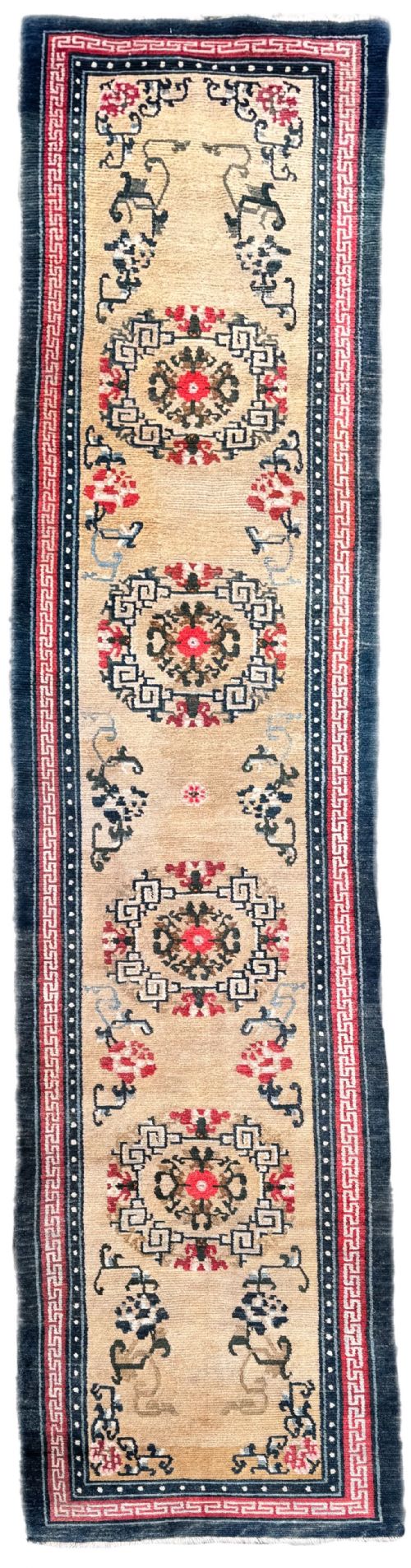


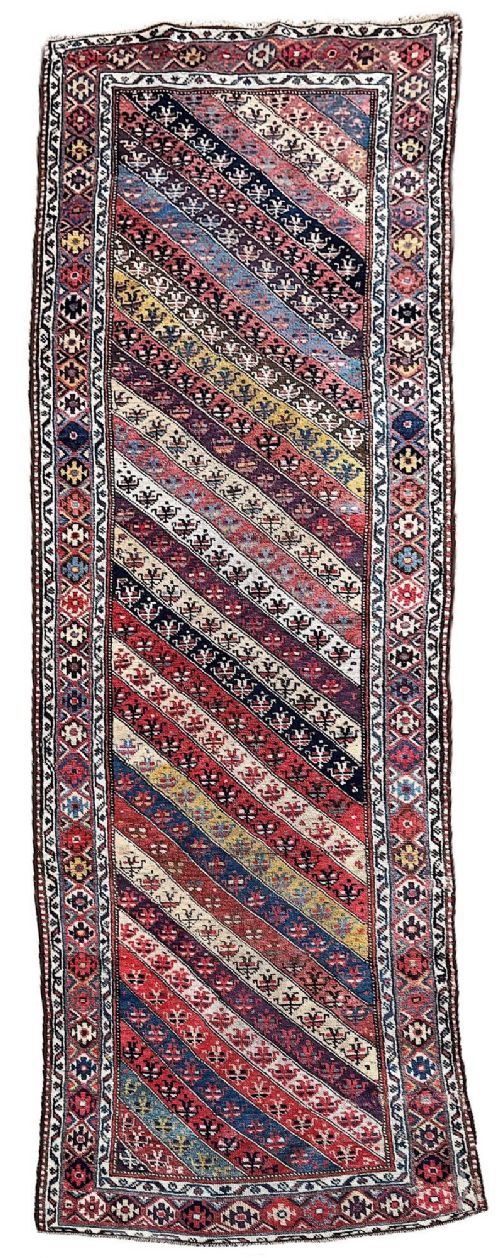


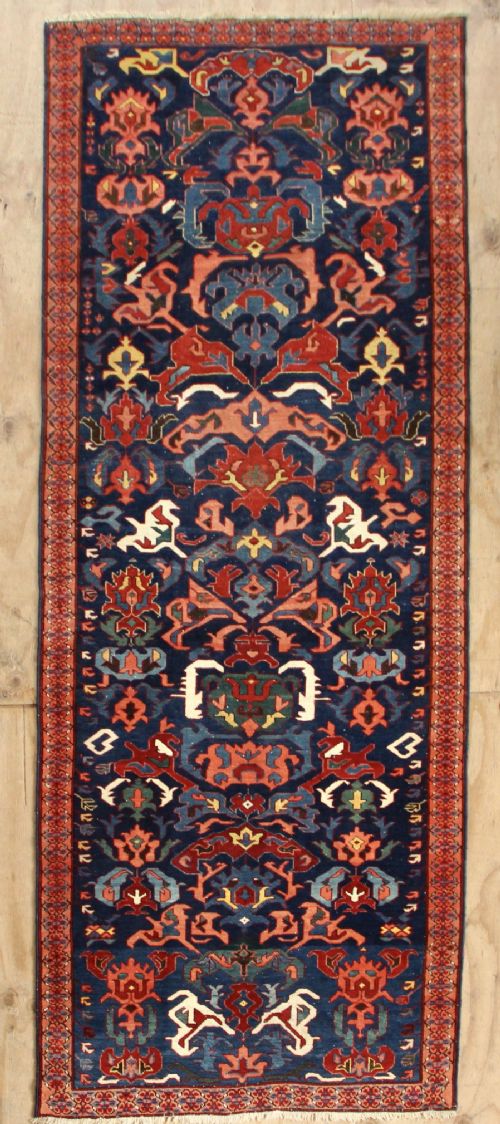
Hand Woven Corridor Rug
A hand woven corridor rug brings warmth and historic character to narrow spaces, offering durable utility alongside rich tribal and regional artistry.
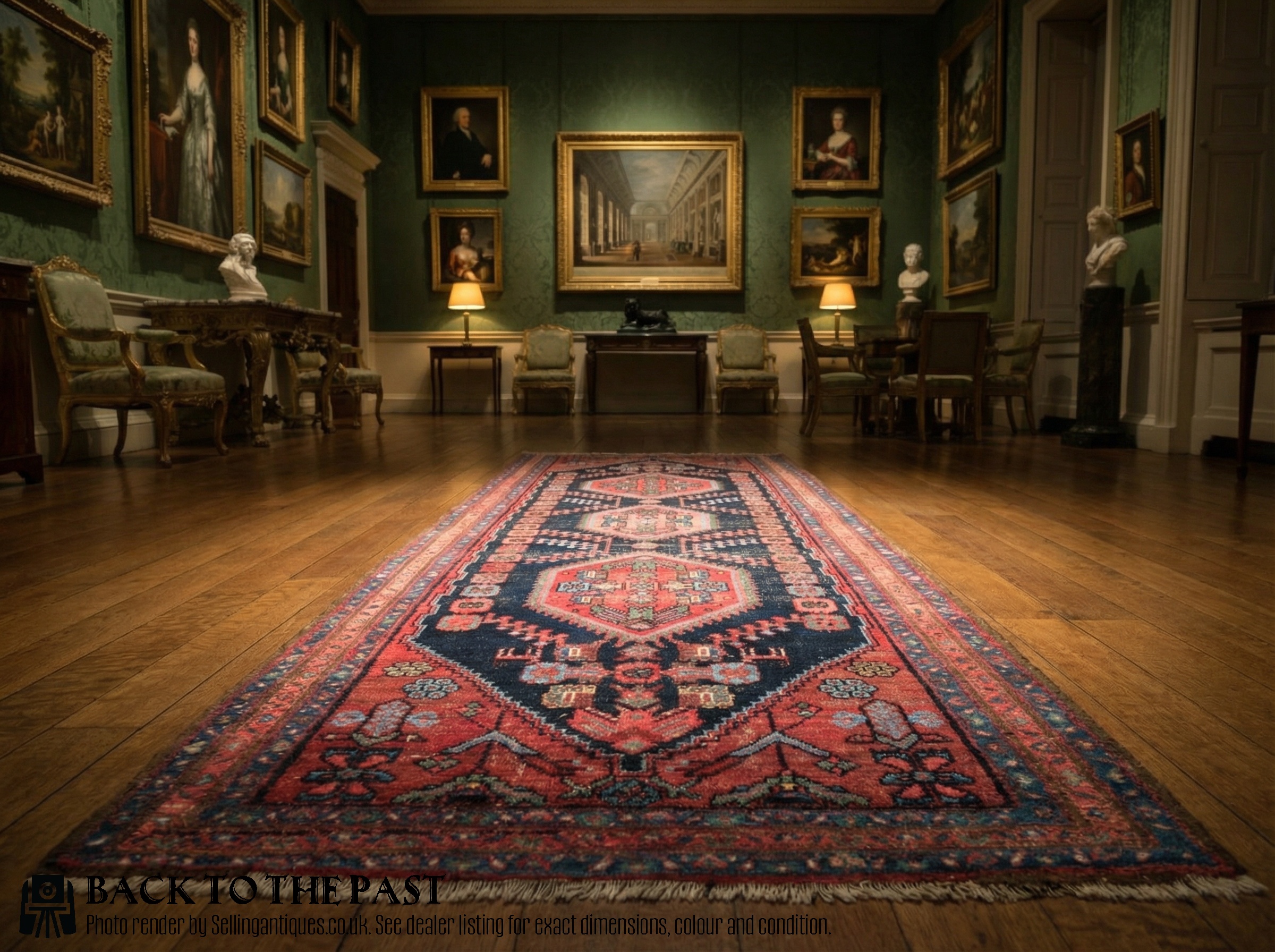
Hand Woven Corridor Rug
A hand woven corridor rug spans long and narrow formats designed specifically for hallways, passages and extended spaces. Buyers encounter antique examples originating from Persian, Caucasian, Tibetan and Anatolian weaving traditions.
The selection ranges from nineteenth-century village carpets to early twentieth-century tribal runners. Common forms include elongated formats such as Kelleh carpets and narrow corridor runners.
Makers utilised traditional regional designs, including latch hook medallions, all-over shrub patterns and bold geometric borders. These textiles served practical floor-covering purposes in country houses and town residences.
How they were made
Weavers employed wool, cotton and hand-spun wool materials to construct these textiles on vertical or horizontal looms. Hand-spun wool provides resilience and distinct texture across the pile.
Natural dye methods created the deep tones seen in regional pieces from Heriz, Bidjar, Kurdish and Caucasian districts. Dense knotting techniques ensured the pile withstood heavy foot traffic in corridors.
Some runners stretch to exceptional lengths, requiring multiple pairs of footsteps just to cross a single hallway.
What varies in quality
Quality depends on the fineness of the knotting and the tightness of the weave, which dictate how sharply geometric or floral motifs are rendered. Tightly packed foundations offer superior structural integrity.
The choice of materials influences the handle and longevity, with hand-spun wool yielding greater resilience. Furthermore, the complexity and balance of regional design motifs distinguish standard production from exceptional village work.
The Hand Woven Corridor Rug Glossary
- Runner
- A long, narrow carpet format designed for hallways, corridors and staircases. These pieces measure significantly longer than they are wide.
- Kelleh
- A Persian room-size carpet of intermediate proportions, narrower than a full carpet but broader than a standard runner. These textiles often display traditional village or tribal medallions.
- Pile
- The upright yarn surface of a rug, formed by knotted loops that are shorn flat. Pile density affects the weight and durability of the piece.
- Warp
- The longitudinal threads stretched vertically on the loom before weaving begins. Weft threads are passed across these foundational warps to secure the knots.
- Latch hook
- A stepped, geometric motif resembling a hook, frequently seen in tribal and Caucasian weaving traditions. This design element adds sharp angular detail to borders and central fields.
Hand Woven Corridor Rug: Frequently Asked Questions
Where should I place a corridor rug?
These narrow textiles suit hallways, corridors and entryways where length adds visual guidance. They also function well alongside long furniture arrangements in galleries.
Ensure the space allows adequate clearance for doors to swing above the pile thickness.
How do I care for an antique rug?
Gentle, regular suction vacuuming without a rotating brush bar prevents dirt accumulation within the wool pile. Professional specialist cleaning maintains the integrity of natural dyes.
Positioning a suitable underlay beneath the textile prevents slipping and reduces friction against hard flooring.
What is the difference between a runner and a kelleh?
Runners feature exceptionally long and narrow proportions suited for corridors. Kellehs offer broader dimensions, sitting between a standard runner and a full carpet.
Both formats originated to fit specific architectural spaces within traditional homes.
How are regional styles identified?
Characteristics such as palette, border motifs and knotting density point to specific weaving districts like Heriz, Bidjar or the Caucasus. Structural traits in the foundation yarns offer further clues.
Local tribal traditions often repeat distinct geometric symbols passed down through generations.