
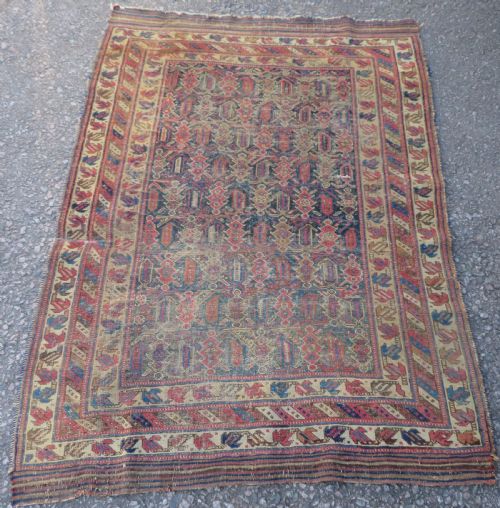
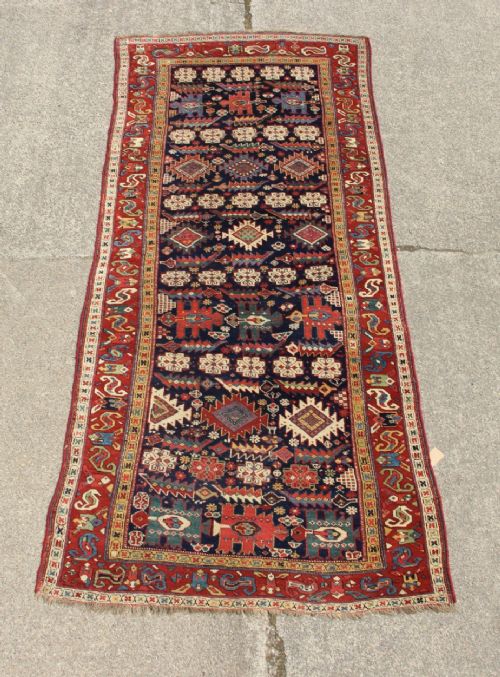
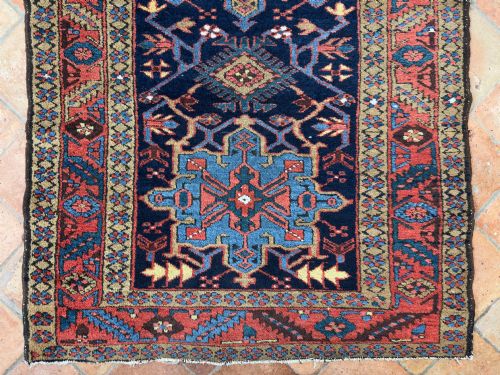


Navy Wool Hallway Runner
A navy wool hallway runner brings lasting warmth to narrow spaces through centuries-old weaving traditions.
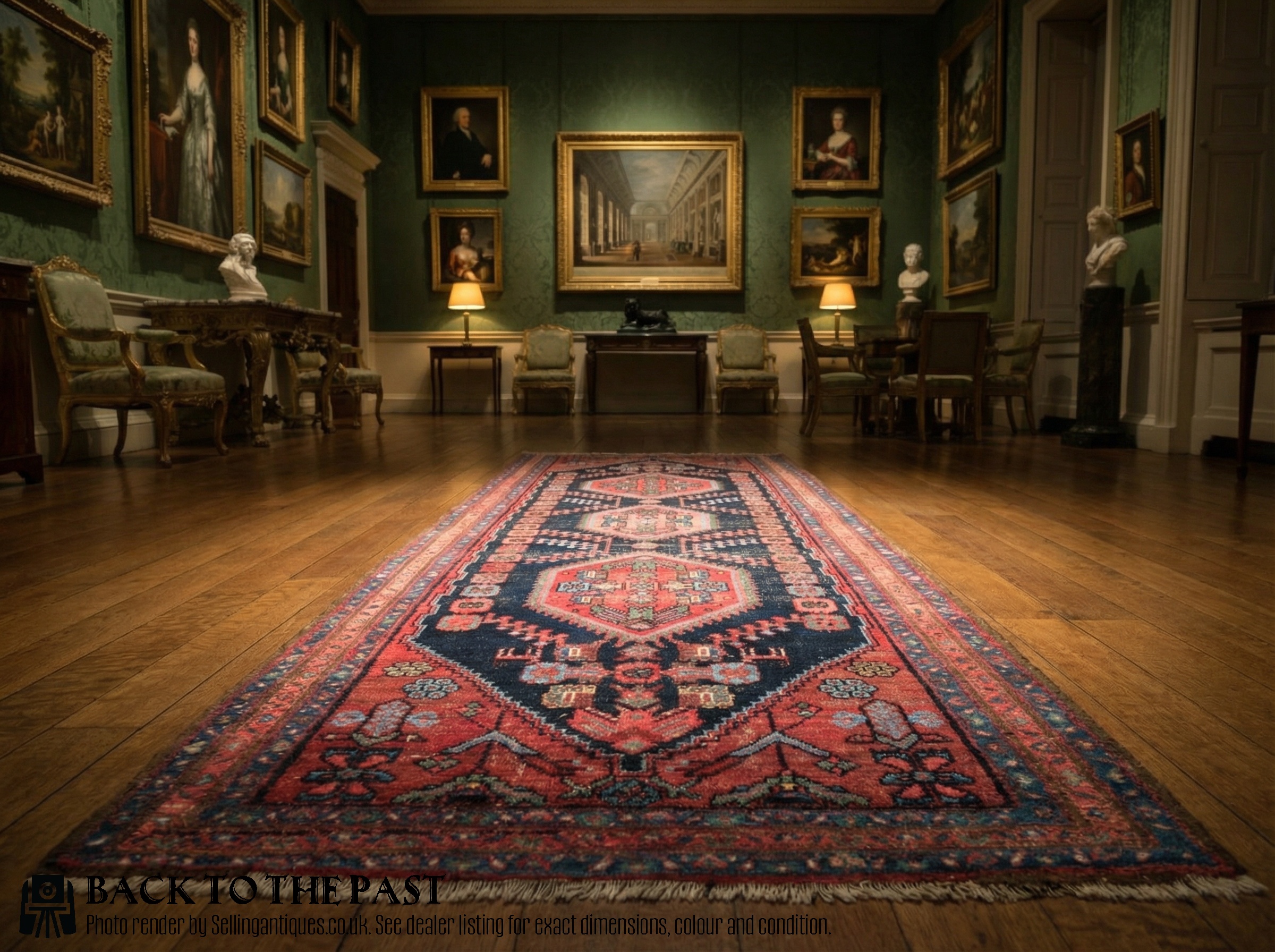
Navy Wool Hallway Runner
A navy wool hallway runner provides a durable, elongated floor covering designed specifically for narrow thoroughfares like corridors and landings.
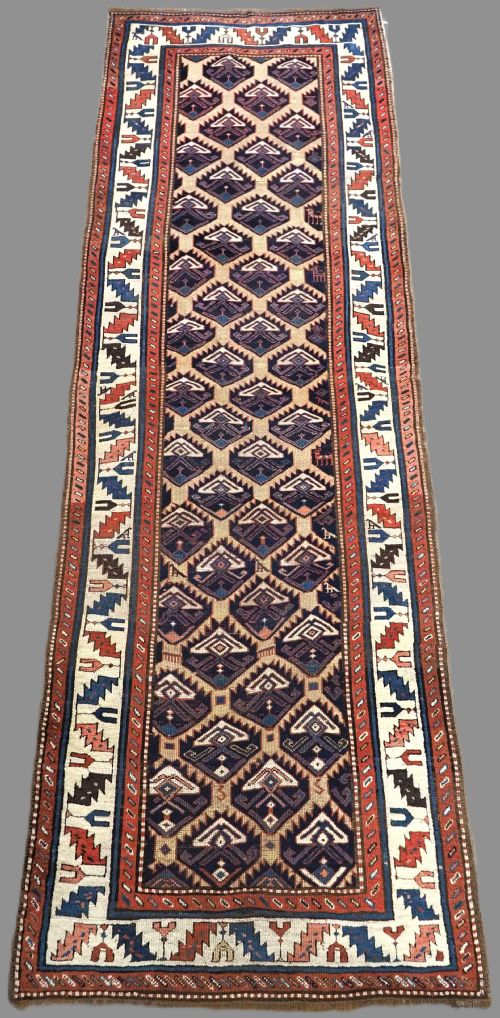
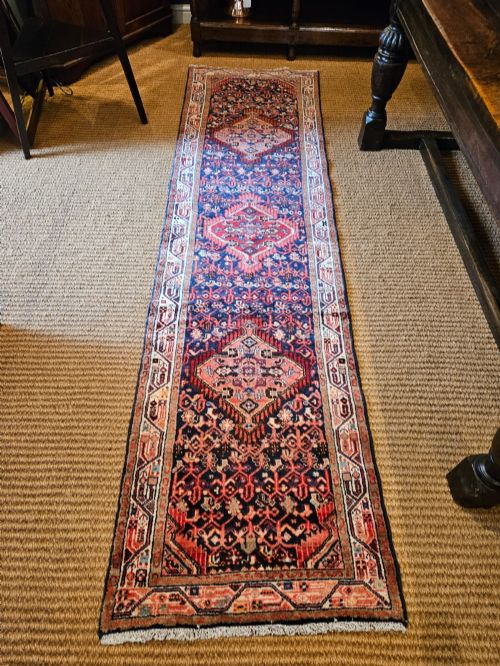
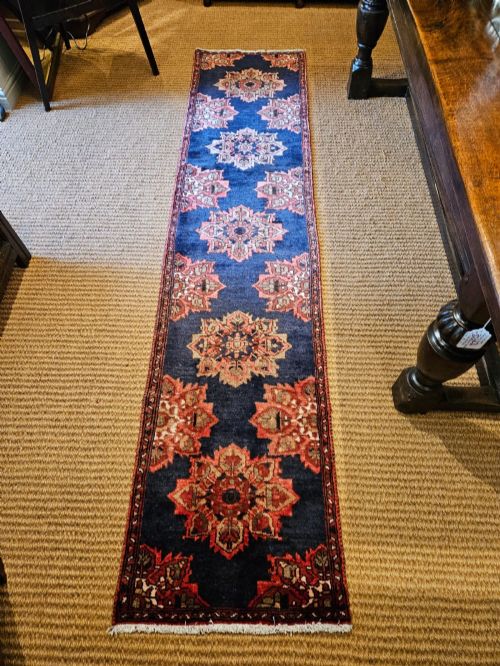
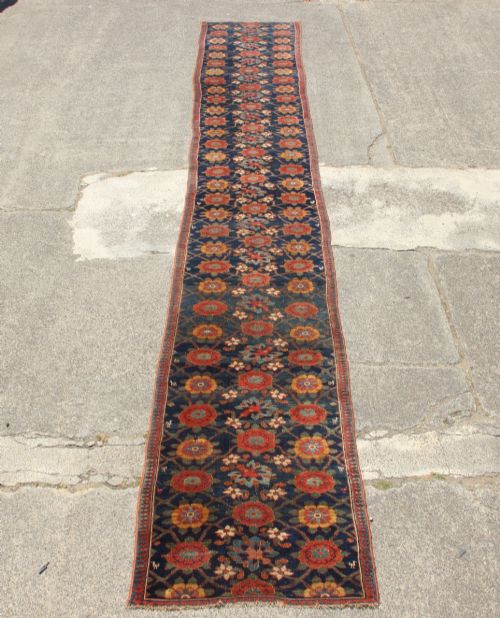
Buyers seeking a navy wool hallway runner encounter pieces originating primarily from Persian and Caucasian weaving traditions dating from the late nineteenth century into the early twentieth century.
The selection ranges from narrow Ferahan and Hamadan runners to geometric Caucasian and tribal Kurdish long carpets.
Materials and construction methods
These runners utilise hand-spun wool for the pile and foundation, providing resilience against heavy foot traffic in domestic hallways.
Weavers employed natural dyes to achieve deep indigo and navy blue tones alongside contrasting earth shades.
Each piece relies on traditional hand-knotted techniques executed across Persian village workshops and tribal communities.
Geographic origins represented include Heriz, Hamadan, Bakhtiari, Kurdish, and Caucasian workshops.
Determinants of quality
Knot density and structural tightness dictate the longevity and definition of the geometric or floral patterns.
The clarity and depth of the natural dyes distinguish superior pieces from those with simpler or more uniform coloration.
The integrity of the original wool pile and selvedges marks the difference between well-preserved examples and heavily restored specimens.
The Navy Wool Hallway Runner Glossary
- Runner
- A long, narrow carpet format specifically proportioned for corridors, hallways, and stairs. This shape directs movement along domestic passageways.
- Pile
- The upright yarn loops or cut ends that form the soft surface of a rug. In these pieces, wool constitutes this upper layer.
- Natural dye
- Colouring matter derived from plants, insects, or minerals rather than synthetic compounds. These substances yield complex tones that age gracefully.
- Selvedge
- The reinforced side edges of a rug that prevent the foundation threads from unravelling. Secure finishing protects the structural integrity of the piece.
- Knot
- The individual loops of wool tied around the warp threads by the weaver. Higher counts allow for intricate pattern detail.
Navy Wool Hallway Runner: Frequently Asked Questions
How do I measure for a hallway runner?
Measure the clear floor space of your corridor, leaving an equal margin of exposed wood or tile visible around the edges. Ensure doors swing freely over the pile thickness.
Account for standard runner proportions by checking both length and narrow widths in the specifications before placing the piece.
Are these runners durable for heavy traffic?
Traditional wool pile combined with tight hand-knotting creates a resilient surface that withstands daily footsteps in busy corridors. Natural lanolin within the wool fibres naturally repels everyday dust and dirt.
Place a suitable underlay beneath the runner to prevent slippage and reduce friction against the floorboards.
How do I clean a antique wool runner?
Vacuum gently using suction alone without a rotating brush bar to protect the delicate hand-spun wool pile and older foundations. Address spills immediately by blotting with a clean cloth rather than rubbing.
Consult a specialist rug cleaner experienced in antique vegetable-dyed textiles for periodic deep cleaning.
How do I distinguish regional Persian styles?
Heriz and Serapi runners display bold geometric medallions and large-scale motifs. Kurdish and Hamadan pieces often feature denser repeating lattice patterns or tribal boteh designs.
Examine the palette and knot structure to determine whether a runner originated from northwestern workshops or Caucasian weaving traditions.