

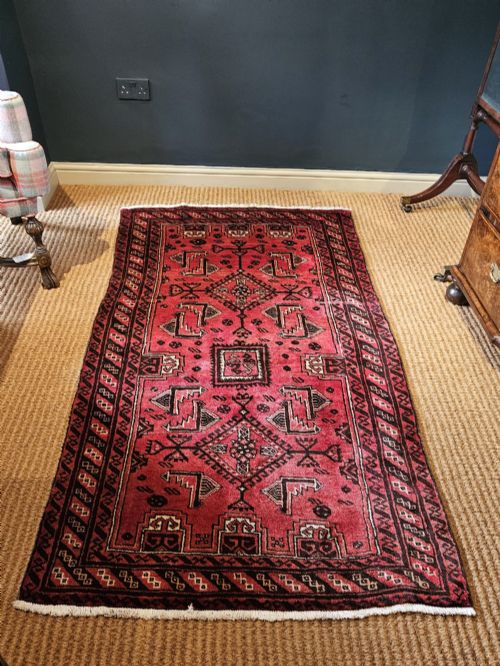
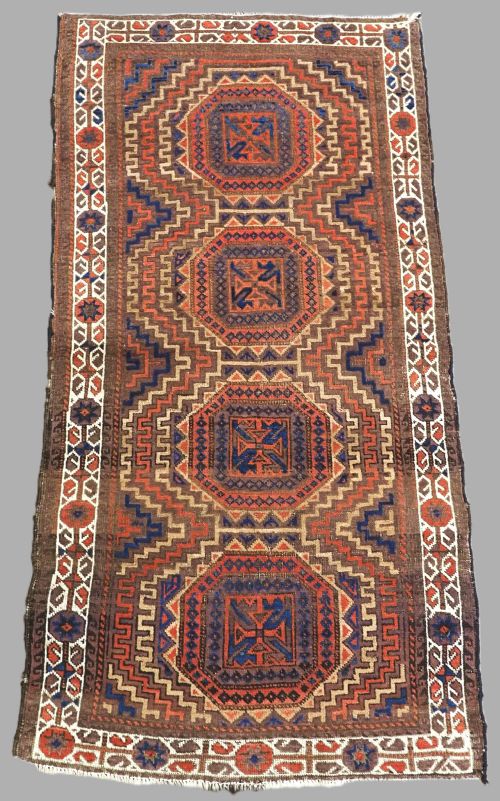
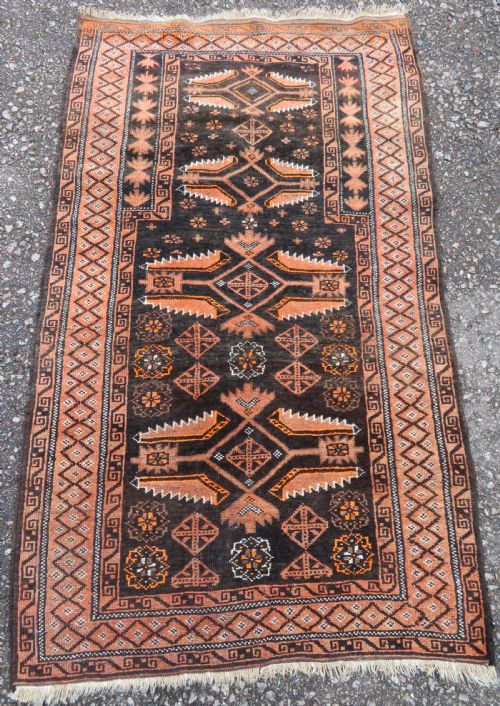
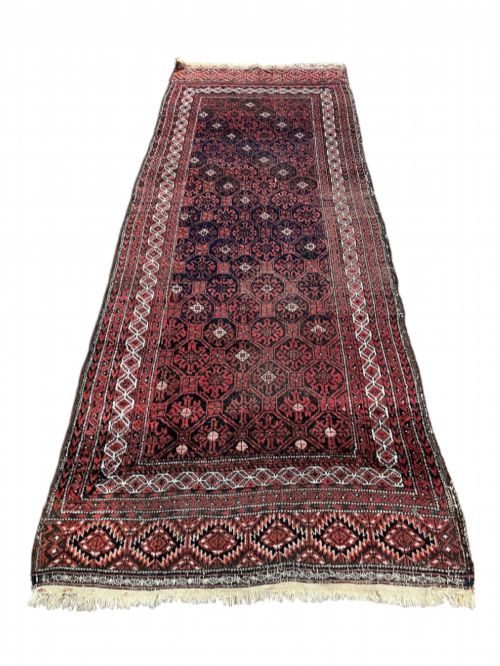


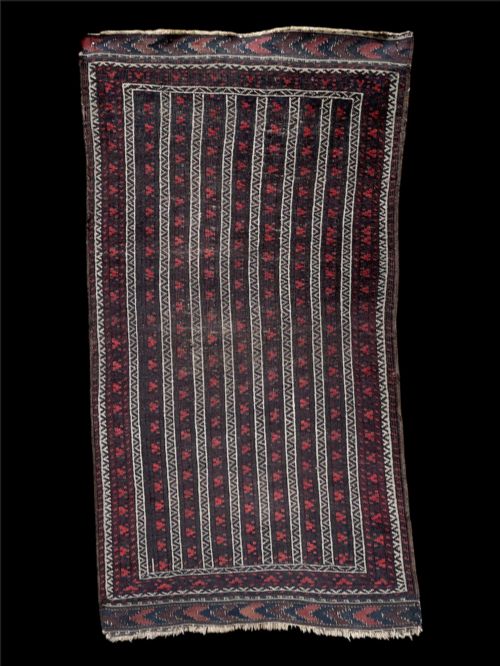


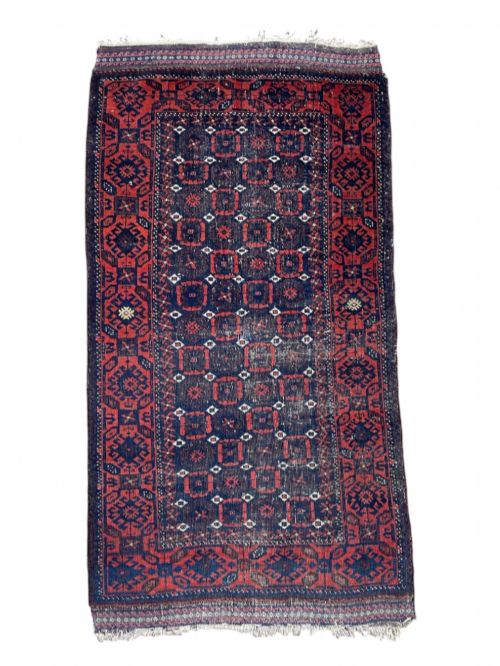

Baluch Runner Rug
When you seek a baluch runner rug, you enter a world of nomadic hand-knotted floor coverings shaped by tribal traditions across nineteenth and early twentieth-century Persia and Afghanistan.
Baluch Runner Rug
Most examples encountered on this page date from the late nineteenth century up to the 1930s, reflecting the output of various tribal groups such as the Taimani, Timuri, and Salar Khani. The form ranges from specific corridor runners to long kilims and prayer rugs woven with rich, dark wool palettes.
The enduring appeal of these runners lies in their dense, tactile pile and asymmetric tribal symbols that tell the visual stories of their makers. Collectors appreciate the way authentic village pieces combine utilitarian durability with deeply personal artistic expressions.
Materials and Construction Techniques
Weavers relied primarily on hand-spun wool for the pile, frequently incorporating camel hair, goat hair, and cotton foundations to add structural resilience and natural colour variation. Natural dyes provided the deep indigos, madder reds, and earthy browns that characterise antique tribal weaving.
Many pieces utilise mixed techniques, combining knotted pile sections with flatwoven kilim bands and weftwork decorations to create varied textural surfaces. The resulting fabrics demonstrate the robust structural methods developed by nomadic communities to withstand heavy daily use.
Recorded styles encompass Baluch tribal, Afghan tribal, and Persian tribal traditions with prayer and geometric formats.
Assessing Quality and Execution
The finest examples distinguish themselves through exceptionally tight knot density, which allows intricate geometric motifs like the kalam donneh or mina khani to remain sharp and well-defined. Superior pieces also display a thoughtful balance in the composition of secondary borders and field patterns.
Material selection significantly influences the tactile character of each textile, with hand-spun wool and genuine camel hair yielding a softer handle and more luminous depth of colour. The complexity of the tribal design and the preservation of original selvedges and end finishes further elevate the standing of individual rugs.
The Baluch Runner Rug Glossary
- Mihrab
- A niche design symbolising a doorway or prayer arch, commonly found pointing toward Mecca on tribal prayer rugs.
- Gul
- A repeating medallion or octagonal floral motif frequently utilised across Central Asian and tribal carpets.
- Kilim
- A flatwoven textile produced by tightly interweaving warp and weft strands without creating a raised pile surface.
- Selvedge
- The reinforced side edges of a rug formed by wrapping or binding the outermost warp threads to prevent fraying.
- Kalam Donneh
- A traditional motif resembling a pencil box or curved paisley shape, often arranged in rows across the field.
Baluch Runner Rug: Frequently Asked Questions
How were baluch runner rugs used?
These narrow textiles served practical purposes inside nomadic tents and village homes, functioning as floor coverings for corridors, seating areas, or spaces dedicated to prayer. Their portable nature suited the seasonal migrations of tribal groups.
Over generations, the durable wool and hair construction protected families from cold earth floors while adding symbolic imagery to living quarters.
Where did these woven runners originate?
The pieces originate from the borderlands of Persia and Afghanistan, created by various tribal groups including the Taimani, Timuri, and Salar Khani. Khorassan and Sistan are prominent regions associated with these traditional productions.
Each tribe incorporated distinct design vocabularies and colour preferences into their weaving, reflecting their specific geographic locations and cultural heritages.
How do I care for an antique rug?
Protect the textile by vacuuming gently without a rotating brush roll, and use a breathable underlay to prevent slipping and fibre wear. Keep the piece away from direct, prolonged sunlight to preserve the stability of natural dyes.
Professional specialist cleaning is recommended every few years to remove embedded dust safely without damaging the delicate hand-spun wool pile.
How can I tell the age of a rug?
Age is identified through structural clues such as the use of hand-spun wool, natural dye palettes, and specific tribal design motifs typical of the nineteenth and early twentieth centuries. Irregularities in dimensions and weaving tension often point to traditional village production rather than modern mechanical output.
Comparing structural elements like foundation materials and secondary borders helps place pieces within specific decades from the 1880s through the 1930s.