


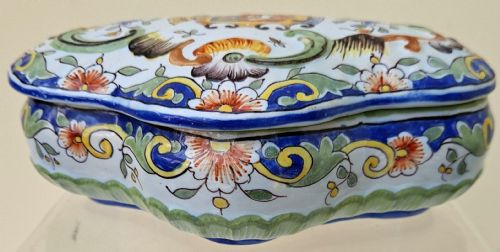
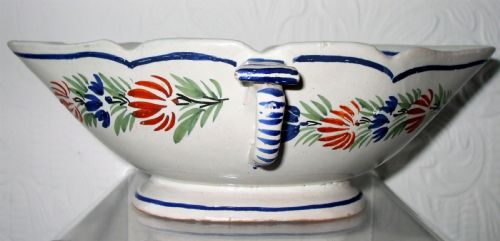
Tin Glaze Earthenware Dish
A tin glaze earthenware dish brings centuries of painted ceramic artistry to the table.
Tin Glaze Earthenware Dish
A tin glaze earthenware dish encompasses a range of historic ceramics shaped as chargers, plates, bowls, and table vessels produced across Europe. The most common examples met here are large chargers and plates originating from English, Dutch, and French potteries during the seventeenth and eighteenth centuries. These items combine utilitarian forms with decorative painted surfaces designed for display.
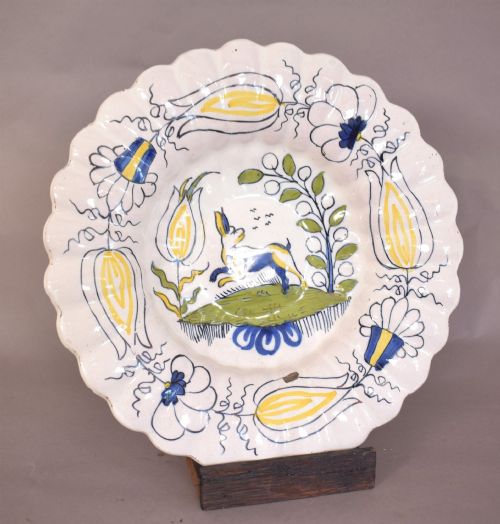
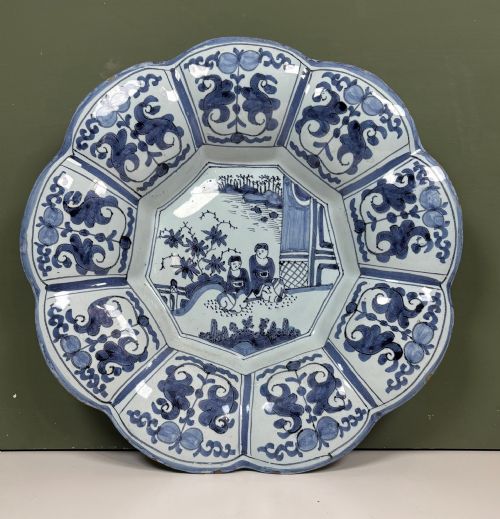
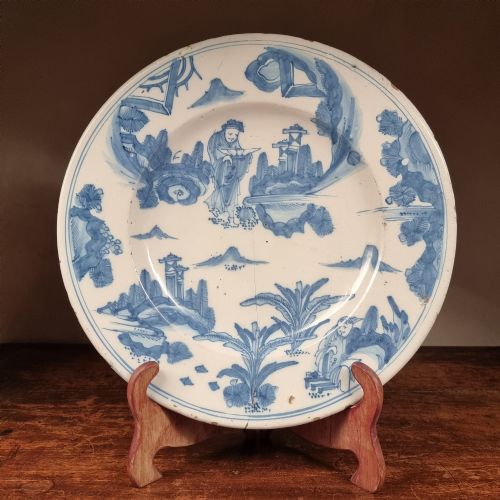
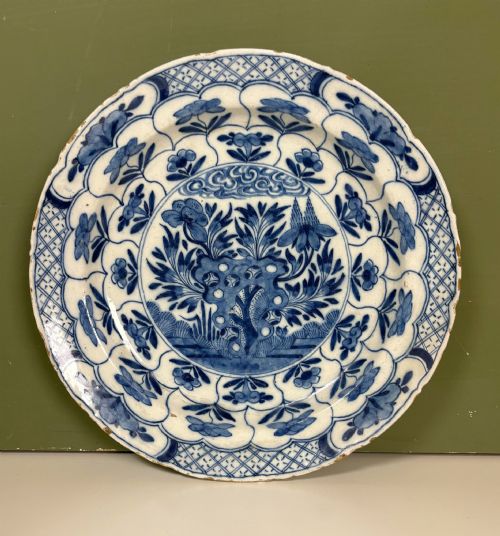
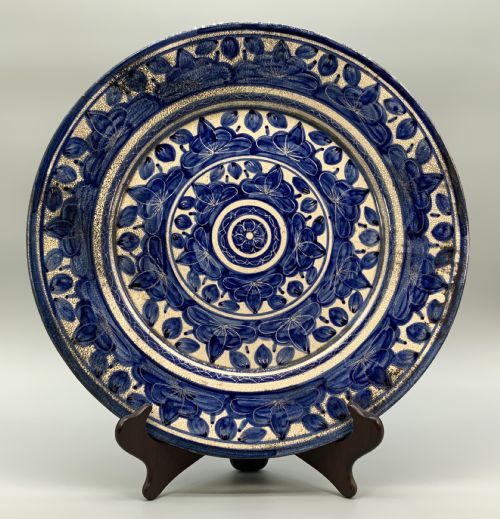
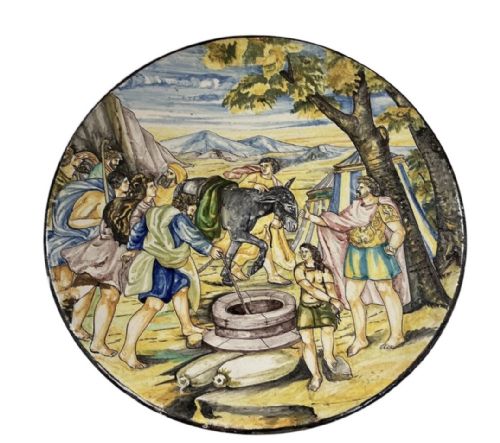
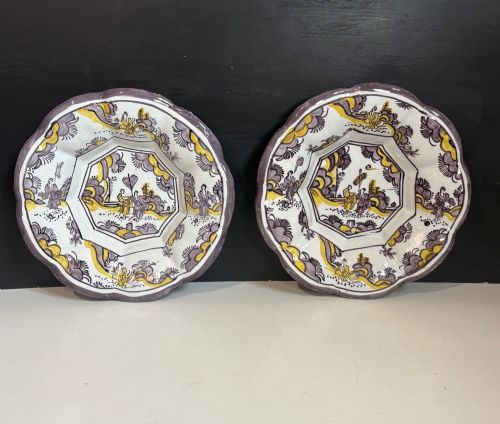
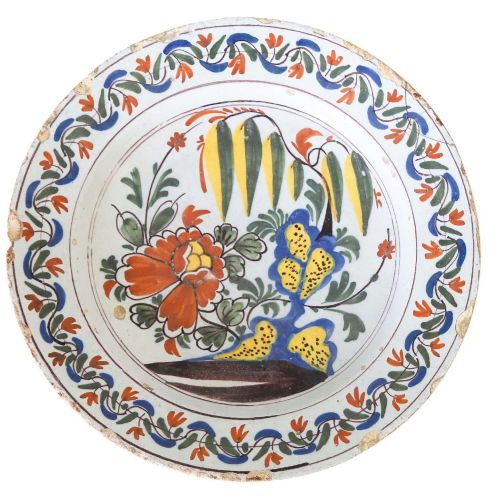
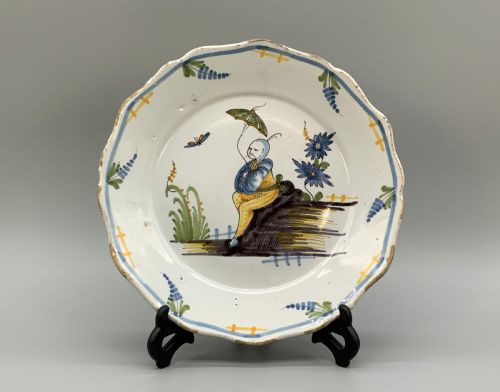
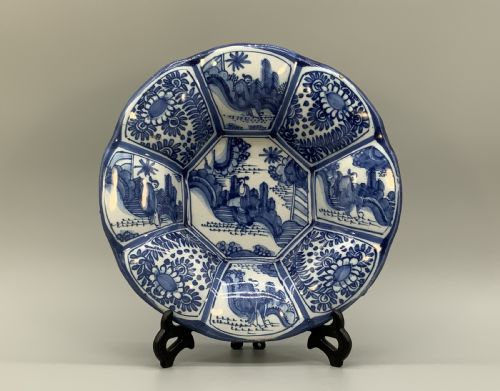
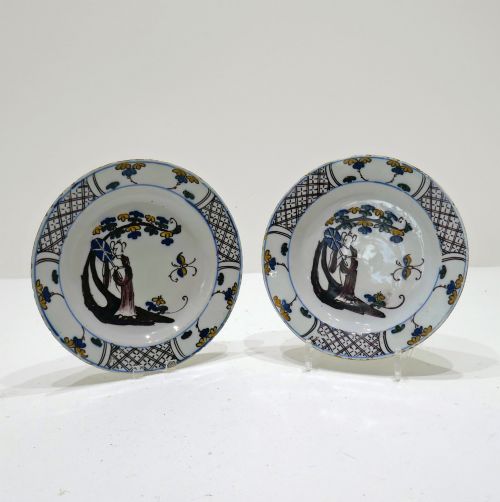
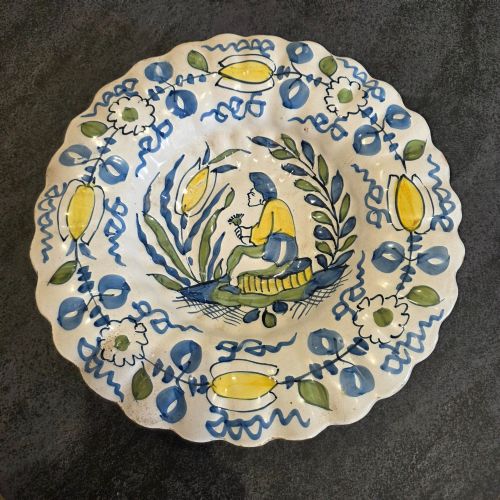
Makers applied white opaque tin-glaze to a clay body before hand-painting designs in blue and white, manganese, yellow, or polychrome palettes. The forms vary from shallow bowls and lobed dishes to specialist objects like barber's bowls and salt cellars. Continental pieces display influences ranging from Dutch Delftware to French faience and Italian maiolica.
How they were made
Potters shaped earthenware bodies from local clays, firing the pieces to create a porous base ready for glazing. They coated the fired clay in an opaque tin-glaze, which provided a smooth white background for subsequent hand-painted decoration.
Artisans applied cobalt pigment, manganese, and other metal oxides directly onto the raw glaze before a final kiln firing fixed the colours. This technique required precise brushwork, as the absorbent glaze permitted no correction once the pigment touched the surface.
Eighteenth-century barbers utilised specialised bleeding dishes with recessed rims to catch medical fluids while patients sat for a shave.
What varies in quality
Quality depends on the crispness of the hand-painted decoration, the stability of the glaze during firing, and the complexity of the motifs. Pieces displaying refined polychrome palettes or detailed Chinoiserie and floral scenes demonstrate higher artistic control than simpler geometric patterns.
The thickness and evenness of the tin-glaze coat also distinguish finer examples. Superior specimens maintain a smooth, luminous white surface that enhances the painted cobalt or metallic oxide details without heavy distortion or excessive firing blemishes.
Quimper French Faience·Desvres French Faience·Rouen French Faience
The Tin Glaze Earthenware Dish Glossary
- Charger
- A large decorative plate or dish, typically measuring over thirty centimetres, used historically for table service or wall display.
- Tin-Glaze
- An earthenware glaze rendered opaque and white by the addition of tin oxide, creating a ground for painted decoration.
- Delftware
- Tin-glazed earthenware produced in the Netherlands and England, renowned for blue and white or polychrome painted designs.
- Faience
- Tin-glazed earthenware originating from France, Spain, and Italy, often featuring bright colours and diverse regional styles.
- Polychrome
- Decoration executed in multiple colours, distinguishing these pieces from standard single-pigment blue and white wares.
Tin Glaze Earthenware Dish: Frequently Asked Questions
How were tin glaze earthenware dishes used historically?
These dishes served both functional and decorative purposes in historic households. Large chargers adorned walls or formal dining tables, while smaller plates and bowls held food.
Specialist forms such as salt cellars, sauceboats, and barber's bowls fulfilled specific domestic and grooming roles.
How do you date an old tin glaze dish?
Dating relies on stylistic clues, palette choices, and potting characteristics. Seventeenth-century pieces often feature Kraak styles or heavy earthenware bodies, while eighteenth-century items introduce refined polychrome florals and Chinoiserie motifs.
Pigment colours like manganese and yellow also help assign pieces to specific periods and production centres.
Are these ceramic dishes safe for modern food use?
Historic tin-glazed earthenware possesses a porous clay body and a glaze that may contain historical metallic oxides. Most collectors treat these antique pieces as decorative objects rather than functional tableware.
Hand-washing is essential to preserve the fragile glaze and historic painted surfaces.
What is the difference between Delftware and faience?
Delftware specifically refers to tin-glazed earthenware made in England and the Netherlands, typically associated with blue and white Dutch styles. Faience is the broader continental term used for similar tin-glazed pottery produced in France, Spain, and Italy.
Both employ identical glaze chemistry but vary in regional painting traditions and forms.