

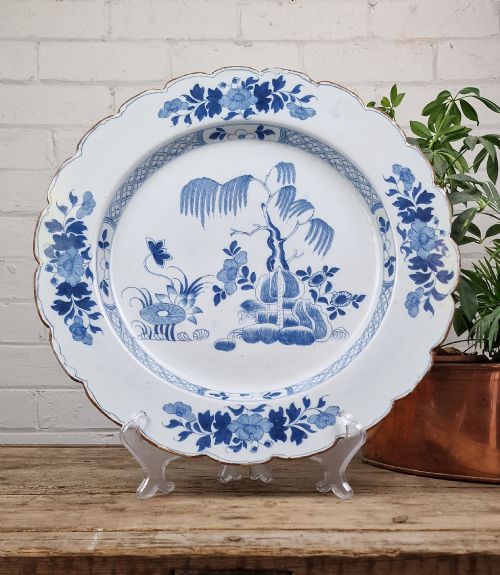


Georgian Tin Glazed Plate
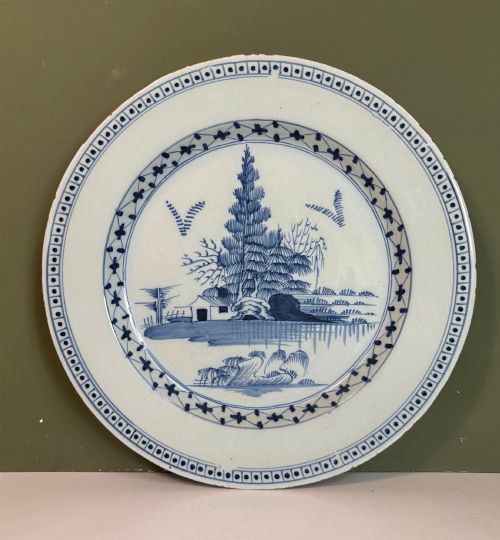
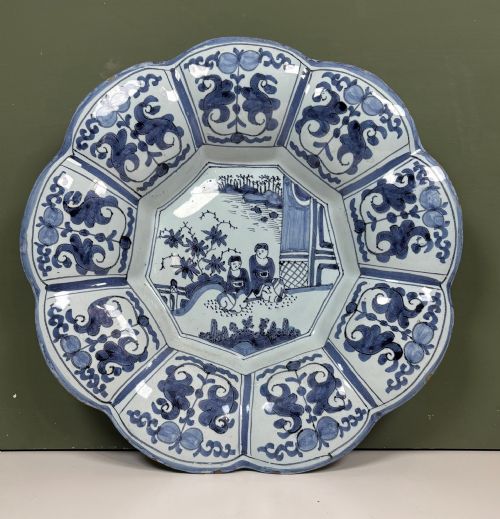
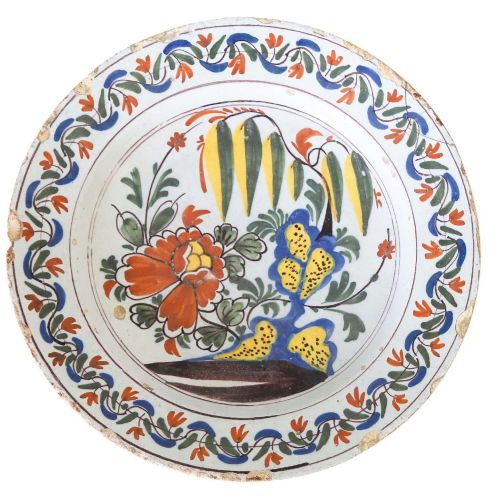
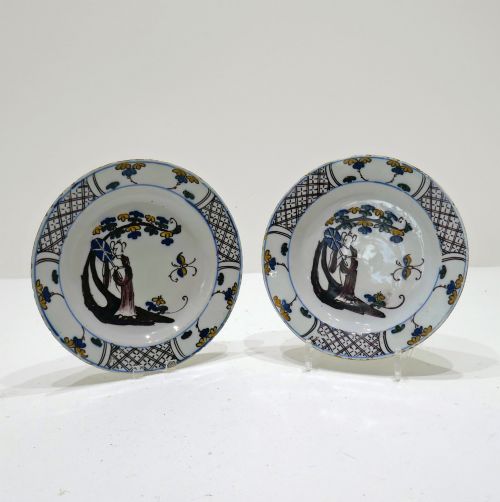
A georgian tin glazed plate brings eighteenth-century earthenware into the home with hand-painted cobalt and polychrome pigments.
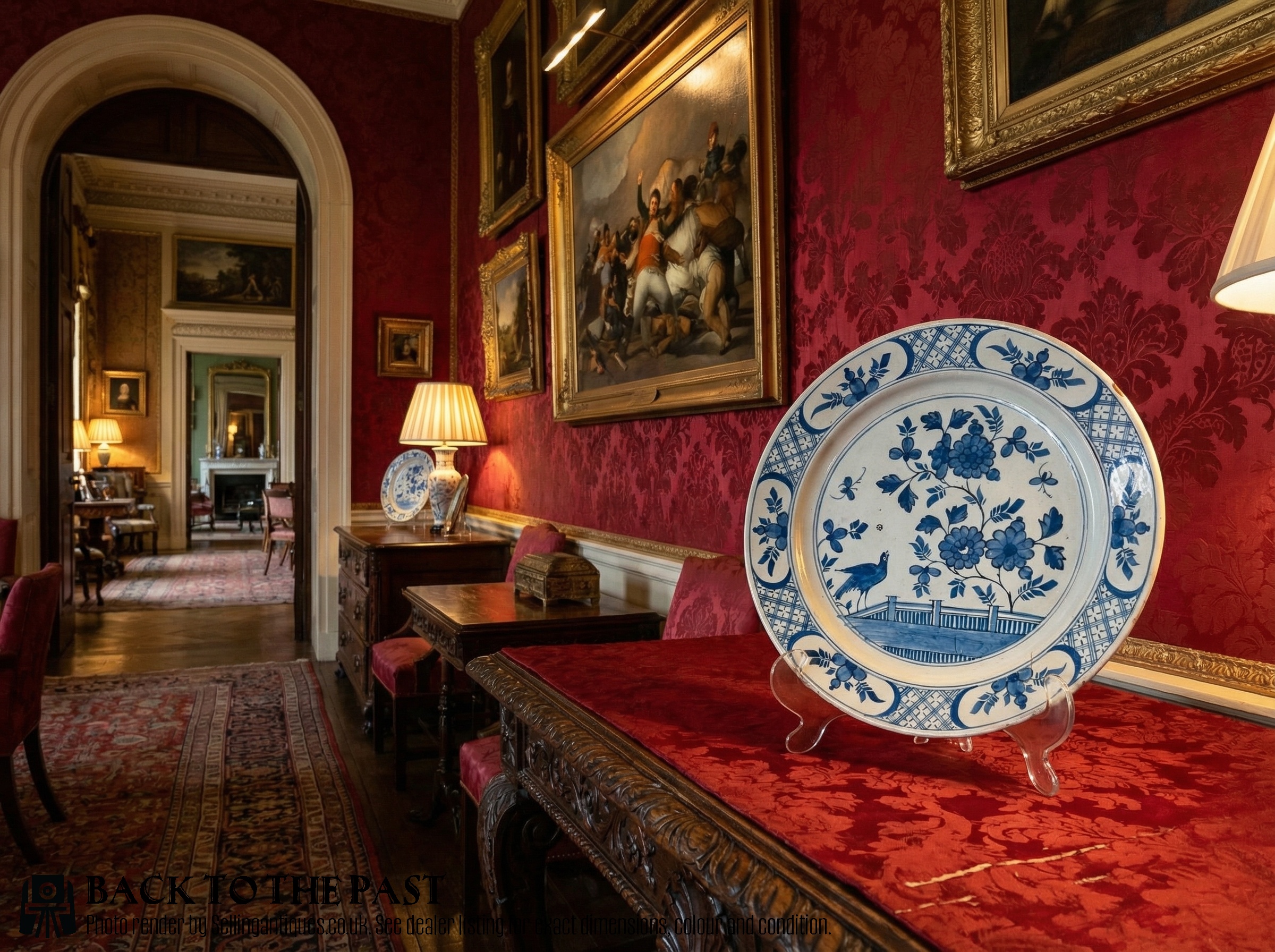
Georgian Tin Glazed Plate
A georgian tin glazed plate is an eighteenth-century ceramic piece designed for display or serving. These items appear across the inventory as plates, dishes, chargers, and platters.
The objects stem from the eighteenth century, commonly taking the form of large chargers or smaller matching pairs and sets. Makers span English centres such as Bristol and Lambeth, alongside Dutch Delftware traditions.
Buyers encounter blue and white palettes as well as polychrome decoration, frequently featuring floral motifs or Chinoiserie scenes. Specific examples include marriage plates and seventeenth to eighteenth-century domestic tablewares.
How they were made
Potters shaped earthenware bodies to form the plates and chargers before applying an opaque tin glaze. This white coating provided a smooth ground for subsequent brushwork.
Painters applied cobalt pigment and various polychrome colours directly onto the absorbent unfired or raw glaze. Firing then bonded the metallic oxides to the tin surface to create the finished decoration.
Marriage plates recorded special unions with painted initials, proving that eighteenth-century kitchenware doubled as romantic paperwork.
What varies in quality
Quality rests upon the crispness of the hand-painted design and the depth of the cobalt or polychrome pigments. Finer pieces display confident brushwork and balanced compositions across the tin-glazed surface.
The stability and coverage of the tin glaze itself affect the visual success of the piece. Superior examples maintain an even glaze layer that successfully masks the underlying earthenware body.
Lambeth Delft·Bristol Delft
The Georgian Tin Glazed Plate Glossary
- Tin glaze
- An opaque white glaze made by adding tin oxide to a lead glaze base. This mixture provides the characteristic white background for painted decoration on earthenware.
- Charger
- A large decorative plate or dish used on a sideboard or table. These pieces often measure significantly wider than standard dining plates.
- Polychrome
- Decoration utilising multiple colours rather than a single pigment. In these ceramics, this involves combinations of vibrant hues applied over the tin glaze.
- Chinoiserie
- European interpretations of Chinese artistic styles and motifs. These designs appear frequently on eighteenth-century ceramic plates and chargers.
- Earthenware
- Porous pottery fired at relatively low temperatures. The body requires a tin glaze to render the vessel impermeable to liquids.
Georgian Tin Glazed Plate: Frequently Asked Questions
What is a tin glazed plate?
A tin glazed plate is an eighteenth-century earthenware vessel coated in an opaque white glaze and decorated with hand-painted pigments.
These objects include plates and larger chargers produced in English and Dutch potteries.
How were these plates used?
These pieces served as decorative chargers, platters, and dining dishes within eighteenth-century households. Large chargers were frequently displayed on walls or sideboards.
Smaller plates functioned during meals or special occasions such as marriages.
How do I care for a delft plate?
Keep these earthenware pieces away from modern dishwashers and harsh cleaning agents. The porous ceramic body and tin glaze require gentle manual handling.
Display them securely on stable plate stands or wall hangers designed for heavy chargers.
How do I tell English and Dutch plates apart?
English and Dutch pieces share similar tin-glazed earthenware bodies and cobalt or polychrome decoration. Specific regional characteristics often require studying the clay body and painting style.
Potteries in locations such as Bristol and Lambeth developed distinct local traditions within the broader Delftware movement.