


Silver Plate Biscuit Barrel
A silver plate biscuit barrel brings Victorian and Edwardian dining ceremony straight to the modern sideboard.
Silver Plate Biscuit Barrel
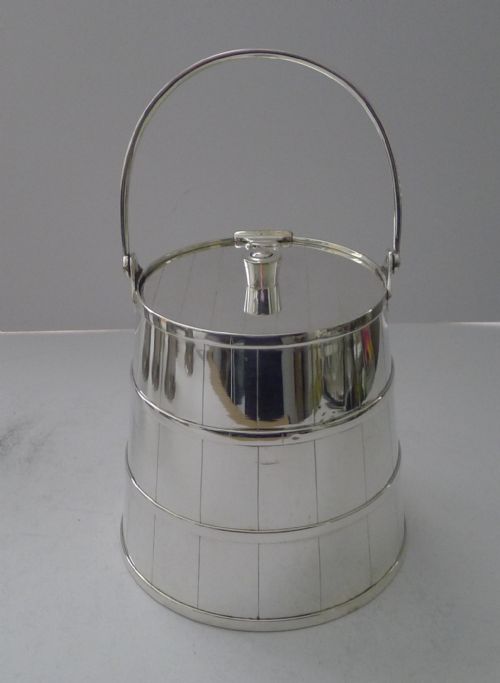
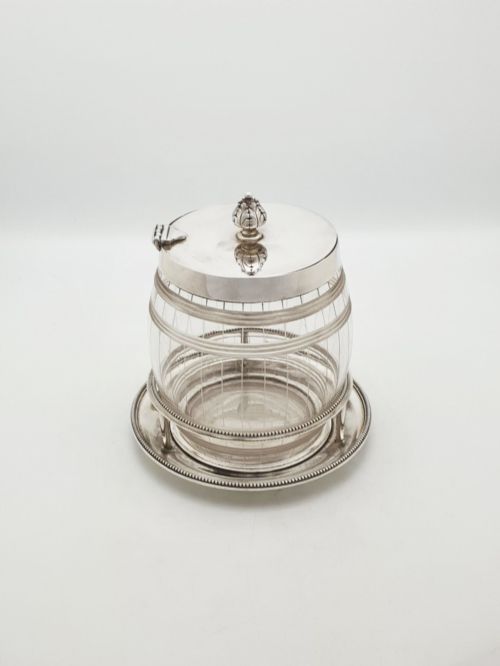
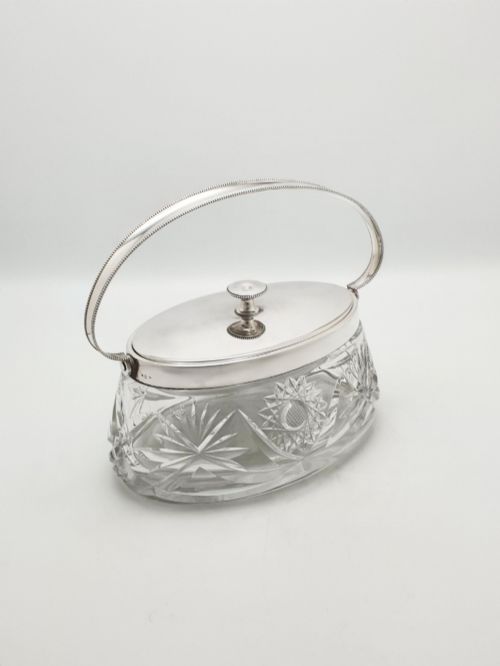
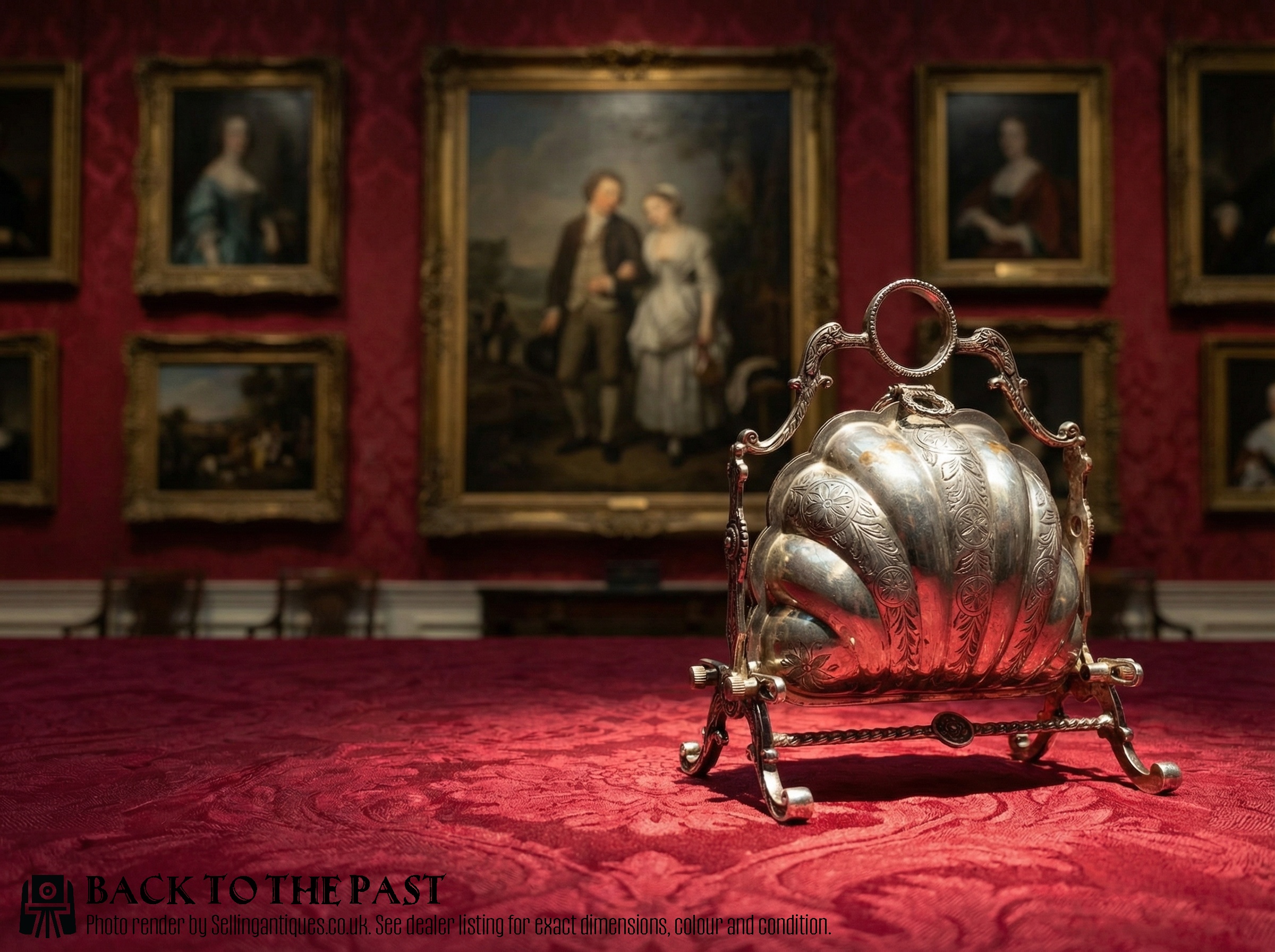
A silver plate biscuit barrel is a covered container designed for storing and serving dry biscuits in nineteenth and early twentieth-century households. These lidded vessels appear in cylindrical, drum, bell, and novelty shapes including weights and shells, often fitted with hinged mechanisms or folding lids. The most common versions combine a silver-plated mount, collar, and lid with a heavy glass, ceramic, or carved oak body.
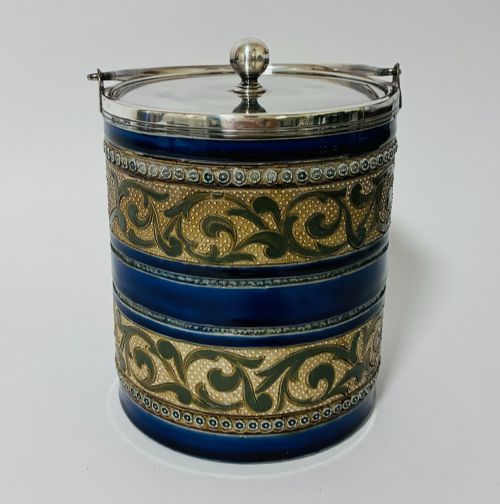
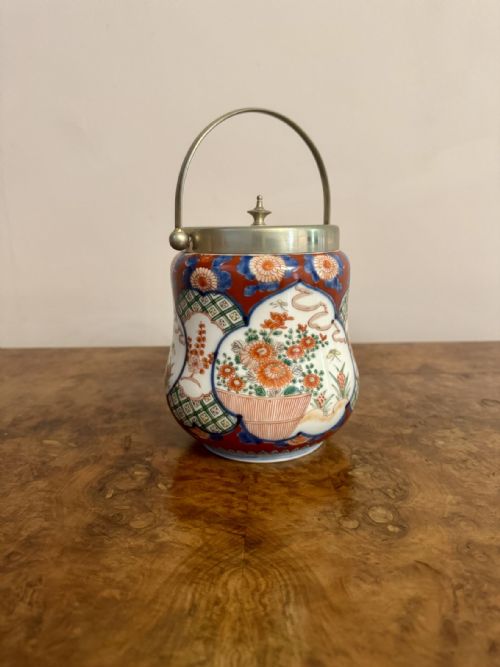
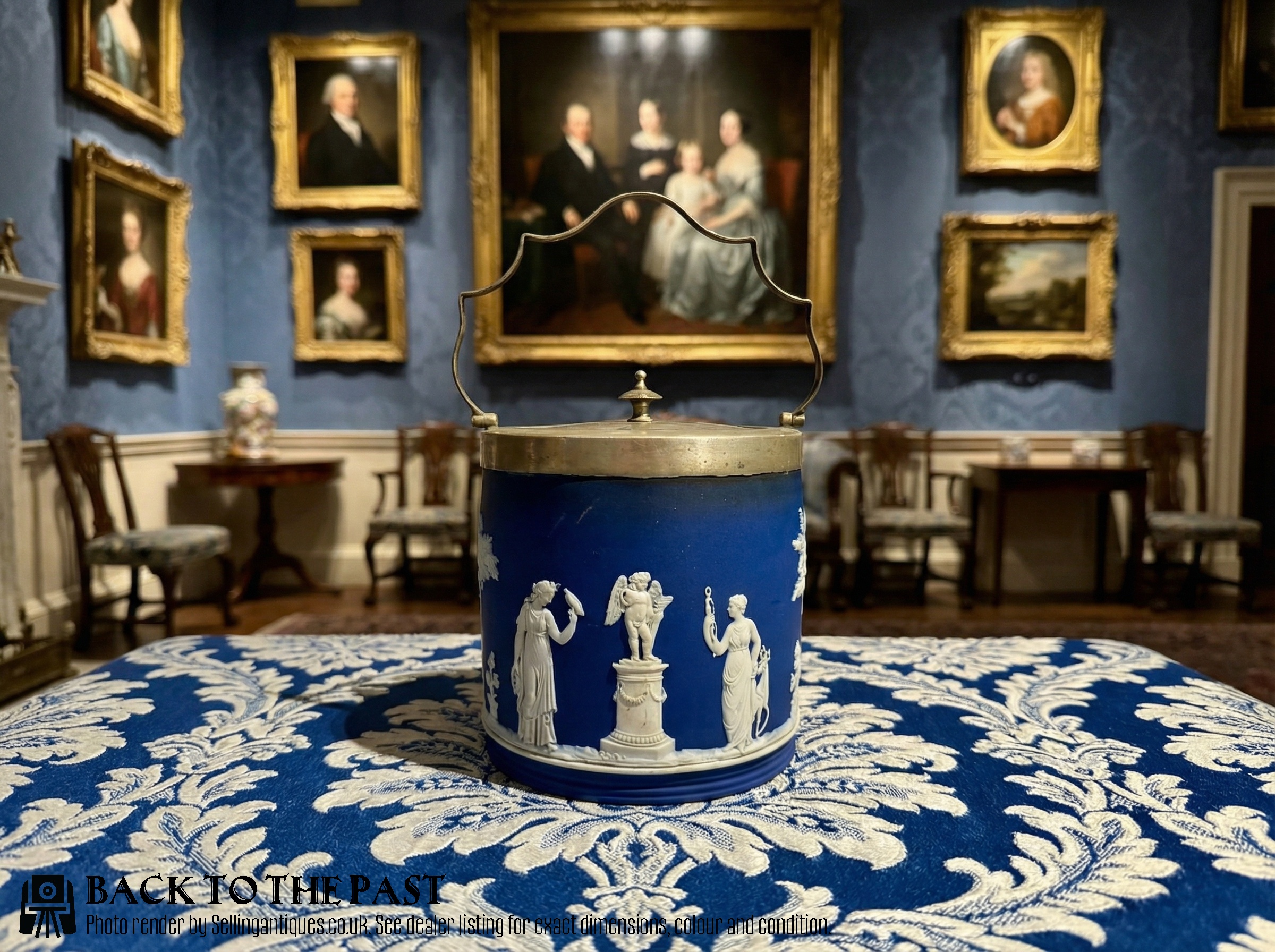
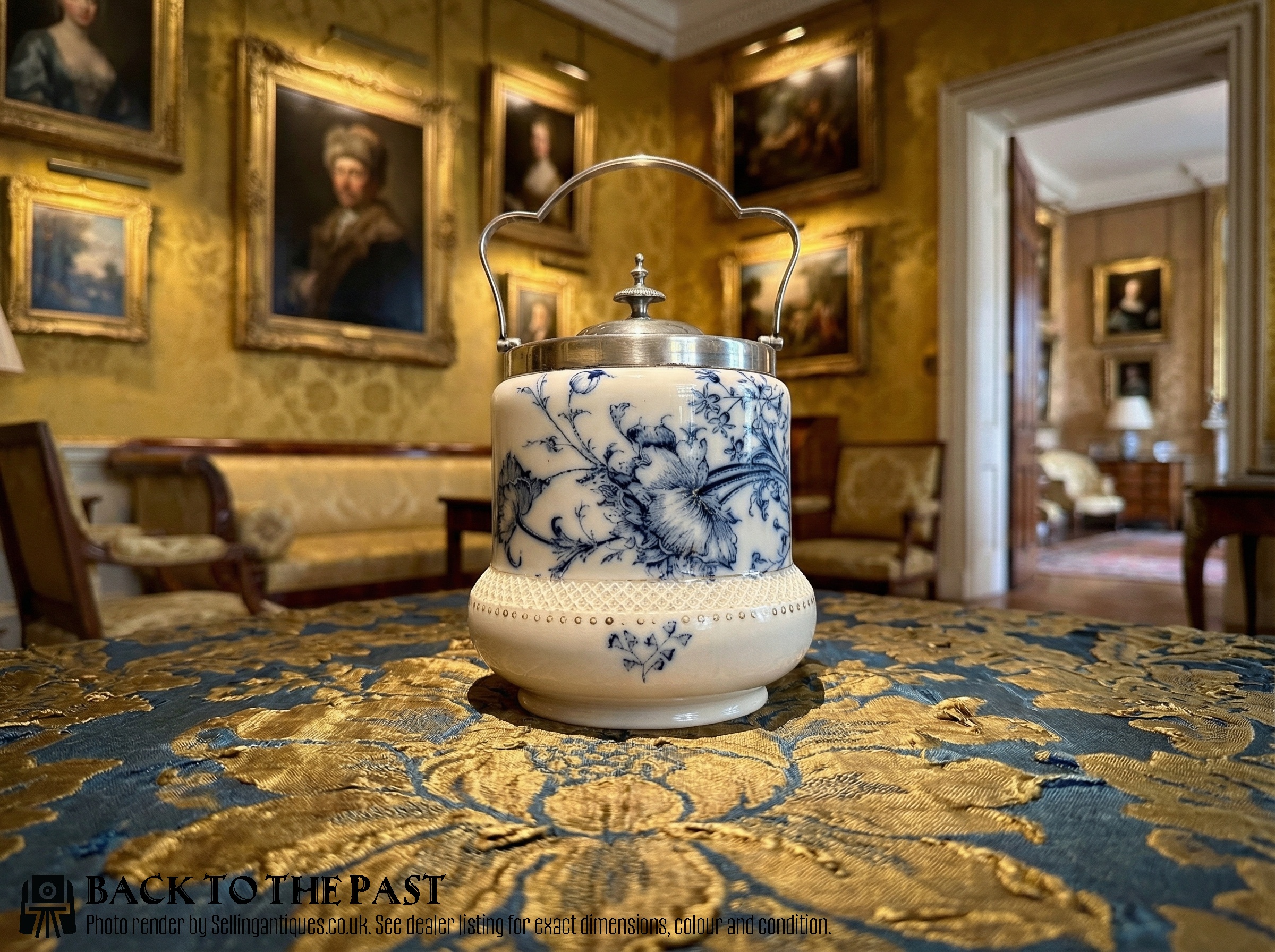
The material combinations on this page span Victorian and Edwardian periods, stretching from the mid-nineteenth century into the early twentieth. Alongside plain silver-plated metal, buyers encounter cut crystal, hobnail and faceted glass, alongside ceramic bodies such as Wedgwood Jasperware, Doulton Lambeth, and flow blue earthenware. Some examples double as ice buckets or incorporate stands, handles, and elaborate finials.
Makers represented in the archive and current listings include notable firms like Mappin and Webb, Elkington and Co, Walker and Hall, and WMF. Stylistic influences range from Neoclassical and Arts and Crafts to Jugendstil and Japanese Imari. Whether rendered in carved oak or cranberry glass, each piece reflects the Victorian appetite for specialised dining table accessories.
Materials and Construction
Silver-plated mounts and hardware were typically applied over a base metal using electroplating or by working silver plate onto copper. These metal components include cast feet, swing handles, ornate collars, and hinged lids, frequently detailed with engraved patterns or heraldic motifs.
Vessels that utilise glass rely on heavy-walled blanks shaped by blowing or moulding, then finished with deep wheel-cutting, hobnail faceting, or delicate etching. Ceramic bodies incorporate stoneware, earthenware, and jasperware, which were fired, glazed, and sometimes fitted with interior ceramic or china liners.
Wooden barrels employ hand-carved oak staves bound with metal hoops or mounted directly into silver-plated frames, sometimes featuring shields or carved panels. Assembly often involves mechanical screw fittings and secure bezels to hold glass and ceramic inserts firmly within their metal cages.
Silver Plate Biscuit Barrel Retail Price Guide 2026
Typical asking prices for silver plate biscuit barrel among the pieces listed under this phrase on Sellingantiques today, from the lower quarter to the upper quarter. They describe what is for sale here now, not the wider market.
Some Victorian biscuit barrels take the literal form of twenty-eight-pound iron weights.
Distinctions in Quality
The standard of a silver plate biscuit barrel rests primarily on the crispness of its metalwork and the weight of its body. Heavier gauge silver plating over copper or nickel silver provides greater durability and sustains deeper, sharper hand-engraving across the mounts and lids.
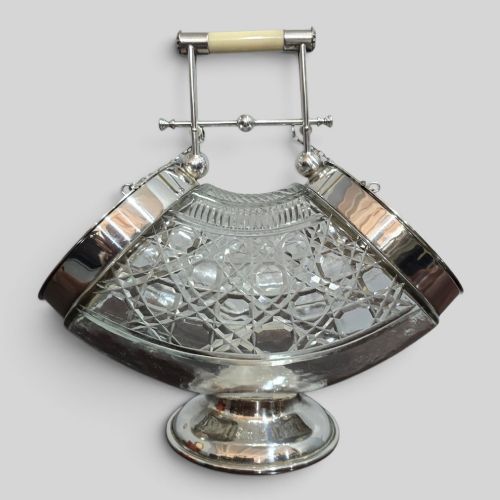
Glass bodies demonstrate quality through optical clarity, depth of wheel-cutting, and thickness, where deep hobnail patterns or faceted panels outshine thin, plain blown vessels. Ceramic components achieve higher standing through fine body preparation, precise moulding of relief details such as Jasperware sprigs, and high-fired glaze consistency.
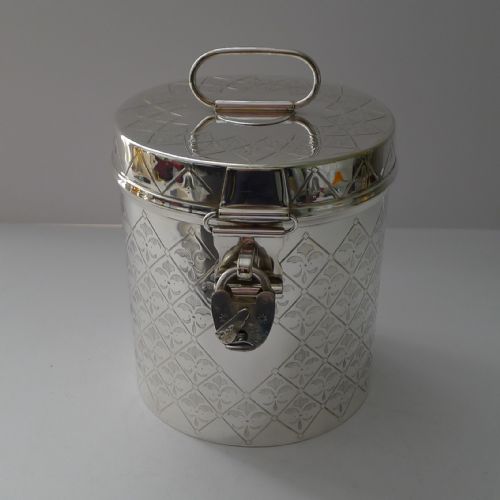
Sophistication of mechanism also separates standard items from exceptional ones. Smoothly operating folding shell designs, reliable locking lids with keys, and integrated pivoting stands show superior mechanical execution by makers such as Elkington or Mappin and Webb.
Mappin and Webb·Elkington and Co·Walker and Hall·Robert and Belk·John Grinsell and Co·Fenton Brothers·WMF
The Silver Plate Biscuit Barrel Glossary
- Electroplated Nickel Silver
- A base alloy of copper, nickel, and zinc coated with a layer of pure silver through an electrolytic process. This technique became widely used by manufacturers from the mid-nineteenth century onwards.
- Jasperware
- A type of fine stoneware developed by Josiah Wedgwood, characterised by a matte unglazed surface and contrasting white relief ornaments. It appears frequently on nineteenth-century ceramic biscuit barrel bodies.
- Hobnail Cut
- A raised, multi-faceted glass-cutting pattern resembling the head of a hobnail boot. It catches the light and adds tactile texture to crystal barrels.
- Finial
- The decorative knob or sculpture mounted on top of a lid. On these vessels, they often take the form of fruit, leaves, or heraldic creatures.
- Flow Blue
- A style of Staffordshire pottery where cobalt blue glaze intentionally blurred during firing into a misty halo effect. This technique creates a rich, painterly surface on Edwardian ceramic bodies.
Silver Plate Biscuit Barrel: Frequently Asked Questions
What were silver plate biscuit barrels used for?
These vessels held dry biscuits and sweet treats during formal Victorian and Edwardian drawing room teas and dining sessions. The lidded design kept baked goods crisp while sitting on the sideboard or dining table.
Hosts used them to present biscuits to guests before the widespread standardisation of cardboard packaging. After meals, the barrel was often passed around the table or kept accessible for evening entertaining.
How do I clean a silver plate biscuit barrel?
Maintenance requires gentle washing with warm water, mild soap, and a soft cloth to protect both the metal plating and any glass or ceramic inserts. Avoid harsh abrasive dips or scrubbers that strip thin silver layers.
Silver polish should be used sparingly and kept away from ceramic bodies, glass liners, and wooden staves. Patting the metal and interior dry immediately prevents water spotting and tarnishing.
Can I use a biscuit barrel as an ice bucket?
Many of these lidded containers function effectively as ice pails, and period makers frequently produced identical bodies for both biscuits and ice. The thick glass, ceramic, or oak walls help retain low temperatures for ice cubes.
When using an antique barrel for ice, ensure any interior ceramic or glass liner is intact to protect the outer metal frame from prolonged moisture contact.
How do I date a silver plate biscuit barrel?
Dating relies on examining manufacturer marks, registration numbers, and stylistic cues such as Victorian aesthetic movement engraving or Edwardian ceramic patterns. Maker stamps from firms like Elkington or Walker and Hall often correspond to specific decades of production.
Material combinations also offer clues, as heavy cut crystal with ornate silver mounts typically points to the mid-to-late Victorian era. Simpler oak designs and flow ceramics frequently align with the Edwardian period.