


Antique Ceramic Cookie Jar
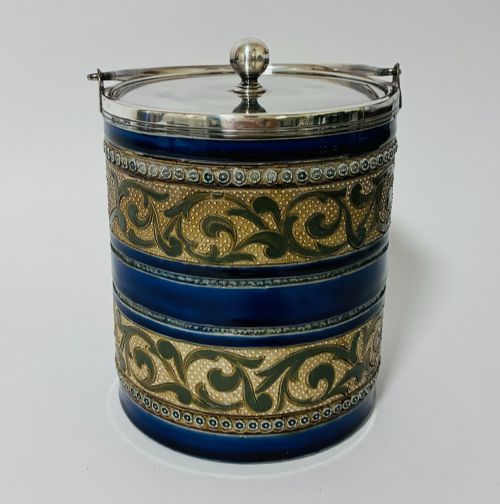
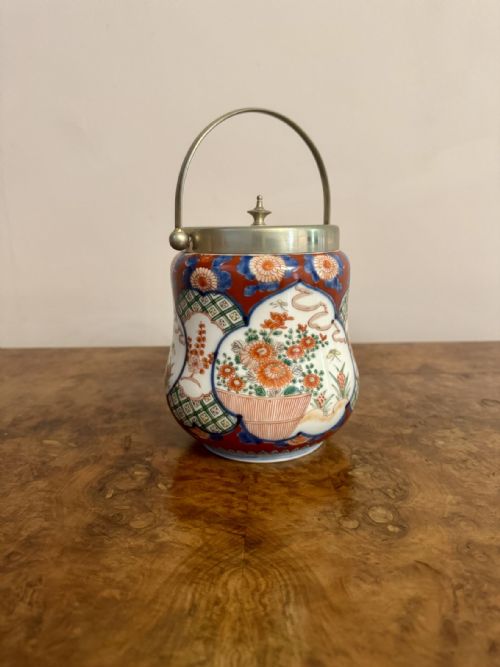
These antique ceramic cookie jars, traditionally known as biscuit barrels, bring tactile earthenware and stoneware charm to any table.
Antique Ceramic Cookie Jar
When you search for an antique ceramic cookie jar, you are looking at domestic storage vessels that date from the Victorian, Edwardian, and turn-of-the-century periods. These lidded containers were designed to keep dry baked goods fresh in the drawing room or dining parlour.
The evidence shows these containers crossing stylistic boundaries from neoclassical Jasperware and flow blue to Japanese Imari designs. British potteries produced the majority of these pieces, adapting them for the formal hospitality of the late nineteenth and early twentieth centuries.
How They Were Made
Potters shaped these ceramic cookie jars using traditional earthenware, stoneware, and porcelain bodies, frequently applying relief ornamentation or underglaze transfer printing. Relief techniques such as those seen on Jasperware required separate application of moulded white clay designs onto a contrasting coloured ground.
Metalwork played a structural role in the manufacture of these pieces, with silver plate and brass deployed for swing handles, rims, and domed lids. These metal components were secured directly to the ceramic body to support the weight of the hinged cover.
This selection spans the Victorian and Edwardian eras, featuring materials from stoneware and Jasperware to silver plate and brass.
What Varies in Quality
The refinement of the ceramic body and the crispness of the moulded relief decoration separate standard storage jars from finer presentation pieces. Sharp detailing in applied friezes or precise transfer printing indicates superior craftsmanship during the forming stage.
The quality of the associated metalwork also defines the piece, particularly the weight of the silver plate and the smooth action of the hinged lid and swing handle. Heavier mounts and intact original plating reflect a higher tier of original production.
Doulton Lambeth·Crown Devon·Carlton Ware·Wedgwood
The Antique Ceramic Cookie Jar Glossary
- Biscuit barrel
- A covered ceramic container used for storing dry biscuits or cookies on the dining table. They frequently feature metal swing handles and plated lids.
- Jasperware
- A type of fine stoneware developed with a matte finish and typically decorated with white relief figures against a coloured ground. It remains closely associated with Wedgwood production.
- Flow blue
- A cobalt blue transfer printing technique where the colour intentionally blurred slightly into the white glaze during firing. This creates a soft, hazy effect across the ceramic surface.
- Silver plate
- A thin layer of silver fused to a base metal such as copper or brass, used extensively for the rims, covers, and handles of these containers.
Antique Ceramic Cookie Jar: Frequently Asked Questions
What is a biscuit barrel?
A biscuit barrel is a covered ceramic container designed for holding dry biscuits or cookies in a nineteenth-century dining room.
These vessels kept baked goods protected from moisture before the widespread adoption of modern packaging.
How do I date these jars?
Dating relies on stylistic markers such as neoclassical motifs, flow blue patterns, or the specific form of the silver-plated mounts.
Victorian and Edwardian examples often display registration marks or manufacturer stamps on the ceramic base.
Are the handles always silver plate?
Most surviving examples utilise silver plate or brass for the swing handles and hinged lids to match the ceramic rim.
These metal mounts were manufactured to withstand regular handling during dining service.
How should I clean my jar?
Gentle dusting with a soft cloth preserves both the ceramic body and the delicate silver-plated metal components.
Harsh chemical immersion should be avoided to protect the integrity of the glaze and the plated surfaces.