

Antique Tea Caddy Jar
An antique tea caddy jar brings tangible history to the table, holding dry leaf securely while lending quiet character to a room.
Antique Tea Caddy Jar
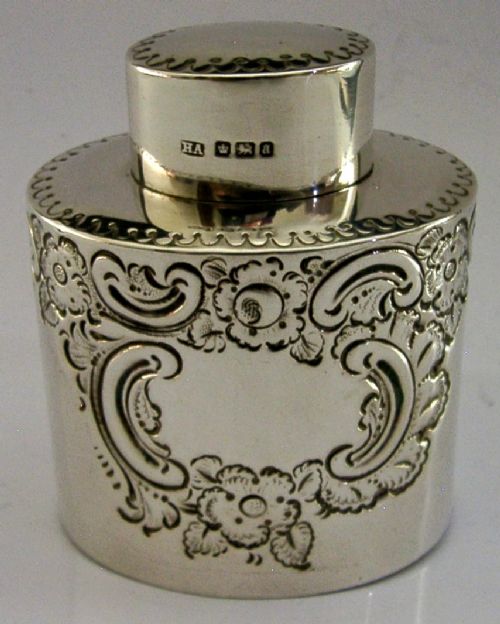
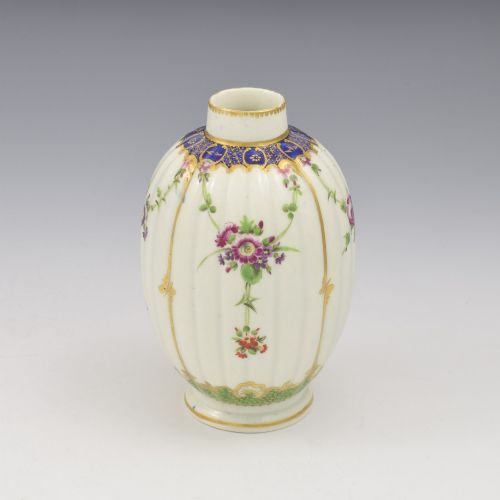
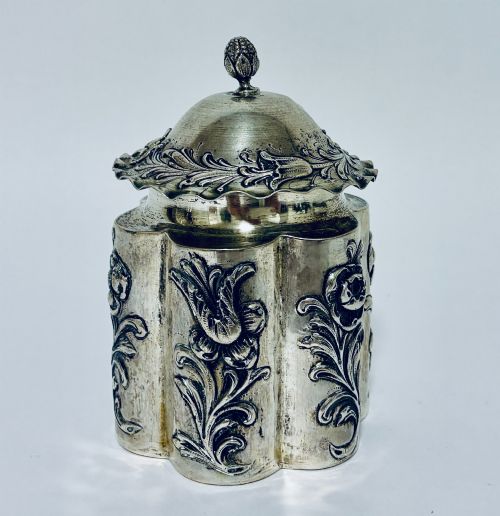
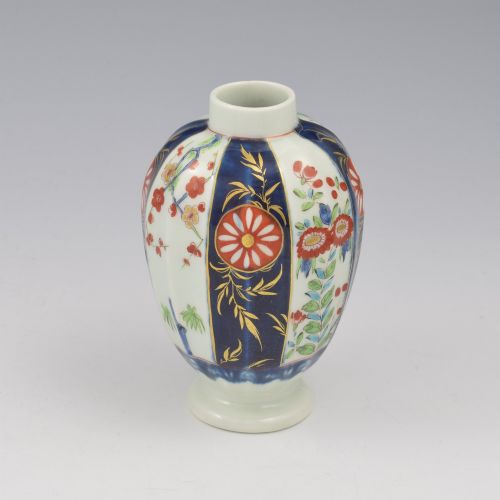
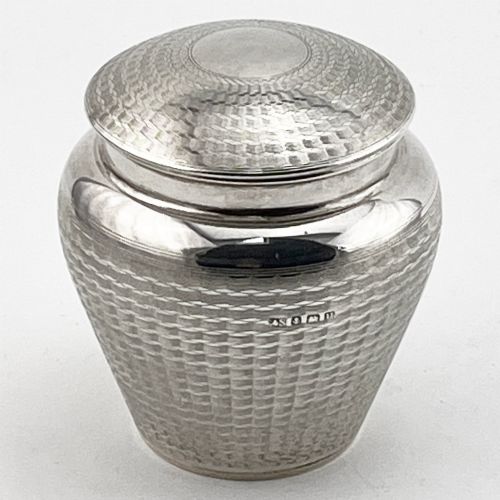
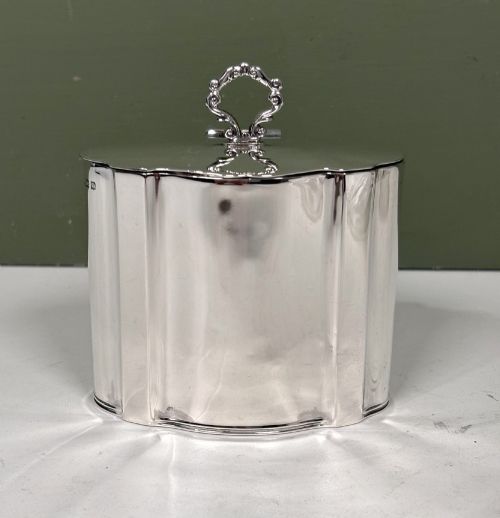
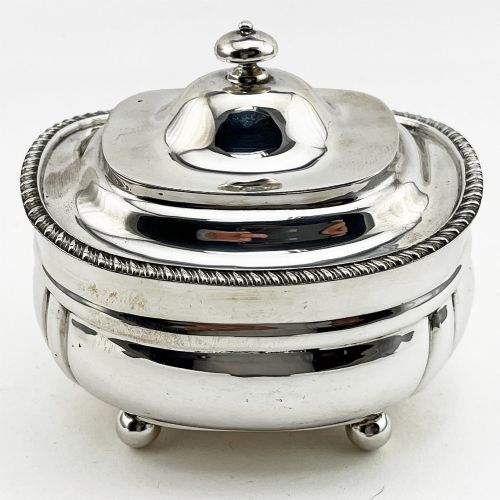
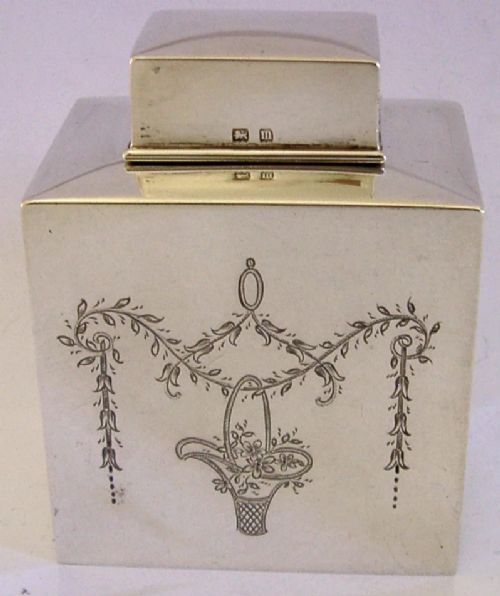
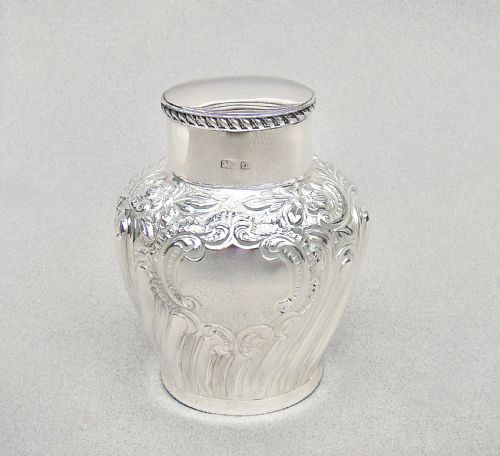
An antique tea caddy jar encompasses metal boxes, porcelain canisters and ceramic vessels designed originally to store precious loose tea leaves safely under lock and lid. The selections span compact silver boxes from the Victorian and Edwardian eras, alongside earlier Georgian silver specimens and eighteenth-century porcelain canisters.
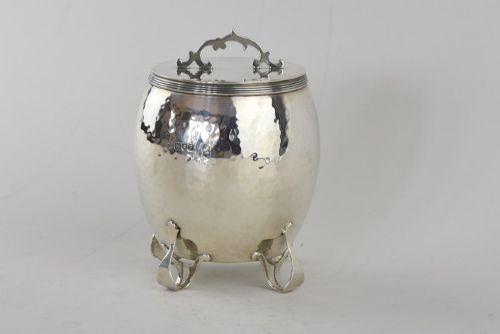
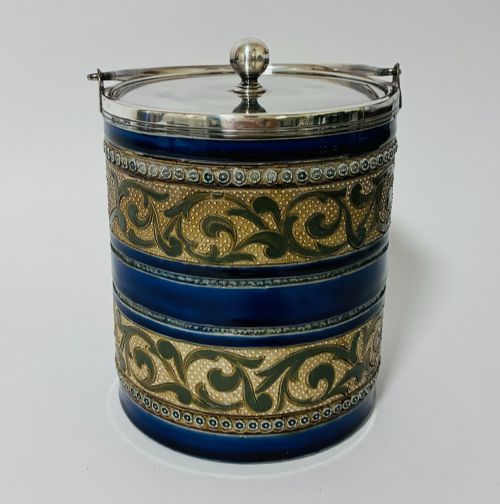
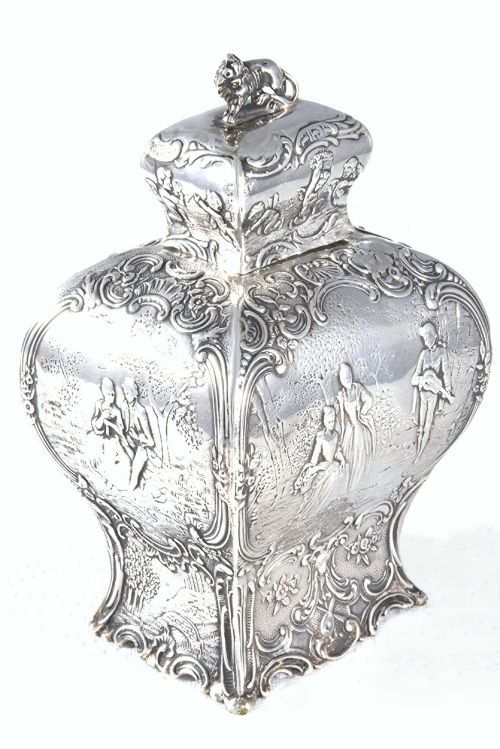
Buyers will encounter diverse forms including cylindrical canisters, bombe boxes and ceramic jars, often accompanied by related biscuit barrels and decorative containers. These containers trace roots from nineteenth-century English workshops back to eighteenth-century Chinese export porcelain and earlier periods.
The assortment reflects domestic habits of past centuries when tea was a costly commodity requiring secure storage. Many examples bridge functional kitchen use and decorative table display through pierced silver work, gilt decoration and hand-painted glazes.
How they were made
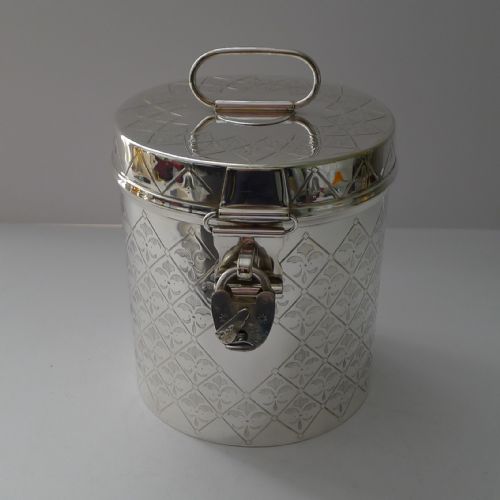
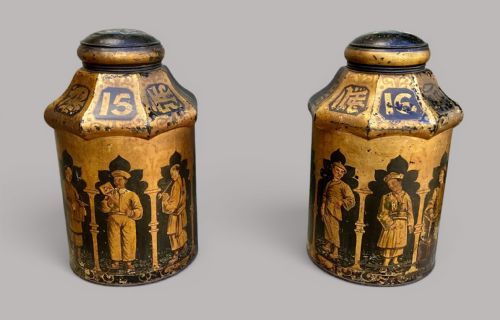
Metalsmiths formed sterling silver and silver plate through hammering, piercing and casting, finishing items with fitted pull-off lids or locking mechanisms. Artisans also utilised toleware with black and gilt Chinoiserie decoration, or carved organic materials such as Chinese bamboo.
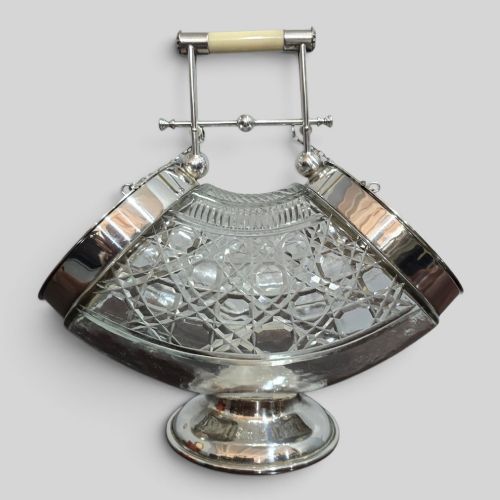
Potters shaped porcelain and earthenware bodies, applying hand-painted designs, enamel work, flow blue glazes and gold leaf accents before high-temperature firing. Glass inserts and cut crystal components were integrated alongside metal mounts in later nineteenth-century biscuit boxes.
Materials span sterling silver, silver plate, earthenware, porcelain, enamel, glass and bamboo across multiple centuries.
What varies in quality
Material thickness and weight differentiate standard containers from heavier gauge silver pieces produced by notable makers. Substantial metal mass and crispness in chased or hammered surface details indicate superior craftsmanship.
Artistic execution dictates the distinction in ceramic and porcelain examples, where hand-painted precision, intact gilt highlights and original enamel preservation elevate the piece. The integrity of internal fittings, original locks and matching lids likewise determines collector standing.
Charles Edwards·Thomas Hayes·Mappin and Webb·Robert and Belk·Tokyo Taizan
The Antique Tea Caddy Jar Glossary
- Tea caddy
- A small container or box designed specifically for storing loose tea leaves. They often included internal compartments or locking lids.
- Biscuit barrel
- A covered ceramic, glass or silver-plated vessel used for serving biscuits at the Victorian dining table. These containers frequently featured swing handles and matching metal rims.
- Bombe
- A swollen or bulging profile shape seen on certain silver tea caddy bodies. This curved outline derives from continental furniture and decorative design.
- Chinoiserie
- European decorative style reflecting Chinese artistic motifs, commonly rendered in gold leaf upon black toleware canisters. This aesthetic was popular during the eighteenth and nineteenth centuries.
- Flow blue
- A cobalt blue transfer printing technique where the colour intentionally bled slightly into the surrounding white glaze during firing. This created a soft, hazy appearance on nineteenth-century earthenware.
Antique Tea Caddy Jar: Frequently Asked Questions
What is an antique tea caddy jar used for?
These vessels originally served to store expensive loose tea leaves away from moisture and light, keeping the contents fresh in wealthy households.
Today they function as decorative objects, small storage boxes for trinkets or desktop containers in modern interiors.
How do I clean silver tea caddy jars?
Silver pieces require gentle cleaning with a soft cloth and dedicated silver polish to remove tarnish without abrading chased details or hallmarks.
Harsh chemical dips should be avoided, particularly on lined or antique pieces where delicate joins might be compromised.
How do I tell Victorian from Georgian pieces?
Georgian specimens from the eighteenth and early nineteenth centuries often display simpler, cleaner lines with restrained engraving or bright-cut ornamentation.
Victorian and Edwardian items tend toward heavier ornamentation, more complex forms like bombe profiles, and widespread adoption of silver plate.
Were biscuit barrels used for tea?
Biscuit barrels were manufactured for the dining room to hold dry biscuits rather than tea leaves, though their forms and materials overlap closely.
They generally feature larger proportions, swing handles and fitted ceramic or glass interiors with metal rims.