


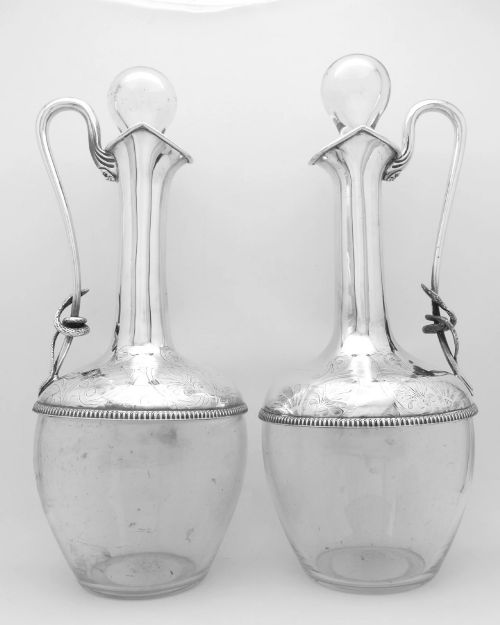

Silver Mounted Glass Carafe
A silver mounted glass carafe combines brilliant glass vessels with gleaming precious metal collars, mounts, and handles for table service.
Silver Mounted Glass Carafe
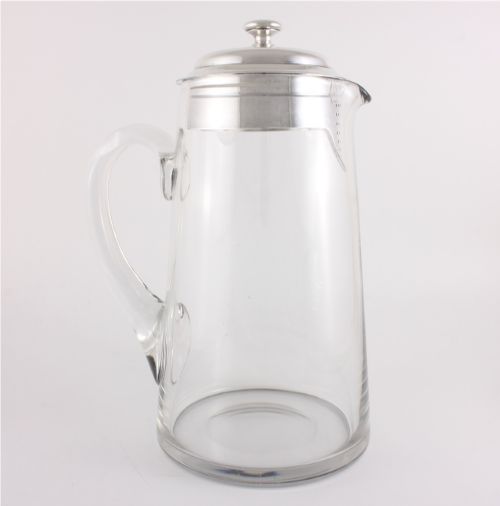
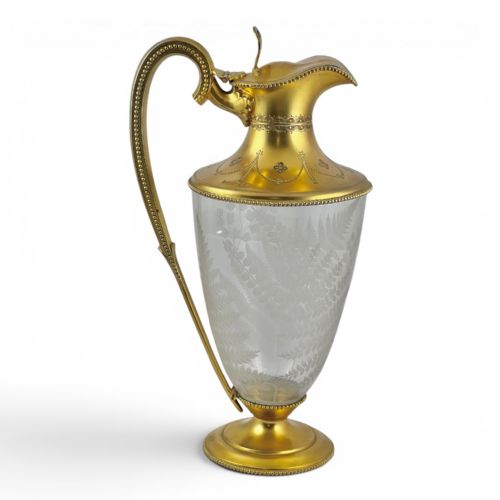
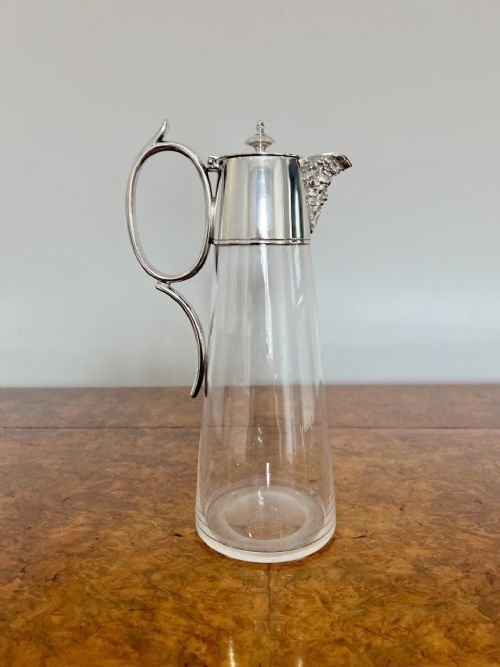
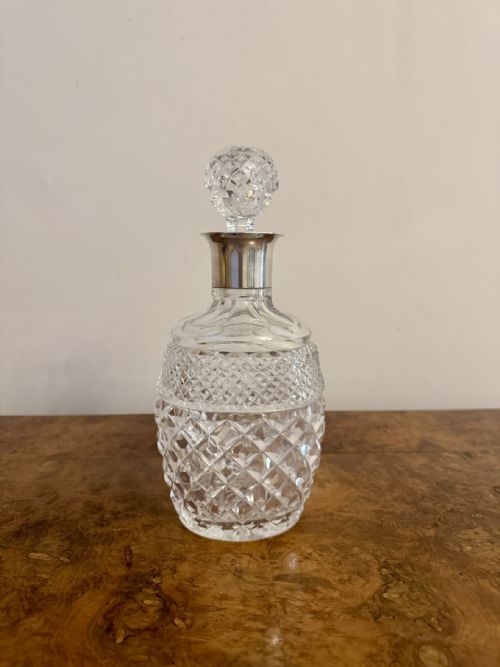
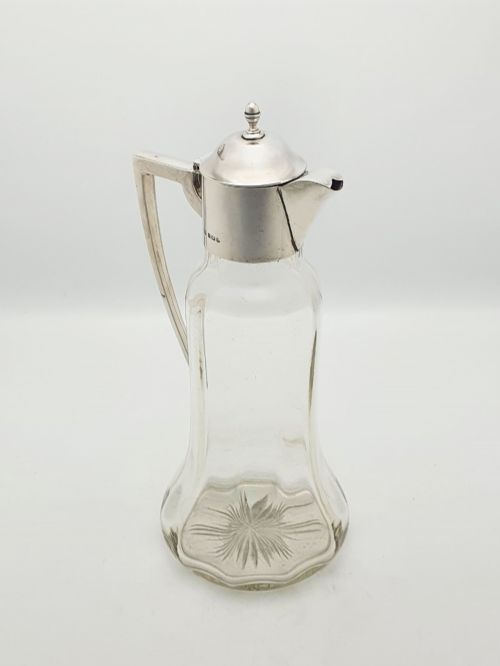
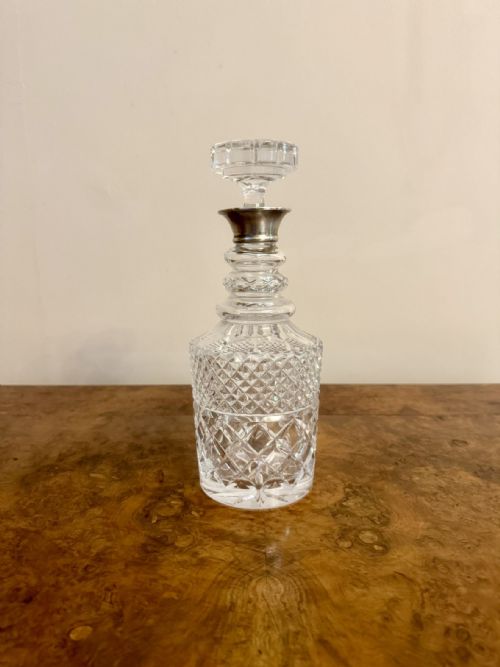
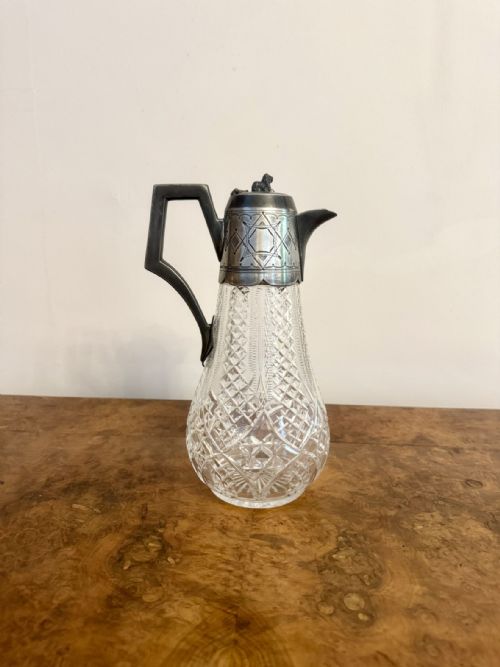
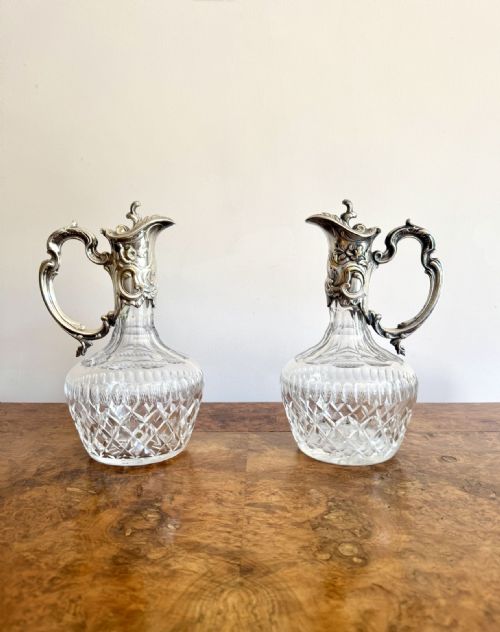
A silver mounted glass carafe encompasses functional vessels designed for serving wine, spirits, water, and liqueurs at the dining table. When searching for a silver mounted glass carafe, buyers encounter a variety of forms including claret jugs, decanters, spirit bottles, and whisky noggins.
The pieces appearing here span multiple eras from the nineteenth century through the Edwardian period and into the mid-twentieth century. Victorian and Edwardian examples dominate the selection, showcasing elaborate floral engraving, clean silver collars, and heavy glass bodies.
Makers utilised diverse coloured and clear glass bodies, pairing ruby, green, blue, and cranberry glass with sterling silver, silver gilt, and silver plate mounts. These functional serving vessels range from small individual whisky noggins to large wine jugs.
Materials and construction
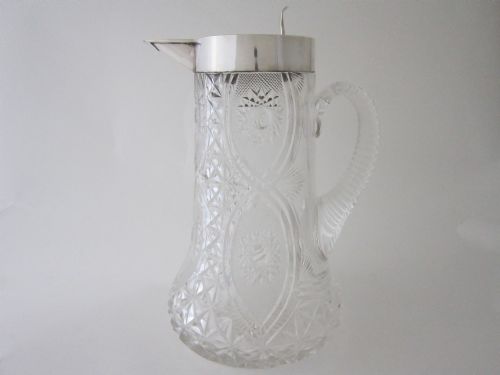
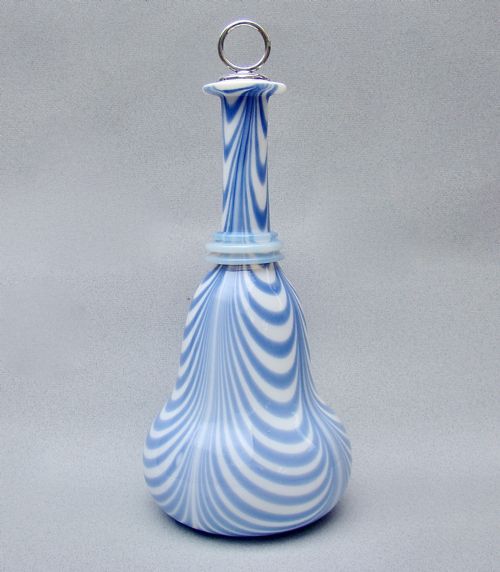
Glass bodies are formed through blowing, cutting, or etching, producing both smooth coloured vessels and heavy cut crystal or glass with deep geometric facets. Nailsea glass and other specialist techniques yield distinct visual patterns within the vessel walls.
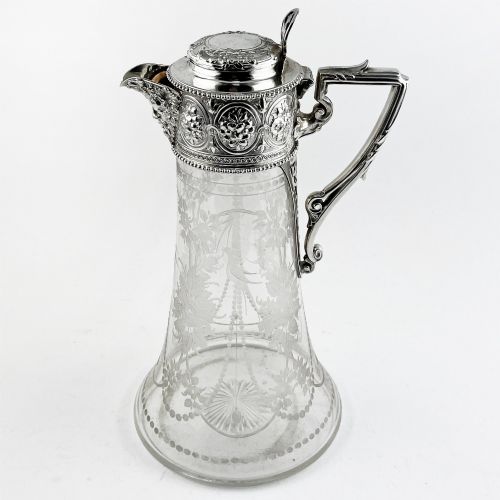
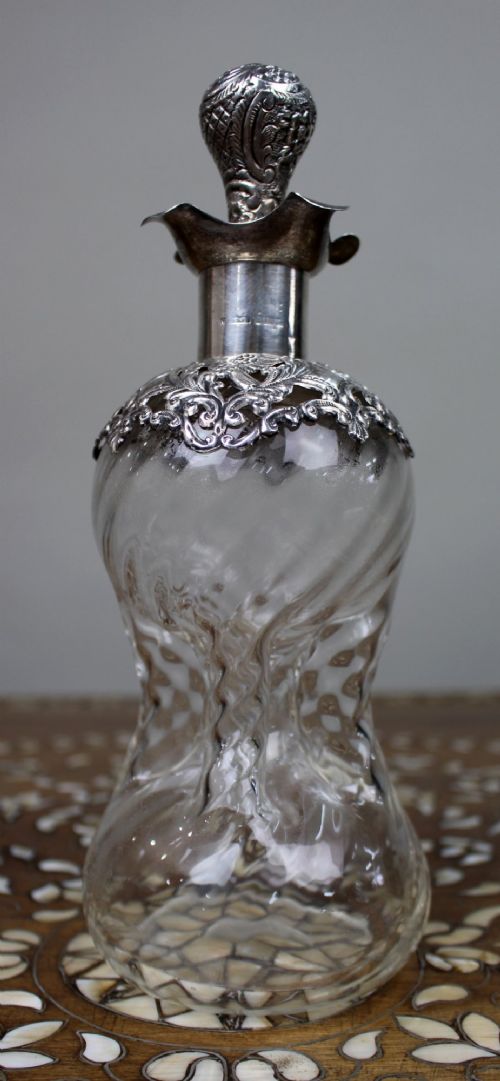
Metal mounts, collars, hinges, and handles are fashioned from sterling silver, silver plate, or Old Sheffield Plate, often secured directly around the neck of the bottle. Silversmiths cast and chased decorative elements such as Bacchus masks, serpent handles, and floral motifs to accent the glass.
Period origins span the Victorian era, Edwardian period, and twentieth-century decades up to the nineteen-sixties.
Factors determining quality
The weight, clarity, and depth of cutting in the glass body distinguish standard production items from finer tableware. Heavy crystal and vibrant coloured glass indicate superior material selection by the maker.
The substance and detail of the metal mounts separate different grades of execution. Solid sterling silver, substantial silver plate, and crisply chased figural handles like serpents or masks demonstrate higher craftsmanship than plain collars.
Asprey and Co. Ltd·Christofle·Mappin and Webb·Hukin and Heath
The Silver Mounted Glass Carafe Glossary
- Claret jug
- A specialised pouring vessel designed specifically for serving red wine at the table. These pieces typically feature a hinged silver lid and handle attached to a glass body.
- Whisky noggin
- A small individual spirit decanter or jug fitted with a silver collar and a matching pouring lip. They often include a small silver-mounted lid and a handle.
- Old Sheffield Plate
- An early composite metal made by fusing a thin sheet of silver to a thicker copper base. This technique appears on nineteenth-century pieces before electroplating became common.
- Silver gilt
- Sterling silver that has been coated with a thin layer of gold on the surface. This treatment provides a rich interior or accent finish within the metal mounts.
- Cut crystal
- High-clarity glass containing lead oxide that is deeply faceted by grinding and polishing. The cutting creates sharp geometric patterns that refract light through the vessel.
Silver Mounted Glass Carafe: Frequently Asked Questions
What is a silver mounted glass carafe used for?
These vessels serve wine, claret, whisky, and other spirits during dining and social occasions. They hold liquids for immediate pouring at the table while displaying decorative metal and glass craftsmanship.
The hinged lids and spouts help control the flow of liquid and protect the contents. Many pieces function as part of a matching set for formal entertaining.
How do I clean a silver mounted glass carafe?
Careful hand washing with warm water and mild detergent preserves both the glass and the delicate metal mounts. Avoid submerging antique pieces with sealed bases or historic cements for extended periods.
Polish the silver portions gently with a specialised cloth while avoiding abrasive cleaners that might scratch the surrounding glass surface.
How can I tell Victorian pieces apart from Edwardian ones?
Victorian examples often feature heavier ornamentation, including elaborate floral engraving, chased scrollwork, and rich coloured glass bodies like green or ruby. The silver work tends to be ornate and deeply textured.
Edwardian pieces frequently lean towards cleaner lines, restraint in decoration, and brilliant cut crystal. Hallmarks stamped into the silver mounts provide definitive dates for manufacture.
Can I use these carafes for daily dining?
Sturdy construction allows these vessels to serve beverages during meals provided they receive gentle handling. The glass and silver materials are durable enough for regular domestic use.
Inspect the internal condition of the glass and the security of the handle joints before serving liquids. Hand washing ensures the antique mounts remain securely attached to the glass body.