

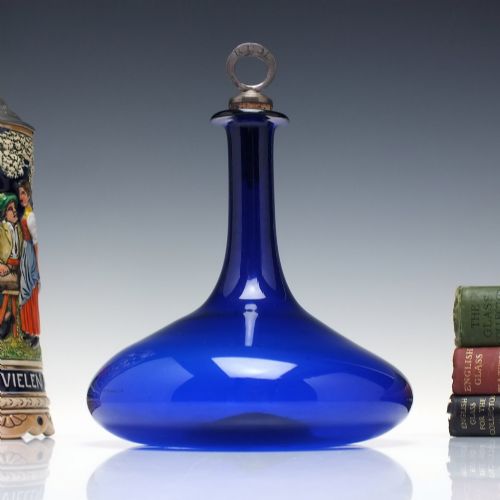
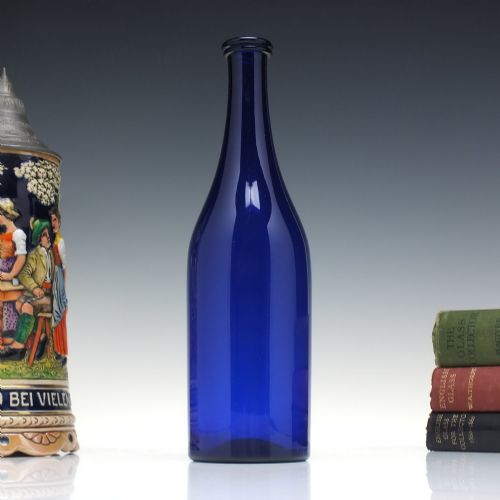
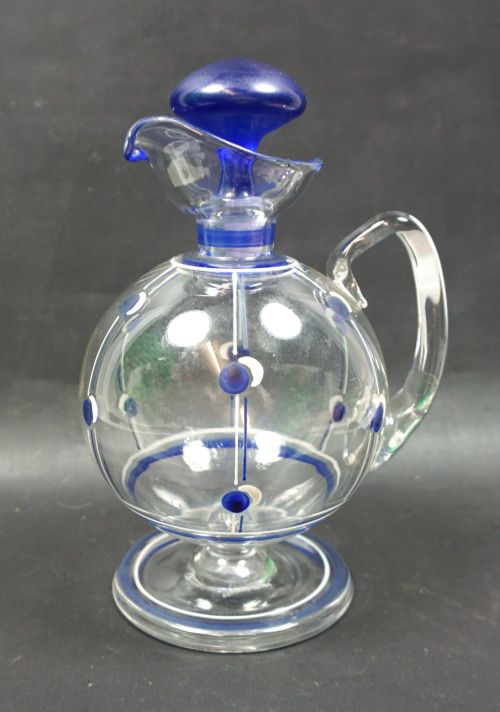
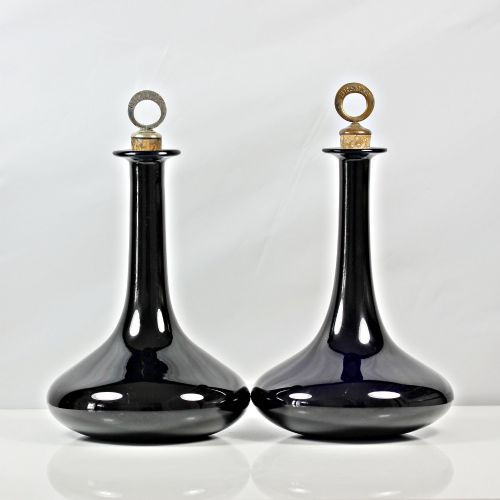


Blue Glass Wine Decanter
A blue glass wine decanter brings rich colour and striking form to a dining table.
Blue Glass Wine Decanter
A blue glass wine decanter serves as both a functional vessel for serving wine and a decorative object for the sideboard. These pieces range from deep cobalt tones to bright Bristol blue and layered crystal designs.
The selections available here span the nineteenth century and the art deco period, offering styles from simple English serving bottles to ornate Bohemian jugs. Buyers will encounter forms such as mell decanters, hock decanters, and tall carafes originating from Britain, Bohemia, and Venice.
Makers and glasshouses utilised distinctive regional techniques, producing everything from plain blown glass to pieces enriched with silver plate mounts and enamel decoration. Each example reflects the prevailing aesthetic of its era, from robust Victorian utility to the geometric lines of the nineteen-thirties.
How they were made
Glassmakers produced these vessels using traditional free-blown or mould-blown methods, working molten metal to achieve deep colour saturation such as cobalt and Bristol blue. Artisans then shaped the hot glass into distinctive forms like the wide-shouldered mell decanter or slender claret jug.
Many examples incorporate secondary materials including silver plate, old Sheffield plate, and cork for the stoppers and mounts. Decoration was often added through hand-painting with enamel or by casing colour over clear crystal before cutting.
Blue Glass Wine Decanter Retail Price Guide 2026
Typical asking prices for blue glass wine decanter among the pieces listed under this phrase on Sellingantiques today, from the lower quarter to the upper quarter. They describe what is for sale here now, not the wider market.
What varies in quality
Quality in a blue glass wine decanter rests on the depth and purity of the glass colour and the crispness of any cut or enamelled decoration. Finer examples show careful balance in the hand-blown body and a well-fitted stopper.
The integration of metalwork also marks the difference between standard and superior pieces, with heavy silver plate or old Sheffield plate mounts demonstrating a higher standard of craftsmanship.
The Blue Glass Wine Decanter Glossary
- Mell decanter
- A decanter with a mallet-shaped body designed for stability on shipboard or busy dining tables. This sturdy form is particularly common in nineteenth-century British glass.
- Bristol blue
- A deep, vibrant cobalt blue glass historically associated with the West Country glasshouses. It gained popularity during the Georgian and Victorian periods for tableware.
- Old Sheffield plate
- A composite material made by fusing a thin sheet of silver to a thicker copper base. It was widely used for decanter necks and mounts before modern electroplating.
- Nailsea glass
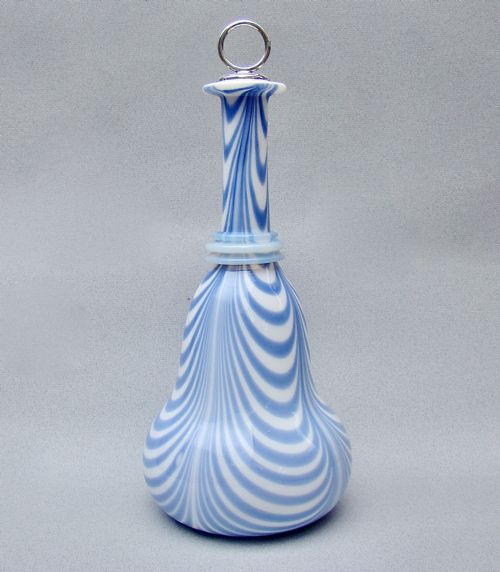
- Glass characterised by quirky looped or feathered white trails applied over a coloured ground. It takes its name from the Somerset village where the technique flourished.
- Latticino
- A Venetian glass technique using fine white threads encased within clear or coloured glass. This method creates delicate, lace-like patterns across the vessel.
Blue Glass Wine Decanter: Frequently Asked Questions
How do I clean a blue glass wine decanter?
Fill the vessel with warm water and mild detergent, avoiding harsh abrasives that might scratch the surface. Use specialist bottle brushes to reach interior sediment gently.
Allow the decanter to dry completely upside down on a rack. Keep original cork stoppers dry to preserve the material.
Can I use these decanters for serving wine today?
Most antique decanters remain entirely suitable for holding and pouring wine at the table. Check the interior first to ensure no stubborn staining or residue remains from past use.
Hand wash the vessel immediately after your meal to maintain the clarity of the glass. Avoid sudden temperature changes that could stress antique material.
How do I identify a Victorian piece?
Look for characteristic nineteenth-century forms such as mallet-shaped mell decanters and heavy moulded bases. Pontil marks on the underside often indicate hand-blown manufacturing methods.
Examine any metal mounts for period styles like William IV or early Victorian design cues. Enamel decoration and rich cobalt or Bristol blue colours also point toward this era.
What is colour over crystal glass?
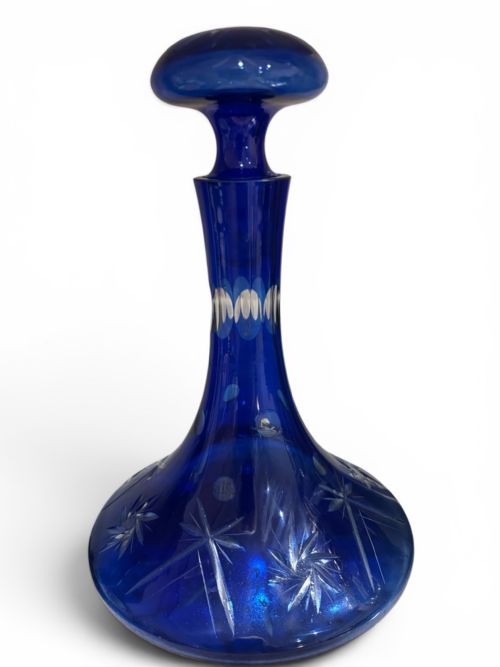
This technique involves casing a layer of vibrant coloured glass over a clear crystal core. Artisans then cut through the outer layer to reveal the clear glass beneath.
This method creates striking contrast and highlights the brilliance of the material. It appears frequently on nineteenth-century hock decanters.