

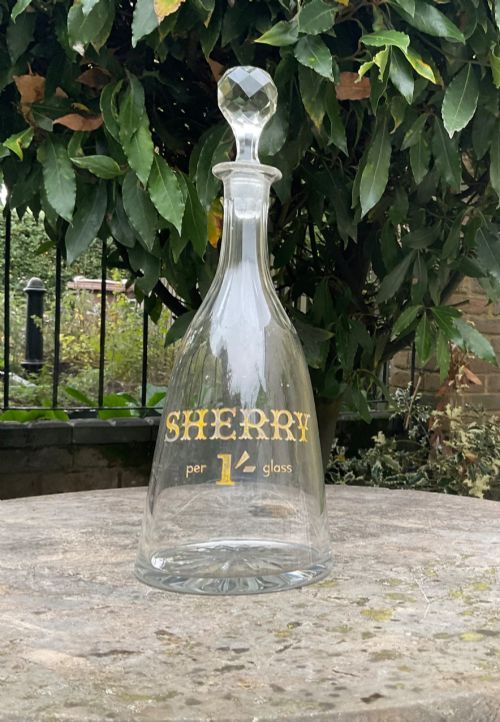
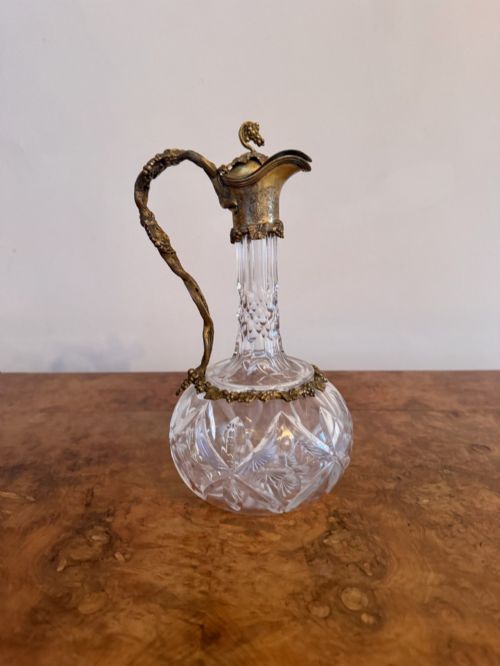
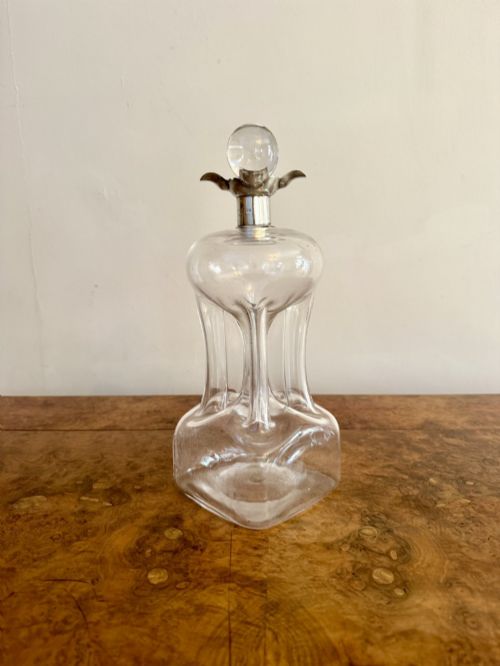
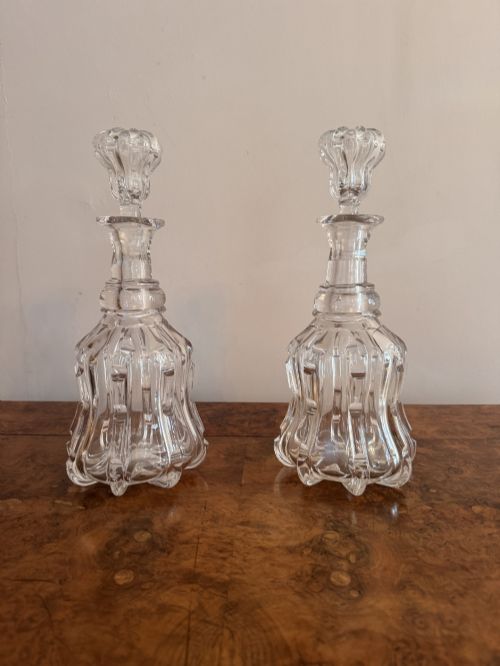
Antique Wine Carafe Decanter
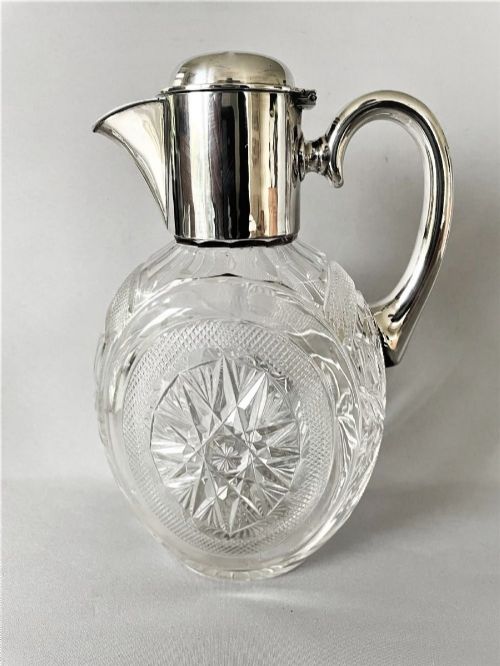
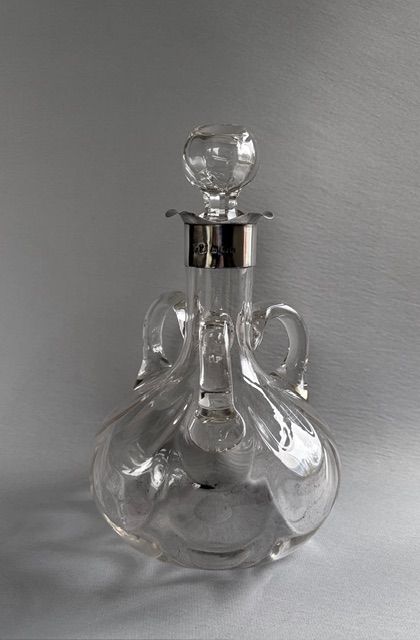
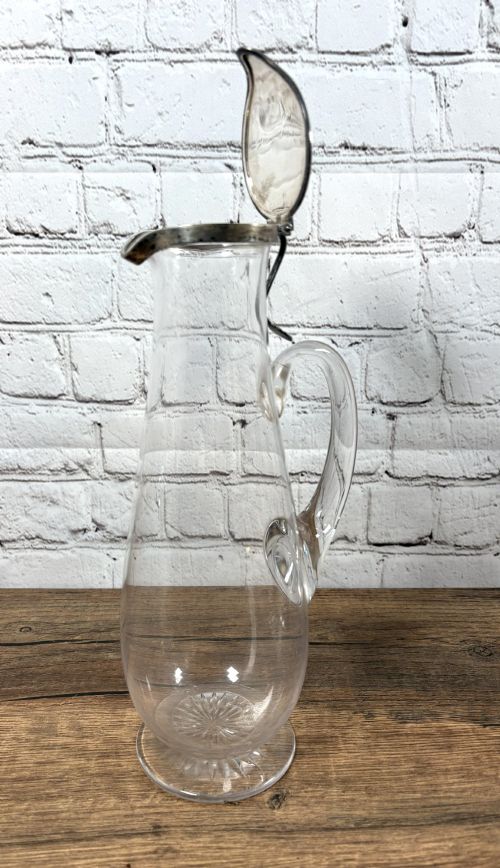
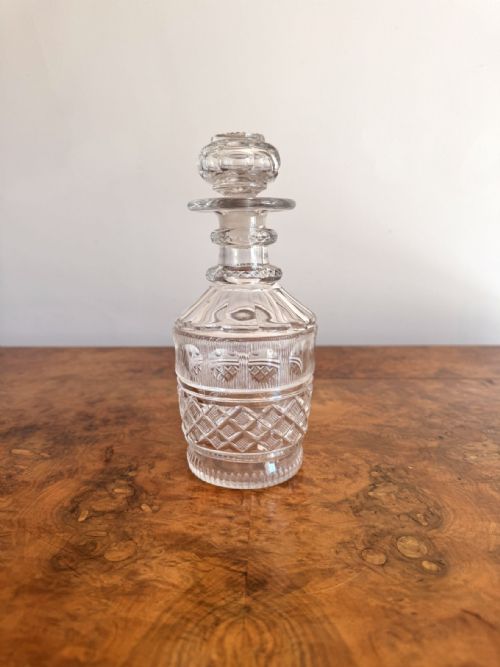
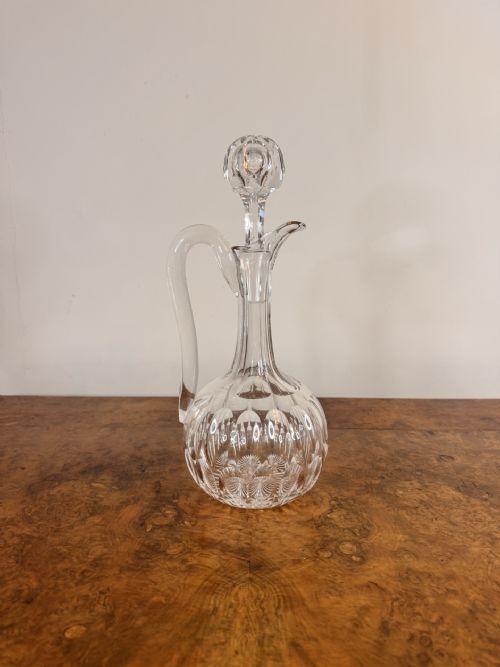
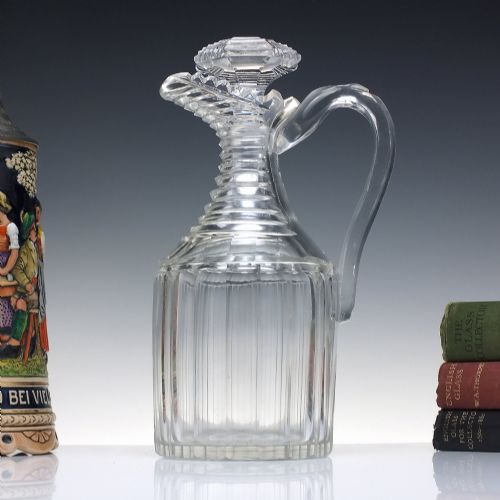
These antique wine carafe decanter pieces bring nineteenth-century elegance to the table, combining heavy cut glass with chased silver mounts for serving wine.
Antique Wine Carafe Decanter
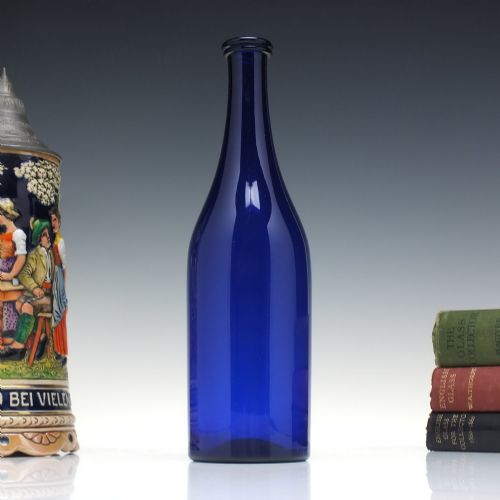
An antique wine carafe decanter encompasses vessels designed for serving wine at the dining table, ranging from straightforward glass bottles to elaborate ewers and claret jugs. The selection spans Georgian, Victorian, and Edwardian periods, alongside Continental and Bohemian workshops.
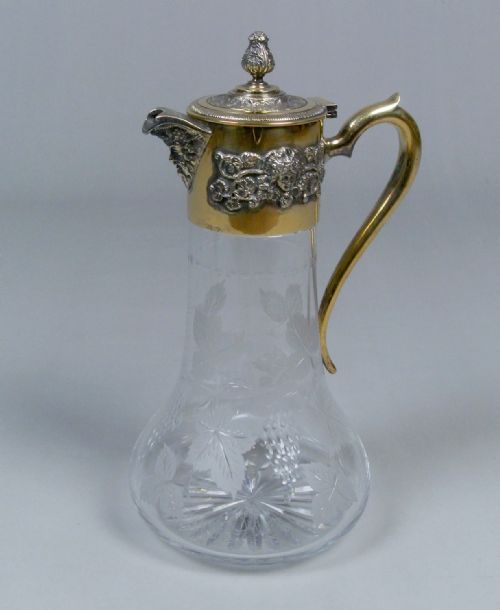
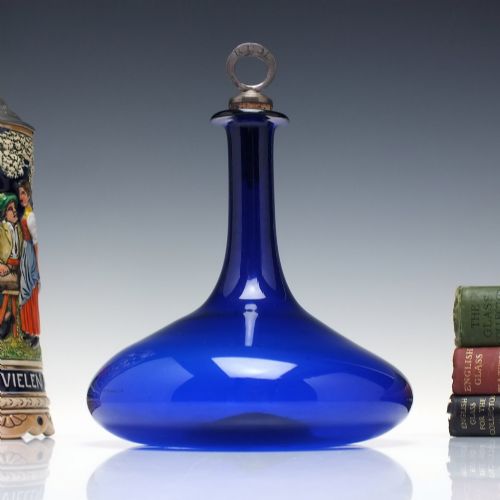
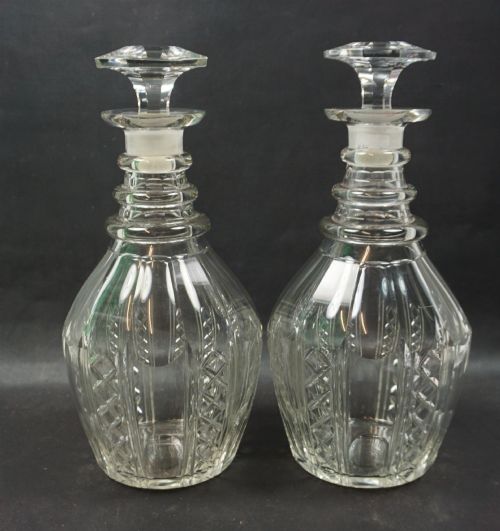
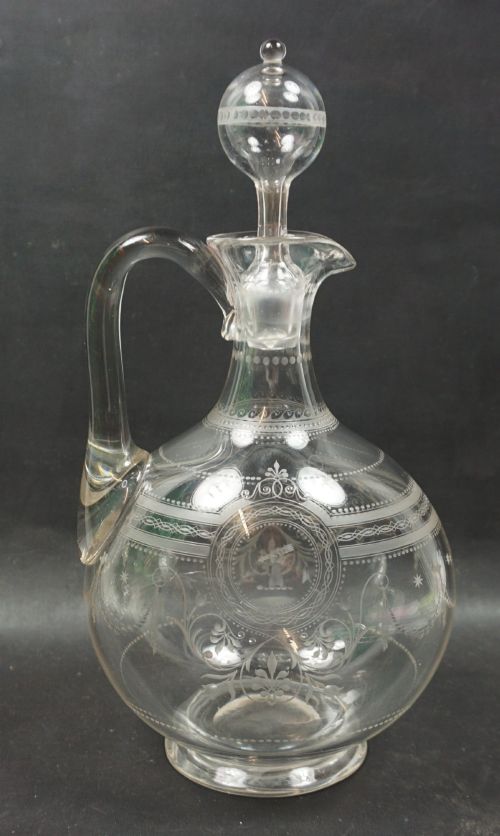
Buyers frequently encounter cut glass and crystal bodies paired with sterling silver or silver plated mounts. Forms include ovoid decanters, shoulder carafes with Lynn rings, and zoomorphic or mask-spouted claret jugs.
English and Continental pieces dominate, reflecting centuries of dining traditions. From plain clear glass serving bottles to heavily engraved crystal, each iteration serves the practical purpose of aerating and pouring wine.
Materials and Techniques
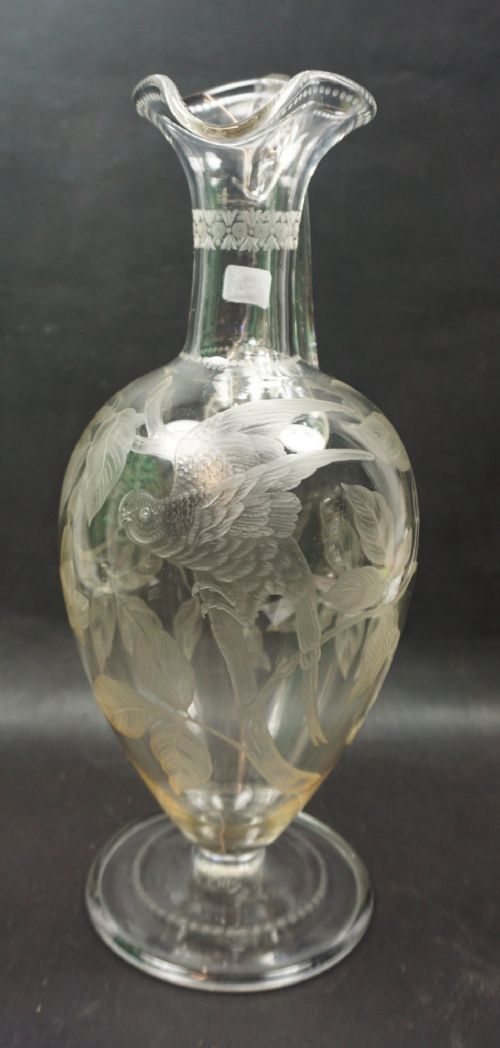
Glassmakers utilised lead crystal, clear glass, and coloured glass such as Bristol blue, amethyst, and Nailsea styles, shaping vessels by hand and mould. Cutting, wheel engraving, and hand painting decorated the surfaces with crests, florals, and enamel patterns.
Silversmiths and pewterers added structural mounts, handles, and spouts using sterling silver, silver plate, white metal, and pewter. Handles often took zoomorphic forms like serpents, while collars and hinged lids secured the tops.
Antique Wine Carafe Decanter Retail Price Guide 2026
Typical asking prices for wine carafe decanter among the pieces listed under this phrase on Sellingantiques today, from the lower quarter to the upper quarter. They describe what is for sale here now, not the wider market.
Judging Quality
The weight and clarity of the lead crystal or glass set the foundation, where deeper, crisper wheel cutting and hand engraving indicate superior craftsmanship. Heavy, unblemished glass reflects light cleanly and holds balance in the hand.
The integration of the metal mount defines the upper tier of execution. Substantial sterling silver mounts, detailed casting such as Bacchus masks or serpent handles, and crisp hallmarks elevate a piece far above standard plated wares.
William Comyns·Asprey and Co. Ltd·James Giles
The Antique Wine Carafe Decanter Glossary
- Claret jug
- A pouring vessel specifically intended for red wine, usually featuring a handle and a hinged metal lid. These often combine crystal bodies with silver or silver-plated mounts.
- Lynn rings
- Horizontal raised ribs encircling the neck of a decanter. They provide a secure grip for the hand when pouring.
- Lead crystal
- Glass containing lead oxide, which increases weight, brilliance, and refractive index. It allows for deep, sharp wheel cutting.
- Silver plate
- A base metal coated with a thin layer of silver. This technique offered the visual appeal of solid silver at a lower cost during the nineteenth century.
- Ewer
- A large jug with a wide spout and a curved handle. They trace their forms back to classical vessel shapes adapted for nineteenth-century dining.
Antique Wine Carafe Decanter: Frequently Asked Questions
How do I date an antique decanter?
Examination of the pontil mark, glass colour, and cutting style provides initial clues. Metal mounts often carry hallmarks that pinpoint the exact year and maker.
Shape and proportions also shift across periods, moving from Georgian ovoid profiles to ornate Victorian claret jugs and Edwardian cut glass.
Are these decanters safe for modern wine?
Most glass and crystal decanters remain completely suitable for holding and serving wine today. Thorough cleaning removes any historical sediment.
Peculiarities like older silver plate require gentle hand washing rather than immersion in harsh dishwashing chemicals.
What is the difference between a carafe and a decanter?
A decanter typically includes a fitted stopper and a heavier base designed for longer storage and presentation. Carafes often lack stoppers and focus purely on immediate serving.
In historical listings, the terms frequently overlap as makers applied both labels to similar glass and metal vessels.
How should I display my decanter?
Placement on a sideboard or dining table allows light to pass through the cut glass and coloured crystal. Keeping them away from direct, harsh sunlight protects any enamel or gilding.
Stoppers should remain slightly loose or removed when empty to prevent moisture trapping inside.